
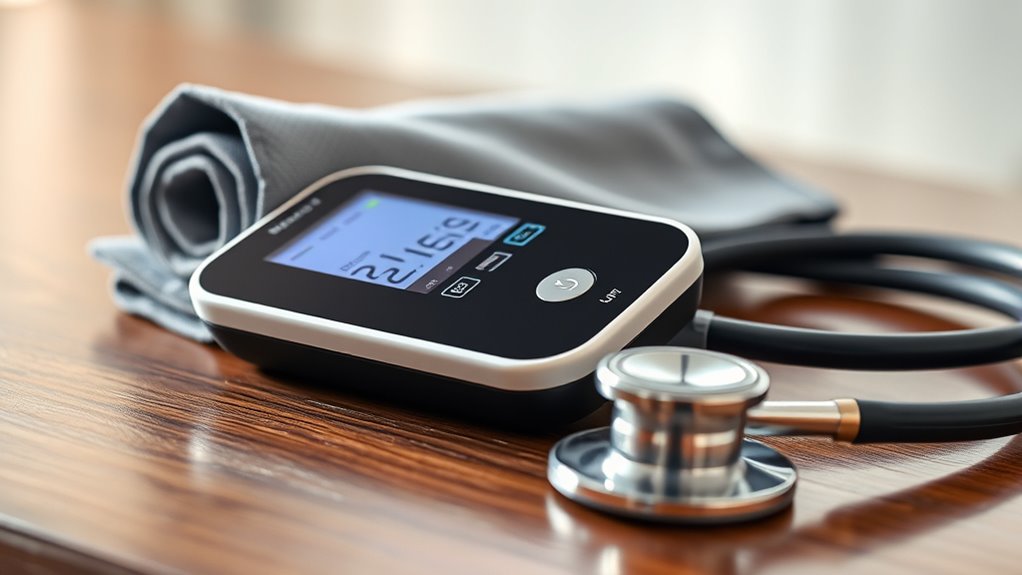

A blood pressure monitor works by measuring the force of blood against your artery walls using a cuff that inflates and deflates. As the cuff constricts blood flow, it captures systolic and diastolic pressures—systolic during heartbeats and diastolic when the heart rests. Monitors may be manual or digital, employing different methods for accuracy. Proper cuff size and placement are essential for reliable results. To better understand this process and enhance your monitoring skills, keep exploring available information.
Understanding Blood Pressure Basics
Blood pressure is an essential sign that reflects the force of circulating blood against the walls of your arteries. It consists of two measurements: systolic pressure and diastolic pressure. Systolic pressure, the higher number, indicates the pressure in your arteries when your heart beats. This is when blood is pumped out, and the force is at its peak. Diastolic pressure, the lower number, represents the pressure in your arteries when your heart rests between beats. Understanding these values is critical for evaluating cardiovascular health. Both numbers are important; elevated systolic pressure can signal hypertension, while abnormal diastolic pressure might indicate underlying health issues. Keeping track of these figures empowers you to take charge of your well-being and make informed health choices.
Types of Blood Pressure Monitors
When it comes to blood pressure monitors, you’ll encounter two main types: manual and digital. Each type has its own advantages, and understanding these can help you choose the right one for your needs. Additionally, consider the differences between wrist and arm monitors, as this can affect accuracy and ease of use.
Manual Monitors Explained
Manual monitors, often referred to as sphygmomanometers, come in two primary types: aneroid and mercury. These devices require you to employ manual techniques for measuring blood pressure, making proper cuff placement essential for accuracy.
| Type | Features | Usage |
|---|---|---|
| Aneroid | No liquid, dial reading | Lightweight, portable |
| Mercury | Liquid column, precise | More accurate, less portable |
Using a stethoscope, you’ll listen for the Korotkoff sounds while inflating the cuff. This helps you determine systolic and diastolic pressures. Mastering these manual techniques empowers you to take control of your health with confidence.
Digital Monitors Overview
Digital monitors represent a significant advancement in blood pressure measurement technology, providing users with convenience and ease of use. These devices leverage digital technology to enhance measurement accuracy and simplify the monitoring process. Here’s a quick overview of the types of digital monitors available:
- Upper Arm Monitors: These are typically more accurate and recommended for consistent readings.
- Wrist Monitors: Convenient for portability, but may require careful positioning for accurate results.
- Finger Monitors: Compact and easy to use, though often less reliable than arm monitors.
- Smartphone-Compatible Monitors: Integrate with apps for tracking and sharing data, enhancing user engagement.
With these options, you can choose a monitor that suits your lifestyle while ensuring reliable blood pressure tracking.
Wrist vs. Arm Monitors
Choosing the right type of blood pressure monitor is key to obtaining accurate readings, and this often comes down to a choice between wrist and arm monitors. Wrist monitors offer convenience and wrist comfort, making them easy to use on the go. However, they can be less accurate if not positioned correctly. On the other hand, arm monitors typically provide better arm accuracy, as they measure pressure closer to the heart. While they may be bulkier, their reliability often outweighs their size. If you’re looking for precision in monitoring your blood pressure, an arm monitor is generally the preferred option. Ultimately, your choice should align with your lifestyle while ensuring you get the most accurate readings possible.
The Anatomy of a Blood Pressure Monitor
To understand how a blood pressure monitor works, it’s vital to explore its key components. Each part, from the cuff to the display, plays an important role in accurately measuring your blood pressure. You’ll also need to grasp the measurement techniques used, which guarantee reliable readings every time you take a measurement.
Components of the Monitor
A blood pressure monitor consists of several key components that work together to measure your blood pressure accurately. Understanding these parts helps you appreciate how the device functions. Here’s what you need to know:
- Cuff Design: This wraps around your arm and inflates to restrict blood flow.
- Pressure Gauge: It displays the pressure readings, typically in millimeters of mercury (mmHg).
- Pump: This manually or automatically inflates the cuff to the required pressure.
- Release Valve: It gradually deflates the cuff, allowing blood flow to resume, while the gauge measures the pressure.
These components collaborate seamlessly to guarantee reliable readings, giving you the freedom to monitor your health effectively.
Measurement Techniques Explained
Understanding the measurement techniques used by a blood pressure monitor is essential for interpreting your readings accurately. Most monitors employ either oscillometric or auscultatory methods. In oscillometric monitors, the cuff inflates, detects vibrations in the arterial wall, and calculates your systolic and diastolic pressures. Alternatively, auscultatory monitors listen for Korotkoff sounds through a stethoscope while manually inflating the cuff. Calibration procedures are vital for ensuring the accuracy of these readings, typically performed against a standard gauge. Regular calibration helps maintain the reliability of your device, ensuring your health decisions are based on precise data. By grasping these techniques, you can confidently manage your blood pressure and make informed choices for your well-being.
How Blood Pressure Is Measured
When measuring blood pressure, a healthcare professional typically uses a sphygmomanometer, which consists of an inflatable cuff and a pressure gauge. However, if you’re monitoring at home, the process can be just as straightforward. Here’s how blood pressure is measured:
Measuring blood pressure can be simple, whether done by a professional or at home with a sphygmomanometer.
- Cuff Placement: Wrap the cuff snugly around your upper arm, ensuring it’s positioned correctly.
- Inflation: Inflate the cuff to constrict blood flow in your artery.
- Deflation: Gradually release the pressure while listening for heartbeats.
- Reading: Note the systolic and diastolic pressure on the gauge, which helps track blood pressure trends.
The Role of Sphygmomanometer
While it may seem like a simple device, the sphygmomanometer plays an essential role in accurately measuring blood pressure. Its history dates back to the 19th century, when it was first developed by Samuel Siegfried Karl Ritter von Basch. Today, you’ll find various sphygmomanometer types, including manual and digital models. Manual sphygmomanometers, often paired with a stethoscope, require you to listen for Korotkoff sounds to determine systolic and diastolic pressures. On the other hand, digital sphygmomanometers provide automatic readings, enhancing convenience. Regardless of the type, the sphygmomanometer remains a critical tool for monitoring cardiovascular health, ensuring that you stay informed about your blood pressure levels and can take appropriate actions if necessary.
Automated vs. Manual Measurements
When measuring blood pressure, you have the option of using automated devices or manual methods. Each technique presents distinct advantages regarding accuracy, reliability, and user-friendliness. Understanding these differences can help you choose the method that best suits your needs.
Measurement Techniques Comparison
Although both automated and manual blood pressure measurement techniques aim to provide accurate readings, they differ markedly in their methodology and user experience. Here’s a quick measurement methods comparison:
- Automated Measurements: Use oscillometric technology; provide readings at the push of a button.
- User Experience: Generally more user-friendly, requiring minimal training or skill.
- Monitoring Device Accuracy: Highly dependent on the calibration and condition of the device.
- Manual Measurements: Require a sphygmomanometer and stethoscope; demand more technical skill and experience.
Each method has its advantages and drawbacks. If you’re looking for convenience, automated devices may be your best bet. However, if you prefer a hands-on approach and have the expertise, manual techniques can offer deeper insights into blood pressure dynamics.
Accuracy and Reliability Factors
Understanding the accuracy and reliability of blood pressure measurements requires examining the nuances between automated and manual techniques. Automated monitors often provide quick readings but can be susceptible to calibration procedures that may lead to inaccuracies if not properly maintained. In contrast, manual measurements, while potentially more accurate when performed correctly, are highly dependent on the skill of the user. User errors, such as improper cuff placement or listening technique, can considerably skew results. As a result, it’s essential to regularly calibrate devices and guarantee that you’re trained in manual measurement techniques. By recognizing these factors, you can make informed decisions about which method best suits your needs while maintaining the freedom to monitor your health effectively.
User-Friendliness and Convenience
Automated blood pressure monitors are designed with user-friendliness in mind, making them accessible for individuals without medical training. These devices boast several user-friendly features and convenient designs that enhance your monitoring experience. Here are some key advantages:
- One-button operation: Just press a button to start measuring.
- Digital displays: Clear readings make interpretation easy.
- Memory storage: Automatically saves previous readings for trend tracking.
- Comfortable cuffs: Designed for easy application, ensuring accurate results.
In contrast, manual monitors require more skill and effort. While they can be accurate, they lack the convenience that automated options provide. By choosing an automated monitor, you gain efficiency and independence in managing your health.
The Importance of Cuff Size
Choosing the right cuff size is essential for accurate blood pressure readings. A proper cuff fitting guarantees that you’re getting reliable results. If the cuff’s too small, it can lead to falsely high readings; if it’s too large, readings may be inaccurately low. Here’s a quick guide to help with size selection:
| Cuff Size | Arm Circumference | Recommended Use |
|---|---|---|
| Small (S) | 22-26 cm | For smaller arms |
| Medium (M) | 27-34 cm | Standard adult use |
| Large (L) | 35-44 cm | For larger arms |
| Extra Large (XL) | 45-52 cm | For extra-large arms |
Interpreting Blood Pressure Readings
Blood pressure readings are typically expressed as two numbers, representing systolic and diastolic pressures. Understanding these values helps you manage your health better. Here’s how to interpret them:
- Normal Range: Systolic < 120 mmHg and Diastolic < 80 mmHg.
- Elevated: Systolic 120-129 mmHg and Diastolic < 80 mmHg.
- Hypertension Stage 1: Systolic 130-139 mmHg or Diastolic 80-89 mmHg.
- Hypertension Stage 2: Systolic ≥ 140 mmHg or Diastolic ≥ 90 mmHg.
Common Factors Affecting Blood Pressure
Although several factors can influence your blood pressure, understanding these variables is essential for maintaining cardiovascular health. Here’s a quick overview of common factors:
| Factor | Description | Impact on Blood Pressure |
|---|---|---|
| Dietary Habits | High sodium intake can elevate pressure | Increases |
| Stress Levels | Chronic stress can raise heart rate | Increases |
| Physical Activity | Regular exercise helps lower pressure | Decreases |
| Sleep Quality | Poor sleep affects overall health | Increases |
Other aspects include medication effects, age factors, genetic predisposition, environmental influences, hydration status, and smoking impact. Recognizing these influences can empower you to make informed choices for your health.
Tips for Accurate Blood Pressure Monitoring
To guarantee accurate blood pressure monitoring, it’s essential to follow specific guidelines that can minimize errors. Here are some tips for effective home monitoring:
- Choose the Right Time: Measure your blood pressure at the same time daily, ideally when you’re relaxed.
- Positioning: Sit comfortably with your back supported and feet flat on the floor. Your arm should be at heart level.
- Avoid Caffeine and Exercise: Refrain from consuming caffeine or engaging in physical activity 30 minutes before taking a reading.
- Track Consistently: Keep a log of your readings, noting any lifestyle adjustments that may impact your results.
Frequently Asked Questions
Can Stress Affect My Blood Pressure Readings?
Absolutely, stress can send your blood pressure soaring like a balloon in a gusty wind. Your body’s stress response triggers anxiety, influencing readings and masking your true cardiovascular health. It’s essential to monitor your emotions, too.
How Often Should I Check My Blood Pressure?
You should check your blood pressure regularly, ideally at the same time daily. Frequency guidelines suggest monitoring it at least once a week, but daily checks may be necessary during stress or medication adjustments.
What Is Considered a Normal Blood Pressure Reading?
You might think any reading’s fine, but normal blood pressure readings usually range between 90/60 mmHg and 120/80 mmHg. Staying within these limits helps guarantee your heart and blood vessels remain free from unnecessary stress.
Can Medications Alter Blood Pressure Measurements?
Yes, medications can alter blood pressure measurements. Different medication types affect readings, and timing plays a vital role. For accurate assessments, measure your blood pressure before taking medications or after allowing sufficient time for effects to stabilize.
Are There Any Risks Associated With Measuring Blood Pressure at Home?
While home monitoring can empower you, it’s not without risks. Improper techniques may skew measurement accuracy, leading to anxiety or misinterpretation. Always consult a healthcare professional to guarantee your readings are reliable and meaningful.
