
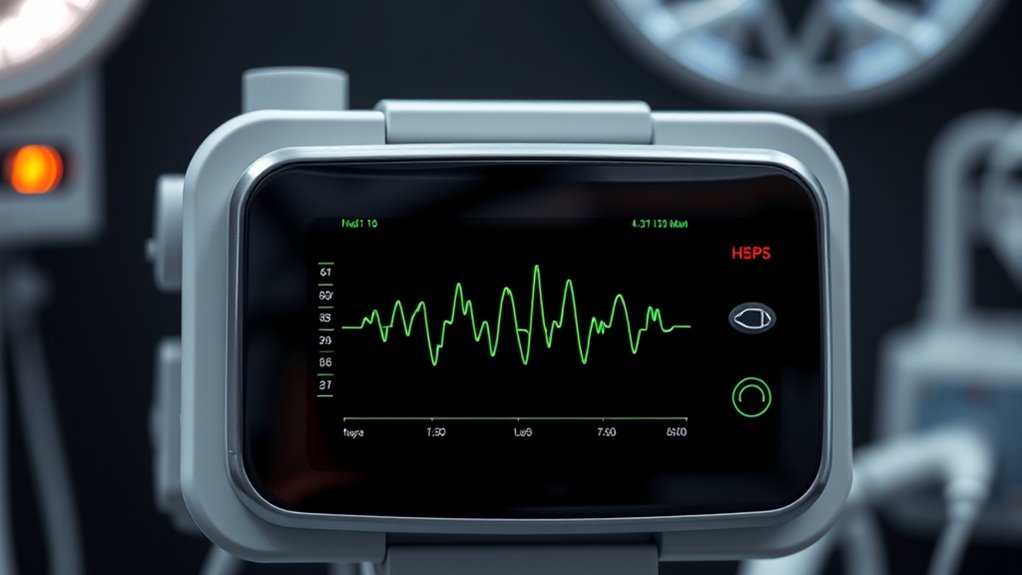

A heart monitor varies in appearance based on its type. Wearable monitors, like smartwatches and chest straps, are sleek and designed for comfort, while hospital-based monitors feature larger display screens and numerous connected wires. Implantable monitors are small devices placed under the skin, often resembling a grain of rice. Each type serves its purpose for tracking heart activity effectively. To learn more about their specific functions and benefits, keep exploring the different types of heart monitors.
Types of Heart Monitors
There are several types of heart monitors, each designed for specific monitoring needs. Understanding this types overview helps you make informed choices. First, there’s the electrocardiogram (ECG) monitor, which provides real-time data on heart activity. Then, you have Holter monitors, worn for 24-48 hours, capturing continuous heart rhythms. Event monitors are useful for recording sporadic symptoms over weeks. Additionally, implantable loop recorders offer long-term monitoring for patients with unexplained symptoms. When you look at monitor comparisons, consider factors like comfort, duration of use, and data accuracy. Each type serves a unique purpose, giving you the freedom to choose what aligns best with your health goals. Stay informed, so you can take control of your heart health effectively.
Wearable Heart Monitors
Wearable heart monitors come in various types, each designed to cater to specific health needs. These devices offer features like real-time tracking and data analysis, providing valuable insights into your heart health. Understanding their benefits can help you choose the right monitor for your lifestyle.
Types of Wearable Monitors
As technology advances, a variety of wearable heart monitors have emerged, each designed to cater to different health monitoring needs. These devices leverage smart technology for accurate health tracking, allowing you to effortlessly monitor your heart health on the go. Here are three common types:
- Smartwatches: These multifunctional devices not only track heart rate but also monitor activity levels and sleep patterns.
- Chest Straps: Often preferred by athletes, these provide precise heart rate data during intense workouts.
- Fitness Bands: Lightweight and easy to wear, these devices focus on heart rate monitoring along with daily activity tracking.
Choosing the right monitor depends on your lifestyle and specific health goals, ensuring you maintain control over your well-being.
Features and Benefits
When selecting a heart monitor, understanding the features and benefits can greatly enhance your experience and health management. Wearable heart monitor technology provides real-time tracking of your heart rate, offering insights into your cardiovascular performance. With accurate heart health statistics, you can identify irregularities early, empowering you to take proactive steps towards better health. Many devices also include activity tracking, sleep monitoring, and customizable alerts, allowing you to tailor your health journey according to your lifestyle. User-friendly interfaces and smartphone compatibility guarantee that you can access your data anytime, anywhere. By leveraging these features, you gain the freedom to make informed decisions about your heart health, ultimately leading to improved well-being and a more active life.
Hospital-Based Heart Monitors
Hospital-based heart monitors play an essential role in patient care, providing real-time data on heart activity for those in critical condition or recovering from surgery. These advanced pieces of hospital equipment are crucial for ensuring patient safety.
Key features include:
- Continuous Monitoring: Tracks heart rhythms and alerts staff to any abnormalities.
- Data Recording: Stores important information for analysis, aiding in decision-making.
- Remote Access: Allows healthcare providers to monitor patients from different locations, enhancing response times.
Implantable Heart Monitors
Implantable heart monitors, designed for long-term cardiac surveillance, offer significant advantages for patients with specific heart conditions. These implantable devices provide continuous monitoring, allowing you to track your cardiac health without frequent hospital visits. They’re particularly beneficial for those experiencing irregular heartbeats or unexplained symptoms. By gathering real-time data, these devices help your healthcare provider make informed decisions about your treatment. The small size and minimally invasive nature mean you won’t have to compromise your freedom or comfort. Plus, you can often go about your daily activities without interruption. With a focus on long-term monitoring, these devices empower you to take charge of your cardiac health and enhance your quality of life.
Features of Heart Monitors
Heart monitors come equipped with several key features that enhance their functionality and usability for patients. Understanding these aspects can empower you in managing your health effectively. Key features include:
Heart monitors offer essential features that boost usability and effectiveness, empowering you to take charge of your health.
- Real-time Monitoring: Continuous data collection allows for immediate feedback on your heart’s condition, essential for timely interventions.
- User-friendly Interface: A clear and intuitive monitor design guarantees that you can easily interpret readings without confusion.
- Data Storage and Analysis: Advanced device functionality permits the storage of historical data, enabling healthcare providers to track trends over time.
These features work together to provide a thorough tool for heart health management, guaranteeing you have the information needed for informed decisions about your well-being.
The Importance of Heart Monitoring
Monitoring your heart is crucial, especially when you consider that cardiovascular diseases remain a leading cause of mortality worldwide. By actively engaging in heart monitoring, you gain valuable insights into your heart health, allowing for early detection of potential issues. This proactive approach can empower you to make informed decisions about lifestyle changes or medical interventions, greatly enhancing your well-being.
The monitoring importance lies in its ability to track essential signs, identify irregularities, and assess the effectiveness of treatments. Whether you’re managing a chronic condition or simply prioritizing your health, consistent monitoring can help you stay ahead. Ultimately, understanding your heart’s behavior fosters a sense of freedom, enabling you to live life fully while safeguarding your heart health.
Frequently Asked Questions
How Do Heart Monitors Detect Irregular Heartbeats?
Heart monitors detect irregular heartbeats by analyzing electrical signals that control your heart rhythm. They track variations in these signals, identifying abnormalities and providing real-time data to help you understand your heart’s performance and health.
Can Heart Monitors Be Used for Fitness Tracking?
Absolutely, heart monitors can be great for fitness tracking! They offer fitness benefits like real-time heart rate data, but you should consider accuracy concerns—sometimes, they might not be as precise as you’d hope.
Are There Any Risks Associated With Wearing a Heart Monitor?
Yes, there are risks associated with wearing a heart monitor. While generally safe, you could experience skin irritation or allergic reactions. Potential complications may arise, so it’s essential to monitor your body’s response and consult a professional.
How Often Should Heart Monitors Be Calibrated?
You should calibrate heart monitors regularly, typically every six months, to guarantee they meet accuracy standards. This frequency helps maintain reliable data, allowing you the freedom to trust the monitor’s performance during your health monitoring.
What Is the Cost Range of Heart Monitors?
Heart monitors can cost anywhere from a few hundred to several thousand dollars, like a rollercoaster ride of expenses. Cost factors include technology and insurance coverage, which can greatly influence your out-of-pocket expenses.
