
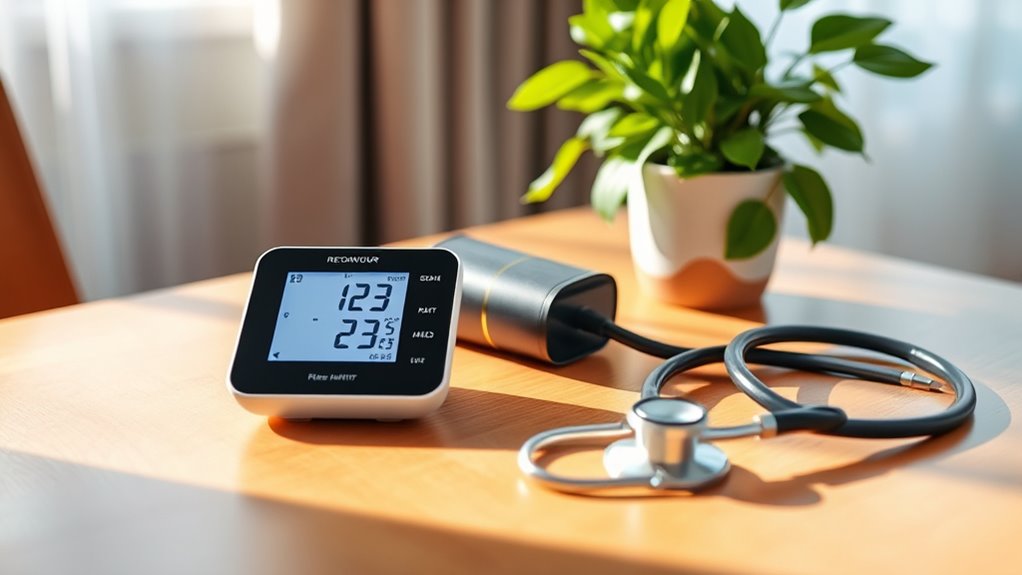

The best blood pressure monitor for you depends on your needs. Digital monitors are user-friendly and provide quick results, making them a popular choice. Brands like Omron and Withings stand out for their accuracy. If you’re on the go, wrist monitors offer portability. Consider features like cuff size, Bluetooth connectivity, and ease of use. Remember, accurate measurements rely on proper technique. Stick around to discover more tips and reviews for choosing the right monitor.
Understanding Blood Pressure Monitors
When you’re looking to manage your health, understanding blood pressure monitors is essential. There are several monitor types available, including manual, digital, and wrist models. Each type offers unique benefits, but it’s vital to choose one that meets your needs. Measurement accuracy is paramount; inaccurate readings can lead to mismanagement of your health. Digital monitors often provide quick results, while manual models can give you a more hands-on experience. It’s important to evaluate factors like cuff size and ease of use when selecting your monitor. Ultimately, finding the right blood pressure monitor empowers you to take control of your health effectively, giving you the freedom to monitor your progress and make informed decisions about your well-being.
Key Features to Consider
Choosing the right blood pressure monitor involves considering several key features that can enhance your monitoring experience. First, think about digital connectivity; models that sync with your smartphone or health apps can help you track your readings over time, making it easier to share data with your healthcare provider. Next, pay attention to the user interface. A clear, intuitive display can make it simple to read your results and navigate settings. Look for features like voice assistance or large buttons if you prefer a more user-friendly experience. Additionally, consider the monitor’s size and portability if you plan to use it on the go. By weighing these features, you can find a blood pressure monitor that fits your lifestyle.
Top Blood Pressure Monitors Reviewed
As you explore the best blood pressure monitors on the market, it’s essential to evaluate models that combine accuracy, ease of use, and advanced features. Among the top choices, digital monitors stand out for their precision and user-friendly interfaces. Brands like Omron and Withings offer reliable options that provide clear readings and store your measurements for easy tracking. If you prefer something more portable, wrist monitors are a great alternative; they’re compact and easy to use on the go. Look for models with adjustable cuffs and Bluetooth connectivity for added convenience. Ultimately, the best blood pressure monitor fits your lifestyle, ensuring you can monitor your health effortlessly and with confidence.
Pros and Cons of Each Monitor
While each blood pressure monitor has its unique features, weighing the pros and cons is essential for making an informed choice. Here’s a quick look at what you can expect from different types:
| Monitor Type | Pros | Cons |
|---|---|---|
| Digital Monitors | Easy to read, automatic calibration | May require battery replacements |
| Manual Monitors | Accurate when used correctly | Requires more skill to operate |
| Wrist Monitors | Portable and compact | Less accurate than arm monitors |
| Arm Monitors | Usually more accurate | Bulkier and less portable |
Understanding these pros and cons helps you choose the right monitor that suits your lifestyle and needs, ensuring you get the most accurate readings possible.
How to Choose the Right Monitor for You
How do you find the right blood pressure monitor that fits your needs? Choosing between digital monitors and manual monitors can be intimidating, but a few key factors can help you decide:
- Accuracy: Look for monitors with validated accuracy ratings.
- Ease of Use: Digital monitors are user-friendly, while manual monitors may require some practice.
- Portability: Consider if you need a monitor that’s easy to carry, especially for travel.
- Features: Some digital monitors offer advanced features like Bluetooth connectivity or memory storage.
- Budget: Determine how much you’re willing to spend, as prices can vary greatly.
Tips for Accurate Blood Pressure Measurement
To guarantee accurate blood pressure measurements, it’s essential to follow some important guidelines. First, make sure you’re in a relaxed state—sit quietly for a few minutes before taking your reading. Proper positioning is critical; keep your arm at heart level, and your feet flat on the ground. Avoid crossing your legs, as this can impact results. Also, be certain to use a properly calibrated monitor; check the manufacturer’s instructions to maintain accuracy. If you’ve had coffee or smoked recently, wait at least 30 minutes before measuring. Finally, take multiple readings at different times for a more reliable average. By following these steps, you can achieve the most accurate blood pressure readings possible.
Frequently Asked Questions
Can I Use a Blood Pressure Monitor on My Wrist?
Yes, you can use wrist monitors, but be aware of accuracy concerns. They may not be as reliable as arm monitors, especially if your wrist isn’t positioned correctly. Always follow the manufacturer’s instructions for best results.
How Often Should I Calibrate My Blood Pressure Monitor?
You should calibrate your blood pressure monitor every six months to guarantee accuracy. Regular calibration frequency helps maintain reliable readings, giving you peace of mind about your health management and empowering you to monitor effectively.
Are There Any Specific Brands to Avoid?
You should definitely avoid those unreliable models that leave you guessing your health! Check brand reviews thoroughly; some brands can be downright notorious for inaccuracies. Your well-being deserves the best, not a gamble!
Can I Use a Blood Pressure Monitor Without a Prescription?
Yes, you can use a blood pressure monitor for home use without a prescription. These devices are great for health tracking, allowing you to monitor your blood pressure conveniently and manage your health independently.
What Is the Lifespan of a Typical Blood Pressure Monitor?
A typical blood pressure monitor lasts about 5 to 10 years, depending on monitor longevity and device maintenance. Regularly checking for accuracy and keeping it clean can help extend its useful life considerably.
