
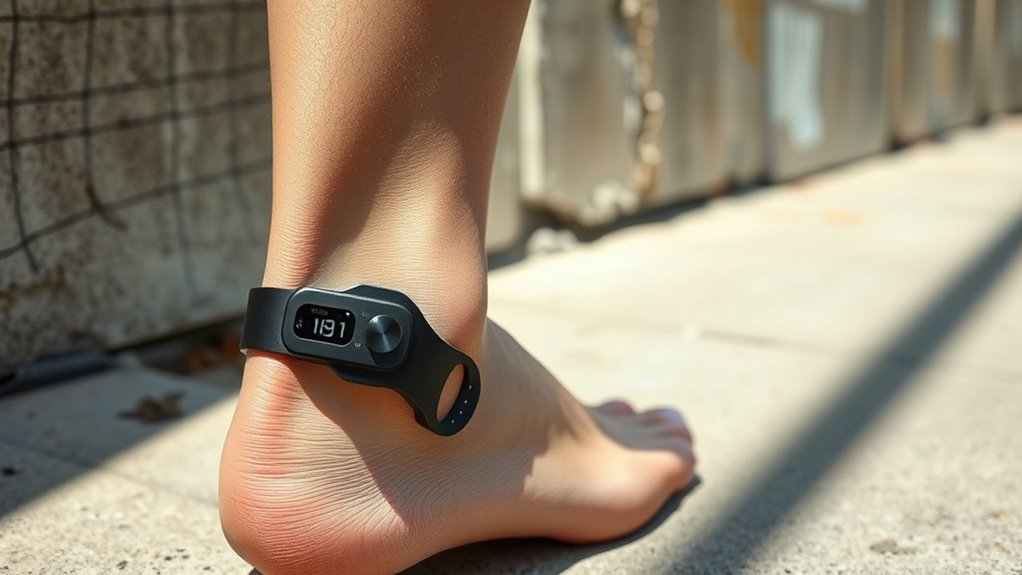

Ankle monitors work by using GPS and RF technology to track your location in real-time. They guarantee compliance with court-ordered conditions like curfews while allowing you some personal freedom. The device continuously collects movement data, triggering alerts if you violate predefined boundaries. This technology serves to enhance public safety but also raises concerns about privacy and individual autonomy. If you explore further, you’ll uncover more about their impact on rehabilitation and future advancements.
What Are Ankle Monitors?
Ankle monitors, often referred to as electronic monitoring devices, serve as an essential tool in the criminal justice system. These devices utilize advanced monitoring systems to track an individual’s location, ensuring compliance with court-imposed conditions. You might be surprised to learn that they provide an alternative to incarceration, allowing individuals to maintain a semblance of freedom while under electronic supervision. The technology embedded in these monitors includes GPS tracking, which relays real-time data to law enforcement agencies. This data can help verify that you adhere to designated boundaries, such as curfews or restricted areas. However, the use of ankle monitors raises important questions about privacy, autonomy, and the balance between societal safety and individual freedoms, making them a complex component of modern justice.
Types of Ankle Monitors
There are several types of ankle monitors, each designed to meet specific monitoring needs and requirements. The most common types include GPS monitors, which track location in real-time, and RF (radio frequency) monitors, which create a perimeter around a certain area. GPS monitors are effective for broader tracking, especially for those under house arrest or on parole. On the other hand, RF monitors are typically used for confined areas, like homes or treatment centers. Additionally, some devices incorporate alcohol detection functionality, monitoring sobriety alongside location. Each type has its unique uses, depending on the level of supervision required and the individual’s circumstances. Understanding these differences can help clarify their effectiveness in promoting compliance and accountability.
How Ankle Monitors Track Movement
Ankle monitors utilize GPS tracking technology to pinpoint a wearer’s location with high accuracy. This capability is often enhanced by geofencing, which allows for the establishment of designated areas that trigger alerts if the wearer crosses boundaries. Additionally, real-time monitoring systems provide immediate updates, ensuring that movements are consistently tracked and recorded.
GPS Tracking Technology
GPS tracking technology forms the backbone of how monitoring devices keep tabs on an individual’s movements. These ankle monitors utilize satellites to determine your precise location, offering geolocation accuracy that can pinpoint your whereabouts within a few meters. This level of precision is essential, as it enhances tracking reliability, ensuring that any movement outside designated parameters can be detected almost instantly. The technology works by collecting data at regular intervals, sending it to a monitoring center that analyzes the information. If you venture outside predefined boundaries, alerts can be triggered, highlighting any deviations from your assigned restrictions. Ultimately, this technology balances the need for monitoring with the desire for personal freedom, providing a structured approach to oversight.
Geofencing Capabilities
While many might view ankle monitors simply as tools for tracking, their geofencing capabilities play an essential role in how they enforce movement restrictions. Geofencing creates virtual boundaries, allowing the monitor to track your movements with high location accuracy. When you enter or exit designated zones, the system generates geofencing alerts, notifying authorities of any violations. This feature guarantees that you remain within approved areas, enhancing compliance and accountability.
| Geofence Zone | Action Taken | Alert Type |
|---|---|---|
| Home | Allowed | None |
| Restricted | Violation Detected | Immediate Alert |
| Safe Zone | Allowed | None |
These capabilities reflect a balance between monitoring and the pursuit of personal freedom, underscoring the importance of clear boundaries.
Real-Time Monitoring Systems
As you move within the designated geofenced areas, the real-time monitoring systems employed by ankle monitors continuously track your location, providing authorities with up-to-the-minute updates on your whereabouts. These systems are essential for maintaining compliance while still allowing a degree of freedom.
Key features include:
- Real-time alerts: Notifications are sent immediately if you breach predetermined boundaries.
- Location updates: Your position is constantly monitored, ensuring accurate records for law enforcement.
- Data integration: Information from the ankle monitor can be synchronized with other systems for thorough oversight.
This technology not only helps to prevent violations but also supports your ability to navigate life outside of incarceration, emphasizing a balance between monitoring and personal autonomy.
The Technology Behind Ankle Monitors
Ankle monitors primarily utilize GPS technology to track an individual’s location in real-time, ensuring accurate monitoring of compliance with restrictions. These devices also employ various communication protocols to transmit data back to monitoring agencies, allowing for immediate alerts if conditions are breached. Understanding these technical components is essential for grasping how effectively ankle monitors serve their purpose.
GPS Tracking Mechanism
GPS tracking technology is central to the functionality of ankle monitors, providing real-time location data that helps authorities monitor offenders. The effectiveness of this technology hinges on several key factors:
- GPS accuracy: High precision in determining location guarantees that movements are tracked accurately.
- Tracking reliability: Continuous signal monitoring helps maintain consistent updates, even in challenging environments.
- User compliance: The effectiveness of the system relies on the wearer’s adherence to the specified boundaries.
These elements combine to create a robust monitoring system that balances the need for public safety with the individual’s desire for freedom. Understanding the GPS mechanism is vital, as it directly impacts both the efficacy of monitoring and the person’s experience with the device.
Communication Protocols Used
The effectiveness of ankle monitors doesn’t solely depend on GPS technology; the communication protocols they utilize play a significant role in ensuring accurate and timely data transmission. These protocols determine how data is sent from the monitor to monitoring agencies. Commonly used protocols include cellular, radio frequency, and Wi-Fi, each with distinct advantages and limitations.
| Protocol Type | Key Features |
|---|---|
| Cellular | Wide coverage, real-time updates |
| Radio Frequency | Lower power, shorter range |
| Wi-Fi | High data rates, location-based |
| Bluetooth | Short-range, energy-efficient |
Understanding these communication protocols helps you grasp how ankle monitors maintain connectivity and provide reliable information, which is essential for monitoring compliance and ensuring personal freedom.
How Ankle Monitors Ensure Compliance
While many individuals may view ankle monitors as a mere tracking device, they play an essential role in guaranteeing compliance with legal restrictions. These devices utilize various compliance methods to monitor behavior and maintain accountability. Their effectiveness hinges on several critical components:
Ankle monitors are vital for enforcing legal compliance, utilizing real-time tracking and immediate alerts to ensure accountability.
- Real-time location tracking: This feature guarantees you remain within designated boundaries.
- Immediate alerts: Notifications are sent to authorities if you violate set conditions, enhancing monitoring effectiveness.
- Data collection: Historical data helps assess compliance over time, providing insights into patterns of behavior.
Limitations and Challenges of Ankle Monitoring
Although ankle monitors serve as a useful tool for supervision, they come with several limitations and challenges that can impact their effectiveness. One major concern is technological reliability; devices can malfunction or lose signal, leading to false alarms or missed violations. This unpredictability can escalate anxiety management issues for those monitored, as individuals may fear unintended consequences from equipment failures. Additionally, some users find the physical presence of the monitor restrictive, limiting their daily activities and personal freedoms. These factors can hinder rehabilitation efforts, as they may create stress rather than support a smoother reintegration into society. Understanding these limitations is essential for both users and policymakers aiming for a balanced approach to using ankle monitoring as a corrective measure.
Privacy Concerns and Ethical Considerations
As individuals are monitored through ankle devices, significant privacy concerns and ethical considerations arise that merit careful examination. You may wonder how your data is being used and who has access to it, raising questions about data privacy and the ethical implications of surveillance.
Consider these critical points:
Consider the critical points of consent, data security, and social stigma when evaluating the ethics of ankle monitoring technology.
- Consent: Are individuals fully informed about the extent of monitoring and its consequences?
- Data Security: How secure is the data collected, and what measures are in place to protect it from breaches?
- Social Stigma: Does being monitored create societal judgments that affect personal freedom and rehabilitation?
These factors highlight the delicate balance between public safety and individual rights, necessitating a thoughtful dialogue on the ethical frameworks surrounding ankle monitoring technology.
The Role of Ankle Monitors in Rehabilitation
The concerns surrounding privacy and ethical implications of ankle monitoring devices often overshadow their potential role in rehabilitation. However, these devices can provide significant rehabilitation benefits by facilitating behavioral monitoring. By tracking movements and compliance with treatment plans, ankle monitors can help individuals stay accountable to their rehabilitation goals. This technology not only guarantees that you adhere to court-mandated programs but also encourages healthier lifestyle choices. The real-time data generated can prompt timely interventions, allowing for adjustments in rehabilitation strategies. Furthermore, with consistent monitoring, you may experience a smoother shift back into society, fostering a sense of responsibility and encouraging positive behavioral changes. Ultimately, when used appropriately, ankle monitors can be a valuable tool in your rehabilitation journey.
Future Developments in Ankle Monitoring Technology
While advancements in technology continue to reshape various fields, ankle monitoring systems are poised for significant innovations that could enhance their effectiveness and reliability. Future developments in this area might include:
- Advancements in accuracy: Improved sensors could provide more precise location tracking, reducing false positives and negatives.
- Predictive analytics: Integrating AI algorithms could allow for real-time insights, predicting behavioral patterns and potential violations before they occur.
- User-friendly interfaces: Enhanced mobile applications may offer users greater autonomy, enabling them to monitor their compliance without intrusive oversight.
These innovations could lead to more effective monitoring solutions that protect public safety while respecting individual freedom, striking a balance between accountability and personal autonomy in the justice system.
Frequently Asked Questions
Can Ankle Monitors Be Removed or Tampered With?
Yes, ankle monitors can be tampered with or removed, but such actions carry serious consequences, including legal penalties. Attempting removal methods jeopardizes your freedom and can lead to immediate incarceration or extended monitoring periods.
How Long Do Individuals Typically Wear Ankle Monitors?
Typically, individuals wear ankle monitors for several weeks to months, depending on monitoring conditions set by the court. Monitor duration can vary markedly, reflecting the nature of the offense and compliance with legal requirements.
What Happens if an Ankle Monitor Malfunctions?
If an ankle monitor malfunctions, it could lead to monitor failures, potentially resulting in legal implications. You might face additional penalties or restrictions, impacting your freedom and complicating your situation with the authorities.
Do Ankle Monitors Notify Law Enforcement Immediately?
“Freedom isn’t free,” and ankle monitors can trigger immediate monitor notifications to law enforcement if tampered with or removed. This swift law enforcement response aims to guarantee compliance, greatly impacting your sense of autonomy and choice.
Are There Any Age Restrictions for Wearing Ankle Monitors?
Yes, there are age limitations for wearing ankle monitors. Typically, juvenile offenders can be monitored using these devices, but regulations vary by jurisdiction, reflecting a balance between rehabilitation and public safety considerations for minors.
