
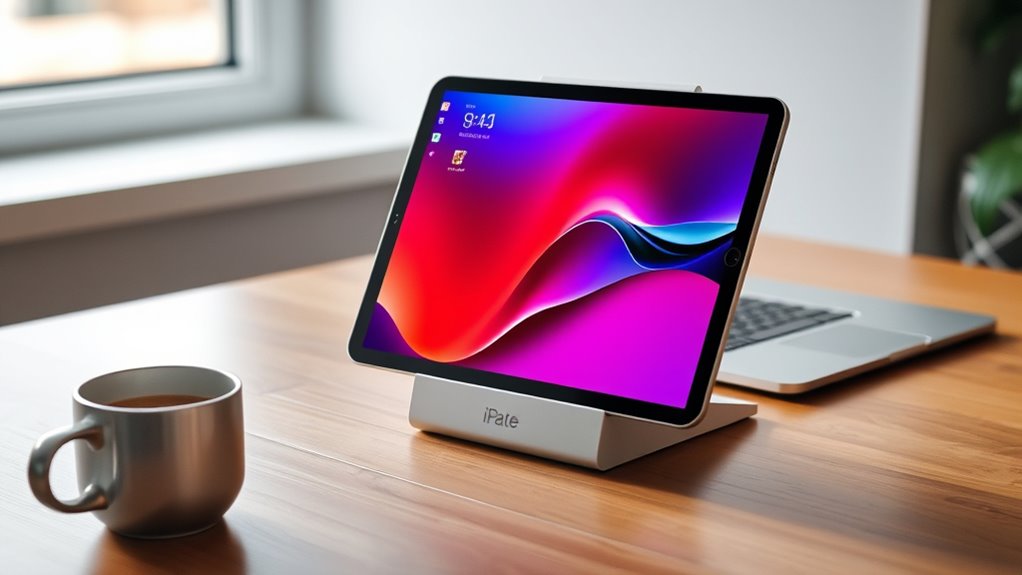

To use your iPad as a second monitor, make sure your Mac runs MacOS Catalina or later, and your iPad is on iOS 13 or later. You can connect via Wi-Fi or USB-C, using Apple’s Sidecar or a third-party app like Duet Display. Once connected, you can extend or mirror your display, enhancing productivity by viewing multiple applications at once. For tips on optimizing your dual-screen setup, continue exploring the setup options available.
Understanding the Benefits of Using an Ipad as a Second Monitor
When you consider the flexibility and portability of an iPad, using it as a second monitor can greatly enhance your productivity. This setup offers a significant productivity boost, allowing you to streamline your workflow. You can easily display your emails, documents, or research on your iPad while keeping your main screen focused on critical tasks.
With the multitasking advantages of an iPad, you can effortlessly switch between applications, making it easier to collaborate or complete projects efficiently. Imagine having your video calls on one screen and your notes on another—this setup frees you from the clutter of constant tab switching. Embracing your iPad as a second display empowers you to work smarter, not harder, ultimately elevating your overall efficiency.
Requirements for Setting up Your Ipad as a Second Display
To set up your iPad as a second display, you’ll need a few essential components. First, verify your primary device meets the hardware compatibility requirements. This typically means having a Mac or PC that supports display extensions. Next, check the software requirements; you’ll want the latest version of the operating system for both devices.
Here’s a quick reference table:
| Component | Requirement |
|---|---|
| Primary Device | MacOS Catalina or later |
| iPad | iOS 13 or later |
| Connection Method | Wi-Fi or USB-C |
| App Needed | Third-party app or Sidecar |
With these in place, you’re ready to enhance your workspace and enjoy the freedom of dual displays!
Using Sidecar: Apple’s Native Solution
If you want a seamless experience using your iPad as a second monitor, Sidecar is Apple’s built-in solution that makes it easy. This feature allows you to extend or mirror your Mac’s display wirelessly or via USB-C, giving you the flexibility to work from anywhere. Sidecar features include Apple Pencil support, letting you draw or annotate directly on your iPad, enhancing your creative workflow. For compatibility options, both your Mac and iPad need to be running compatible operating systems—macOS Catalina or later and iPadOS 13 or later. With Sidecar, you can enjoy a smooth, intuitive setup that integrates perfectly into your Apple ecosystem, offering you the freedom to multitask and boost productivity effortlessly.
Third-Party Apps for Enhanced Functionality
While Sidecar offers a great native solution, third-party apps can provide additional features that enhance your experience using an iPad as a second monitor. These third-party applications often come packed with unique functionalities that can boost your workflow. For instance, apps like Duet Display and iDisplay allow for customizable settings and improved resolution options, giving you more control over your display. You can also find tools that enable touch gestures or stylus support, making your iPad a more versatile companion for creative tasks. By integrating these apps, you can achieve enhanced productivity, transforming your iPad into a powerful extension of your workspace. Explore different options to find the perfect fit for your needs and elevate your multitasking abilities.
Setting Up a Wired Connection
Setting up a wired connection between your iPad and Mac can considerably enhance display performance and reduce lag. To guarantee ideal connection stability, it’s important to choose the right cable. Here’s a quick reference table to help you with cable selection:
| Cable Type | Recommended Use |
|---|---|
| Lightning to USB | iPad to Mac direct |
| USB-C to USB-C | iPad Pro to Mac direct |
| USB to HDMI | For extended displays |
| Adapter Cables | When ports don’t match |
Once you’ve selected the appropriate cable, connect your devices. This wired setup allows for a smooth, responsive experience, making multitasking easier and freeing you from the limitations of wireless connections. Enjoy your expanded workspace!
Setting Up a Wireless Connection
How can you easily set up a wireless connection between your iPad and Mac? Start by ensuring both devices are connected to the same wireless network. This is essential for seamless communication. Next, on your Mac, navigate to the display settings and select “AirPlay Display.” Choose your iPad from the list. You’ll see a prompt on your iPad to establish the connection. Accept it, and you’re all set! For ideal connection stability, keep your iPad close to your router, minimizing any potential interference. If you experience lag, consider adjusting the distance or ensuring fewer devices are using the network. With these steps, you can enjoy the freedom of a second monitor without the hassle of wires!
Tips for Optimizing Your Dual-Screen Experience
To make the most of your dual-screen setup, you’ll want to adjust the screen resolution settings for ideal clarity. Additionally, organizing your apps strategically can enhance your workflow and make multitasking easier. By fine-tuning these elements, you’ll create a more efficient and enjoyable working environment.
Screen Resolution Settings
While adjusting screen resolution settings might seem like a minor detail, it can greatly enhance your dual-screen experience when using your iPad as a second monitor. Start by ensuring your iPad’s screen resolution matches your primary display for a seamless workflow. You might need to tweak the display scaling options, especially if you’re using apps that require specific resolutions. This helps prevent any blurriness or distortion, giving you a clearer picture. Additionally, consider experimenting with different resolutions to find what feels most comfortable for your eyes and tasks. A properly set screen resolution allows you to maximize productivity and enjoy a more fluid user experience, making your dual-screen setup much more enjoyable. Embrace the freedom of customization!
App Arrangement Strategies
When you’re using your iPad as a second monitor, effective app arrangement can greatly boost your productivity. Start by prioritizing app organization; place your most-used applications on the iPad for quick access. Consider aligning your screens strategically—keep your primary tasks on your main monitor, while using the iPad for secondary functions like chat or reference materials. This way, you minimize distractions and maintain focus. Utilize split-screen features where possible, allowing you to view multiple apps simultaneously without clutter. Remember to adjust your iPad’s position for ideal screen alignment, ensuring everything’s within your line of sight. By refining your app arrangement, you’ll create a seamless workflow that enhances your dual-screen experience and gives you the freedom to work efficiently.
Troubleshooting Common Issues
Sometimes, using your iPad as a second monitor can lead to unexpected issues. If you’re experiencing connection issues, first verify both devices are on the same Wi-Fi network. Restarting both your iPad and computer can often resolve temporary glitches.
If you notice display lag, check your network speed; a slow connection will affect performance. Closing unnecessary apps on both devices can also help free up resources.
For persistent problems, consider adjusting the display settings in your mirroring app. Lowering the resolution may improve responsiveness.
Lastly, keep your software updated on both the iPad and your computer to verify compatibility. By following these steps, you can enhance your experience and enjoy the freedom of dual displays seamlessly.
Frequently Asked Questions
Can I Use My Ipad With a Non-Apple Computer?
Yes, you can use your iPad with a non-Apple computer. Just guarantee the iPad compatibility with non-Apple software, and consider using third-party apps that facilitate connections between your devices for a seamless experience.
Is There a Latency When Using the Ipad as a Second Monitor?
When you’re using your iPad as a second monitor, latency concerns can arise. Performance factors like connection type and distance matter. Just remember, “a stitch in time saves nine” – optimize settings for smoother performance.
Will Using the Ipad Drain Its Battery Quickly?
Yes, using your iPad as a second monitor can drain its battery quickly due to increased energy consumption. However, with proper battery management techniques, you can optimize usage and extend its life while multitasking.
Can I Customize the Display Settings on My Ipad?
Yes, you can customize your iPad’s display settings. Adjust the display resolution for clarity and change the screen orientation for comfort. This flexibility lets you tailor your experience, balancing productivity with personal preference effortlessly.
Does Using My Ipad as a Monitor Void Its Warranty?
Using your iPad as a monitor doesn’t void its warranty, as long as you’re using compatible software and accessories. Just guarantee that any modifications stay within warranty coverage guidelines to avoid issues later on.
