
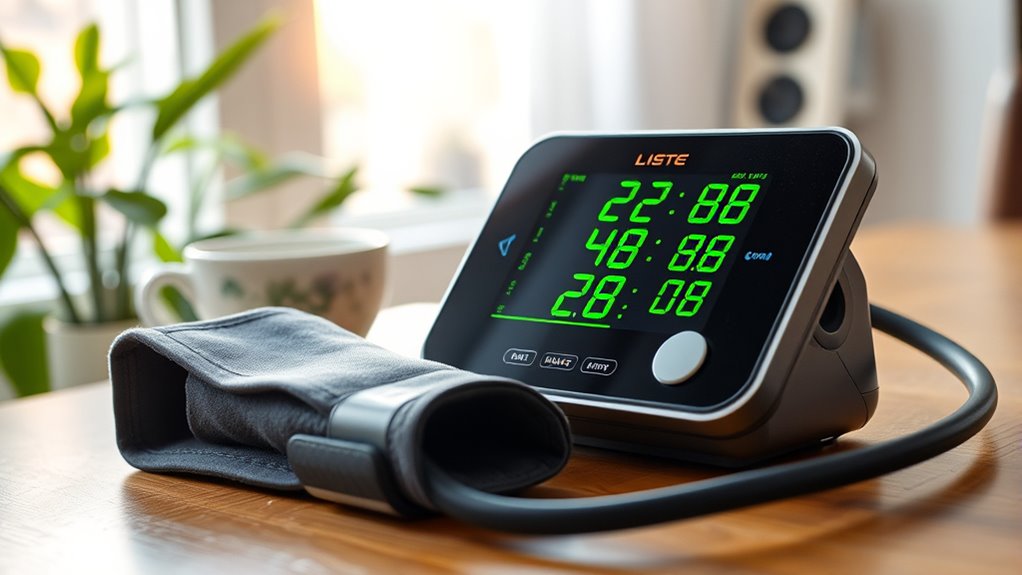

To use a blood pressure monitor, find a quiet space and sit comfortably with your back supported and feet flat. Wrap the cuff around your upper arm, making certain it’s above the elbow. Press the button if it’s automatic, or inflate the cuff manually if it’s manual. Stay still and quiet during the measurement. Record the systolic and diastolic values along with the time and your emotional state. There’s more you can learn to guarantee accurate results.
Understanding Blood Pressure Readings
Understanding blood pressure readings is essential for monitoring your cardiovascular health. Blood pressure is measured in millimeters of mercury (mmHg) and consists of two numbers: systolic and diastolic. Systolic pressure, the top number, indicates the pressure in your arteries when your heart beats. Diastolic pressure, the bottom number, reflects the pressure when your heart rests between beats. Blood pressure categories classify these readings into normal, elevated, and various stages of hypertension. For effective hypertension management, knowing these categories helps you take necessary actions, like lifestyle changes or medication. Regularly monitoring your blood pressure empowers you to make informed decisions, ultimately supporting your freedom to live a healthier life. Prioritizing this knowledge is vital for your overall well-being.
Choosing the Right Blood Pressure Monitor
When choosing a blood pressure monitor, you’ll need to take into account whether you prefer a manual or automatic option. It’s also essential to guarantee the cuff size fits your arm properly for accurate readings. Selecting the right features will help you effectively monitor your blood pressure at home.
Manual vs. Automatic Options
Choosing the right blood pressure monitor often comes down to the decision between manual and automatic options. Manual monitors require you to inflate the cuff yourself and listen for heartbeats through a stethoscope, offering a more hands-on approach. This can give you a sense of control and accuracy, but it might take practice to master. On the other hand, automatic monitors inflate the cuff and display your readings with the push of a button, making them user-friendly and convenient. If you prefer simplicity and quick results, an automatic monitor may suit you better. Ultimately, consider your comfort level and how much involvement you want in the measurement process when deciding between manual and automatic monitors.
Size and Cuff Fit
Getting the right size and fit for your blood pressure monitor cuff is crucial for accurate readings. An improperly sized cuff can lead to misleading results, so consider these key points:
- Measure Your Arm Circumference: Use a measuring tape to determine the widest part of your upper arm.
- Choose the Correct Cuff Size: Most monitors come with small, medium, and large cuffs. Verify you pick one that matches your measurement.
- Check the Manufacturer’s Guidelines: Each monitor has specific cuff size recommendations based on arm circumference.
- Test the Fit: The cuff should fit snugly but not too tight; you should be able to slip one finger underneath it comfortably.
Preparing for Measurement
Before taking your blood pressure, it’s important to choose a quiet space to minimize distractions. Gather all necessary equipment, including the monitor and any required accessories. Finally, take a moment to relax to guarantee an accurate reading.
Choose a Quiet Space
To guarantee accurate blood pressure readings, it’s vital to select a quiet space where you can relax and focus. Ambient noise can interfere with your measurement accuracy, so finding the right environment is important. Here are four tips to help you choose the perfect spot:
- Limit Distractions: Avoid busy areas or places with loud appliances.
- Comfortable Seating: Make sure you have a comfortable chair to sit in during the measurement.
- Consistent Temperature: Choose a space with a stable temperature to prevent discomfort.
- Minimize Interruptions: Inform others around you that you need some quiet time for accurate results.
Gather Necessary Equipment
Once you’ve found a quiet space to take your blood pressure reading, the next step is gathering the necessary equipment. You’ll need a blood pressure cuff, which can be either manual or automatic, depending on your preference. If you opt for a digital monitor, make certain it’s calibrated and functioning properly. Check that the cuff size is appropriate for your arm, as a proper fit is vital for an accurate reading. Also, have a notepad handy to record your measurements. If you’re using a manual cuff, keep a stethoscope nearby to listen for heartbeats. Having all this equipment ready will help streamline the process and guarantee you get accurate blood pressure readings.
Relax Before Measurement
It’s essential to relax for a few minutes before taking your blood pressure measurement, as stress and anxiety can greatly affect your readings. Here are some effective ways to calm your mind and body:
- Practice Breathing Exercises: Take deep, slow breaths to lower your heart rate.
- Listen to Calming Music: Soft melodies can help create a peaceful environment.
- Sit in a Comfortable Position: Find a quiet space and sit with your back supported.
- Clear Your Mind: Focus on positive thoughts or visualize a serene scene.
Proper Technique for Taking a Reading
Achieving an accurate blood pressure reading requires careful attention to technique. Start by sitting comfortably with your back supported and feet flat on the ground. Your arm should be at heart level, resting on a table. Wrap the cuff snugly around your upper arm, ensuring it’s placed about an inch above your elbow. When you begin the measurement, avoid talking or moving—this helps maintain measurement accuracy. It’s best to take two or three readings, waiting about one minute between each to allow your blood flow to stabilize. Using consistent reading techniques each time, like the same arm and position, will enhance the reliability of your results. Remember, proper technique is essential for understanding your blood pressure effectively.
Recording and Interpreting Your Results
Recording your blood pressure results is an essential step in monitoring your health. To effectively track your measurements, consider these recording techniques:
- Date and Time: Always note when you took the reading.
- Systolic and Diastolic Values: Record both numbers clearly.
- Position: Indicate whether you were sitting, standing, or lying down.
- Emotional State: Mention if you felt stressed or relaxed during the reading.
Once you’ve recorded the results, interpreting them is significant. Compare your numbers against standard guidelines to understand where you stand. If your readings consistently fall outside the normal range, it might be time to consult a healthcare professional. Keeping accurate records empowers you to take control of your health and make informed decisions.
Tips for Accurate Measurements
To guarantee accurate blood pressure measurements, follow a few key practices that can greatly influence your results. First, choose consistent measurement timing; ideally, take your readings at the same time each day. Avoid measuring immediately after physical activity or meals, as these can skew results. Second, consider hydration effects; dehydration can lead to artificially high readings, while overhydration may lower them. Make sure you’re adequately hydrated before taking a measurement. Additionally, sit quietly for at least five minutes prior to your reading, and keep your arm supported at heart level. Finally, use the same arm for each measurement to maintain consistency. By adhering to these guidelines, you’ll markedly enhance the accuracy of your blood pressure readings.
Frequently Asked Questions
How Often Should I Check My Blood Pressure?
You should check your blood pressure regularly, ideally daily, to guarantee measurement accuracy. Incorporating it into your daily routine helps you monitor fluctuations, allowing for better management of your health and more informed lifestyle choices.
Can I Use a Blood Pressure Monitor on My Wrist?
Yes, you can use a wrist monitor, but be aware of accuracy concerns. They’re convenient and portable, yet they may not provide readings as reliable as arm monitors. Positioning and technique are essential for accuracy.
What Should I Avoid Before Taking a Measurement?
Before measuring, avoid caffeine intake and intense physical activity. Like a serene lake reflecting the sky, your blood pressure readings need calmness. Take a moment to breathe and relax for accurate results.
How Do I Maintain My Blood Pressure Monitor?
To maintain your blood pressure monitor, regularly check the battery and replace it as needed. Follow the calibration schedule recommended by the manufacturer to guarantee accurate readings and keep your device in peak condition.
Is It Safe to Use a Blood Pressure Monitor During Pregnancy?
It’s generally safe to use a blood pressure monitor during pregnancy, as long as you follow your healthcare provider’s guidelines. Monitoring helps guarantee both your and your baby’s health, contributing to overall pregnancy safety.
