
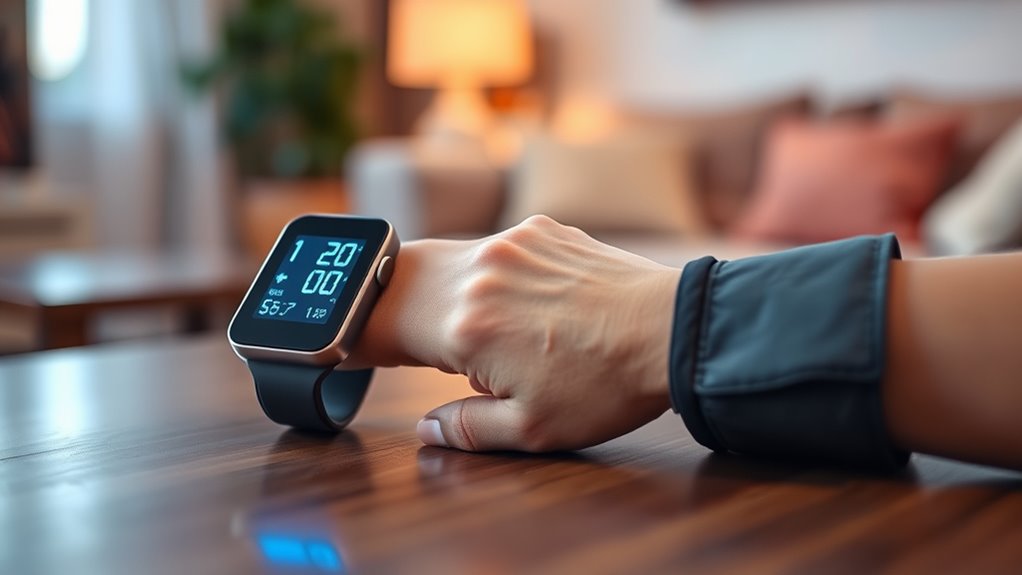

To use a wrist blood pressure monitor, first guarantee it’s clean and properly calibrated. Position it about an inch above your wrist bone, with the display facing you. Keep your arm relaxed at heart level, palm up, and avoid muscle tension. Sit quietly for five minutes before taking a measurement, and record the systolic and diastolic numbers once displayed. Consistent monitoring is key to managing your health, so keep exploring for more tips on effective usage!
Understanding Your Wrist Blood Pressure Monitor
When you’re using a wrist blood pressure monitor, it’s essential to understand how it works to get accurate readings. The device relies on your wrist anatomy, specifically the radial artery, to measure blood pressure. Proper positioning is imperative; the monitor needs to be aligned with your heart for accurate results. Device calibration is also critical; confirm your monitor is calibrated correctly according to the manufacturer’s instructions. This guarantees that your readings reflect your true blood pressure. Before each use, double-check the settings and make certain the monitor is clean and functioning well. By grasping these fundamentals, you’ll empower yourself to take control of your health and make informed decisions regarding your blood pressure management.
Preparing for Measurement
Before you take a measurement, it’s essential to prepare adequately to guarantee accuracy. Here are some key steps you should follow to ascertain reliable results:
Preparing correctly before taking a measurement is crucial for ensuring accurate results. Follow these essential steps for reliability.
- Choose the right time: Measure at the same time each day for consistency.
- Relax before measuring: Sit quietly for about five minutes to lower your heart rate.
- Avoid caffeine and nicotine: Steer clear of these stimulants for at least 30 minutes before your measurement.
- Check your wrist positioning: Make sure your wrist is at heart level for maximum accuracy.
- Wear loose clothing: Confirm nothing constricts your wrist or arm during the measurement.
Positioning Your Wrist
Getting the wrist positioning right is essential for an accurate blood pressure reading. First, verify your wrist is at heart level; this helps maintain proper blood flow and guarantees reliable results. To achieve correct wrist alignment, straighten your arm and keep your wrist relaxed. Your palm should face up, with your hand position slightly elevated, ideally resting on a flat surface. Avoid clenching your fist or tensing your muscles, as this can interfere with the measurement. It’s also important to stay still during the reading; any movement can lead to inaccuracies. By taking a moment to adjust your wrist properly, you’ll set yourself up for a successful and precise blood pressure reading.
Using the Monitor Correctly
To get accurate readings from your wrist blood pressure monitor, it’s essential to place the device correctly on your wrist. Make sure the monitor is aligned with your heart for the best results. Once you’ve taken a reading, understanding the results can help you track your blood pressure effectively.
Proper Placement of Monitor
Proper placement of your wrist blood pressure monitor is essential for obtaining accurate readings. To guarantee proper wrist alignment and accurate device calibration, follow these guidelines:
- Position the monitor about one inch above your wrist bone.
- Keep your wrist straight and relaxed during the measurement.
- Make sure the monitor’s display is facing you.
- Support your arm on a flat surface, like a table, at heart level.
- Stay still and quiet while the device takes your reading.
Reading the Results
Once the monitor has finished taking your reading, you’ll need to interpret the results to understand your blood pressure levels. Typically, blood pressure is displayed as two numbers: systolic over diastolic. Normal ranges are generally considered to be below 120/80 mmHg. If your reading falls within this range, you’re in good shape. However, if you see high readings—like 130/80 mmHg or above—it’s important to take note. Consistently high readings may indicate hypertension, and you should consult a healthcare professional. Remember to take multiple readings at different times for accuracy, and always keep track of your results. This way, you can stay informed and take proactive steps toward maintaining your health and freedom.
Interpreting Your Readings
Understanding how to interpret your wrist blood pressure monitor readings is essential, especially since these numbers can provide valuable insights into your cardiovascular health. Pay attention to the reading ranges you get, as they can indicate different health implications. Here’s what to keep in mind:
- Normal: 120/80 mmHg or lower
- Elevated: 120-129/<80 mmHg
- High Blood Pressure Stage 1: 130-139/80-89 mmHg
- High Blood Pressure Stage 2: 140/90 mmHg or higher
- Hypertensive Crisis: Over 180/120 mmHg
These categories help you understand your blood pressure status and potential risks. If your readings fall outside the normal range, it’s wise to consult with your healthcare provider for further evaluation and guidance.
Factors That Can Affect Readings
While you might expect your wrist blood pressure monitor to provide consistent readings, several factors can influence the accuracy of those measurements. One significant factor is body posture. If you’re not sitting with your wrist at heart level, your readings may be off. Additionally, medication effects can play a vital role. Certain medications can either elevate or lower your blood pressure, impacting the results you see on the monitor. It’s also important to avoid measuring your blood pressure when you’re stressed or after consuming caffeine, as these can temporarily skew your readings. Being aware of these influences will help you interpret your results more accurately and make informed decisions about your health.
Best Practices for Accurate Measurements
To get the most accurate readings from your wrist blood pressure monitor, following best practices is key. Here are some tips to help you achieve technique consistency and maintain calibration frequency:
For accurate wrist blood pressure readings, ensure consistency and follow calibration best practices.
- Make certain your wrist is at heart level during measurements.
- Avoid caffeine, smoking, or exercise for at least 30 minutes prior.
- Sit quietly for a few minutes to relax before taking a reading.
- Regularly check the monitor’s calibration according to the manufacturer’s instructions.
- Use the same arm and position each time for consistency.
When to Measure Your Blood Pressure
Knowing when to measure your blood pressure can greatly impact the accuracy of your readings. For ideal timing, it’s best to take your measurements at the same times each day. Morning and evening are often perfect, as your body’s blood pressure can fluctuate throughout the day. Make sure you’re relaxed and seated quietly for at least five minutes before taking a reading.
As for measurement frequency, check your blood pressure regularly if you’re monitoring it for health reasons. Consistency is key; daily measurements can provide a clear picture over time, while weekly checks might suffice for those with stable readings. By following these guidelines, you’ll empower yourself to better understand your health and make informed decisions.
Troubleshooting Common Issues
If you encounter issues with your wrist blood pressure monitor, it’s important to troubleshoot effectively to confirm accurate readings. Here are some common steps to take into account:
- Check battery replacement: Verify your device has fresh batteries; weak batteries can lead to incorrect readings.
- Device calibration: Make certain your monitor is calibrated according to the manufacturer’s instructions.
- Positioning: Your wrist should be at heart level during measurement for the most accurate results.
- Avoid movement: Stay still and relaxed while taking your reading, as movement can affect accuracy.
- Review user manual: Refer to the manual for specific troubleshooting tips tailored to your model.
Keeping a Record of Your Readings
Keeping track of your blood pressure readings is essential for monitoring your health effectively. To do this, maintain a consistent record keeping system. Create reading logs, noting the date, time, and your blood pressure results. This helps you spot trends over time and share accurate information with your healthcare provider.
You can use a simple notebook or a digital app—whatever feels comfortable for you. Make it a habit to record your readings after each use of your wrist blood pressure monitor. Consistent documentation not only empowers you but also allows you to take charge of your health. Remember, the more information you have, the better you’ll understand your body’s responses and manage your blood pressure effectively.
Frequently Asked Questions
How Often Should I Replace the Batteries in My Monitor?
You should replace your monitor’s batteries every six months or when you see replacement indicators. Battery lifespan varies, but keeping an eye on performance helps guarantee accurate readings and your peace of mind.
Can I Use a Wrist Monitor if I Have a Larger Wrist Size?
You can use a wrist monitor with a larger wrist size, but be mindful of wrist measurement accuracy. For a proper fit, choose adjustable straps and follow monitor fitting tips to guarantee reliable readings.
Are Wrist Blood Pressure Monitors Suitable for Children?
Wrist blood pressure monitors aren’t generally recommended for children due to size and monitor accuracy concerns. For reliable readings, consider devices specifically designed for child blood pressure, ensuring comfort and precise measurements for young patients.
What Do I Do if My Monitor Gives Inconsistent Readings?
Inconsistent readings can feel like a stormy sea, but don’t worry. Start by checking your position, ensuring a snug fit, and taking multiple readings. Troubleshooting tips like these can help you find calm waters.
Can I Use My Monitor While Taking Medications?
Yes, you can use your monitor while taking medications. Just guarantee you’re consistent with medication timing for the best monitor accuracy. It helps to check your readings regularly to track any changes effectively.
