
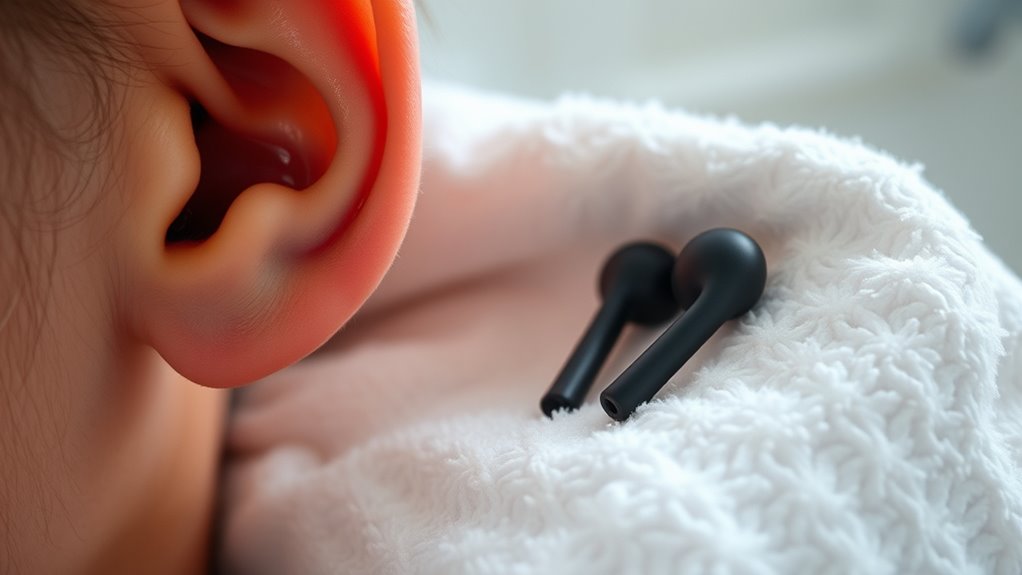

You shouldn’t wear earbuds with an ear infection. They can worsen your condition by trapping bacteria and creating pressure that increases discomfort. Plus, moisture buildup can complicate matters and lead to further issues. It’s best to avoid them until your ears have healed. Maintaining ear hygiene is essential, and taking preventive measures can help you stay healthy in the future. If you’re curious about how to protect your ears, there’s more to discover.
Understanding Ear Infections
Ear infections are a common ailment that can affect anyone, but they’re particularly frequent in children. The causes of infections often stem from bacteria or viruses that invade the ear, usually following a cold or sinus infection. You might notice symptoms like ear pain, fever, or irritability in kids. Treatment options vary, but they generally include over-the-counter pain relief, warm compresses, or antibiotics if a bacterial infection is suspected. It’s essential to consult a healthcare professional for proper diagnosis and guidance. Understanding these factors can empower you to make informed choices about managing ear infections effectively. By addressing the issue promptly, you can help guarantee a faster recovery and restore your sense of freedom from discomfort.
How Earbuds Can Affect Ear Health
Using earbuds can pose risks to your ear health, especially if you have an infection. They can transfer bacteria to your ears and create pressure on your eardrums, potentially worsening your condition. It’s important to contemplate these factors before deciding to wear them.
Bacteria Transfer Risks
While it might be tempting to wear earbuds for convenience, doing so during an ear infection can greatly increase the risk of bacteria transfer. Earbuds can harbor bacteria, especially if not cleaned regularly, leading to potential bacteria transmission into your already vulnerable ear. When you insert them while infected, you’re risking further irritation or a more severe infection. Adopting proper cleanliness practices is essential; regularly disinfecting your earbuds can minimize risks, but it’s still advisable to avoid using them altogether until you’ve fully recovered. Your ear health deserves attention, and choosing to skip the earbuds can aid in your healing process. Remember, freedom in listening shouldn’t come at the cost of your well-being.
Pressure on Eardrums
Listening to music or podcasts through earbuds can create pressure on your eardrums, especially during an ear infection. This pressure can lead to increased discomfort levels and may worsen your symptoms. Here are three ways earbuds can affect your ear health:
- Increased Ear Pressure: Earbuds can create a sealed environment, trapping sound waves and intensifying pressure on your eardrums.
- Amplified Discomfort: If you’re already experiencing pain or irritation, the added pressure from earbuds can heighten these feelings.
- Potential for Damage: Prolonged use during an infection can lead to further complications, such as worsening the infection or causing hearing loss.
It’s best to prioritize your ear health and consider alternatives until you’re fully healed.
Hygiene Practices for Earbud Users
Since earbuds can trap bacteria and moisture, maintaining good hygiene is essential for your ear health. You should adopt effective cleaning techniques and hygiene habits to reduce the risk of infection. Start by regularly wiping your earbuds with a soft, lint-free cloth, and consider using disinfectant wipes specifically designed for electronics. Make sure to clean the ear tips and any removable parts frequently. It’s also a good idea to avoid sharing your earbuds with others, as this can spread germs. Always store your earbuds in a dry place when not in use; moisture can lead to bacterial growth. Finally, wash your hands before handling your earbuds to keep everything as clean as possible. Prioritizing hygiene can help keep your ears healthy and happy.
Symptoms to Consider Before Wearing Earbuds
Before deciding to wear earbuds, it’s important to assess any symptoms you might be experiencing. If you notice any of the following, it’s best to reconsider using them:
- Ear Pain: If you’re feeling discomfort or sharp pain in your ear, earbuds could exacerbate the issue.
- Hearing Loss: Changes in your ability to hear, such as muffled sounds, can indicate a problem that may worsen with earbuds.
- Fluid Discharge: Any discharge from your ear can signify an infection, making it risky to use earbuds.
Listening to your body is vital. If you’re experiencing any of these symptoms, it’s wise to avoid earbuds until you’ve consulted a healthcare professional. Your ear health should always come first!
Risks of Using Earbuds During an Ear Infection
Using earbuds during an ear infection can pose several risks that you should be aware of. First, poor earbud hygiene can exacerbate your condition; bacteria thrive on dirty surfaces, increasing the chance of further infection. When you insert earbuds, they can also trap moisture in your ear canal, creating an ideal environment for bacteria. This can lead to prolonged discomfort and potentially more severe issues. Additionally, the pressure from earbuds may irritate your already sensitive ears, intensifying pain and swelling. Infection prevention is vital, and using earbuds can undermine your healing process. If you’re dealing with an ear infection, it’s best to avoid earbuds altogether until you’re fully recovered to protect your ear health and avoid complications.
Alternative Listening Options
While earbuds might be off-limits during an ear infection, there are plenty of alternative listening options that can keep you entertained and informed. Here are some safe sound options for you to explore:
- Speakers: Use Bluetooth or wired speakers to enjoy music or podcasts without putting pressure on your ears.
- Open-Back Headphones: If you prefer headphones, opt for open-back designs that allow airflow and reduce ear pressure.
- Bone Conduction Headphones: These innovative devices transmit sound through your cheekbones, keeping your ears free while still delivering audio.
These alternative listening methods not only help you stay connected to your favorite sounds but also keep your ears safe during recovery. Enjoy your listening experience without compromising your health!
When to Seek Medical Advice
If you’re experiencing symptoms like severe pain, discharge, or hearing loss, it’s time to consult a healthcare professional. Pay attention to how long your discomfort lasts; persistent issues beyond a few days warrant medical advice. Being aware of potential complications is essential, so don’t hesitate to seek help if you have concerns.
Symptoms to Monitor
How can you tell if your ear infection is getting worse? It’s essential to monitor your symptoms closely. Here are three signs that should prompt you to seek medical advice:
- Increased Pain Levels: If your pain intensifies or becomes unbearable, it’s a clear signal that something’s not right.
- Hearing Changes: Noticeable shifts in your hearing, like muffled sounds or ringing, can indicate complications.
- Persistent Symptoms: If symptoms like fever or drainage last longer than a few days, it’s time to consult a healthcare professional.
Don’t ignore these warning signs. Taking action early can prevent further complications and help you regain your freedom from discomfort.
Duration of Discomfort
Ear infections can cause varying levels of discomfort, and knowing when to seek medical advice is essential for your recovery. If your discomfort lasts more than a couple of days or worsens instead of improving, it’s time to consult a healthcare professional. The duration of discomfort can vary markedly, but persistent pain, fever, or drainage from the ear signals that something more serious might be at play. Early intervention can streamline your healing process and prevent complications. Trust your instincts; if you feel something isn’t right, don’t hesitate to reach out for help. Remember, prioritizing your health and comfort is key to regaining your freedom and enjoying life without the burden of discomfort.
Potential Complications Awareness
While many ear infections resolve on their own, being aware of potential complications is essential for your health. Ignoring infection consequences can lead to serious issues. Here are three signs that indicate you should seek medical advice:
- Severe Pain: If your ear pain intensifies or doesn’t improve over a few days, it’s time to consult a professional.
- Fever: A high fever accompanying your ear infection may signal a more serious issue requiring medical attention.
- Hearing Loss: Any noticeable or sudden change in your hearing should prompt immediate evaluation.
Staying informed about complication awareness can help you avoid long-term damage. Don’t hesitate to reach out to a healthcare provider if you’re uncertain about your symptoms or their severity.
Tips for Preventing Future Ear Infections
Although no one can guarantee complete immunity from ear infections, there are several proactive steps you can take to reduce your risk. Adopting healthy habits and preventative measures can make a big difference. Here are some tips to help you stay ear infection-free:
| Tip | Description |
|---|---|
| Stay Dry | Keep your ears dry, especially after swimming. |
| Avoid Irritants | Stay away from smoke and allergens that can irritate your ears. |
| Wash Your Hands | Regular handwashing can prevent infections from spreading. |
| Manage Allergies | Treat allergies to reduce ear blockage and inflammation. |
Final Thoughts on Earbuds and Ear Health
Taking care of your ears is essential, especially if you’re prone to infections. While earbuds can provide excellent sound quality, choosing the right ones is vital for your ear health. Here are three key points to take into account:
- Earbud Materials: Opt for hypoallergenic materials to reduce irritation and prevent further infections.
- Hygiene: Regularly clean your earbuds to eliminate bacteria that could aggravate your condition.
- Volume Control: Keep the volume at a moderate level to avoid damaging your eardrums, especially when your ears are already sensitive.
Ultimately, if you’re experiencing an ear infection, it’s wise to minimize earbud use until you’re fully healed. Your ears deserve the best care, and taking these steps can help maintain their health while enjoying your favorite tunes.
Frequently Asked Questions
Can I Use Noise-Canceling Headphones Instead of Earbuds During an Ear Infection?
Yes, you can use noise-canceling headphones instead of earbuds during an ear infection. Their noise-canceling benefits help minimize disturbances, but guarantee you maintain proper headphone hygiene to avoid further irritation or infection complications.
Is It Safe to Swim While Wearing Earbuds With an Ear Infection?
It’s not safe to swim while wearing earbuds with an ear infection. Swimming precautions are essential, as moisture can worsen ear infection risks. Avoid using earbuds to protect your ears and promote healing.
How Long Should I Avoid Earbuds After Recovering From an Ear Infection?
After recovering from an ear infection, you should wait at least two weeks before using earbuds again. Prioritize ear hygiene during your recovery timeline; your ears deserve freedom from irritation to fully heal.
Do Different Types of Earbuds Affect Ear Infections Differently?
Different types of earbuds can affect ear infections. In-ear designs may impact ear safety by trapping moisture, while over-ear options provide better sound quality and ventilation. Choose wisely for best comfort and ear health.
Can I Wear Earbuds While Taking Antibiotics for an Ear Infection?
You can wear earbuds while taking antibiotics for an ear infection, but it might not be the best idea. Ear infection symptoms could worsen, potentially affecting antibiotic effectiveness. Give your ears a break instead!
