
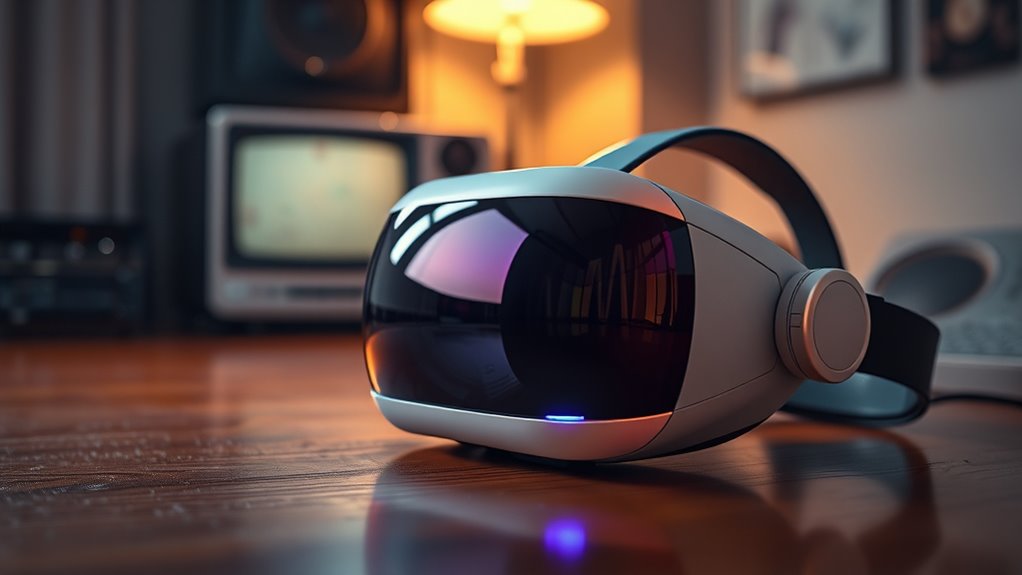

The first modern VR headset, known as the “Sword of Damocles,” was created by Ivan Sutherland in the late 1960s. This groundbreaking device marked a significant shift in how humans could interact with digital environments. Although it was primitive, heavy, and cumbersome, it laid the foundation for future advancements in VR technology. As you explore more, you’ll uncover how these early developments sparked innovations that transformed the VR landscape into what is understood today.
The Early Concepts of Virtual Reality
While the concept of virtual reality (VR) may seem like a recent innovation, its roots stretch back to the mid-20th century, when pioneers began to explore the intersection of technology and immersive experience. Early concepts of VR were centered on creating digital environments that could transport users into alternate dimensions. Researchers experimented with sensory stimuli, blending visual and auditory elements to evoke emotional responses. These experiments laid the groundwork for understanding how immersive experiences could alter perception and engagement. You’ll notice that the desire for freedom and exploration has always driven this technological evolution, as individuals sought deeper connections to digital landscapes. The early ideas not only shaped future developments but also ignited a passion for creating unbounded experiences in virtual spaces.
The Birth of the First VR Headsets
As innovation surged during the 1960s and 1970s, the first modern VR headsets began to take shape, marking a significant leap from theoretical concepts to tangible technology. Pioneer developers like Ivan Sutherland created the “Sword of Damocles,” a rudimentary headset that laid the groundwork for future designs. This headset history reveals a critical shift in how humans interacted with digital environments, pushing boundaries of perception and immersion. The technology wasn’t flawless, often heavy and cumbersome, yet it sparked a vision for immersive experiences. As you explore this era, consider how these early devices paved the way for advancements in VR, fostering a desire for freedom in virtual exploration and inspiring countless innovations that followed.
The 1990s: The Rise of Commercial VR
The 1990s marked a pivotal moment in the evolution of virtual reality, where technological advancements began to intersect with consumer markets, leading to the emergence of commercially available VR headsets. During this decade, companies like Sega and Virtuality introduced products that aimed to deliver immersive technology directly to consumers. You saw the first attempts at creating virtual reality experiences designed for entertainment and gaming, sparking intrigue and excitement. However, despite these innovations, challenges remained—high costs and limited content hindered widespread adoption. Yet, the groundwork laid during this era proved vital, as it ignited public interest and paved the way for future advancements in VR. This period was essential in shaping the landscape of immersive experiences we enjoy today.
Key Innovations in VR Technology
Building on the foundation laid in the 1990s, key innovations in VR technology have greatly transformed the landscape of immersive experiences. Advances in display resolution and refresh rates have considerably enhanced visual realism, allowing you to feel more present in virtual environments. Furthermore, improvements in motion tracking and haptic feedback systems have created more intuitive user interfaces, making interactions seamless and engaging. The integration of artificial intelligence has also enabled adaptive environments that respond to your actions, further deepening immersion. Additionally, wireless technology has liberated you from physical constraints, enhancing mobility and freedom within virtual spaces. Together, these innovations have redefined how you engage with VR, paving the way for a future where immersive experiences become increasingly indistinguishable from reality.
The Impact of Gaming on VR Development
While many factors have contributed to the evolution of virtual reality (VR), the gaming industry has played a pivotal role in its development. The gaming influence is undeniable; developers constantly push boundaries to create immersive experiences that enchant players. This demand for realism has driven significant technological advancements, from improved graphics to enhanced motion tracking. As gamers seek deeper engagement, VR emerges as a natural extension, offering unparalleled interaction and sensory stimulation. The success of games like “Beat Saber” and “Half-Life: Alyx” demonstrates how gaming shapes VR’s trajectory, attracting investment and innovation. Consequently, the industry’s commitment to creating enchanting virtual worlds not only enriches gameplay but also accelerates the entire VR landscape, paving the way for future applications beyond entertainment.
The Transition to Modern VR Experiences
As you explore the shift to modern VR experiences, it’s essential to reflect on the evolution from early VR prototypes that laid the groundwork to the key technological advancements that have shaped current systems. You’ll notice how these developments have influenced consumer adoption trends, making immersive technology more accessible and appealing. By analyzing these factors, you can better understand the trajectory of VR and its impact on various industries.
Early VR Prototypes
Though the concept of virtual reality dates back decades, early prototypes laid the groundwork for what would eventually evolve into modern VR experiences. These initial attempts focused on creating immersive environments, but they often lacked the sophistication we enjoy today, including advanced haptic feedback. You might find it fascinating how these pioneering efforts sparked imaginations and inspired innovation:
- A sense of wonder as you step into new worlds
- The thrill of interacting with digital spaces
- An urge to explore the unknown
- The promise of endless possibilities
- The excitement of technology merging with creativity
These early prototypes were essential in shaping the landscape of virtual reality, driving the quest for deeper immersion and interactivity that defines modern experiences.
Key Technological Advancements
The early prototypes of virtual reality set the stage for significant technological advancements that would redefine immersive experiences. As VR evolved, key innovations like improved display resolutions and low-latency tracking emerged, allowing users to feel more present in virtual environments. These advancements also emphasized sensory feedback, integrating haptic technology that simulates touch and movement, enhancing the realism of interactions. You’d notice how these developments have transformed VR from rudimentary simulations into rich, engaging worlds. The synergy of visual fidelity and tactile sensations creates deeper emotional connections, making experiences feel authentic. As you explore this landscape, you can appreciate how these technological leaps have liberated the potential of virtual reality, paving the way for a future where immersive experiences are increasingly accessible and impactful.
Consumer Adoption Trends
While many technological advancements have shaped the landscape of virtual reality, consumer adoption trends reveal a fascinating shift towards mainstream acceptance. As you explore the evolving market, you’ll notice how consumer preferences are driving innovation and accessibility. Market analysis shows that:
- VR is becoming a staple in homes, not just gaming rooms.
- Diverse applications in education and training are emerging.
- Social experiences in virtual environments are gaining popularity.
- Affordable headsets are empowering more users to join the VR community.
- Content creation is flourishing, attracting artists and developers alike.
This shift toward modern VR experiences highlights an increasing desire for immersive freedom, allowing individuals to escape reality and explore new worlds, ultimately reshaping how we interact with technology.
The Future of Virtual Reality Headsets
As you explore the future of virtual reality headsets, it’s essential to contemplate how emerging technologies like eye tracking and haptic feedback will shape user experiences. Market trends indicate a growing demand for more immersive and accessible VR solutions, driving innovations that could redefine gaming, education, and training. Understanding these dynamics will help you anticipate the next wave of advancements in this rapidly evolving field.
Emerging Technologies in VR
Although many advancements have already transformed virtual reality (VR) headsets, emerging technologies promise to further revolutionize the experience. Innovations like eye-tracking, advanced haptics, and AI integration are set to deepen your connection with virtual worlds, offering truly immersive experiences.
- Enhanced sensory feedback that reacts to your movements
- Seamless integration with other devices for a unified experience
- Increased portability for freedom on the go
- Adaptive environments that change based on your emotions
- Social VR spaces that foster genuine connections
These developments will not only elevate how you interact with virtual environments but also redefine your understanding of reality itself. Embracing these technologies can lead to unprecedented levels of engagement and creativity, unleashing your potential in a boundless digital landscape.
Market Trends and Innovations
Emerging technologies are reshaping consumer expectations and market dynamics in the VR headset industry. As market competition intensifies, brands are innovating to enhance user experience, pushing boundaries with features like improved graphics, wireless capabilities, and haptic feedback. You’ll notice that companies are increasingly focusing on accessibility, ensuring that VR isn’t just for gamers but for education, training, and therapy as well. As consumer demand for immersive experiences rises, expect advancements in comfort and usability, making headsets lighter and more ergonomic. Integrating AI for personalized experiences will further set brands apart, allowing for tailored content that resonates with individual users. The future of VR headsets lies in their ability to adapt to your needs and desires, transforming how you interact with digital worlds.
Frequently Asked Questions
What Materials Are Used in Modern VR Headset Construction?
Modern VR headsets utilize advanced lens technology for clarity and immersion, while comfort features like adjustable straps and breathable materials enhance your experience. These elements guarantee you can enjoy long sessions without discomfort or strain.
How Do VR Headsets Track User Movement?
VR headsets track your movement through advanced motion tracking and sensor technology. These systems utilize gyroscopes, accelerometers, and external sensors, allowing for real-time adjustments that enhance immersion and freedom in virtual environments, creating a seamless experience.
Can VR Headsets Be Used for Non-Gaming Applications?
Absolutely, VR headsets can enhance non-gaming applications like virtual training and immersive storytelling. You’ll find they provide engaging experiences in education, therapy, and simulations, fostering creativity and deeper understanding beyond traditional methods.
What Are the Health Risks Associated With VR Headset Usage?
Using VR headsets can lead to health risks like motion sickness and eye strain. You might feel disoriented after prolonged use, and your eyes could tire quickly, highlighting the need for breaks and moderation.
How Do VR Headsets Differ Across Various Platforms?
VR headsets vary considerably across platforms, impacting user experience and platform compatibility. Some offer immersive graphics and advanced tracking, while others prioritize accessibility and ease of use, catering to different preferences and technological capabilities.
