
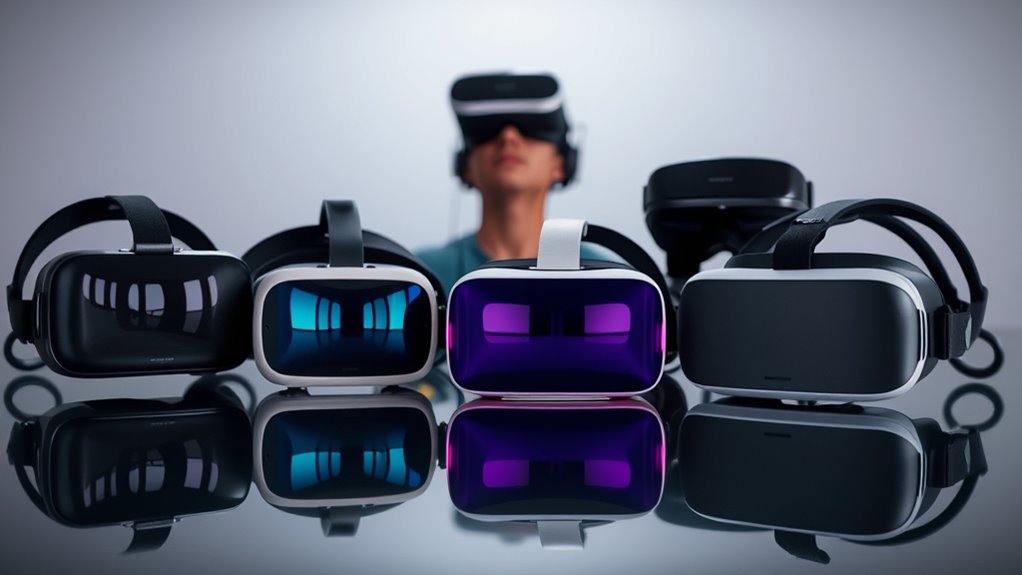

No, not all VR headsets are the same. They differ in features, performance, and intended use, impacting your experience. Entry-level models offer basic capabilities, while mid-range headsets balance performance and affordability. High-end devices provide premium experiences with advanced technology. Tracking technology also varies, affecting movement and immersion. Compatibility with devices and the diversity of available content play significant roles in your enjoyment of virtual reality. Explore further to discover the nuances of each headset type and what they offer.
Understanding Virtual Reality Technology
As you explore the world of virtual reality (VR) technology, it is essential to recognize that not all VR headsets are created equal. The diverse landscape of VR applications offers varying degrees of immersive experiences, which can greatly impact how you interact with virtual environments. Some headsets are designed for gaming, providing high-resolution visuals and low latency, while others focus on educational or therapeutic applications, emphasizing accessibility and ease of use. Understanding these nuances allows you to choose a headset that best fits your needs and desires. By analyzing the specific features and capabilities of each device, you empower yourself to access the full potential of virtual reality, immersing yourself in an expansive domain limited only by your imagination.
Key Features of VR Headsets
When diving into the domain of VR headsets, understanding their key features is vital for making an informed choice. Resolution quality directly impacts your immersive experience; higher resolution means clearer, more engrossing visuals. Comfort design is important, guaranteeing you can wear the headset for extended sessions without discomfort. Tracking accuracy enhances your interaction with the virtual world, while superior audio performance brings sounds to life, enriching the experience. A user-friendly interface allows for seamless navigation, making it easier to explore VR environments. Wireless capability offers freedom of movement, eliminating the hassle of cords, and an ergonomic fit assures the headset rests comfortably on your head. Together, these features create a truly enthralling virtual reality experience.
Entry-Level VR Headsets
When you’re exploring entry-level VR headsets, you’ll find that they offer some attractive, budget-friendly options. However, these affordable devices often come with limited features compared to their higher-end counterparts. Understanding what you can get for your money will help you make an informed choice that suits your needs.
Affordable Options Available
In recent years, the market has seen a surge of affordable entry-level VR headsets that cater to budget-conscious consumers keen to explore virtual reality. Brands like Oculus, Samsung, and Pico have emerged as budget-friendly options, offering compelling experiences without breaking the bank. When you look into value comparisons, you’ll find that these headsets often balance performance and cost, making them attractive for newcomers. Features like ease of setup and comfort are emphasized, allowing you to jump right into the VR world. While they may not boast the high-end capabilities of premium models, these affordable options grant you the freedom to enjoy immersive experiences. So, if you’re excited to explore, these entry-level headsets are worth considering.
Limited Features Offered
While entry-level VR headsets offer an accessible gateway into virtual reality, they often come with limited features that can impact the overall experience. You’ll likely encounter limited resolution, which can detract from immersion, making environments feel less realistic. Basic controls are another common drawback; they may restrict your interaction with the virtual world, hindering your ability to engage fully with the content. These headsets primarily cater to casual users, so if you’re looking for a deeply immersive experience, you might find yourself wanting more. While they can serve as an introduction to VR, it’s essential to recognize that their limitations can affect your exploration and enjoyment of this exciting technology.
Mid-Range VR Headsets
Mid-range VR headsets offer a compelling balance between performance and affordability, making them an attractive option for many users. You’ll find that these headsets often come packed with impressive specifications and features that enhance your immersive experience without breaking the bank. Additionally, compatibility with various devices guarantees that you can enjoy a wide range of content, catering to both casual gamers and serious enthusiasts alike.
Performance and Specifications
When exploring mid-range VR headsets, performance and specifications play an essential role in determining your overall experience. You’ll notice resolution differences that can greatly impact visual clarity, while refresh rates guarantee smooth motion during gameplay. A wider field of view immerses you deeper into virtual environments, enhancing your sense of presence. Audio quality shouldn’t be overlooked, as it complements the visuals for a truly engaging experience. Tracking accuracy is imperative for seamless interaction, making certain your movements translate effectively in-game. Additionally, consider weight distribution and build materials; a well-balanced headset can prevent fatigue during extended use. Finally, efficient cable management can enhance your freedom of movement, minimizing distractions and allowing you to fully immerse yourself in your virtual adventures.
Price vs. Features
In the domain of mid-range VR headsets, striking the right balance between price and features can be a game-changer for your virtual experience. With budget considerations at the forefront, you’ll want to analyze how different headsets stack up against each other. Below is a table to help you with feature comparisons:
| Headset Model | Price |
|---|---|
| Model A | $299 |
| Model B | $399 |
| Model C | $499 |
| Model D | $599 |
Each model offers distinct features like resolution, tracking capabilities, and comfort. By carefully evaluating these options, you can identify which headset delivers the best value for your investment, ensuring you maximize your immersive journey without breaking the bank.
Compatibility With Devices
Finding the right VR headset isn’t just about price and features; it’s also about how well the device integrates with your existing technology. Mid-range VR headsets often excel in cross-platform compatibility, allowing you to connect seamlessly with various device ecosystems. Whether you’re gaming on a console, a PC, or using mobile devices, you’ll want a headset that adapts effortlessly. This flexibility not only enhances your experience but also guarantees you’re not locked into a single platform. With the right headset, you can explore a wide range of content and applications, giving you the freedom to choose how and when you engage with virtual reality. Ultimately, compatibility can greatly impact your overall VR journey.
High-End VR Headsets
While many VR headsets flood the market, high-end models stand out due to their advanced technology and immersive capabilities. These headsets offer premium experiences that transport you into richly detailed worlds. With higher resolution displays and superior audio, you’ll find yourself in immersive environments that feel incredibly realistic. The ergonomic design guarantees comfort during extended use, allowing you the freedom to explore without distraction. Features like wider field-of-view and enhanced refresh rates contribute to a more seamless experience, making you feel as if you’re truly part of the action. If you’re seeking unparalleled immersion and want to access the full potential of virtual reality, investing in a high-end headset is definitely worth considering.
Tracking Technologies Explained
As you explore the world of virtual reality, understanding tracking technologies is essential for fully appreciating how these systems bring digital environments to life. There are two primary methods: inside out tracking and outside in tracking.
Inside out tracking uses sensors on the headset to monitor your movements in relation to the environment, offering a more portable experience without external cameras. This method enhances your freedom, letting you move more naturally. On the other hand, outside in tracking relies on external sensors to capture your movement, often providing greater accuracy and stability, but at the cost of requiring a designated play area. Each technology has its strengths, and your choice can greatly impact how immersive and enjoyable your VR experience will be.
Compatibility and Platform Considerations
How do you choose the right VR headset when compatibility and platform considerations play such a crucial role? First, think about cross-platform compatibility. Not all headsets work seamlessly across different systems, so check which platforms your favorite games or experiences support. This guarantees you won’t be locked into a single ecosystem. Next, consider device integration. Some headsets offer better compatibility with various devices, like smartphones or PCs, allowing you to use them in diverse ways. Look for headsets that connect effortlessly with your existing tech to maximize your investment. Ultimately, freedom in your VR experience hinges on these factors, so take the time to evaluate your options carefully before committing to a headset that may limit your enjoyment.
The Role of Content and Software
Once you’ve navigated compatibility and platform options, the next step is to contemplate the role of content and software in your VR experience. The richness of your journey largely hinges on content diversity; from games to educational programs, a wide array of options empowers you to tailor your experience. However, it’s not just about variety—ongoing software updates are essential too. They enhance performance, fix bugs, and often introduce new features, keeping your headset relevant and exciting. If you’re seeking freedom in your VR exploration, consider how the available content and the frequency of updates can impact your immersion and enjoyment. Ultimately, a headset is only as good as the experiences it can deliver, so choose wisely.
Future Trends in VR Headsets
While the current landscape of VR headsets is diverse and rapidly evolving, future trends suggest a shift toward greater immersion and accessibility. You’ll likely see advancements that blur the lines between virtual reality and augmented reality, creating seamless immersive experiences. As technology improves, headsets will become lighter and more comfortable, making prolonged use a reality. Expect features like eye tracking and haptic feedback to enhance engagement, allowing you to interact with your surroundings in more natural ways. In addition, with the rise of standalone devices, VR will become more accessible to a wider audience. This convergence of technologies promises to transform how you connect, play, and create, fostering a world where virtual and augmented realities coexist harmoniously.
Frequently Asked Questions
Can VR Headsets Cause Motion Sickness in Users?
Using a VR headset can feel like riding a rollercoaster; if you’re motion sensitive, it might lead to discomfort. Your user experience can vary considerably based on the headset’s design and your personal tolerance levels.
How Do VR Headsets Affect Eye Health?
VR headsets can lead to eye strain, especially with prolonged use. While short-term discomfort’s common, the long-term effects are still under investigation. It’s crucial to take breaks and monitor your eye health while enjoying VR experiences.
Are VR Headsets Suitable for Children?
VR headsets can spark joy, but they’re not always child-friendly. Age restrictions exist for a reason; parental guidance is vital. Make sure you weigh the potential risks against the thrill of virtual adventures for your kids.
Do All VR Headsets Require a Powerful Computer?
Not all VR headsets require a powerful computer; some offer wireless capabilities, reducing system requirements. However, high-end experiences often need robust hardware for ideal performance, so it’s essential to contemplate your specific needs before choosing.
What Maintenance Do VR Headsets Need?
To keep your VR headset performing like a well-tuned machine, you’ll need regular cleaning procedures and diligent battery care. Wipe lenses gently, guarantee proper charging, and store it safely to maximize your immersive adventures.
