


Connecting a subwoofer to your speakers is essential for achieving a richer audio experience, especially when it comes to deep bass. This guide provides a comprehensive step-by-step process that will help you successfully integrate a subwoofer into your sound system, ensuring you maximize performance and sound quality.
Understanding Subwoofer Types
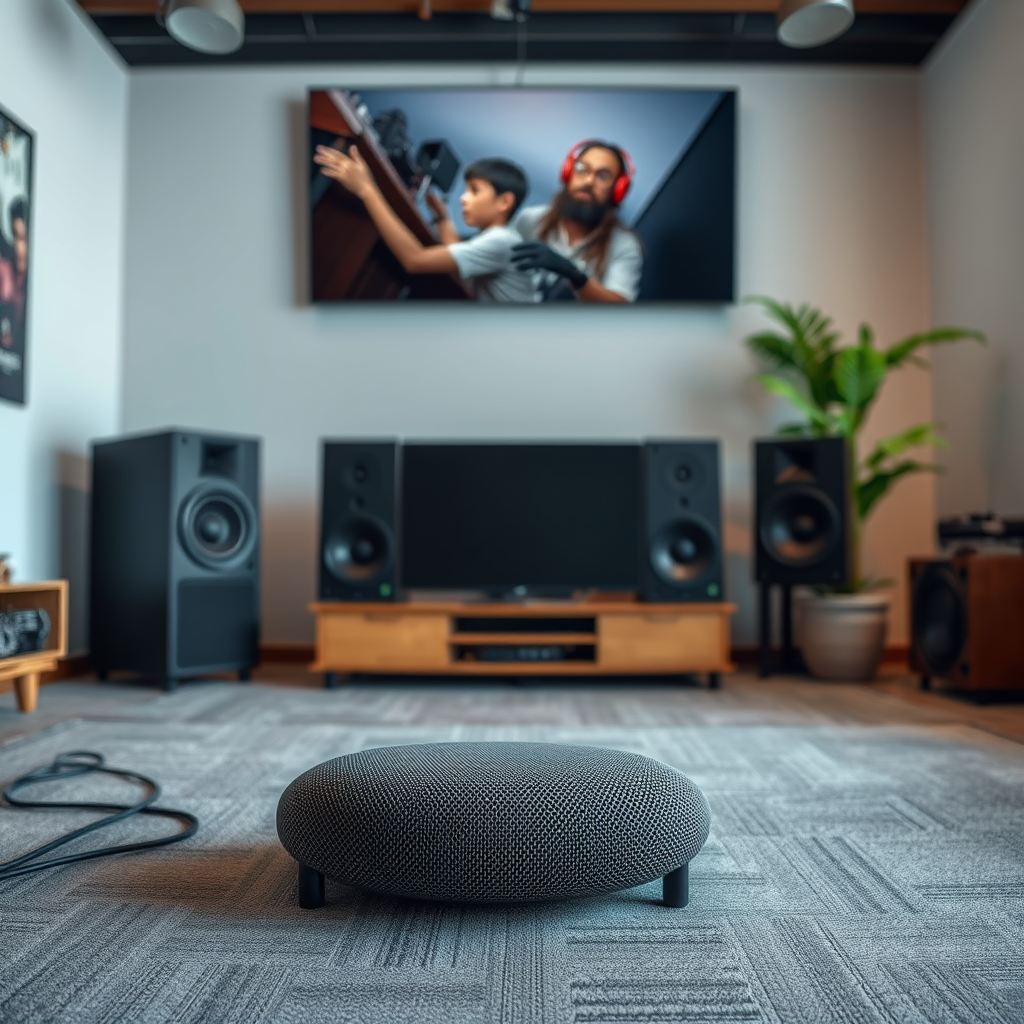
When considering how to connect a subwoofer to your speakers, it’s crucial to first understand the types of subwoofers available. There are two primary categories: active (or powered) subwoofers and passive (or non-powered) subwoofers.
– Active vs. Passive: Active subwoofers come with built-in amplifiers, which means they can be directly connected to your audio source, making installation simpler. In contrast, passive subwoofers require an external amplifier to function, which can complicate the setup but may allow for more customization in terms of output and sound tuning.
– Compatibility: It is equally important to ensure that your speakers and subwoofer are compatible, particularly regarding impedance and power ratings. Most home audio systems use speakers with an impedance of 4 to 8 ohms, and your subwoofer should match or complement this rating to avoid issues like distortion or damage.
Required Equipment
Before jumping into the connection process, ensure you have the following equipment ready:
– Cables: Depending on your setup, you’ll need the appropriate cables. Common options include:
– RCA cables for line-level connections.
– Speaker wire for high-level connections.
– Optical cables if your system supports digital audio.
– Amplifier: If you are using a passive subwoofer, check if your existing amplifier can handle the additional load or if you need to acquire a dedicated subwoofer amplifier.
Connection Methods
Connecting a subwoofer to speakers can be achieved through various methods, depending on your audio setup:
– Direct Connection: The most straightforward method is to connect the subwoofer directly to your receiver or amplifier using the appropriate output. For active subwoofers, this usually involves an RCA output labeled “SUB OUT” or “LFE.”
– High-Level Input: If you are using a passive subwoofer, you can utilize the speaker wire outputs from your amplifier to connect to the subwoofer’s high-level input. This method allows the subwoofer to receive the same audio signal as the main speakers, ensuring consistency in sound.
Data Table: Subwoofer Connection Methods Comparison
Comparison of Subwoofer Connection Methods
| # | Method | Type | Ease of Setup | Sound Quality |
|---|---|---|---|---|
| 1 | Direct Connection | Active | Easy | High |
| 2 | High-Level Input | Passive | Moderate | Medium |
Setting Up the Subwoofer
The placement and setup of your subwoofer can significantly impact the quality of sound you experience. Here are some tips to maximize performance:
– Placement: A subwoofer should ideally be positioned near the front of the room, but placement can vary based on your room’s acoustics. Corners can enhance bass response, while away from walls can minimize boomy sounds. The “subwoofer crawl” method, where you move the subwoofer around the room while playing bass-heavy music, can help you find the optimal location.
– Adjusting Settings: Once the subwoofer is in place, adjust the settings for volume, crossover frequency (which determines when the subwoofer starts playing sound), and phase (which aligns the subwoofer with your main speakers). A good starting point for crossover frequency is around 80 Hz, but adjustments may be necessary based on your main speakers’ capabilities and your personal preferences.
Testing the Connection
After connecting and setting up your subwoofer, it’s time to test its performance:
– Play Audio: Start by playing familiar tracks that feature strong bass lines. This will allow you to assess the clarity and depth of the sound produced by the subwoofer. Pay attention to how it integrates with your main speakers.
– Adjustments: Based on your listening experience, you might need to make adjustments to the volume, crossover frequency, or even the subwoofer’s physical placement. Experimenting can lead to the best possible audio experience tailored to your preferences.
Troubleshooting Common Issues
Even with a well-planned setup, issues can arise. Here are some common problems and their solutions:
– No Sound: If the subwoofer is not producing sound, start by checking all connections—ensure all cables are securely connected and that the power is on. Confirm that the subwoofer is selected in your audio settings.
– Distortion: If you notice distortion or muddiness in the sound, try adjusting the crossover frequency or lowering the volume of the subwoofer. Also, ensure the subwoofer is not placed too close to walls or corners, which can cause sound reflections that lead to distortion.
In summary, connecting a subwoofer to your speakers can significantly enhance your audio experience by providing robust bass and improving overall sound quality. By understanding different subwoofer types, preparing the necessary equipment, using appropriate connection methods, and optimizing your setup, you can achieve a superior sound experience. Don’t hesitate to experiment with placement and settings to get the best results tailored to your preferences. Enjoy your enhanced audio journey!
Frequently Asked Questions
How do I connect my subwoofer to my speakers properly?
To connect your subwoofer to your speakers, start by identifying the outputs on your audio receiver or amplifier. Use an RCA cable to connect the subwoofer output (often labeled as “SUB OUT”) from the receiver to the subwoofer’s input. Ensure that your speakers are connected to the receiver as well, and adjust the crossover frequency on the subwoofer for optimal sound integration with your main speakers.
What type of cable should I use to connect a subwoofer to my speakers?
The best type of cable to connect a subwoofer to your speakers is an RCA cable, specifically a subwoofer cable if available. This cable is designed to carry low-frequency signals efficiently. If your setup allows for it, you can also use speaker wire for a direct connection, but ensure your subwoofer has speaker-level inputs.
Why is my subwoofer not producing sound when connected to my speakers?
If your subwoofer is not producing sound, first check that it is powered on and the volume is turned up. Next, verify the connections; ensure the RCA or speaker wires are securely connected to both the subwoofer and the receiver. Lastly, check the receiver settings to confirm that the subwoofer output is activated and properly configured.
Which subwoofer placement works best for optimal sound quality with my speakers?
For optimal sound quality, place your subwoofer in a corner of the room or along a wall to enhance bass response. However, avoid placing it too close to your main speakers to prevent phase cancellation. Experimenting with placement can help you find the sweet spot where the bass integrates well with your speakers and fills the room evenly.
What is the best way to adjust the settings on my subwoofer after connecting it to speakers?
The best way to adjust your subwoofer settings is to start with the crossover frequency, typically set between 80-120 Hz, depending on your speakers’ capabilities. Use the volume control to match the subwoofer’s output with your speakers, ensuring it complements rather than overpowers them. Finally, if available, utilize a room calibration feature on your receiver for precise adjustments.
References
- Subwoofer
https://en.wikipedia.org/wiki/Subwoofer - National Institutes of Health (NIH) |
https://www.nih.gov/ - Centers for Disease Control and Prevention | CDC
https://www.cdc.gov/ - BBC News – Breaking news, video and the latest top stories from the U.S. and around the world
https://www.bbc.com/news - https://www.sciencedirect.com/topics/engineering/subwoofer
https://www.sciencedirect.com/topics/engineering/subwoofer - Nature
https://www.nature.com/ - Google Scholar Google Scholar
https://scholar.google.com/scholar?q=how+to+connect+subwoofer+to+speakers - Google Scholar Google Scholar
https://scholar.google.com/scholar?q=subwoofer+connection+techniques - Google Scholar Google Scholar
https://scholar.google.com/scholar?q=audio+system+subwoofer+integration - Subwoofer | loudspeaker | Britannica
https://www.britannica.com/technology/subwoofer

[…] My earbuds say “Connected,” but there’s no sound—what should I do?Select the earbuds as the audio output again (and if needed, switch the […]
[…] and ensure the output is set to the TV (duplicate or extend display as needed). If there’s no sound, verify that the TV is selected as the default audio output in Windows or your operating system’s […]
[…] if you’re seeing “Connected” but no sound comes out, you likely have a routing problem: the earbuds are paired but not selected as the […]
[…] output by opening Control Center and selecting your Beats earbuds under the audio card. If you hear no sound, try pausing and playing audio, then increase volume on both iPhone and the earbuds (if supported). […]
[…] failures are frustrating because the symptoms overlap: “no sound” can be earwax on the speaker mesh, a drained case, an audio-routing bug on your phone, or a […]
[…] My Beats earbuds connect but there’s no sound—what’s next?Confirm audio output in your phone/computer settings and restart Bluetooth, then […]
[…] walks you through pairing, choosing the correct output, and fixing the most common problems like no sound or poor call quality. If you want earbuds that work instantly with iPhone 13, these tips will be […]
[…] In my own troubleshooting across multiple truly wireless (TWS) models, I’ve found that “no sound” most often comes from a mis-selected audio output or a stale Bluetooth session—and cleaning […]
[…] only if the symptom persists—because earbuds behave differently depending on whether you have “no sound,” “one side only,” “won’t charge,” or “connection […]
[…] the inverted-pyramid approach—get audio working first, then refine controls—you’ll go from “no sound” to dependable playback and call audio in minutes, and you’ll know exactly where to look in […]
[…] What crossover frequency should I start with for component tweeters?Start around the manufacturer’s recommended range, […]
[…] in the phone’s sound output controls. This last step is what prevents the “connected but no sound” […]
[…] and selecting the earbuds as your default audio output. If you don’t see the device or you get no sound, the fix is usually a pairing-mode/codec mismatch or the wrong Windows output device—this guide […]
[…] your Apple earbuds won’t connect, crackle, or produce no sound, you can usually restore them fast with a tight troubleshooting checklist. Start with the quickest […]
[…] Why can my phone “see” the earbuds but still play no sound?Because the device may be connected for discovery but your phone’s audio output (A2DP) hasn’t […]
[…] and do a Bluetooth disconnect/reconnect or full earbud reset. If the earbud still produces no sound, test it with different devices; persistent silence usually points to a speaker failure or a […]
[…] failure (no sound after cleaning + […]