


Portuguese is spoken by approximately 260 million people worldwide, making it the sixth most spoken language globally. This figure highlights the language’s significant reach, primarily concentrated in Brazil and Portugal but also expanding in various regions across Africa, Asia, and the Americas. In this article, you will learn about the distribution of Portuguese speakers, the countries where it is most prevalent, and the factors contributing to its growth.
Global Distribution of Portuguese Speakers
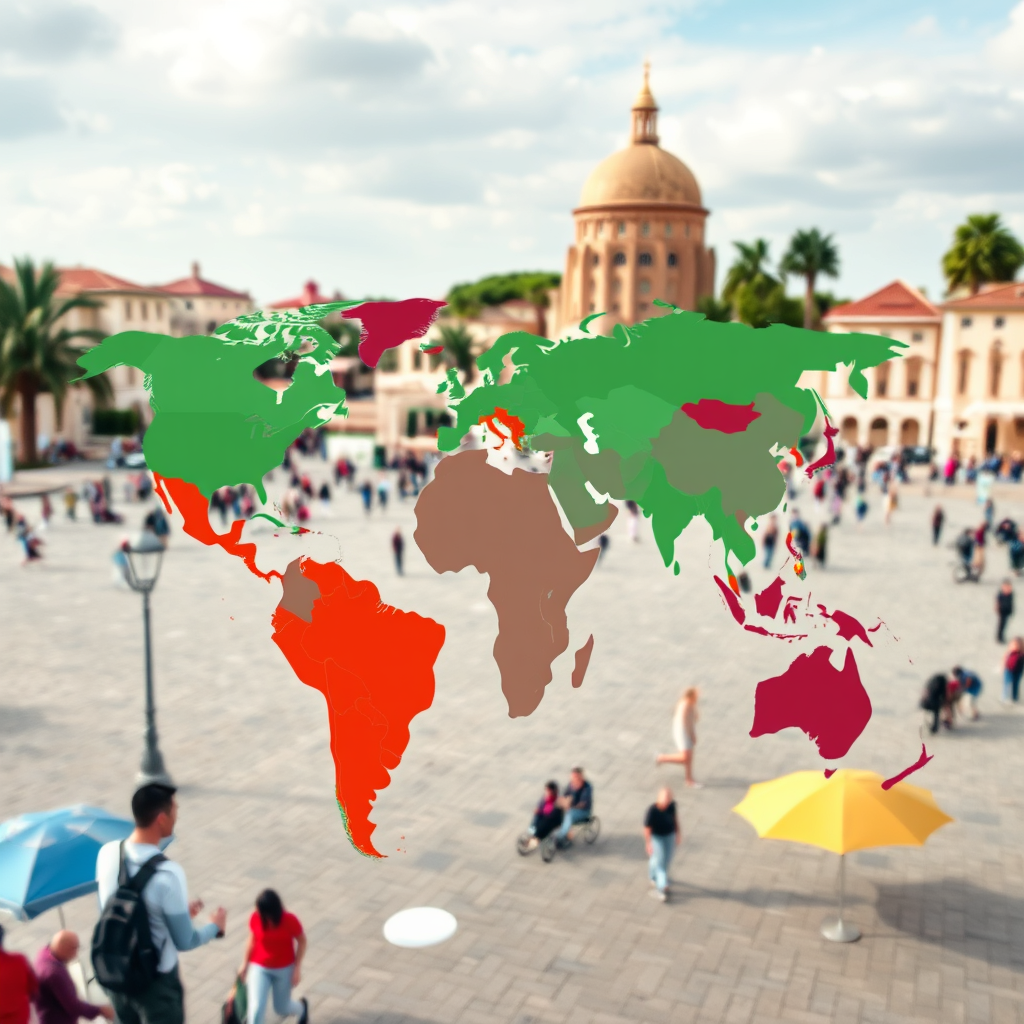
The majority of Portuguese speakers reside in Brazil, which accounts for about 211 million speakers. This staggering number reflects Brazil’s status as the largest country in South America, where Portuguese is the sole official language. The linguistic heritage has roots in the colonial era, and despite regional dialects and variations, Brazilian Portuguese remains predominantly uniform.
Portugal, the birthplace of the language, has around 10 million speakers. Despite its smaller population, Portugal plays a critical role in preserving the language’s historical and cultural significance. The language serves as a bridge connecting historical narratives and contemporary culture, influencing global conversations and cultural exchanges.
In addition to Brazil and Portugal, other countries contribute to the Portuguese-speaking community. Estimates indicate that around 10 million people speak Portuguese in African nations such as Angola and Mozambique, which have rich histories tied to Portuguese colonialism.
Portuguese in Africa
Several African countries have significant Portuguese-speaking populations, primarily due to historical colonial ties. Angola and Mozambique stand out with over 30 million speakers combined. In Angola, Portuguese is the official language and plays a central role in governance, education, and media. The country’s rapidly growing economy has also fueled an increased interest in the language, both domestically and among expatriates.
Mozambique, similarly, has Portuguese entrenched in its national identity. The language facilitates communication among diverse ethnic groups within the country. Additionally, it serves as a medium for education and media, impacting literacy and cultural exchange.
Moreover, the language serves as an official or widely spoken language in nations such as Guinea-Bissau and Cape Verde. These nations have vibrant cultural identities, with Portuguese interwoven into local traditions and practices. The growing number of Portuguese speakers in Africa underscores the language’s importance in facilitating economic and social interactions across the continent.
Portuguese in Asia and the Americas
In Asia, Portuguese is spoken in regions such as Goa (India) and Macau (China), though the numbers are relatively small. Goa, once a Portuguese colony, retains a community of Portuguese speakers who uphold the language through cultural events and educational institutions. Meanwhile, Macau, a former Portuguese territory, continues to recognize Portuguese as an official language alongside Chinese, reflecting its unique historical context.
In the Americas, countries like the United States and Canada have growing Portuguese-speaking communities, primarily due to immigration. The influx of Portuguese-speaking immigrants, particularly from Brazil and Portugal, has led to the establishment of vibrant communities that celebrate their linguistic heritage. Cities like Newark in New Jersey and Toronto in Canada have significant populations of Portuguese speakers, contributing to the multicultural fabric of these urban centers.
📋 MANDATORY DATA TABLE
Portuguese-Speaking Countries and Their Populations (2023)
| # | Country | Speakers (millions) | Official Language | Cultural Significance |
|---|---|---|---|---|
| 1 | Brazil | 211 | Yes | Rich Cultural Heritage |
| 2 | Portugal | 10 | Yes | Historical Significance |
| 3 | Angola | 33 | Yes | Cultural Revival |
| 4 | Mozambique | 30 | Yes | Cultural Integration |
| 5 | Goa (India) | 0.5 | No | Cultural Heritage |
| 6 | Macau (China) | 0.5 | Yes | Cultural Exchange |
| 7 | United States | 1.5 | No | Cultural Diversity |
Language Growth and Trends
The number of Portuguese speakers has been steadily increasing due to Brazil’s economic growth and the diaspora in various regions. As Brazil’s economy has expanded, so too has the interest in the Portuguese language for business and trade. This growth has led to greater demand for Portuguese language education globally, especially in regions with burgeoning trade relationships with Brazil.
Portuguese is experiencing a renaissance, with rising interest in learning the language globally. Language schools and online platforms are increasingly offering Portuguese courses, and universities are introducing Portuguese studies as part of their curricula. This increase in educational initiatives signifies a growing awareness of the language’s cultural and economic importance.
Moreover, international events, such as the FIFA World Cup 2014 and the upcoming Expo 2025 in Osaka, Japan, have heightened interest in Portuguese-speaking countries, thereby encouraging more people to learn the language.
Cultural Impact of the Portuguese Language
Portuguese is not just a means of communication; it carries rich cultural significance through literature, music, and cuisine. Literary figures like Fernando Pessoa and José Saramago have enriched world literature, offering unique insights into the human experience. Additionally, the vibrant music genres of Fado and Bossa Nova have roots in Portuguese culture, captivating audiences worldwide.
The global spread of Portuguese-speaking communities has led to cultural exchanges that enhance its relevance. Festivals, culinary events, and art exhibitions celebrating Portuguese-speaking cultures are increasingly common in international cities, fostering a sense of community among speakers and promoting cultural appreciation.
The Portuguese language also serves as a vehicle for sharing traditional cuisines, such as Brazilian feijoada or Portuguese bacalhau. These culinary traditions have found their way into the global gastronomic scene, highlighting the language’s role in cultural diplomacy.
Future Projections for Portuguese Speakers
Predictions indicate that the number of Portuguese speakers may continue to rise, fueled by demographic changes and globalization. The increasing population in Portuguese-speaking countries, particularly in Africa, combined with the diaspora’s growth, suggests a positive trend for the language’s future.
Educational initiatives and cultural programs are promoting the language, particularly in non-Portuguese-speaking countries. As interest in global citizenship and cross-cultural communication grows, learning Portuguese becomes more attractive for individuals seeking to engage with diverse communities.
The future of the Portuguese language looks promising, with a potential increase in speakers and learners. As globalization continues to connect people across borders, the relevance of Portuguese in international affairs, commerce, and culture will likely expand.
The growing number of Portuguese speakers highlights the language’s global importance and cultural richness. Understanding its distribution and trends can provide insights into the future of this vibrant language. If you’re interested in learning Portuguese or exploring its culture, now is a great time to start!
Frequently Asked Questions
How many Portuguese speakers are there in the world?
As of 2023, there are approximately 260 million Portuguese speakers globally, making it the sixth most spoken language in the world. This number includes native speakers as well as those who speak Portuguese as a second language, primarily in countries such as Brazil, Portugal, and several African nations.
Which countries have the highest number of Portuguese speakers?
The highest number of Portuguese speakers can be found in Brazil, where about 211 million people speak the language. Other significant populations include Portugal with around 10 million speakers, and Mozambique and Angola in Africa, with approximately 30 million and 8 million speakers, respectively.
Why is Portuguese considered a global language?
Portuguese is considered a global language due to its widespread use across different continents, including Europe, South America, Africa, and Asia. The historical expansion of the Portuguese Empire and the current cultural and economic influence of Brazil contribute to its global status, making it an important language for international communication.
What factors contribute to the growth of Portuguese speakers worldwide?
The growth of Portuguese speakers can be attributed to factors such as Brazil’s large population and economic influence, increased migration from Portuguese-speaking countries, and the global spread of Portuguese culture through music, literature, and media. Additionally, the establishment of Portuguese as an official language in several international organizations promotes its usage.
How can I learn Portuguese effectively if I want to join the community of speakers?
To learn Portuguese effectively, consider enrolling in language courses, using language learning apps, or participating in language exchange programs. Additionally, immersing yourself in Portuguese media, such as films, music, and books, can enhance your learning experience and help you connect with the vibrant community of Portuguese speakers worldwide.
References
- Portuguese language
https://en.wikipedia.org/wiki/Portuguese_language - Portuguese language | Origin, History, Grammar, & Speakers | Britannica
https://www.britannica.com/topic/Portuguese-language - Spotlighting The World Factbook as We Bid a Fond Farewell – CIA
https://www.cia.gov/the-world-factbook/countries/portugal/ - Spotlighting The World Factbook as We Bid a Fond Farewell – CIA
https://www.cia.gov/the-world-factbook/countries/brazil/ - https://www.ethnologue.com/language/por
https://www.ethnologue.com/language/por - https://www.sciencedirect.com/topics/social-sciences/portuguese-language
https://www.sciencedirect.com/topics/social-sciences/portuguese-language - Google Scholar Google Scholar
https://scholar.google.com/scholar?q=how+many+portuguese+speakers+in+the+world - Google Scholar Google Scholar
https://scholar.google.com/scholar?q=portuguese+language+speakers+statistics - Google Scholar Google Scholar
https://scholar.google.com/scholar?q=global+distribution+of+portuguese+speakers - https://en.wikipedia.org/wiki/Special:Search?search=how+many+portuguese+speakers+in+the+world
https://en.wikipedia.org/wiki/Special:Search?search=how+many+portuguese+speakers+in+the+world
