

Understanding how speakers are measured is crucial for selecting the right audio equipment. Key specifications such as frequency response, sensitivity, and impedance determine a speaker’s performance and compatibility with audio systems. This article will break down these measurements, helping you make informed decisions when purchasing or setting up speakers.
Frequency Response
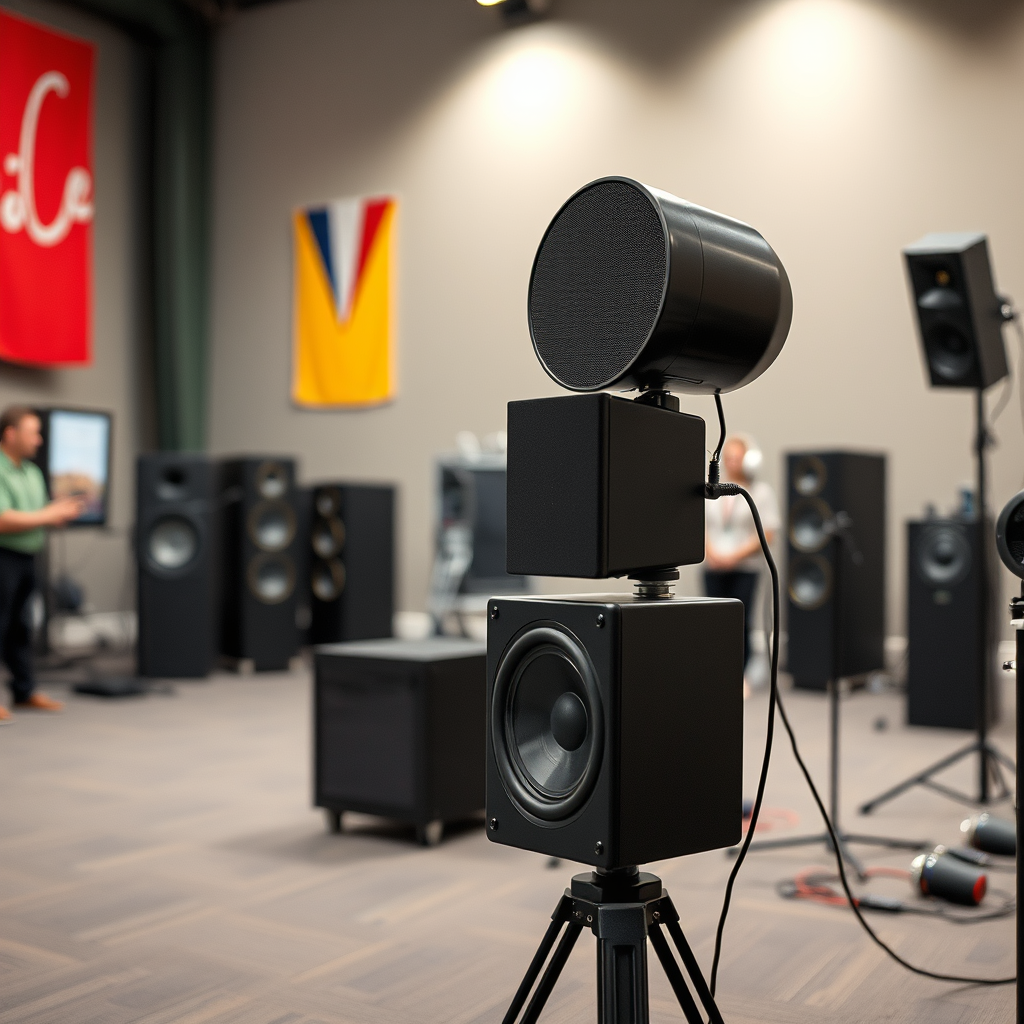
Frequency response is one of the most fundamental specifications when evaluating speakers. It measures the range of frequencies a speaker can reproduce, typically noted in Hertz (Hz). The frequency range generally spans from the lowest bass frequencies to the highest treble frequencies. A wider frequency response indicates better performance, allowing for deeper bass and clearer highs, which is essential for delivering a full and rich audio experience.
For example, a speaker boasting a frequency response of 20 Hz to 20 kHz can reproduce the full range of human hearing. In contrast, a speaker with a frequency response of 40 Hz to 18 kHz may not deliver the same depth in bass or the clarity in treble. When choosing speakers, it is advisable to look for those with a response that suits your listening preferences and the type of audio content you consume, whether it be music, movies, or gaming.
Sensitivity
Sensitivity is another critical specification that indicates how efficiently a speaker converts power into sound, typically expressed in decibels (dB). A higher sensitivity rating means that a speaker can produce louder sounds with less power. This is particularly important for users with lower-powered amplifiers or those who prefer to listen at moderate volume levels without compromising sound quality.
For instance, a speaker with a sensitivity of 90 dB will require significantly less power to achieve the same volume level as a speaker rated at 85 dB. Consequently, speakers with higher sensitivity ratings are often favored by audiophiles or those seeking to maximize their audio setup’s efficiency. When considering sensitivity, it’s essential to match it with your amplifier’s power output to ensure optimal performance and prevent distortion.
Impedance
Impedance refers to the resistance a speaker offers to the current supplied by an amplifier, measured in ohms (Ω). Common impedances for speakers are 4, 6, and 8 ohms. Understanding impedance is crucial for ensuring compatibility between your speakers and amplifier, as mismatched impedance can lead to subpar performance or even damage to your equipment.
For example, an 8-ohm speaker is typically easier to drive for most amplifiers, while a 4-ohm speaker may require more power to deliver the same performance level. When selecting speakers, always check the specifications of your amplifier to match the impedance, thereby ensuring you get the best sound quality and longevity out of your equipment.
Top 7 Speaker Specifications (2024)
| # | Speaker Model | Frequency Response | Sensitivity (dB) | Impedance (Ω) | Power Handling (W) |
|---|---|---|---|---|---|
| 1 | Bose 301 | 45 Hz – 20 kHz | 89 | 8 | 150 |
| 2 | JBL Studio 530 | 45 Hz – 24 kHz | 87 | 6 | 225 |
| 3 | Klipsch R-41M | 68 Hz – 21 kHz | 90 | 8 | 100 |
| 4 | Polk Audio T15 | 60 Hz – 22 kHz | 89 | 8 | 100 |
| 5 | Yamaha NS-6490 | 45 Hz – 20 kHz | 90 | 8 | 100 |
| 6 | Bowers & Wilkins 685 S2 | 49 Hz – 22 kHz | 88 | 8 | 120 |
| 7 | Sony SSCS5 | 53 Hz – 50 kHz | 87 | 6 | 100 |
Power Handling
Power handling refers to the maximum wattage a speaker can handle without distortion or damage. This specification is usually specified as RMS (Root Mean Square) and peak power. RMS power handling describes the continuous power a speaker can manage, while peak power refers to the maximum power for short bursts. Understanding these ratings is crucial for preventing speaker damage during high-volume playback, especially for those who enjoy robust sound experiences.
For instance, if a speaker has an RMS rating of 100 watts and a peak rating of 200 watts, it is essential not to exceed the RMS rating during regular listening sessions. Doing so could lead to distortion and potential damage over time. When configuring your audio system, always consider the power handling specifications to match your amplifier’s output and ensure the longevity of your speakers.
Total Harmonic Distortion (THD)
Total Harmonic Distortion (THD) is a measure of the distortion introduced by a speaker when reproducing sound, expressed as a percentage. Lower THD percentages indicate cleaner, more accurate sound reproduction, making it an essential factor for audiophiles and anyone who values high fidelity in their audio experience.
For example, a speaker with a THD of 0.5% will deliver a clearer sound than one with a THD of 1.5%. This is particularly important for critical listening situations where accuracy is paramount. When evaluating speakers, consider the THD rating as part of your decision-making process, especially if you plan to use the speakers for music production or other professional audio applications.
Driver Size and Type
The size and type of drivers, which include woofers, tweeters, and mid-range speakers, significantly affect sound quality and output. Generally, larger drivers are better at producing low-frequency sounds (bass), while smaller drivers excel in higher frequencies (treble). A balanced speaker system with an appropriate combination of driver sizes can deliver a full-range sound that captures all aspects of the audio spectrum.
For instance, a speaker with a 12-inch woofer will typically provide deeper bass than one with a 6-inch woofer, while a 1-inch tweeter will deliver clearer highs compared to a 3/4-inch tweeter. When choosing speakers, it’s essential to consider the type of music or audio content you’ll be listening to, as well as the overall sound balance you desire.
Enclosure Design
The design of the speaker enclosure plays a crucial role in influencing sound quality. Various enclosure designs, such as sealed and ported types, serve specific acoustic purposes, impacting overall performance and sound characteristics. A sealed enclosure typically offers tighter bass response and better transient response, while a ported enclosure allows for enhanced bass output at the cost of some precision.
Choosing the right enclosure design depends on your listening preferences and the type of music you enjoy. For example, if you prefer genres with heavy bass, a ported enclosure may enhance your experience. Conversely, if you value clarity and precision, a sealed enclosure might be the better option. Understanding the implications of enclosure design can significantly enhance your overall audio experience.
Summarizing these key specifications will empower you to choose the right speakers for your needs. Whether you’re an audiophile or simply looking to enhance your home audio system, understanding how speakers are measured helps in making informed decisions. Explore your options and consider these measurements carefully to achieve the best sound experience.
Frequently Asked Questions
What are the main specifications used to measure speaker performance?
The main specifications used to measure speaker performance include frequency response, sensitivity, impedance, and power handling. Frequency response indicates the range of sound frequencies a speaker can reproduce, while sensitivity measures how efficiently a speaker converts power into sound. Impedance affects compatibility with audio sources, and power handling refers to the maximum power a speaker can handle without damage.
How is speaker sensitivity measured and why is it important?
Speaker sensitivity is measured in decibels (dB) and indicates how loud a speaker will play with a given amount of power. It is important because higher sensitivity ratings mean that a speaker requires less power to produce a certain volume level, making it more efficient and suitable for lower-powered amplifiers.
Why is frequency response critical when choosing speakers?
Frequency response is critical because it defines the range of sound frequencies a speaker can reproduce accurately. A wider frequency response allows for better playback of various music genres and audio content, ensuring that both low bass and high treble sounds are delivered clearly, enhancing the overall listening experience.
Which impedance rating should I look for when buying speakers?
When buying speakers, you should look for an impedance rating that matches your amplifier or receiver, typically 4, 6, or 8 ohms. Matching the impedance is crucial for optimal performance and to prevent damage to either the speakers or the audio equipment, ensuring that you get the best sound quality without any distortion.
What is the best way to measure the power handling capability of speakers?
The best way to measure the power handling capability of speakers is to look at both the RMS (Root Mean Square) and peak power ratings. RMS indicates the continuous power a speaker can handle without distortion, while peak power refers to the maximum power it can withstand in short bursts. This information helps you choose speakers that can handle your audio system’s output without compromising sound quality.
References
- Loudspeaker
https://en.wikipedia.org/wiki/Loudspeaker - Loudspeaker | Definition, Types, & Facts | Britannica
https://www.britannica.com/technology/loudspeaker - https://pubmed.ncbi.nlm.nih.gov/29233151/
https://pubmed.ncbi.nlm.nih.gov/29233151/ - https://www.sciencedirect.com/topics/engineering/loudspeaker
https://www.sciencedirect.com/topics/engineering/loudspeaker - Battle Sign – StatPearls – NCBI Bookshelf
https://www.ncbi.nlm.nih.gov/books/NBK537104/ - https://www.aps.org/publications/apsnews/201905/speakers.cfm
https://www.aps.org/publications/apsnews/201905/speakers.cfm - Google Scholar Google Scholar
https://scholar.google.com/scholar?q=how+are+speakers+measured - Google Scholar Google Scholar
https://scholar.google.com/scholar?q=loudspeaker+measurement - https://scholar.google.com/scholar?q=speaker+performance+evaluation Google Scholar
https://scholar.google.com/scholar?q=speaker+performance+evaluation - An overview of the descent and landing of the Huygens probe on Titan | Nature
https://www.nature.com/articles/nature04347

[…] quality depends on more than price—driver tuning, enclosure design, and tuning consistency across frequencies strongly affect what you hear. Materials and build […]
[…] Q: Will resetting Bluetooth fix both low volume and poor sound quality?Often yes—when the issue is an incorrect audio profile, resetting Bluetooth can restore both loudness and frequency response. […]
[…] leaks can reduce the effective coupling between the earbud and the ear canal, shifting perceived frequency response (Acoustics/ear-canal coupling studies). In practice, users often describe this as “tinny,” […]
[…] Headset” (telephony) differently from “Bluetooth Headphones” (media), affecting volume and frequency response (OS audio routing behavior). When Bluetooth reconnects, the audio profile often re-negotiates, […]
[…] – lower perceived bass (a leaking seal changes frequency response), […]
[…] good in-ear seal improves low-frequency response and perceived loudness; poor sealing can make one earbud sound quieter. In-ear placement (depth and […]
[…] Do I need special audio equipment for a projector?Not always, but many projector setups benefit from a soundbar or receiver because […]
[…] of 2025–2026, I also recommend powering the audio equipment on first (soundbar/receiver), then starting AirPlay—this reduces handshake delays that sometimes […]
[…] external speakers (soundbars or AVRs) typically provide clearer dialogue and better frequency response than built-in projector speakers.” Common audio engineering outcomes (speaker design basics) […]
[…] Stable power and higher-quality HDMI cables reduce handshake interruptions and connection glitches in projector setups. Ambient light strongly affects perceived contrast; controlling room brightness can make streaming appear sharper and more “cinematic.” Keeping firmware updated can improve HDMI compatibility and streaming stability across Apple TV and connected display/audio equipment. […]
[…] single HDMI cable can replace separate audio cabling in many projector setups. If you use external audio equipment, check whether the projector can route audio via HDMI, a dedicated audio-out port, or Bluetooth. In […]