


The number of native English speakers is estimated to be around 370 million to 400 million people globally. This vast number highlights the significance of English as a primary language in various countries. As the world becomes increasingly interconnected, understanding the scope of native English speakers is crucial for effective communication in international contexts. In this article, we’ll explore the distribution of native speakers, factors influencing these numbers, and the implications for global communication.
The Global Distribution of Native English Speakers
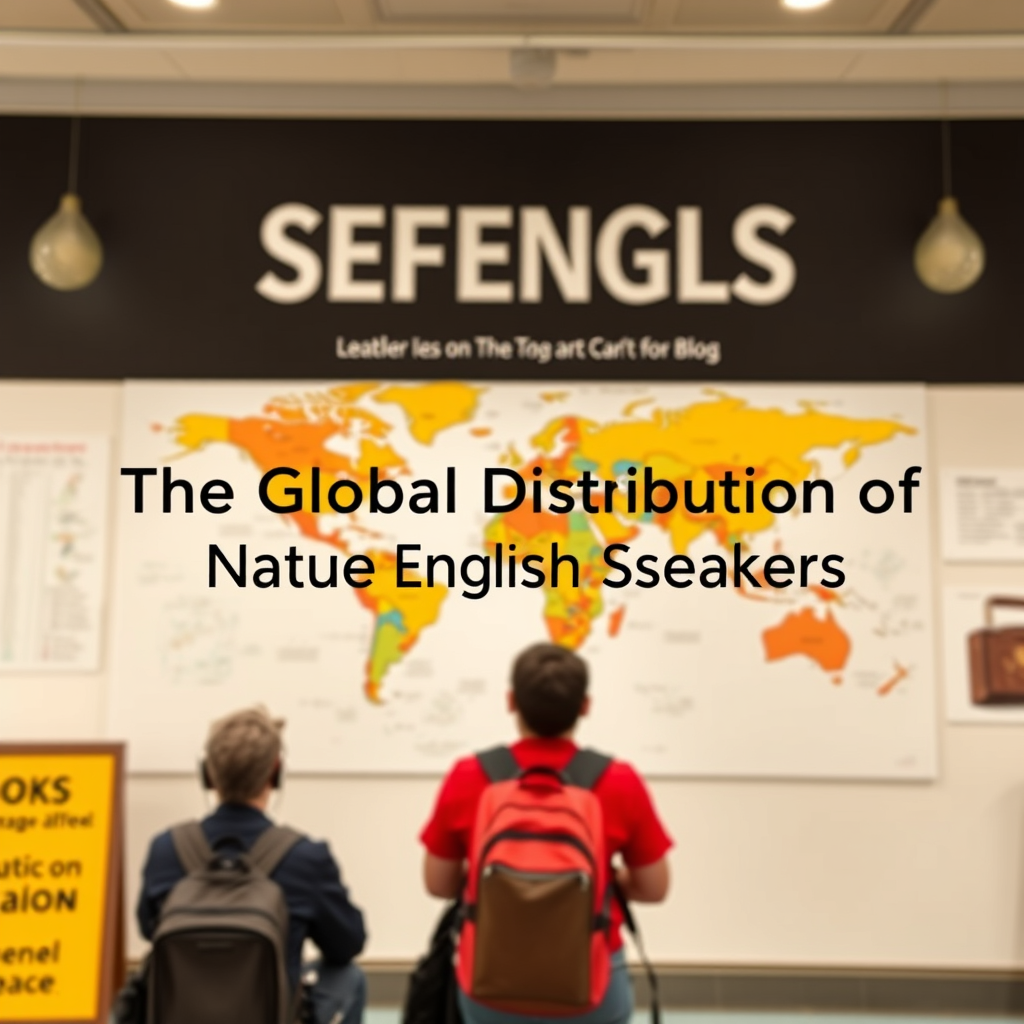
Native English speakers are primarily concentrated in a few key countries, including the United States, the United Kingdom, Canada, Australia, and New Zealand. According to estimates, the United States alone accounts for the largest share, boasting over 300 million native speakers. This substantial population not only reinforces the status of English as a dominant global language but also indicates the cultural and economic influence that these nations exert worldwide.
In addition to these primary countries, English is also spoken by smaller communities in regions such as South Africa, Ireland, and parts of the Caribbean, where English serves as an official language or a first language in many households. The following table provides a clearer picture of the estimated number of native English speakers in these countries.
Estimated Number of Native English Speakers by Country (2023)
| # | Country | Estimated Native Speakers |
|---|---|---|
| 1 | United States | 300 million+ |
| 2 | United Kingdom | 60 million |
| 3 | Canada | 20 million |
| 4 | Australia | 17 million |
| 5 | New Zealand | 5 million |
| 6 | South Africa | 4.8 million |
| 7 | Ireland | 4.8 million |
Factors Influencing the Number of Native Speakers
Several historical and sociopolitical factors contribute to the current number of native English speakers. One of the most significant factors is the historical colonization and expansion of the British Empire. At its height, the Empire spread English across various continents, establishing it as a dominant language in numerous regions.
In addition to colonization, immigration patterns have played a crucial role in shaping the demographic landscape of English speakers. Countries like the United States and Canada have seen large waves of immigration, where newcomers often adopt English as a primary or secondary language, thus affecting the growth and evolution of native speaker communities.
Language policies in many countries also impact the number of native speakers. For instance, nations that prioritize English in education and government can experience an increase in English proficiency among their populations, even if these individuals do not identify as native speakers. These factors create a complex interplay that influences the overall statistics surrounding native English speakers.
Comparison with Non-Native English Speakers
While the estimated number of native English speakers ranges from 370 million to 400 million, the total number of individuals who speak English, including non-native speakers, is approximately 1.5 billion. This stark contrast illustrates the vastness of English as a global lingua franca. Non-native speakers often learn English for various reasons, including business, travel, and academic pursuits, further solidifying its role as the world’s most widely spoken second language.
The distinction between native and non-native speakers is essential for understanding the language’s global influence. Native speakers tend to influence the evolution of the language through their cultural and linguistic practices, while non-native speakers contribute to its diversification and adaptation in various contexts. This dynamic relationship affects how English is perceived, taught, and used globally.
The Impact of English as a Global Language
As the primary language of international business, diplomacy, and academia, English has a profound impact on global communication. Many multinational corporations require proficiency in English, making it a critical language for career advancement. The use of English in scientific publications, international treaties, and global conferences further underscores its significance.
The rise of digital communication has also reinforced English’s status as a global language. The internet, social media, and online learning platforms predominantly use English, shaping how information is disseminated and consumed worldwide. This digital landscape fosters a community of English speakers and learners, promoting cross-cultural exchanges and collaborations.
The Future of Native English Speakers
Looking ahead, trends suggest that while the number of native English speakers may stabilize, the number of non-native speakers will continue to grow. Projections indicate that as countries around the world prioritize English in education and economic development, the global community of English speakers will expand, leading to new dialects and variations.
This evolution may have significant implications for the language itself. Regional accents, idioms, and expressions are likely to emerge, reflecting the diverse backgrounds of speakers. As English continues to adapt and evolve, it may increasingly reflect the cultural nuances of its non-native speakers, enriching the language and broadening its appeal.
Resources for Learning About English Language Demographics
For those interested in exploring English language demographics further, various linguistic studies and databases provide valuable insights. The Ethnologue and the Linguistic Society of America are excellent starting points for understanding the complexities of language use and demographics. Additionally, online resources such as the British Council and the Cambridge English Language Assessment offer updated statistics and research on English language speakers worldwide.
In conclusion, understanding the dynamics of native English speakers reveals important insights into the language’s global significance. As English continues to shape international communication, the interplay between native and non-native speakers will play a pivotal role in its evolution. Engaging with the resources mentioned can further enhance your understanding of the English language and its diverse communities worldwide.
Frequently Asked Questions
How many native English speakers are there worldwide?
As of 2023, there are approximately 375 million to 400 million native English speakers globally. This number continues to grow due to the language’s widespread use in education, business, and the internet, making it one of the most spoken languages in the world.
What countries have the highest number of native English speakers?
The United States, the United Kingdom, Canada, Australia, and New Zealand are among the countries with the highest number of native English speakers. The U.S. alone accounts for about 70% of the total native English-speaking population, highlighting its dominance in the language.
Why is English considered a global language despite having fewer native speakers than other languages?
English is considered a global language because it is the primary language of international business, diplomacy, and the internet, making it crucial for global communication. Its role as a second language for millions worldwide further amplifies its influence, allowing it to transcend its native speaker count.
How does the number of native English speakers compare to non-native speakers?
There are over 1.5 billion people who speak English worldwide, with approximately 1.1 billion of them being non-native speakers. This stark contrast highlights the language’s reach and importance as a lingua franca in various domains such as travel, trade, and technology.
Which regions have the fastest-growing populations of native English speakers?
Regions such as Sub-Saharan Africa and parts of Asia, including India and the Philippines, are experiencing rapid growth in English speakers. This increase is largely due to the rising emphasis on English education and its role in global commerce, leading to a surge in the number of people who speak English as a first language.
References
- English language
https://en.wikipedia.org/wiki/English_language - English language | Origin, History, Development, Characteristics, & Facts | Britannica
https://www.britannica.com/topic/English-language - Spotlighting The World Factbook as We Bid a Fond Farewell – CIA
https://www.cia.gov/the-world-factbook/countries/united-states/ - https://www.ethnologue.com/language/eng
https://www.ethnologue.com/language/eng - The most spoken languages worldwide 2025| Statista
https://www.statista.com/statistics/266808/number-of-native-english-speakers-worldwide/ - https://www.cambridge.org/core/journals/english-today/article/abs/english-the-global-language/94A88A8A2C8E0E4A8F6D2D4D4A24A8E0
https://www.cambridge.org/core/journals/english-today/article/abs/english-the-global-language/94A88A8A2C8E0E4A8F6D2D4D4A24A8E0 - https://www.ncbi.nlm.nih.gov/pmc/articles/PMC6579430/
https://www.ncbi.nlm.nih.gov/pmc/articles/PMC6579430/ - https://www.sciencedirect.com/science/article/pii/S2351978921000059
https://www.sciencedirect.com/science/article/pii/S2351978921000059 - Google Scholar Google Scholar
https://scholar.google.com/scholar?q=how+many+native+english+speakers - Google Scholar Google Scholar
https://scholar.google.com/scholar?q=global+English+speakers+statistics
