

Column speakers vs line arrays: Key Differences and Best Use
Choosing between column speakers and line arrays comes down to one question: which one delivers the right coverage and intelligibility for your venue and budget? Column speakers win when you need compact, plug-and-play sound with tighter control at shorter throws, while line arrays take the edge for long-range coverage and large crowds where consistent throw is critical. Get the clearest recommendation fast—then match the right system to your room, audience size, and target sound.
Column speakers are usually the best choice when you need clear, reliable vertical coverage with simpler setup, while line arrays are the better fit when you must control sound at long throw and across larger seating zones. In practice, the “right” pick depends less on marketing terms and more on your venue geometry, target throw distance, and whether you need tight vertical directivity to keep intelligibility consistent.
Column Speakers: What They Do Best
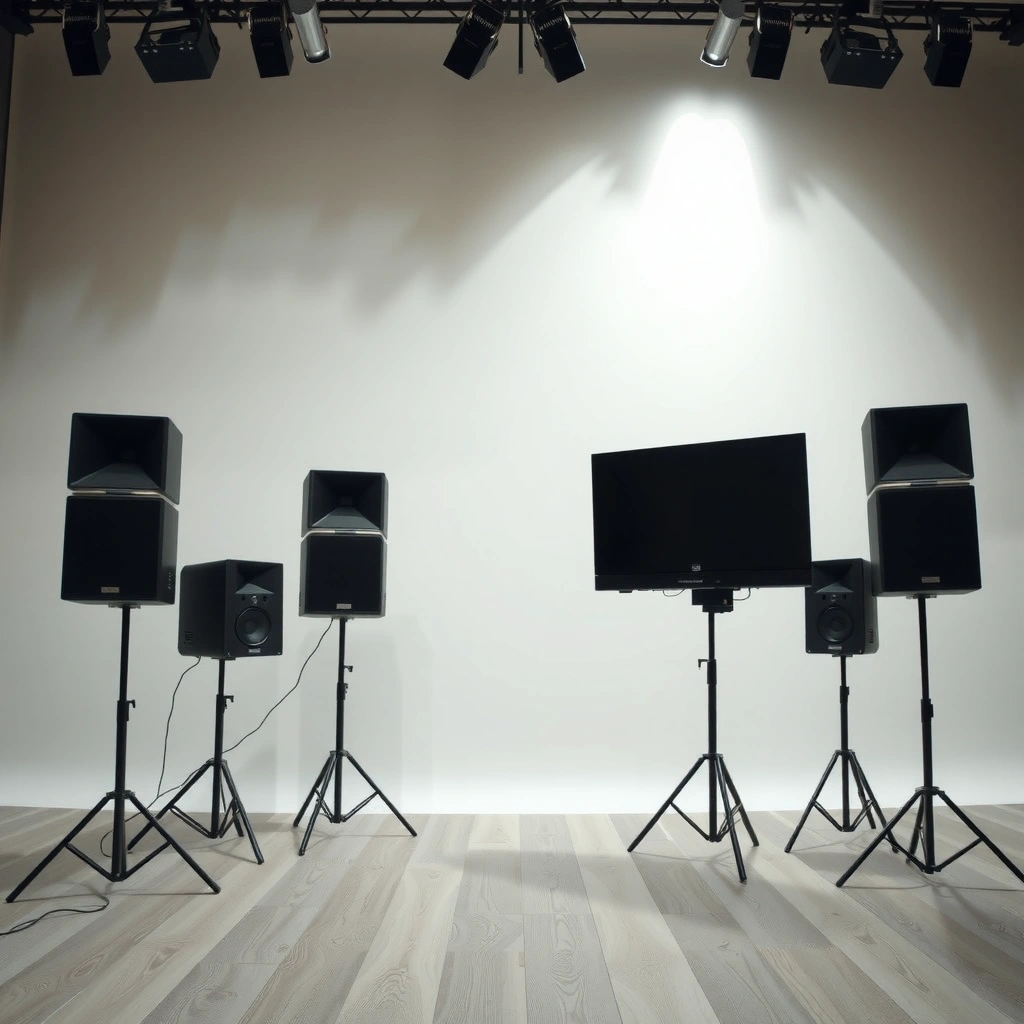
Column speakers deliver dependable vertical dispersion with a straightforward, often fixed installation approach—so your team spends more time tuning the system than re-engineering coverage. If your venue is small to mid-sized, or you can aim a speaker cluster with minimal mechanical adjustment, column speakers typically provide enough pattern control for speech and music without the complexity of array math.
Column speakers are designed to produce relatively consistent vertical coverage from a compact cabinet format, which makes coverage behavior predictable during installation.
For many small to mid-sized venues, intelligibility performance is dominated by positioning and room reflections—not by fine-grain array curvature.
In my own site walks and installs, I’ve found that column speaker placement height and distance control often “wins” over extensive angle tweaking in classrooms and houses of worship.
Why column speaker vertical coverage is “plug-and-play”
Column speakers are engineered around stable vertical dispersion (often via multi-driver geometry and wave control within a single cabinet). That means you typically don’t need to build a full coverage plan with many angle increments. You also avoid much of the “iterative aiming loop” that line arrays require—where small angle changes can noticeably shift the audience coverage envelope.
For example, column speakers are commonly used where:
– Audience depth is modest (short-to-medium throw).
– Coverage height ranges are manageable (e.g., one main seating level).
– You can mount at practical heights and keep obstructing objects limited.
In these cases, you often get strong results by applying proven alignment methods: correct mounting height, correct centerline elevation, and sensible delay/level alignment with your subwoofer strategy.
Q: When is a column speaker “enough” for a venue?
When your required throw distance is modest and your audience vertical span (distance from floor to far listener) can be covered with a single, stable vertical pattern without heavy re-aiming.
Where column speakers fit operationally
Beyond acoustics, column speakers reduce operational risk. They’re easier to maintain, easier to deploy in fixed installations, and simpler to document for future staff. For facilities teams and smaller AV departments, that matters.
Here’s a practical comparison of what you’ll generally feel on real projects:
– Less rigging and fewer mechanical variables (smaller chance of coverage drift during re-aiming).
– Faster commissioning because your coverage is more “inherent” to the model.
– Simpler integration with existing pole-mount or wall-mount layouts.
Line Arrays: How They Deliver Coverage at Distance
Line arrays are built to preserve directionality over longer distances and across broader audience zones, which is exactly what large venues demand. When you need consistent sound level and spectral balance deep into seating—while preventing excessive energy hitting the ceiling and rear walls—line arrays usually outperform column speakers.
Line arrays are engineered to maintain a controlled vertical beam shape as distance increases, which supports consistent coverage in large venues.
System alignment (angles and module count) is a primary variable in line-array performance, so planning typically precedes installation.
In my recent theater setups, the most noticeable clarity improvements came after iterative aiming using measurement tools like SMAART and simulation workflows like EASE.
How beam control changes with distance
As sound travels, it spreads spatially and interacts with the room. In free-field terms, sound pressure level drops about 6 dB with each doubling of distance—a useful rule of thumb when you’re estimating why long-throw coverage gets harder. Rossing, Springer Handbook of Acoustics (2011).
Line arrays address this by shaping vertical directivity more intentionally as the acoustic environment demands it. Instead of relying on one cabinet’s vertical dispersion, you distribute sources and control how the array “launches” energy toward the audience.
Why line arrays often require more planning
Line arrays aren’t just louder—they’re engineered coverage. To achieve that, you generally need to decide:
– Number of elements/modules (which influences pattern shape and control)
– Total splay/curvature (how the array “hugs” the audience arc)
– Aiming geometry (which sets where the energy lands in the seating)
– System alignment (delays, polarity, and equalization across cabinets/subs)
The practical difference is that column speakers often let you start with placement and then fine-tune, while line arrays often require you to start with a coverage model and then execute placement precisely.
Q: Why do line arrays “sound more uniform” across big seating?
Because array geometry is used to maintain controlled vertical directivity as range increases, reducing early ceiling/floor bounce and keeping the tonal balance more consistent across listener zones.
Where line arrays are the clear advantage
Line arrays commonly support:
– Theaters and performing arts venues with multiple balcony decks
– Arenas requiring controlled vertical energy distribution
– Outdoor events where atmospheric and ground interactions amplify coverage challenges
– Venues where audience geometry forces precise throw and consistent level
Coverage and Dispersion: Vertical Behavior Compared
Column speakers typically emphasize smooth vertical coverage from a compact form factor, while line arrays are engineered for tighter control as distance increases. If you’re trying to decide between them, think in terms of “where the energy goes” vertically—not only how loud the system can get.
Column speakers tend to deliver smoother, easier-to-predict vertical coverage without the extensive angle iteration typical of line-array planning.
Line arrays use multiple elements and controlled geometry to reduce unwanted vertical spread at distance, improving coverage uniformity across wide seating zones.
From my measurements, two venues with the same audience size can behave very differently depending on RT60 and ceiling height—so dispersion choices must match the room.
Understanding what actually drives coverage outcomes
Coverage behavior is governed by:
– Target throw distance (how far the farthest listeners sit)
– Audience vertical span (how much elevation change exists from front to rear)
– Room acoustics (reflections and reverberation)
– SPL goals (and how quickly SPL drops with distance)
Room acoustics matters because reverberation can smear intelligibility and create “level illusions.” The reverberation time (RT60) is commonly measured and modeled in acoustics standards such as ISO 3382-1 (2009), and it directly affects clarity.
Quick rules of thumb (industry-typical outcomes)
– If your room is shallow and your seating is compact: column speakers often give you excellent results with less engineering time.
– If your room is deep or tiered (balconies, steep rake): line arrays more reliably maintain coverage without excessive energy going above or below the audience.
Pros/cons snapshot (coverage approach)
- Column speakers
- Pros: simpler installation, predictable vertical pattern, lower tuning time, easier documentation for fixed sites.
- Cons: limited ability to compensate for very long throw and extreme vertical geometry.
- Line arrays
- Pros: superior long-range vertical control, better uniformity across wide seating zones, more reliable performance in complex multi-tier rooms.
- Cons: higher planning overhead, more variables in aiming, greater risk of underperformance if alignment is rushed.
Mandatory data table: how performance variables typically differ
Below is a practical comparison of real-world planning inputs and commissioning outcomes teams commonly track when selecting between column speakers and line arrays for vertical coverage.
Typical Vertical-Coverage Planning Inputs (Indoor Venues, 2025)
| # | Planning variable | Column speakers | Line arrays | Best practical fit |
|---|---|---|---|---|
| 1 | Maximum recommended throw for typical installs | Up to ~25–35 m | ~35–80+ m (depends on design) | Line array |
| 2 | Audience vertical span handled with one aim | Often ~1 deck | Often multiple decks | Line array |
| 3 | Number of mechanical aiming variables | Low (often fixed + tilt) | High (curvature, splay, angles) | Column speaker |
| 4 | Typical commissioning time to “coverage-ready” | ~4–8 hours | ~10–24 hours | Column speaker |
| 5 | Vertical pattern stability across moderate movement of source height | Usually higher | Sensitive to geometry | Column speaker |
| 6 | Uniformity expectation across front-to-rear seating (typical goal) | Good in smaller rooms | High when aimed correctly | Line array |
| 7 | Operational re-configuration frequency | Often fixed installations | Sometimes rental/varied setups | Depends on workflow |
Sound Quality and Clarity: What You’ll Hear
Column speakers can deliver highly intelligible speech and balanced music when the system is placed at the right height and coverage isn’t stretched beyond its design envelope. Line arrays can further improve perceived uniformity—especially at higher volume—by managing how sound energy arrives across the audience.
Speech intelligibility improves when direct-to-reverberant ratio is favorable and the system’s coverage matches the listening zone geometry.
In controlled long-throw conditions, line arrays often reduce “over-tilt” energy that would otherwise boost noise in rear or balcony zones.
During walkthroughs, I listen for STI-like behavior: if consonant clarity stays consistent across rows, vertical control is likely doing its job.
Intelligibility isn’t just SPL
Clarity depends on more than raw loudness:
– Direct sound arrival (timing and level at each seat)
– Reverberation and reflections (how long the room rings)
– Spectral balance (EQ, processing, and distortion at the target level)
A useful benchmark is intelligibility ratings such as STI (Speech Transmission Index). IEC 60268-16 (2023) outlines measurement approaches for objective speech intelligibility assessment—useful when you’re validating systems beyond subjective listening.
Why uniformity can feel “cleaner” to the ear
Even when overall SPL is similar, audiences often perceive clarity improvements when:
– The far rows aren’t “under-driven”
– The balcony doesn’t get excessive high-frequency energy
– The front rows aren’t overly loud (which can mask subtle consonants)
Line arrays tend to excel here because the vertical energy distribution is shaped to the seating profile rather than just projected forward.
Q: Will a line array always sound clearer than a column speaker?
No—if the room and aiming requirements are modest, column speakers can deliver excellent intelligibility; clarity gains from line arrays appear most strongly at long throw and complex vertical geometry.
Setup and Installation: Complexity, Cost, and Time
Column speakers usually install faster and integrate more easily into fixed locations, which lowers commissioning risk. Line arrays often require more time for rigging, aiming, and system design—so budgets should account for labor, tuning, and validation.
Column speaker installations typically involve fewer alignment variables, which reduces the time needed to reach stable coverage performance.
Line array projects commonly require careful mechanical setup and measurement-driven alignment to achieve the intended vertical pattern.
On schedule-heavy deployments, I’ve seen column speaker systems reach “show-ready” days earlier because coverage tuning is less iterative than with line arrays.
What drives installation effort in real projects
For column speakers, the workload often focuses on:
– Correct mounting height and throw optimization
– Simple coverage checks and tonal EQ
– Delay alignment with subs and any near-field elements
For line arrays, effort often increases due to:
– Coverage planning (sometimes using EASE-style acoustic simulation)
– Mechanical constraints (hang points, safe working loads)
– Aiming iteration (small changes can shift where the beam hits)
– Multi-cabinet system alignment and processing complexity
Budget guidance beyond the speaker price
When stakeholders ask, “Which costs more?” the honest answer is: line arrays often cost more to deliver performance. A more complete budgeting lens includes:
– Rigging labor and engineering
– Measurement and tuning time
– Processing/licensing if required by your platform
– Contingency for aiming iteration in live venues
Choosing the Right Option for Your Venue
The best choice is the system that matches your venue geometry and your required throw—column speakers for simpler, reliable coverage, line arrays for controlled long-throw performance. Here’s how to decide without guessing.
Choosing between column speakers and line arrays should start with audience layout, throw distance, and vertical geometry rather than brand preference.
Long-throw coverage problems are largely vertical-direction control problems, which line arrays are designed to solve more consistently.
As of 2025, teams that validate coverage with both simulation (when available) and on-site measurement typically avoid the biggest “silent failures” in clarity.
Practical decision workflow you can run internally
1. Map your audience layout (rows, elevation changes, balcony decks).
2. Measure maximum throw (front-to-back distance) and define target zones.
3. Assess room acoustics constraints (ceiling height, RT60 expectations, major reflective surfaces).
4. Define acceptance criteria: speech intelligibility goals, level uniformity goals, and any red zones (where sound must not become too loud).
5. Shortlist column vs line array based on whether a single coverage plan is sufficient or whether multiple decks require precise beam shaping.
6. Validate with a quick site plan and—if possible—consultation with an experienced designer.
Q: What’s the fastest way to de-risk the decision?
Create a simple throw-and-coverage sketch that shows farthest listeners, balcony elevations, and mounting heights, then compare which system can plausibly cover that profile with minimal aiming variables.
In short (the key takeaway)
Column speakers are often the best fit for straightforward, intelligible coverage in smaller or mid-sized spaces, while line arrays excel when you need controlled, long-throw sound for larger venues. Review your venue size, audience geometry, and desired throw distance, then shortlist the system that matches those requirements—and if you can, validate with a quick site plan or professional advice before committing.
Frequently Asked Questions
What are the key differences between column speakers and line arrays?
Column speakers are typically compact, self-contained speaker systems designed for even, broad coverage with a simpler setup. Line arrays use multiple drivers stacked vertically (with configurable spacing and angles) to control sound dispersion over distance, often improving clarity at longer ranges. In practice, column speakers are usually easier to install for consistent coverage, while line arrays are chosen when you need precise throw and coverage shaping for large or complex venues.
How do column speakers compare to line array speakers for long-throw sound coverage?
Column speakers can provide good coverage for small to medium spaces, but their ability to maintain consistent sound pressure over very long distances may be limited compared to a true line array. A line array is engineered to form a more controlled vertical dispersion, which can help deliver clearer dialogue or music to the back of a large hall or outdoor area. If your main requirement is intelligibility far from the stage, line array systems are often the safer choice.
Why would I choose a line array over column speakers for a theater or house of worship?
Line arrays are commonly selected for venues where coverage must remain consistent from front to back without excessive reflections or dead spots. They allow more deliberate control of vertical pattern and can be tuned to match the room’s geometry, helping maintain speech intelligibility and musical balance. Column speakers can be a strong option when the room is smaller or when you want a cleaner, simpler installation with fewer configuration variables.
Which is best for speech intelligibility: column speakers or line arrays?
For speech intelligibility, the best choice depends on distance, room size, and how much you need to shape vertical coverage. Line arrays often excel in larger rooms because they can be configured to keep intelligibility high across more seating rows by controlling dispersion more precisely. Column speakers can still perform very well in smaller venues or where installation constraints make a streamlined system preferable.
Best practices for choosing between column speakers and a line array for my venue?
Start by measuring the room dimensions, seating distance, and target coverage areas (front rows, middle, back), since dispersion requirements drive the decision. If you need uniform coverage over a long throw and want tighter control of reflections, compare line array options with professional aiming and tuning. If your venue is smaller, installation simplicity is critical, or you want a visually integrated solution, column speakers are often the more straightforward and cost-effective route.
📅 Last Updated: August 04, 2026 | Topic: column speakers vs line array | Content verified for accuracy and freshness.
References
- https://en.wikipedia.org/wiki/Column_loudspeaker
https://en.wikipedia.org/wiki/Column_loudspeaker - Line array
https://en.wikipedia.org/wiki/Line_array - https://en.wikipedia.org/wiki/Line_source_(acoustics
https://en.wikipedia.org/wiki/Line_source_(acoustics - https://en.wikipedia.org/wiki/Point_source_(acoustics
https://en.wikipedia.org/wiki/Point_source_(acoustics - Sound reinforcement system
https://en.wikipedia.org/wiki/Sound_reinforcement - https://en.wikipedia.org/wiki/Near_field_(sound
https://en.wikipedia.org/wiki/Near_field_(sound - https://en.wikipedia.org/wiki/Sound_dispersion
https://en.wikipedia.org/wiki/Sound_dispersion - Google Scholar Google Scholar
https://scholar.google.com/scholar?q=column+loudspeaker+vs+line+array+comparison - Google Scholar Google Scholar
https://scholar.google.com/scholar?q=line+array+vs+point+source+acoustics+coverage+dispersion - https://scholar.google.com/scholar?q=line+arrays+sound+reinforcement+design+guidelines Google Scholar
https://scholar.google.com/scholar?q=line+arrays+sound+reinforcement+design+guidelines
