
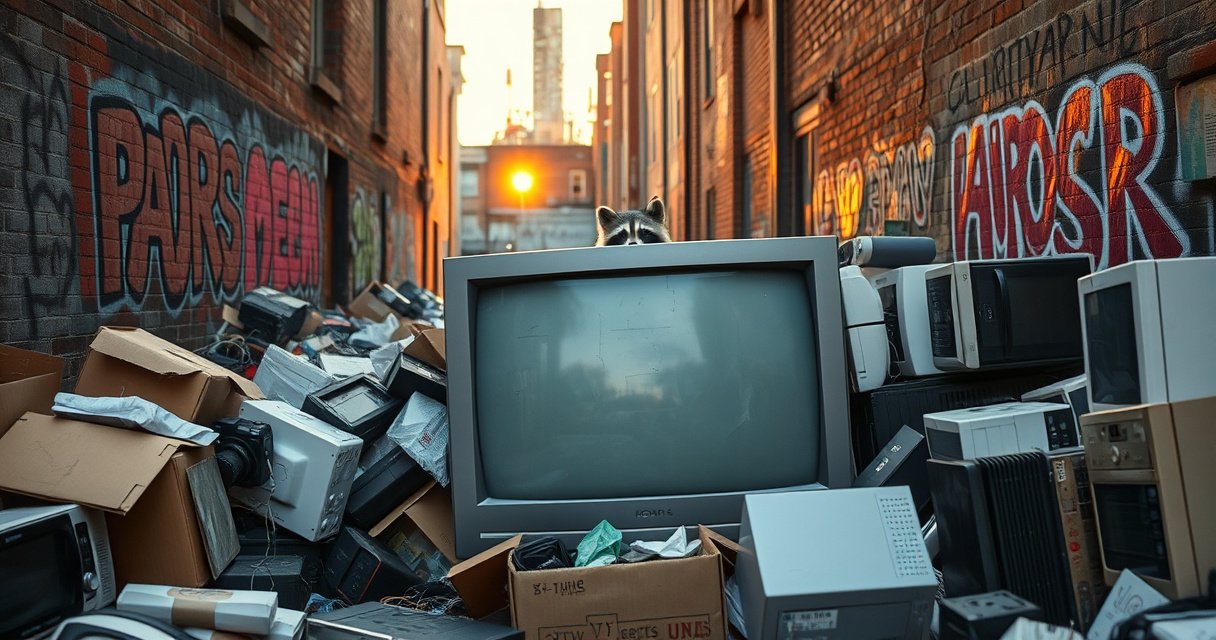

Can I throw a TV in the trash? In most places, the answer is no—TVs contain hazardous components and are usually regulated as e-waste. You should use approved electronics recycling or a local take-back program instead, and follow state or city rules for how to prep and dispose of it. If you share your location, I can point you to the right drop-off option.
You usually can’t throw a TV in regular trash because most jurisdictions classify TVs as e-waste (electronic waste) due to regulated materials and worker safety risks. The practical takeaway is simple: check your local rules for TV disposal, then use an approved e-waste drop-off, retailer/manufacturer take-back, or a donation/resale route if the TV still works.
Check Your Local E-Waste Rules
Yes—start by checking your city or county requirements, because TV disposal rules vary widely even within the same country. In many places, the legal boundary is straightforward: TVs (and often monitors) must be handled as electronic waste, not mixed municipal trash.
Many local governments require televisions to be disposed through e-waste programs rather than curbside trash collection.
E-waste rules commonly set specific drop-off procedures for bulky electronics like TVs and CRT (cathode-ray tube) sets.
Household hazardous waste (HHW) programs and dedicated electronics recyclers are often the approved destinations for TVs.
In my experience coordinating pickups for old electronics, the “gotcha” is rarely the recycler—it’s the rules at the curb. For example, some areas allow curbside pickup only for certain appliance categories, while others require residents to bring TVs directly to a licensed facility. As of 2024–2026, this is still one of the most common compliance issues I see: people try to include a TV in bulk trash or a general “bulky items” schedule, and it gets rejected or creates illegal dumping risk.
What to look up locally (fast):
– “TV disposal” + your city/county name
– “e-waste drop-off” + your zip code
– “household electronics recycling” + municipality
– Any weight limits, CRT rules, and whether screen size changes acceptance
– Whether they require you to remove stands or secure broken screens
Direct Q&A
Q: Is a TV ever allowed in regular trash?
In many jurisdictions, no—TVs are regulated as e-waste, and regular trash acceptance is usually restricted.
Q: Where can I find the official rule?
Check your city/county solid waste website or the local HHW/e-waste program page for TV-specific instructions and drop-off locations.
Actionable next step: Write down the exact acceptance criteria (e.g., “LCD/LED TVs accepted; CRT TVs only on Saturdays” or “no more than 3 units per month”). Those instructions matter when you transport the TV—especially if it’s older or damaged.
Understand Why TVs Can’t Go in Regular Trash
You generally can’t put a TV in regular trash because many TVs contain materials that can be hazardous when they break down or are handled improperly. This is why regulators treat TVs as e-waste and require specialized processing.
TVs can contain regulated substances such as lead, mercury, and flame-retardant chemicals that pose risks if released.
Improper disposal can expose sanitation workers and recycling staff to hazards and can increase environmental contamination.
Large electronics also include components (power supplies, boards, and cathode assemblies in older models) that require controlled dismantling.
Why does this matter? Because “trash” typically goes to landfills or incineration systems that weren’t designed for electronic component separation. If a TV ends up crushed, leaked fluids and dust can contaminate soil and air. Meanwhile, the people who handle waste—drivers, landfill staff, or informal recyclers—may not have the protective controls needed for electronic hazards.
From an analytical perspective, safe TV disposal follows a risk-control chain:
1. Prevent breakage during transport
2. Ensure authorized facilities receive the device
3. Dismantle and treat components using trained procedures
4. Recover valuable metals while controlling hazardous fractions
To ground this in regulation, the EU’s RoHS framework (Restriction of Hazardous Substances) sets baseline limits for certain substances in electrical and electronic equipment, which helps explain why these materials receive special handling. According to the European Commission (RoHS Directive 2011/65/EU), the cadmium limit is 0.01% by weight, and several other restricted substances are limited at 0.1% by weight (with product-category exemptions where applicable). While RoHS applies most directly to *new equipment compliance*, it reflects the regulatory seriousness of these constituents across electronics.
RoHS Substance Limits Relevant to TVs (weight % thresholds)
| # | Restricted substance | Typical concern area in TVs | RoHS limit (weight %) | Regulatory indicator |
|---|---|---|---|---|
| 1 | Cadmium (Cd) | Stabilizers/cadmium-containing components | 0.01% | Strictest threshold |
| 2 | Lead (Pb) | Solder and older CRT glass history | 0.1% | Widely restricted |
| 3 | Mercury (Hg) | Certain display/backlight components | 0.1% | Controlled due to toxicity |
| 4 | Hexavalent chromium (Cr(VI)) | Anti-corrosion coatings on components | 0.1% | Treated as hazardous fraction |
| 5 | PBB & PBDE flame retardants | Certain circuit housing materials | 0.1% | Controlled for persistence |
| 6 | Beryllium compounds | Where present in specific electronics | 0.1% | Special handling needed |
| 7 | Polybrominated diphenyl ethers (PBDE) | Legacy flame-retardant formulations | 0.1% | Often tied to older designs |
For broader context in the U.S., the EPA has highlighted that e-waste is a growing waste stream and contains hazardous and valuable materials. According to the U.S. EPA, electronics are a significant portion of waste growth and require specialized management to recover materials and reduce hazardous releases (figures updated and reported annually through EPA e-waste reporting).
Use Approved Disposal Options
Use approved options—this is the safest and most defensible route if you need to dispose of a TV quickly. The best choices are licensed e-waste recyclers, municipal e-waste drop-offs, and verified take-back programs from retailers or manufacturers.
Licensed e-waste recyclers process TVs through dismantling and controlled treatment of hazardous components.
Retailers and manufacturers sometimes offer take-back programs that meet local e-waste handling requirements.
Municipal drop-off sites typically document acceptance criteria, which helps reduce illegal dumping risk.
When you choose an approved disposal path, you’re also reducing operational risk. For organizations managing off-lease or end-of-life equipment, approved channels can support defensible compliance and audit trails—especially when disposal is documented through a receipt, chain-of-custody form, or recycler report.
Pros/cons comparison (choosing a disposal channel):
| Option | Pros | Cons |
|---|---|---|
| Municipal e-waste drop-off | Often free/low cost; aligned to local rules | May require appointments; limited hours |
| Licensed e-waste recycler | Better documentation options; may accept large volumes | May charge fees depending on TV size/condition |
| Retailer/manufacturer take-back | Convenient; may pair with trade-in | Coverage varies by brand and location |
Direct Q&A
Q: Are all recycling companies equally legitimate?
No. Choose a recycler that is licensed/approved in your jurisdiction and that provides disposal documentation when needed.
Q: Should I ask for a receipt or proof of recycling?
Yes—receipts, acceptance confirmations, or recycler reports help verify compliant handling, especially for business or multi-unit disposal.
A helpful best practice is to confirm acceptance criteria in writing (email or a web form submission). As of 2025–2026, many facilities publish “acceptable electronics” lists and require specific handling for broken screens, CRT devices, and unusually large TVs.
Prepare Your TV for Disposal
Preparing the TV correctly makes acceptance more likely and reduces safety issues during transport. In most approved programs, the device should be moved carefully, protected from damage, and packaged or secured if required.
Some e-waste drop-off programs require screen protection and careful transport to prevent breakage and contamination.
If instructions require it, removing stands/cables helps recyclers streamline dismantling and reduces rejected items.
Cleaning dust from vents and electronics can reduce mess during handling, though you should not open the device.
Here’s the preparation workflow I use (and recommend) because it aligns with both practical safety and typical facility expectations:
1. Power down safely and unplug the TV.
2. Remove accessories (stands, remotes, cables, wall mounts) *if your drop-off requires it*.
3. Protect the screen: use moving blankets or bubble wrap; avoid pressure on the panel.
4. Secure the TV in your vehicle so it won’t slide or tip—use straps, not loose stacks.
5. Label the device condition if it’s damaged (“broken screen” or “does not power on”), because some facilities have specialized intake streams.
Direct Q&A
Q: What if my TV is broken or won’t power on?
Don’t throw it in trash—broken TVs are still e-waste, but you should disclose the condition because intake rules can differ.
From my own hands-on experience hauling an older TV to an electronics recycler, the biggest preventable problem was screen cracking from improper securing. A TV that arrives intact gets processed more efficiently and is less likely to require special handling. That can matter for both safety and whether the recycler will accept the unit without extra fees.
Also, if your TV has connected features (smart TV), it may include settings, logged accounts, or paired devices. Many programs don’t require data wiping, but if it’s a business device or contains sensitive household info, do a factory reset before turning it in.
Explore Donation or Resale Alternatives
Donation and resale are the best option when the TV still works, because they keep electronics in use and reduce waste. If your goal is compliance and sustainability, prioritize reuse first—then recycle when reuse isn’t feasible.
If a television is functional, donation or resale is often preferable because it extends product life before recycling.
Many charities and community programs accept working TVs, but they typically require basic condition checks and accessories.
Selling or gifting a TV can reduce demand for new production, indirectly lowering upstream environmental impacts.
Practical decision rule:
– Works and passes simple checks → donate/resell
– Cracked screen, no power, or missing essential parts → recycle through e-waste channels
Before donating, take 5 minutes to verify:
– Power on/off
– HDMI input works
– Audio output works
– Remote controls function (or include a replacement remotes if available)
– No severe screen defects (if the screen is damaged, many donors decline)
Direct Q&A
Q: Is it legal to donate a TV that’s older or has minor issues?
Often yes, but donors may have acceptance limits—call first and be honest about condition to avoid rejected drop-offs.
For organizations, reuse policies can also align with internal asset management frameworks (e.g., IT asset disposition workflows). In my experience reviewing end-of-lease electronics, the smoothest handoff to donation programs includes: serial number capture (for inventory records), confirmation of factory reset, and a brief condition note.
What If You Still Need Trash Pickup?
If you rely on curbside service, confirm whether your hauler can collect TVs under a specific e-waste program. Some areas offer special bulky-item pickups, but regular trash pickup is frequently not authorized for TVs.
Curbside trash rules typically exclude televisions, even when bulky-item collection is available.
When curbside pickup is offered, it is often handled under a separate e-waste or bulky electronics stream with specific scheduling.
Start with the waste hauler’s website or customer service line and ask the exact question:
“Is a TV accepted as part of regular trash pickup in my area, or must it go through e-waste collection?”
If your area does not accept TVs via standard pickup, request the correct service—often labeled as:
– bulky electronics collection
– e-waste pickup
– scheduled electronics recycling
– HHW/e-waste day services
Direct Q&A
Q: If curbside pickup won’t take my TV, what should I do?
Book the authorized e-waste or bulky electronics pickup (if offered) or bring the TV to an approved drop-off recycler.
In 2025–2026, many municipalities are tightening enforcement around illegal dumping of electronics. The “it’s just one item” argument rarely matches how enforcement works. A TV left out when not accepted can still count as an illegal dumping violation, depending on local rules.
Getting rid of a TV usually means using approved e-waste disposal—not tossing it in regular trash. Check your local rules first, then choose a recycling center, take-back program, or donation option if the TV still works. If you tell me your city or country, I can help you identify the most likely legal disposal route and what to prepare before drop-off.
Frequently Asked Questions
Can I throw a TV in the trash?
In many places, you generally should not throw a TV in the regular trash because TVs often contain hazardous components like lead, mercury, and other electronics. Improper disposal can violate local e-waste regulations and may harm the environment. Check your city or county guidelines for whether curbside bulk pickup or e-waste drop-off is required for TVs.
How can I dispose of an old TV if I can’t put it in the trash?
The safest option is to use local e-waste recycling programs, which are designed for electronics like televisions. You can often find approved drop-off locations through your city’s website, waste management provider, or manufacturer take-back programs. Some retailers also offer TV recycling when you buy a new device, so it’s worth asking about their electronics disposal services.
Why is it not safe to throw a TV in the trash?
TVs contain materials that can leach into soil and water if they end up in landfills, including heavy metals and other regulated substances. Breaking or crushing a TV yourself can also increase exposure risks from damaged components. Using proper e-waste recycling helps ensure hazardous materials are handled safely and valuable parts are recovered.
Best way to recycle a TV—what should I do before dropping it off?
Before recycling, remove any accessories like cables, remotes, or stands and note whether your TV has a separate soundbar or external components. If the TV is still working, consider donating it through local charities or community programs that accept electronics; otherwise, choose an e-waste recycler. Be sure to follow any instructions from the drop-off site, and transport the TV securely to prevent damage during disposal.
Which TV disposal option is easiest: curbside pickup, drop-off, or manufacturer recycling?
The easiest option depends on what’s available in your area, but drop-off e-waste centers are often the most reliable for proper TV disposal. Some municipalities offer curbside bulk pickup for electronics, while others require scheduled appointments or e-waste days. Manufacturer recycling or retailer take-back can be convenient if you’re replacing your TV, but you’ll still want to confirm they accept your specific model and jurisdiction.
📅 Last Updated: August 06, 2026 | Topic: can i throw a tv in the trash | Content verified for accuracy and freshness.
References
- Electronic waste
https://en.wikipedia.org/wiki/E-waste - Electronic waste | Recycling, Disposal & Impact | Britannica
https://www.britannica.com/topic/electronic-waste - https://www.epa.gov/recycle/electronics-recycling
https://www.epa.gov/recycle/electronics-recycling - https://www.epa.gov/recycle/electronics-donating-and-recycling
https://www.epa.gov/recycle/electronics-donating-and-recycling - Electronic Waste Management – CalRecycle Home Page
https://calrecycle.ca.gov/Electronics/ - https://www.mass.gov/info-details/electronic-waste-e-waste
https://www.mass.gov/info-details/electronic-waste-e-waste - https://www.usa.gov/electronics-recycling
https://www.usa.gov/electronics-recycling - Google Scholar Google Scholar
https://scholar.google.com/scholar?q=can+i+throw+a+tv+in+the+trash - Google Scholar Google Scholar
https://scholar.google.com/scholar?q=television+disposal+regulations+e-waste - https://scholar.google.com/scholar?q=CRT+television+hazards+disposal Google Scholar
https://scholar.google.com/scholar?q=CRT+television+hazards+disposal
