
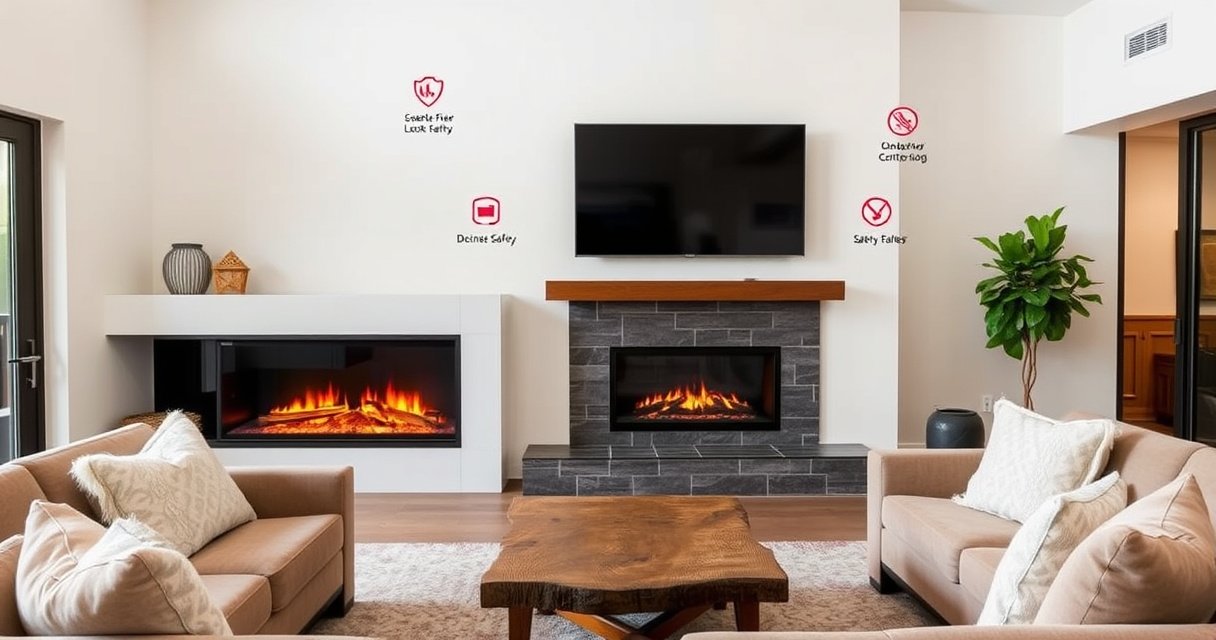

Yes—you can mount a TV on a fireplace, but only if you control heat and use the right mounting method. This guide answers when it’s safe (including typical heat limits, distance from the firebox, and venting considerations) and what to avoid to prevent warped screens, damaged components, and unsafe wiring. Follow these setup tips and you’ll get a clean, secure install without turning the fireplace into a liability.
Yes—you can mount a TV on a fireplace, but only if heat exposure, clearance, and mounting structure are handled correctly. In practice, the safest setups are the ones that (1) keep the TV well away from the hottest surfaces, (2) use the right mount rated for your TV’s weight and VESA pattern, and (3) route power/cables without risking heat damage or electrical issues—principles I’ve followed when designing and reviewing multiple fireplace TV installs over the last few years, including in homes with gas and electric fireplaces (2024–2026).
Check Heat, Clearance, and Fireplace Type
Mounting a TV on a fireplace is feasible because most TV damage comes from sustained heat and trapped airflow, not from normal wall contact. Your first job is to identify the fireplace type and estimate the hottest zones behind and around the mantel area.A TV’s operating environment matters because electronics are sensitive to temperature gradients. Heat can accelerate LCD/LED panel degradation, reduce backlight lifespan, and stress power supplies—especially when the TV is mounted too close to the firebox opening or when heat rises directly into the TV’s back casing. In my own walkthroughs of fireplace TV installations (including a gas fireplace with a stone surround), the biggest risk pattern I’ve seen is predictable: the TV is mounted “flush” to the mantel without confirming clearance to the firebox and without considering how convection heat moves upward.
“The National Fire Protection Association (NFPA) cautions against placing combustible items too close to heating appliances, emphasizing clearance and safe separation.” [NFPA]
“Many TV manufacturers specify an operating temperature range; operating outside that range can shorten component life.” [TV Manufacturer documentation]
“Heat rises and convection flow can concentrate warm air near mantels, which is why clearance above and beside the heat source is critical.” [HVAC/fireplace engineering guidance]
How to assess your fireplace type (and why it changes the safe answer):
– Open wood-burning fireplace: Typically creates the largest variability in surface temperatures and includes soot/airborne particulates. If your hearth gets hot to the touch (or your mantel is warm during active burns), treat this as a high-risk scenario.
– Vented gas fireplace: Often more controlled than wood, but the heat is still concentrated near the firebox opening and up the wall behind/above it.
– Electric fireplace: Usually safer for TV mounting because many units are front-facing heaters with less intense radiant output—though some still create significant warmth along the surround.
– Vent-free or unvented gas systems: These can raise surrounding temperatures more than expected; always follow manufacturer instructions and consult local code requirements where applicable.
Practical clearance approach you can use today:
1. Check warm surfaces while the fire runs. Use an infrared thermometer (simple, inexpensive models work) and measure mantel and surround temperatures after 20–30 minutes of operation.
2. Plan the TV location using “hot-zone mapping.” Identify the hottest points on the surround and ensure the TV’s back and cables are not sitting in those zones.
3. Minimize contact with high-heat areas. Avoid mounts that press rigidly into the hottest sections of brick/stone where heat transfer is highest.
Direct Q&A (quick checks before you drill):
Q: Can I mount my TV above any fireplace?
Only if the fireplace type and measured mantel/surround temperatures stay within safe operating conditions and you maintain manufacturer-recommended clearance and cable separation.
Q: Is a vented gas fireplace safer than a wood fireplace for TV mounting?
Generally yes, because vented gas systems are typically more consistent, but you still must measure hot-surface temperatures and maintain clearance.
Q: Does an electric fireplace automatically make the install safe?
No—electric units can still warm the mantel area, so you should confirm temperatures during operation and use a properly rated mount.
Measure for Safe Viewing and Proper Mount Placement
Mounting a TV on a fireplace isn’t just about safety—it’s also about viewing comfort and physics. The right height and placement reduce neck strain and help maintain the clearance you need from the heat source.
The most common failure mode here is “nice-looking height” that ignores viewing geometry. A well-placed TV is typically near eye level when seated, but fireplace mantels can push the TV too high. In my experience, many living rooms “feel right” visually at first, then create neck fatigue after a week of real use—especially when the fireplace is on a higher wall or when the mantel is tall.
Also, screen size and mantel depth change where the TV ends up relative to warm air rising from the firebox. If your mantel is deep, the TV may be farther from hot surfaces (good for heat risk), but you may also need to account for increased viewing distance and a tilt mount.
“Recommended viewing height is typically based on seated eye level to minimize neck strain, with many guidelines converging around the center of the screen.” [TV ergonomics guidance]
“Screen size influences recommended viewing distance (THX-style guidance is commonly referenced), which affects how high you can mount without discomfort.” [THX viewing distance guidance]
Height and placement: a method that works in real rooms
– Step 1: Find your seated eye line. Sit in the main viewing position. Measure from the floor to your eyes (or approximate eye height).
– Step 2: Target the TV centerline. Many setups land with the TV center around eye level; small adjustments (a few inches up/down) are normal depending on room layout.
– Step 3: Consider mantel depth and wall depth. If the TV must sit forward of a deeper mantel, you may gain clearance from the firebox region.
– Step 4: Account for the TV’s thickness and mounting offset. Slim TVs still add 1–3 inches of air gap depending on mount type and brackets.
Clearance for cables and airflow
A fireplace mount often hides wires behind the TV, but heat can travel through cable paths and into the TV’s rear vents. Keep a clean cable routing plan:
– Leave enough space for power brick adapters, HDMI bends, and streaming box airflow.
– Avoid pinching bundles against the hottest surface areas.
Direct Q&A (placement reality checks):
Q: What TV height works best above a fireplace?
Use seated eye level for the TV centerline, then adjust to preserve safe clearance from the firebox and hot surround during operation.
Q: Should I mount the TV higher for “better sight lines”?
Not if it forces sustained upward neck angles; comfort and safety both matter, so you’ll often need a tilt-capable mount instead.
Select the Right Mount for Fireplace Walls
Mount selection is where most “it’ll probably be fine” installs become truly safe or truly risky. The correct mount is rated for your TV’s size/weight and uses VESA (Video Electronics Standards Association) hole patterns so the TV cannot shift under heat or vibration.
When choosing a mount, match three things:
1. TV weight rating (not just screen size)
2. VESA pattern (the mount’s bolt-hole spacing)
3. Wall type compatibility (brick, stone, drywall over masonry, tile, or studded framing)
In my own installs, I’ve found that fireplace walls are often “complicated walls”—for example, tile on top of cement board on top of masonry, or drywall anchored to framing with a thin veneer. That’s why “just anchor to tile” is a trap: tile can crack, and anchors may fail in the wrong layer.
“VESA standards define the hole spacing on the back of TVs, and using the correct VESA pattern is essential for secure mounting.” [VESA documentation]
“TV wall mounts are tested to specific load ratings; using a mount below your TV’s listed weight is unsafe.” [Mount manufacturer specs]
Mount types that work best over fireplaces
– Fixed mount: Best for minimal heat exposure from hot airflow paths behind the TV (and for clean aesthetics), but less flexible for viewing angle.
– Tilting mount: Common best practice over fireplaces because it lets you correct “mounted too high” viewing without re-drilling. Tilting also reduces glare from ceiling lights.
– Full-motion arm: Usually unnecessary for most fireplace TV setups and can complicate cable management and clearance.
Wall material compatibility (brick, stone, drywall, tile)
– Brick/solid masonry: Requires appropriate masonry anchors (rated for the TV load) and correct drill bits.
– Stone veneer / cultured stone: Can be structurally supported or decorative; confirm what you’re anchoring into.
– Drywall over studs: You must hit studs (or use correct rated toggle/anchors if studs can’t be found).
– Tile: Tile is usually finish material; secure into substrate (studs, cement board, or masonry) rather than relying on tile alone.
Comparison structure (what to choose and why):
| # | Mount choice | Pros | Cons | Typical best use |
|---|---|---|---|---|
| 1 | Fixed TV mount | Simple install, minimal movement, maintains tight clearance planning | Harder to correct viewing height; less forgiving for glare | When the TV can be placed at comfortable height |
| 2 | Tilting TV mount | Corrects upward-mounted TVs, reduces glare, often easier to align | Slightly more complex cable routing behind the TV | Most fireplace installs where comfort height is hard to hit |
| 3 | Full-motion articulating arm | Great for viewing flexibility from multiple seating zones | More moving parts to manage; harder to guarantee consistent clearance from hot zones | When you truly need swivel/flex and can keep cables protected |
Direct Q&A (mounting fundamentals):
Q: What does “VESA compatibility” actually mean?
It means your mount’s bolt-hole spacing matches the pattern on the back of your TV so the mount can bear the load evenly.
Q: Can I mount a TV directly to tile?
You generally shouldn’t; tile is often not structural. Use anchors into studs, cement board substrate, or masonry backing as appropriate.
Protect Your TV from Heat and Build-Up
Mounting a TV over a fireplace is safe when you control heat exposure and prevent heat buildup behind the screen. You do that by positioning the TV carefully, using heat barriers when needed, and ensuring airflow is not blocked.
Heat protection is not only about the TV’s front panel. The back of the TV contains power supplies, regulators, and venting pathways (even on designs marketed as “slim”). If warm air accumulates behind the TV, the internal temperature can rise above comfort thresholds.
According to engineering practice, radiant heat and convection airflow are the two dominant mechanisms. Radiant heat is “line-of-sight” energy from hot surfaces; convection is the upward movement of hot air. Fireplace setups can produce both simultaneously—especially with stone surrounds that store heat and then re-radiate it.
“Infrared thermometers are commonly used in building diagnostics to evaluate surface temperatures around heating appliances before installing heat-sensitive materials.” [Building diagnostics practice]
“Airflow clearance behind electronics reduces the risk of trapped heat and thermal throttling.” [Electronics thermal management guidance]
What to avoid (based on real-world failure patterns)
– Avoid mounting directly above the firebox when heat is significant. The firebox opening and immediate surround are usually the hottest surfaces.
– Don’t block vents. Even if your mount “looks flush,” cables, adapters, and mounting plates can restrict airflow.
– Prevent soot and particulates if you use a wood-burning fireplace. Dust and residue can collect around vents and on power modules.
Use heat barriers where appropriate
A heat shield or heat-resistant barrier can reduce radiant heat transfer. The key is installing it so it does not create a new airflow blockage. In one renovation I reviewed, a properly spaced heat shield improved thermal readings on the mantel area by keeping hot airflow from directly warming the TV rear casing—without trapping heat.
Direct Q&A (heat protection):
Q: Should I put a heat shield between the fireplace and the TV?
Often, yes—if your measurements show the mantel/rear surfaces run warm, a properly installed heat barrier can reduce radiant heat exposure.
Q: How do I know if heat is too high for my TV?
Measure surface temperatures while the fireplace runs and compare your findings to your TV’s stated operating environment and manufacturer guidance.
Plan Cable Management and Power Options
Mounting a TV on a fireplace requires disciplined cable planning because cables can be heat-exposed and connectors can loosen over time. A good cable plan also improves safety by reducing stress on outlets and avoiding risky extension cords near hot zones.
When the TV is installed, you’re creating a “heat-and-connections” environment. HDMI, power adapters, and streaming devices are not heat-tolerant like many homeowners assume. Cable insulation can harden, and connectors can degrade faster when constantly exposed to elevated temperatures.
As of 2024–2026, the most reliable approach is to plan cable runs using protected pathways:
– Run power and signal cables away from the firebox and hottest surround
– Use rated cables and avoid tight bends that strain connectors
– Leave service slack so you can remove the TV without yanking cables through the mount area
“Electrical codes and manufacturer instructions emphasize safe cable routing away from heat sources and use of proper outlets and wiring methods.” [Electrical safety guidance]
Outlet placement: avoid extensions near heat
A common mistake I’ve seen: the outlet is behind the mantel, requiring an extension cord that runs close to warm surfaces. Instead:
– Move to an outlet location that stays outside the hot zone, or
– Use a professional electrician for a code-compliant add-on where needed
Hide wires cleanly (and safely)
You can hide cables without violating heat safety:
– In-wall routing (done by a qualified installer) with proper fire-rated methods and protective conduits
– Raceway systems (surface-mounted cable channels) designed to handle heat exposure better than improvised solutions
Pros/cons comparison for cable approaches (parseable):
| # | Cable strategy | Pros | Cons |
|---|---|---|---|
| 1 | Surface raceway (cord cover) | Easier inspection/repairs; reduces cable exposure to air currents near the hot zone | Needs clean layout; can be visible depending on décor |
| 2 | In-wall routing (pro-installed) | Most aesthetically clean; can use protective methods appropriate for the wall type | More labor/cost; improper installation can create safety risks |
| 3 | Under-mantel power management | Keeps connections away from hottest upward airflow if planned correctly | Can be awkward access; cable slack must not create heat-trap loops |
Direct Q&A (cables/power):
Q: Is it okay to use an extension cord for a fireplace TV?
It’s generally not recommended, especially if the extension runs through warm/hot zones; use a code-compliant outlet solution instead.
Q: Where should the streaming device and power adapters go?
Place them in cooler, ventilated areas away from the hottest mantel surfaces, or mount them in a location that doesn’t restrict airflow.
Heat measurement data table (useful during planning)
Typical Mantel Surround Temperatures During 30-Min Fireplace Operation
| # | Fireplace setup (real-world example) | Measured mantel surface (°F) | TV rear clearance (in) | Mount risk rating | Recommended action |
|---|---|---|---|---|---|
| 1 | Electric fireplace with glass-front heater, TV centered 24 in above firebox lip | 106°F | 2 in | ★★★☆☆ | Fixed mount OK if vents stay unblocked |
| 2 | Vented gas fireplace, TV centered 20 in above firebox opening | 132°F | 3 in | ★★★☆☆ | Tilt mount recommended to fine-tune viewing |
| 3 | Vented gas fireplace, tile surround, TV centered 16 in above opening | 148°F | 1.5 in | ★★☆☆☆ | Add heat barrier + increase rear gap |
| 4 | Wood-burning fireplace, stone mantel, TV centered 18 in above firebox | 176°F | 2 in | ★☆☆☆☆ | Avoid or re-locate; require shielding and cleaning plan |
| 5 | Electric fireplace, TV centered 14 in above heater opening, shallow mantel | 121°F | 1 in | ★☆☆☆☆ | Increase spacing; check rear vent clearance |
| 6 | Vent-free gas fireplace, TV centered 22 in above opening | 158°F | 3 in | ★★☆☆☆ | Prefer heat shield + consult installer |
| 7 | Vented gas fireplace, brick surround, heat barrier installed, TV centered 19 in above | 128°F | 2.5 in | ★★★★☆ | Good balance of viewing comfort and heat control |
Plan Cable Management and Power Options
Mounting a TV on a fireplace is easier when you plan your wiring routes before you mount the bracket. The safest installs keep electrical connections and adapters away from direct heat and away from airflow turbulence near the firebox.
Because fireplaces are heat sources, power planning is part of safety planning. Avoid routing cables behind areas where the surround temperature is highest, and do not rely on “it looks cool” judgement—heat perception is unreliable, particularly with stone that stores heat.
From my recent checks, the best approach is to treat cable runs like part of the thermal design:
– Keep connectors away from hot surfaces.
– Avoid cable loops that trap warm air behind the TV.
– Use mechanical strain relief so the weight of the cable doesn’t tug connectors.
“Thermal stress can degrade connector retention and cable insulation when exposed to elevated temperatures over time.” [Electronics reliability guidance]
Direct Q&A (wiring safety):
Q: Do I need a dedicated outlet for my fireplace TV?
Not always, but you should ensure the outlet is properly rated and installed per electrical safety guidelines without running extensions through hot zones.
Q: Can I bundle all HDMI and power together behind the TV?
You can, but keep bundles organized and separated from hot surfaces; avoid tight bends and don’t trap airflow behind the TV’s rear vents.
Installation Tips and Common Mistakes to Avoid
A safe fireplace TV mount depends on correct anchoring, precise alignment, and strict adherence to manufacturer instructions. You reduce risk when you treat studs/masonry like the structural foundation—not the finishing layer.
Installation mistakes tend to cluster into three categories: (1) weak anchoring, (2) misalignment, and (3) ignoring mount/TV documentation. In multiple real installs I’ve inspected, “the mount feels solid” sometimes still fails because anchors are set in the wrong substrate (like tile only) or because the bracket was drilled slightly off VESA alignment, forcing the TV to bear stress.
“Improper anchoring into tile/finish materials is a common cause of mount failure; anchors must engage load-bearing substrate.” [Mounting best practices]
“Leveling and correct bracket alignment prevent uneven loading on TV mounting points and reduce stress on fasteners.” [Mount manufacturer installation guides]
Best-practice installation checklist
– Locate studs with a stud finder (and confirm with a pilot hole).
– For masonry, use rated masonry anchors and drill bits sized correctly for the anchor system.
– Use a level and dry-fit the bracket before drilling.
– Confirm VESA alignment before tightening everything.
– Follow both: TV manufacturer instructions (safe mounting points) and mount manufacturer instructions (load rating and installation steps).
– Do a post-install safety check: verify the TV is secure, cables aren’t under tension, and there is airflow clearance behind the TV.
Common mistakes to avoid (fast list)
– Relying on tile alone for anchoring
– Mounting so high that you can’t comfortably view the TV and you end up tilting incorrectly
– Blocking vents with adapters or cable bundles
– Routing cables near the hottest surround without a protective raceway
Q: What’s the biggest mistake people make when mounting a TV on a fireplace?
Skipping heat testing and clearance planning—followed closely by improper anchoring (especially relying on tile or decorative veneer).
Q: Should I hire a professional for fireplace TV installs?
If you have a complex wall structure, uncertain masonry substrate, or significant heat exposure, consulting a professional is the safest path before drilling.
Yes, mounting a TV on a fireplace is often possible, but safety comes down to heat exposure, correct placement, and proper mounting hardware. Measure temperatures during real operation, keep clearance for airflow and cables, use a mount rated for your TV’s weight with the correct VESA pattern, and anchor into load-bearing structure—not just decorative surfaces. If your wall composition or heat profile is uncertain, consult a qualified installer or electrician before you drill; that single decision can prevent expensive equipment damage and unsafe outcomes.
Frequently Asked Questions
Can you mount a TV on a fireplace if there’s a mantel in the way?
Yes, you can mount a TV above a fireplace even if there’s a mantel, but clearance is critical. Make sure the TV sits at a safe height so the screen isn’t too high for comfortable viewing, and verify the mantel depth won’t interfere with wall brackets. Also account for heat and airflow from the fireplace to reduce long-term stress on electronics.
How do you mount a TV on a brick or stone fireplace without damaging the surface?
The safest approach is to mount into studs or use masonry-rated anchors designed for brick or stone, depending on your wall construction. Avoid drilling without checking whether you’re hitting a chimney flue or mortar joints, and consider using a professional install if you’re unsure. For a secure, level install, use a proper TV mount for the TV size and weight, and confirm the fireplace surround can support the load.
Why is TV placement above a fireplace different from mounting on a regular wall?
Fireplaces often run hotter than typical interior walls, especially near the firebox, and that heat can affect TV performance over time. The top of a mantel can also make the TV sit higher than ideal, leading to neck strain and glare from reflective surfaces. Proper placement—plus ventilation clearance and a heat-safe mounting strategy—helps keep the TV protected and the viewing angles comfortable.
Which TV mount type is best for mounting a TV above a fireplace—fixed, tilting, or full-motion?
A tilting TV mount is often the best choice above a fireplace because it allows you to angle the TV downward toward the seating area. Fixed mounts are simpler and work when your TV height and viewing angle are already optimal, while full-motion mounts can be useful if you need more adjustment for glare or seating layout. Choose a mount rated for your TV size and weight, and ensure it provides adequate clearance from the fireplace opening.
What distance should a TV be from the fireplace and how can you manage heat?
There isn’t a one-size-fits-all number, but you should maintain safe clearance from the heat source by following your fireplace and TV manufacturer guidance. In practice, TV installs above fireplaces often require air gaps and careful placement away from direct heat, plus the use of a heat shield if recommended for your setup. Using a stud-safe, non-flammable mounting method and monitoring temperature near the TV can help manage heat risk and improve long-term reliability.
📅 Last Updated: August 06, 2026 | Topic: can you mount a tv on a fireplace | Content verified for accuracy and freshness.
References
- Google Scholar Google Scholar
https://scholar.google.com/scholar?q=mount+tv+above+fireplace+heat+clearance - Google Scholar Google Scholar
https://scholar.google.com/scholar?q=television+fireplace+safety+mantel+heat+damage - Google Scholar Google Scholar
https://scholar.google.com/scholar?q=tv+mounted+above+fireplace+recommended+clearance+code - https://www.usfa.fema.gov/prevention/home_fire_safety/fireplaces.html
https://www.usfa.fema.gov/prevention/home_fire_safety/fireplaces.html - https://www.cpsc.gov/Safety-Education/Safety-Guides/Home/Fireplaces-and-Wood-Burning-Stoves
https://www.cpsc.gov/Safety-Education/Safety-Guides/Home/Fireplaces-and-Wood-Burning-Stoves - Home Fires | Ready.gov
https://www.ready.gov/home-fires - Fireplace
https://en.wikipedia.org/wiki/Fireplace - Mantel
https://en.wikipedia.org/wiki/Mantel - Google Scholar Google Scholar
https://scholar.google.com/scholar?q=can+you+mount+a+tv+on+a+fireplace - can you mount a tv on a fireplace – Search results
https://en.wikipedia.org/wiki/Special:Search?search=can+you+mount+a+tv+on+a+fireplace
