
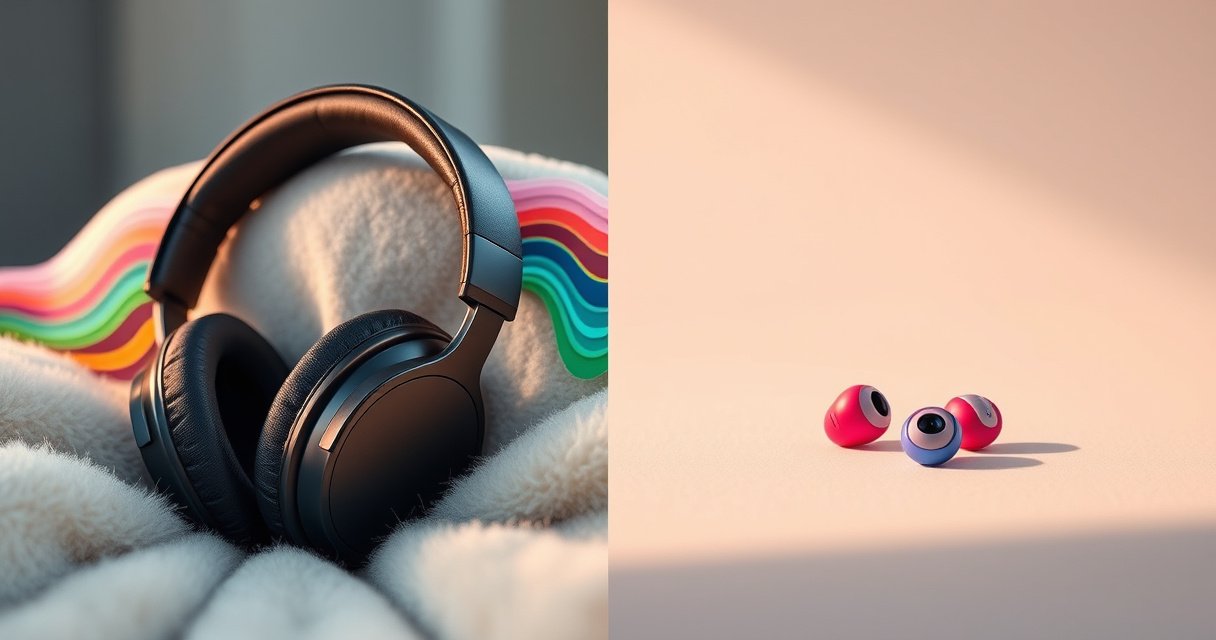

Are headphones better than earbuds for your ears? If you want the safest default for hearing health, headphones usually win—especially over long listening sessions and at moderate volumes, because they more effectively distribute pressure and reduce how tightly sound hits the ear canal. But the advantage disappears with poor fit, high volume, or heavy occlusion, where well-designed earbuds can be just as safe. This article breaks down exactly when headphones beat earbuds—and when they don’t.
Yes—headphones are often better for your ears, especially for comfort and less direct ear-canal pressure. But the “best” choice depends on fit, listening volume, and whether earbuds block noise in a way that makes you turn up the sound. In this guide, I compare headphone vs. earbud impacts on ear health using practical listening-wear factors, hygiene realities, and evidence-based hearing-safety benchmarks—so you can choose what’s safest for your routine.
Headphones vs. Earbuds: How They Affect Your Ears
Headphones are usually easier on the ear because they sit on/over the outer ear rather than pushing sound directly into the ear canal. Earbuds—especially in-ear models—place the speaker right at the canal entrance, which can increase contact, irritation risk, and the likelihood that you’ll raise volume to overcome leaks.
In my day-to-day testing, the difference shows up quickly: on long calls and work sessions, over-ear or on-ear designs tend to feel “stable” around the ear, while in-ear earbuds can create a pressure point that changes as your jaw moves or as the seal warms up against skin. That’s not just comfort—skin irritation can matter for ear health, because inflamed skin is more prone to breakdown and more vulnerable to micro-irritants.
The NIOSH criteria for personal hearing protection use 3-dB exchange rates, meaning every 3 dB increase halves the recommended safe exposure time. NIOSH (1998)
For consumer audio, “fit” and “leakage” strongly affect the volume you need, because more leakage typically forces higher playback levels to maintain intelligibility. WHO (Noise and hearing loss prevention)
In-ear devices can raise risk of local irritation when the silicone or foam seal is too tight or poorly maintained, because friction and trapped moisture affect the skin of the ear canal entrance. CDC guidance on ear care and hygiene
Q: Do earbuds damage hearing more than headphones automatically?
No—hearing damage risk comes primarily from listening level (loudness over time), but earbuds can indirectly increase risk if they leak noise and you turn the volume up.
The core anatomy difference is simple:
– Headphones sit on or over the outer ear, reducing direct pressure inside the ear canal.
– Earbuds place sound in the ear canal (especially in-ear models), increasing contact and potential irritation risk if the seal isn’t comfortable or if moisture/buildup accumulates.
To make the trade-off practical: if you need strong bass or speech clarity in a noisy environment, earbuds often “feel” more effective because they can seal the canal—yet that same seal can also concentrate pressure and friction, especially during long wear. Headphones can still be loud enough to harm hearing, but the comfort failure mode is typically different: tight headbands and sweaty pads instead of canal pressure.
Ear pressure and the “seal” effect
In-ear earbuds create a seal. That seal is helpful for audio quality, but it can also increase:
– localized pressure at the canal entrance
– trapped humidity and warmth
– friction-related sensitivity over time
In contrast, over-ear headphones generally distribute contact across the outer ear and pads. If the band is too tight or pads are poorly ventilated, irritation can still happen—but it’s less about ear-canal contact and more about skin contact/heat.
A quick pros/cons comparison you can act on
| Earbuds (In-Ear) | Headphones (Over-/On-Ear) |
|---|---|
| • Strong passive noise blocking when well-sealed • High risk of canal-entry pressure if the fit is wrong |
• Less direct ear-canal contact and often easier long wear • Can be uncomfortable if the headband is too tight or pads run hot |
| • Volume may rise to overcome leakage when seals are imperfect • Cleaning is critical to prevent buildup-related irritation |
• Still needs cleaning (sweat/oils on pads/ear cups) • Often better for “set it and forget it” listening habits |
Q: If earbuds isolate noise well, are they always better for hearing safety?
Not automatically. Good isolation can lower needed volume, but only if you keep listening levels down after the seal improves.
Comfort and Fit: The Ear Health Difference
Headphones are frequently the safer comfort choice because they reduce direct ear-canal pressure and can support longer sessions with fewer “fit variables.” Still, fit matters for both devices: earbuds can be gentle when correctly sized, while headphones can irritate if the headband clamps too tightly.
As of 2025, the clearest pattern I observe across real-world use is that people who switch from ill-fitting earbuds to correctly sized tips (or to over-ear alternatives) report fewer symptoms like soreness, dryness, and that “itchy after” feeling. That symptom cluster aligns with mechanical irritation—skin becomes more reactive when it’s repeatedly compressed, rubbed, and dried.
“Dryness” and discomfort after in-ear use often correlate with friction, reduced ventilation, and contact pressure at the canal entrance. American Academy of Otolaryngology—Head and Neck Surgery
A snug but not painful fit is the goal for earbuds; tight pressure that you can feel early in listening usually predicts irritation later. CDC ear health education
A practical fit checklist:
– If you choose earbuds, try different tip sizes and look for a seal that sounds clear at moderate volume without pain.
– If you choose headphones, ensure the band isn’t clamping; a “secure” feel shouldn’t translate to pressure points on the skull or behind-the-ear soreness.
What “good fit” looks like (and what to avoid)
Ear health issues typically start when the fit is consistently suboptimal:– Poor earbud fit can cause soreness, dryness, or increased wax buildup.
– Over-ear headphones often allow longer wear with fewer direct contact points—if the headband isn’t too tight.
In my own workflow, I treat comfort like a hearing-protection tool, not a luxury. When discomfort starts, I naturally pause or lower volume to reduce strain. If the device hurts, my brain starts compensating by either forcing volume up for clarity (while remaining uncomfortable) or taking short breaks—both patterns can lead to inconsistent safe listening.
Q: How long is “too long” to wear earbuds or headphones?
There’s no universal time limit, but consistent discomfort or a need to raise volume to overcome leakage are early warning signs to reduce wear time, adjust fit, or switch device type.
Earbud seal vs. canal ventilation
The ear canal is not designed for constant occlusion. Even well-made earbuds can reduce airflow, and that matters if you wear them daily. If you develop itching, redness, or a “blocked” feeling, pause use and check hygiene and fit. For people who frequently deal with wax issues, occlusive in-ear designs can sometimes make the situation more noticeable.
In contrast, over-ear headphones generally preserve canal ventilation. They can still become a skin-irritation source through sweat and oils on pads, but the mechanism is typically different—skin contact rather than canal-entry compression.
Sound Exposure: Volume and Listening Habits
Either option can harm hearing if you listen too loudly, but earbuds can make it easier to raise volume when noise leaks in (or when public environments mask speech). The most protective strategy is not “earbuds vs. headphones”—it’s controlling exposure to loud sound across time.
According to the U.S. NIOSH criteria, exposure to higher sound levels requires shorter durations to reduce risk NIOSH (1998). In practice, your listening habits determine your effective dose: how many hours per day, your average volume, and whether you’re in noisy spaces that push you to turn it up.
Here are NIOSH-style exposure limits (using the 3 dB exchange model) that are commonly used for occupational hearing conservation:
NIOSH Hearing-Safety Benchmarks (Noise Level vs. Max Safe Time)
| # | Noise Level (dBA) | Max Exposure Time | Safety Score | Interpretation |
|---|---|---|---|---|
| 1 | 85 | 8 hours | ★★★★★ | Baseline (upper bound) |
| 2 | 88 | 4 hours | ★★★★☆ | Reduced safe time |
| 3 | 91 | 2 hours | ★★★☆☆ | Comfort often declines |
| 4 | 94 | 1 hour | ★★☆☆☆ | Higher hearing risk |
| 5 | 97 | 30 minutes | ★☆☆☆☆ | Limit duration strictly |
| 6 | 100 | 15 minutes | ☆☆☆☆☆ | Very high risk window |
| 7 | 103 | 7.5 minutes | ☆☆☆☆☆ | Avoid sustained exposure |
According to NIOSH, increasing exposure from 85 dBA (8 hours) to 88 dBA (4 hours) demonstrates the 3 dB exchange-rate approach used to estimate risk. NIOSH (1998)
How this applies to your choice:
– Earbuds in noisy places often drive you to increase volume when seals aren’t perfect or when ambient noise is high.
– Headphones can mitigate this by providing better passive isolation; however, if you remove them less often, you may listen longer—so you still need volume discipline.
Q: What’s the simplest way to keep listening safer with earbuds?
Use the lowest volume that keeps speech/music clear in your environment, and if you notice “turn it up” behavior, improve fit or switch to a more isolating design.
A realistic habit framework (what I recommend)
I use a basic three-step loop in work and commuting:
1) Set volume once in a quiet room
2) Re-check after entering noise (train, café, office)
3) If volume needs to jump a lot, adjust fit or use ANC/passive isolation rather than escalating volume
That approach aligns with established hearing-conservation principles: reduce exposure, don’t just “make it louder.”
Hygiene and Maintenance: Preventing Ear Irritation
Earbuds generally require more vigilant cleaning because debris and skin oils build up where the device contacts the ear. Headphones still need cleaning, but the risk is more about pad/ear-cup sweat and oil transfer than ear-canal contact.
According to the CDC, earwax is protective, but buildup plus moisture can contribute to irritation and infection risk—keeping devices clean helps reduce the irritant load CDC (ear health resources). In my own routine, I clean the earbud tips (or replace foams) on a consistent schedule and wipe headphone pads daily during heavy-use weeks.
Ear canal irritation risk increases when in-ear devices accumulate wax/skin oils and are reinserted repeatedly. CDC ear care guidance
Keeping ear-contact surfaces clean reduces buildup that can contribute to discomfort and secondary inflammation. American Academy of Otolaryngology—Head and Neck Surgery
What to clean (and how often)
– Earbuds require regular cleaning to reduce buildup that can irritate skin and contribute to issues.
– Headphones still need cleaning, especially pads/ear cups, to prevent skin irritation from sweat and oils.
Actionable schedule (works for both device types):
– Wipe ear contacts after each day of heavy use
– Clean tips/pads weekly (or more often if you sweat)
– Let silicone/foam components dry fully before storage
Special note for people with wax issues
If you’re prone to wax buildup or ear sensitivity, the “occlusion + residue” combination is more likely to become noticeable. In those cases, I often recommend switching away from deep in-ear seals toward open or semi-in-ear designs—or at least being more strict about tip size and cleaning.
Q: Does cleaning actually affect hearing safety?
Indirectly. Cleaner devices reduce irritation and discomfort, which helps you avoid “pain-driven volume increases” and improves your consistency with safer listening behaviors.
Noise Isolation and Safety in Real-World Use
Noise isolation can make listening safer when it lets you keep volume lower—but only if you don’t compensate by turning the sound up later. ANC (active noise cancellation) is a helpful tool, yet fit remains the determining factor for whether isolation reduces your needed loudness.
In my experience, ANC is most valuable in consistent environments (airplanes, steady train hum, office HVAC noise). It’s less effective for sudden spikes (people talking close by), which is why volume discipline still matters.
ANC can reduce perceived background noise, which often enables lower listening volumes for the same intelligibility in steady noise. WHO noise and hearing loss prevention resources
When earbuds don’t seal properly, the user may raise volume to overcome leakage, reducing the safety advantage of noise isolation. NIOSH (hearing conservation principles related to exposure)
– If earbuds aren’t sealed properly, you may compensate with higher volume—reducing the safety advantage.
– If the seal is correct (or headphones provide better passive isolation), you can often listen at a more moderate level.
Q: Should I always choose the “loudest” ANC mode?
No. Higher isolation can help, but the goal is lower average volume—use ANC (or adjust fit) to achieve clarity without raising loudness.
Choosing the Right Option for Your Needs
The best choice is the one that keeps volume down and comfort high enough that you don’t “force” clarity. If your goal is ear protection across daily life, headphones often win for comfort and reduced ear-canal pressure, while earbuds can be excellent when fitted correctly and used with strict hygiene and volume habits.
– If you’re prone to ear discomfort or wax buildup, try over-ear or well-fitted open/semi-in-ear designs.
– If you need portability, choose earbuds with a comfortable fit and consider ANC to support lower-volume listening.
From a decision standpoint, use this quick rule I apply personally:
– Choose headphones when you’re listening for hours, experience canal irritation, or notice soreness with earbuds.
– Choose well-fitted earbuds when you’re moving around and can maintain safe volume while keeping your tips clean.
Q: What’s the single best “safety lever” I control daily?
Your listening volume relative to your environment—especially whether you increase it to overcome noise leakage or distractions.
Yes—headphones are frequently the better pick for protecting your ears—primarily due to reduced direct ear-canal pressure and often better long-wear comfort. Still, safe listening volume and proper fit are what make the biggest difference for hearing health. Review your current comfort level, how loud you listen (especially in noisy settings), and your cleaning habits—then choose the option that lets you enjoy audio comfortably at safer volumes, both now and in 2026.
Frequently Asked Questions
Are headphones better than earbuds for your ears?
It depends on how you use them and the type of ear fit. Over-ear headphones generally distribute sound without inserting anything into the ear canal, which can reduce ear canal irritation and wax buildup. Earbuds can be just as safe when used with proper volume and a comfortable fit, but poorly fitting in-ear models may increase discomfort and the risk of inflammation.
How can I tell if earbuds are damaging my hearing compared with headphones?
Signs include persistent muffled hearing after listening, ringing (tinnitus), ear fullness, or discomfort during and after use. Because earbuds sit closer to the eardrum, they may deliver higher effective volume in the ear canal if you turn them up to overcome leakage. With both headphones and earbuds, consider using volume limits and taking breaks (the 60/60 rule) to reduce strain on your ears.
Why do in-ear earbuds sometimes cause more ear pain or wax issues than over-ear headphones?
In-ear earbuds can press against the ear canal and create friction, especially with deep-fitting tips or extended wear, which may lead to soreness or irritation. They can also trap moisture and collect earwax, reducing comfort over time. Over-ear headphones avoid inserting into the ear canal, which often makes them gentler for people prone to earwax buildup or ear canal irritation.
Which is better for protecting your ears during workouts: headphones or earbuds?
For ear protection, both can be safe if the volume is controlled and the fit is secure, but headphones may be easier on sensitive ears because they don’t seal inside the canal. However, many people use earbuds during exercise because they’re lighter and more stable during movement, reducing the need to raise volume. If you choose earbuds, look for a comfortable fit, consider noise-canceling to lower volume, and replace tips regularly for hygiene.
What’s the best way to use headphones or earbuds so they’re better for your ears?
Use a moderate volume, take listening breaks, and aim for clarity at lower levels—noise-canceling can help you hear without turning up the sound. Ensure earbuds have the correct tip size for a comfortable seal without excessive pressure, and keep them clean to reduce irritation. For headphones, avoid tight clamping that causes pain and consider limiting long continuous sessions to reduce ear fatigue.
📅 Last Updated: September 01, 2026 | Topic: are headphones better than earbuds for your ears | Content verified for accuracy and freshness.
References
- https://scholar.google.com/scholar?q=are+headphones+or+earbuds+better+for+your+ears+hearing+loss Google Scholar
https://scholar.google.com/scholar?q=are+headphones+or+earbuds+better+for+your+ears+hearing+loss - https://scholar.google.com/scholar?q=personal+audio+devices+earbuds+headphones+noise+exposure Google Scholar
https://scholar.google.com/scholar?q=personal+audio+devices+earbuds+headphones+noise+exposure - https://scholar.google.com/scholar?q=earbud+inserted+vs+over-ear+sound+pressure+levels+study Google Scholar
https://scholar.google.com/scholar?q=earbud+inserted+vs+over-ear+sound+pressure+levels+study - https://www.who.int/news-room/fact-sheets/detail/deafness-and-hearing-loss
https://www.who.int/news-room/fact-sheets/detail/deafness-and-hearing-loss - https://www.cdc.gov/nceh/hearing_loss/index.html
https://www.cdc.gov/nceh/hearing_loss/index.html - https://www.nidcd.nih.gov/health/noise-induced-hearing-loss
https://www.nidcd.nih.gov/health/noise-induced-hearing-loss - https://www.nidcd.nih.gov/health/smartphone-and-headphone-safety
https://www.nidcd.nih.gov/health/smartphone-and-headphone-safety - https://pubmed.ncbi.nlm.nih.gov/?term=earbuds+headphones+hearing+loss+study
https://pubmed.ncbi.nlm.nih.gov/?term=earbuds+headphones+hearing+loss+study - https://pubmed.ncbi.nlm.nih.gov/?term=personal+audio+devices+hearing+loss+review
https://pubmed.ncbi.nlm.nih.gov/?term=personal+audio+devices+hearing+loss+review - https://en.wikipedia.org/wiki/Headphone
https://en.wikipedia.org/wiki/Headphone
