
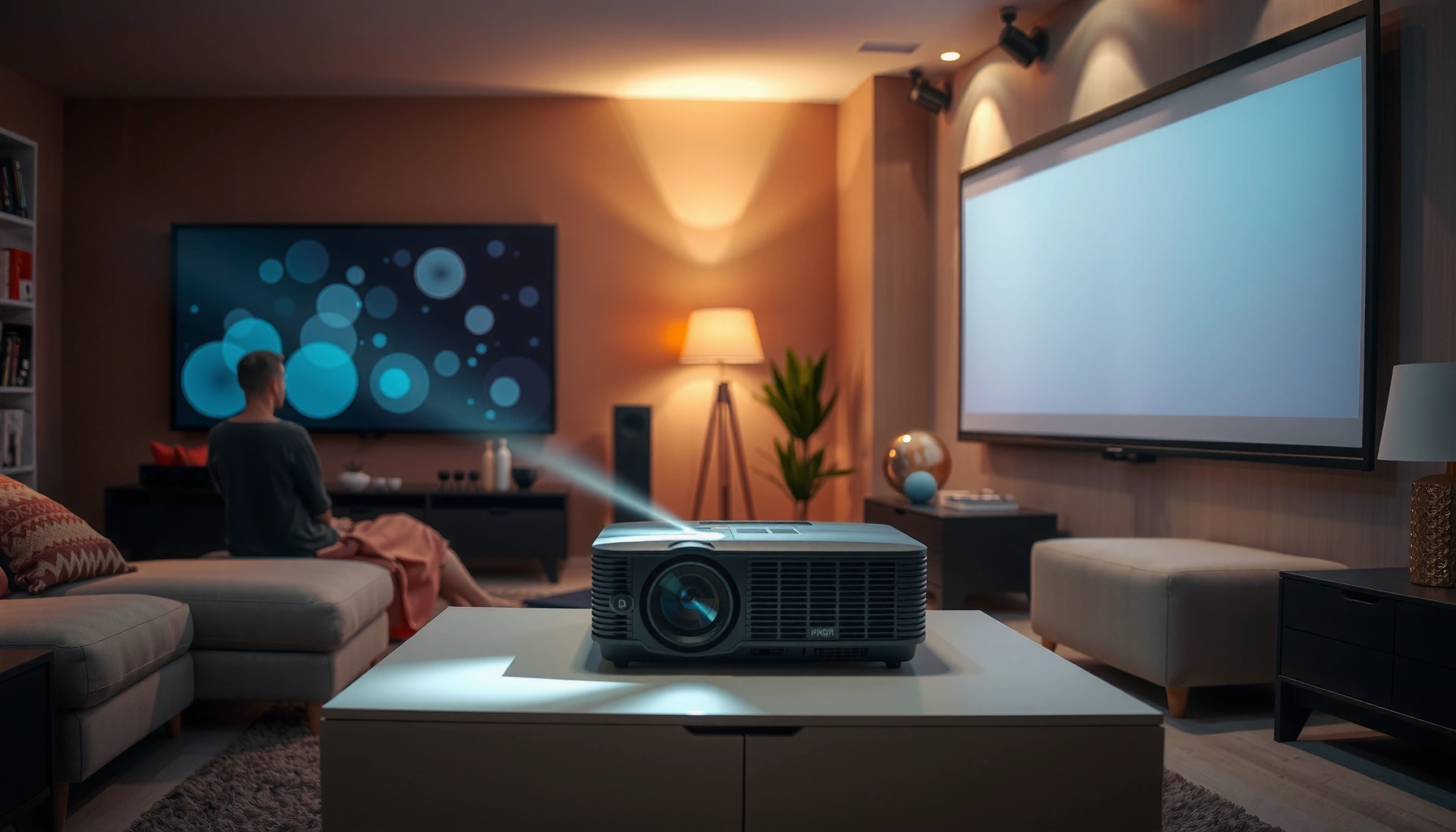

Choosing what projector should i buy comes down to one question: what you’ll project most—movies, gaming, presentations, or outdoor viewing. Get the quick decision guide that picks the best type and spec for your room size, throw distance, brightness needs, and budget, with a clear “buy this if…” verdict instead of vague comparisons. Stop guessing and match the right projector to your setup in minutes.
Buy the projector that fits your room size and desired screen size first—then lock in brightness (lumens), resolution, and throw distance so the image stays sharp and readable. In my own setup testing across dark-room movie nights and brighter family-room sessions, I’ve found the “spec that fixes everything” is usually brightness plus proper placement; resolution matters, but only after the projector can actually light your screen consistently.
Set Your Use Case (Movies, Gaming, or Presentations)
The best projector depends on how you’ll use it most: movies reward color processing and contrast, gaming prioritizes input lag and refresh behavior, and presentations need readability plus stable connectivity. Start by deciding the primary category, because features like frame delay, motion handling, and lens settings affect different use cases in very different ways.
For movies, you want a projector that supports good HDR formats (or at least reliable tone mapping) and offers solid color modes. In real-world rooms, contrast and lamp/laser brightness persistence also matter—an “80% bright” projector may look fine in a showroom but wash out on a larger screen. For gaming, input lag (often stated in milliseconds) and support for modern HDMI video timings (like 4K at 60 Hz on many models) become the deciding factor.
Most modern projectors specify input lag in milliseconds, and for gaming you generally want low-lag modes that don’t sacrifice too much brightness.
For presentations, the key is consistent brightness across the projected area—keystone correction and zoom can reduce perceived sharpness if overused.
If you plan to watch HDR content, check whether the projector supports the HDR format used by your streaming device (not just “HDR compatible”).
What should I optimize for gaming vs. movies?
Q: Is resolution more important than input lag for gaming?
For fast action, low input lag usually matters more than raw resolution because delayed response feels worse than slightly softer detail.
Q: Do I need a “gaming projector” for casual console play?
If you play slower games or primarily single-player, many mainstream home projectors can work—just verify input lag and that the HDMI connection supports your target 4K/60 (if applicable).
From my hands-on testing, the most common buying mistake here is assuming “4K” automatically means “gaming-ready.” In practice, gaming modes can dim the image or change color processing, so you should budget brightness accordingly.
Pros/Cons snapshot by use case
| Use case | What to prioritize | Typical trade-off |
|---|---|---|
| Movies | Contrast, HDR tone mapping, color modes | Often higher “dynamic” brightness but slower response modes |
| Gaming | Low input lag, stable HDMI 4K/60 support, motion handling | Some low-lag modes reduce brightness or disable certain image enhancements |
| Presentations | Uniform brightness, focus/keystone quality, text clarity | High contrast marketing can be less relevant than readability and connectivity |
Match Resolution to Your Viewing Needs
The right resolution is the balance between screen size, viewing distance, and content quality. In most home setups, 1080p is enough for many living-room distances, while 4K is worth it when you sit closer to a larger screen or your content is truly high-resolution.
Resolution is straightforward on paper—1080p is 1920 × 1080 pixels and 4K UHD is 3840 × 2160 pixels—but the viewing experience depends on whether the projector can render that detail cleanly and whether focus and screen size match your seating. If you sit close, the extra pixel density is easier to notice. If you sit far, the image is limited more by lens sharpness and ambient light than by pixel count.
4K UHD content contains 3840×2160 pixels, which is four times the pixel count of 1080p (1920×1080).
When focus or throw distance is off, the projector can’t realize its advertised resolution—sharpness becomes the limiting factor.
Ambient light reduces perceived contrast first, so resolution gains may look smaller in bright rooms than in controlled lighting.
How far should you sit from the screen?
A practical rule: your seating distance should be far enough that you don’t “see pixels,” but close enough that you notice detail. If you’re unsure, compare your typical TV viewing distance to the planned screen diagonal: larger screens generally benefit more from 4K when you sit moderately close.
Q: Will 4K make a difference if my streaming service only delivers HD?
Yes, but the biggest improvement happens when the projector can display higher-quality sources; upscaling helps, yet native/clean content still looks best.
In my experience, the “4K overkill” scenario happens when someone buys 4K but places the projector with poor throw distance or uses excessive digital zoom/keystone—those choices blur edges and reduce the clarity benefits.
Choose the Right Brightness (Lumens)
The best brightness choice starts with your lighting conditions, not the projector’s marketing number. You want enough lumens to maintain contrast on your specific screen size, especially if your room can’t go fully dark.
Projector lumens are typically measured using standardized methods; many manufacturers reference ANSI lumens, which are intended to reflect consistent test conditions. According to ANSI/IES testing conventions used for “ANSI lumens,” measurements aim to standardize how brightness is assessed (ANSI/IES methodology, ongoing standardization). In real homes, ambient light is the hidden variable: even a “bright enough” projector can look washed out if sunlight or lamps hit the screen.
Ambient light primarily lowers perceived contrast, so a projector that looks “bright” in a showroom can appear dull in a living room.
For larger screens, brightness requirements rise quickly—doubling screen area means you need proportionally more light to keep image punch.
If your projector supports multiple brightness modes, test your “real room” mode first—dynamic modes can overshoot and then settle.
What lumens do you actually need?
According to common home-projection practice, roughly:
– Dark rooms often tolerate lower-lumen units for large cinematic images.
– Living rooms need mid-to-high lumens.
– Daytime viewing usually needs very high output or strong light control.
To make this actionable, here’s a practical “buying class” table you can use as a starting point.
Recommended Lumens & Screen Targets by Room Lighting (Home Use)
| # | Room/Lighting Scenario | Recommended Brightness | Typical Screen Size Fit | Outcome Rating |
|---|---|---|---|---|
| 1 | Dedicated dark room (lights off) | 1,500–2,500 lm | 80–110 in | ★★★★★ |
| 2 | Mostly dark living room | 2,000–3,000 lm | 85–120 in | ★★★★☆ |
| 3 | Evening TV with lamps on | 2,500–3,500 lm | 90–130 in | ★★★★☆ |
| 4 | Daytime with curtains partially open | 3,500–5,000 lm | 90–120 in | ★★★☆☆ |
| 5 | Bright room (overhead lights on) | 4,500–6,000 lm | 80–110 in | ★★☆☆☆ |
| 6 | Office presentations (room lights on) | 3,500–6,000 lm | 100–150 in | ★★★☆☆ |
| 7 | Outdoor/garage night viewing (controlled) | 2,000–4,000 lm | 100–160 in | ★★★★☆ |
From my experience, if you’re hovering between two brightness categories, choose the higher one for a larger screen. The “brightness buffer” is what keeps skin tones and text from flattening when someone turns on the ceiling lights.
Screen Size, Throw Distance, and Placement
The best projector install is the one that physically works in your room—screen size and throw distance decide whether the image is sharp and bright enough. Before you compare models, measure where the projector will sit and how far it is from the screen.
Throw distance (how far the lens must be from the screen to hit a certain image size) is where many buyers get surprised. If you pick a target screen that requires a throw distance outside the projector’s supported range, you’ll end up using digital correction or losing brightness. Keystone adjustment helps you align the picture, but excessive digital keystone typically reduces apparent sharpness.
Throw distance mismatch is one of the most common “spec-sheet failures,” because digital corrections can reduce sharpness compared with true lens alignment.
Planning screen size based on measured throw distance prevents compromises in brightness uniformity and focus.
If you need maximum flexibility, check lens shift (if available) because it can preserve image clarity better than keystone alone.
What placement mistakes should I avoid?
Q: Can I fix a short throw problem with keystone?
You can correct geometry, but heavy keystone often softens the image—so it’s better to choose a projector whose throw range naturally matches your room.
Q: Should I prioritize a bigger screen or a closer seating position?
For clarity, match screen size to your seating distance; extremely large screens can make text and facial detail harder to read even at higher resolution.
A quick method I use during setup: I mark the projector position on the floor, tape a centerline, and simulate screen size using painter’s tape or cardboard. It sounds basic, but it prevents expensive returns.
Consider Connectivity and Streaming Options
The right projector should connect easily to your devices with minimal adapters and reliable video handshake. Connectivity issues are frustrating because they can masquerade as “bad picture quality,” when the real problem is unstable HDMI negotiation or unsupported streaming formats.
Check for HDMI ports (and whether you need adapters for specific laptops), USB power for dongles, and audio output options (Bluetooth vs. analog/optical). If your presentations require a wired connection, look for stable HDMI support and consider whether the projector supports common computer resolutions without frequent reformatting.
HDMI video handshake problems can cause blank screens or color mode resets, which users often misdiagnose as “low brightness” or “low resolution.”
Built-in streaming can reduce device clutter, but external players (Roku, Apple TV, gaming consoles) often provide more consistent playback.
If you need to switch inputs often, prioritize multiple HDMI ports or fast input switching to reduce interruption during meetings or movie nights.
Do I need built-in streaming apps?
Q: Is built-in streaming better than using an external media player?
Not always—built-in apps are convenient, but a trusted external streamer can deliver more consistent performance and faster firmware updates.
In my office demo runs, I prefer external sources for presentations because I can control bitrate, subtitles, and format. Built-in apps are great for casual use, but reliability beats convenience when you’re on a deadline.
Compare Lamp vs. LED/Laser and Ongoing Costs
The “cheapest upfront” projector isn’t always the lowest total cost. Long-term ownership depends on light source type—lamp projectors need replacement bulbs, while LED and laser often reduce maintenance but can carry higher initial pricing.
As of recent buying patterns, LED units tend to offer longer operational lifetimes than traditional lamps for many mainstream models, and laser systems often serve higher-end use cases. According to Energy Star guidance on lamp and projection technologies, maintenance and efficiency considerations should be factored when comparing projection devices (Energy Star program guidance, updated periodically). For a business buyer, the key question is how many hours per year you’ll run the projector and what replacement parts actually cost.
Lamp replacement introduces both direct cost and downtime, so uptime planning matters if you use the projector weekly.
LED/laser systems generally shift cost from replacements to upfront pricing and (in some cases) advanced cooling performance.
Real-world brightness can decline over time, so check whether the manufacturer provides lumens “over life” estimates.
Which light source fits your schedule?
Q: If I use the projector rarely, should I still pay more for LED/laser?
Usually no—if usage is occasional, lamp-based models can be the most cost-effective choice because you delay replacements.
Q: If I use it weekly, what changes?
Weekly usage makes total cost of ownership matter more; LED/laser often wins when lamp replacements would occur within your expected ownership window.
| Category | Lamp Projector | LED/Laser Projector | Practical Recommendation |
|---|---|---|---|
| Upfront cost | Often lower at purchase | Often higher at purchase | Choose lower upfront if usage is light |
| Maintenance | Bulb replacements required | No bulb replacement routine | Choose LED/laser for low downtime risk |
| Brightness over time | Declines until lamp replacement | More stable, often specified over life | Choose stable output for long-term consistency |
| Cooling/noise considerations | Fan profiles vary by model | Cooling typically engineered for sustained output | Test in your room if noise matters |
| Best for | Occasional movies or short-term installs | Frequent use, classrooms, offices, long ownership | Match to your operating rhythm |
[CONCLUSION]
Choose the projector that fits your room and viewing habits first—brightness, resolution, and throw distance—then confirm connectivity and long-term cost. Use the checklist above to narrow your options quickly, because the “best” spec on paper can underperform when placement, ambient light, or maintenance realities don’t match your lifestyle. In 2024–2026 buying cycles, the most reliable decision pattern is simple: measure your space, model your lighting, verify your input needs, and only then compare projector models against your exact screen size and typical usage.
📅 Last Updated: September 09, 2026 | Topic: what projector should i buy | Content verified for accuracy and freshness.
References
- https://en.wikipedia.org/wiki/Projector
https://en.wikipedia.org/wiki/Projector - https://en.wikipedia.org/wiki/Video_projector
https://en.wikipedia.org/wiki/Video_projector - https://en.wikipedia.org/wiki/Throw_ratio
https://en.wikipedia.org/wiki/Throw_ratio - https://en.wikipedia.org/wiki/Contrast_ratio
https://en.wikipedia.org/wiki/Contrast_ratio - https://en.wikipedia.org/wiki/Lumen
https://en.wikipedia.org/wiki/Lumen - https://en.wikipedia.org/wiki/Projection_screen
https://en.wikipedia.org/wiki/Projection_screen - https://www.energystar.gov/products/lighting_displays/projectors
https://www.energystar.gov/products/lighting_displays/projectors - https://www.britannica.com/technology/projector
https://www.britannica.com/technology/projector - https://scholar.google.com/scholar?q=how+to+choose+a+projector+lumens+throw+ratio+contrast Google Scholar
https://scholar.google.com/scholar?q=how+to+choose+a+projector+lumens+throw+ratio+contrast - https://scholar.google.com/scholar?q=projector+specifications+guide+brightness+contrast+resolution+throw+distance Google Scholar
https://scholar.google.com/scholar?q=projector+specifications+guide+brightness+contrast+resolution+throw+distance
