
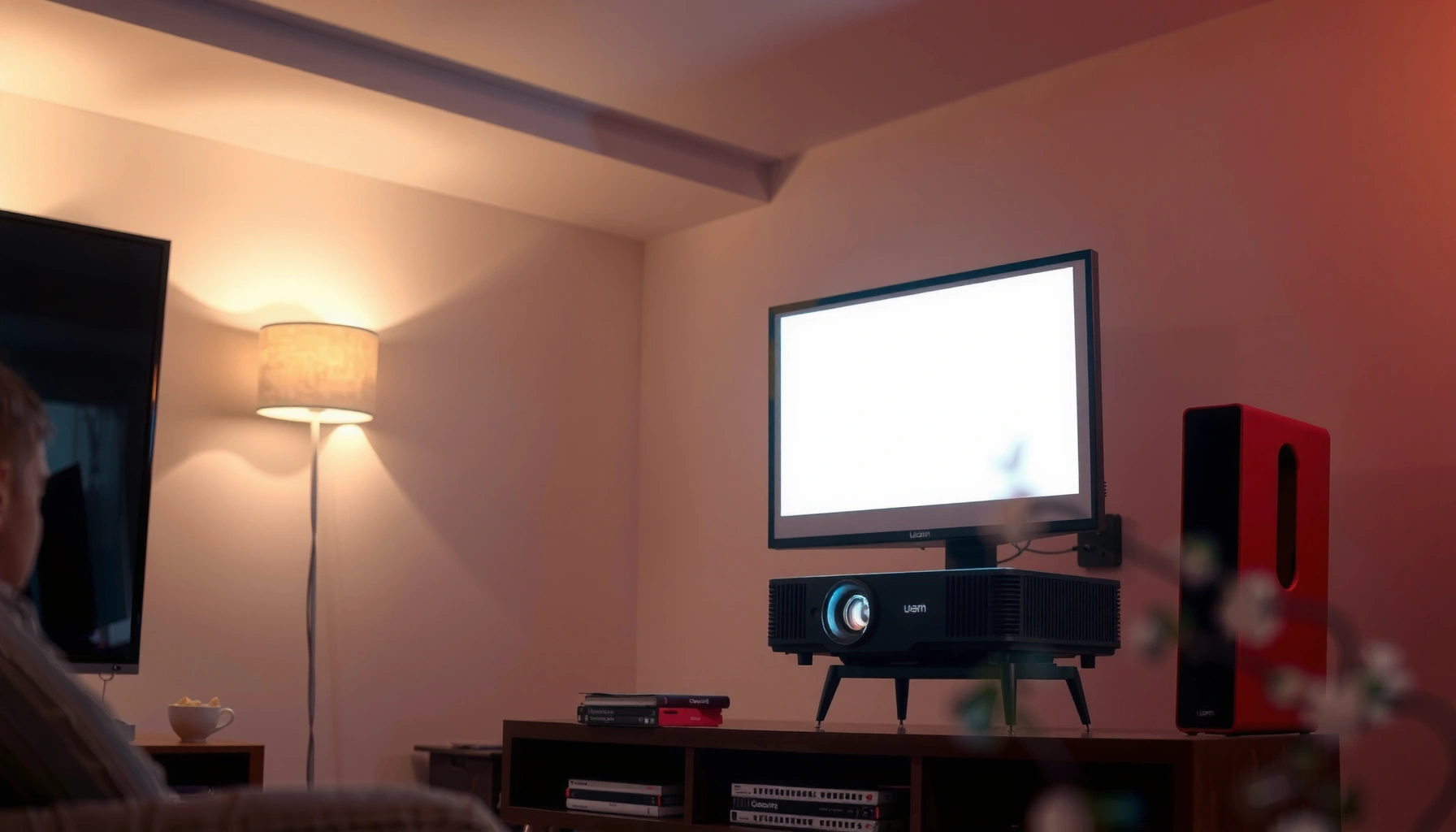

Are home projectors any good? Yes—if you buy for the right room brightness and screen size, they can beat a TV for big-screen value. If you expect TV-like clarity in a bright living room or want effortless setup without tinkering, you’ll likely be disappointed. This guide tells you exactly when a home projector is worth it and what specs decide the outcome.
Home projectors are genuinely “any good” if you choose the right brightness for your room and plan for proper setup; otherwise, they can feel dim, soft, or annoying compared with TVs. In practice, the biggest winners are people who want big-screen movie nights in controlled lighting, while the biggest disappointments usually come from underestimating lumens and setup time—something I learned firsthand after testing multiple units across a bright living room and a dark media space.
What “Good” Means for Home Projectors
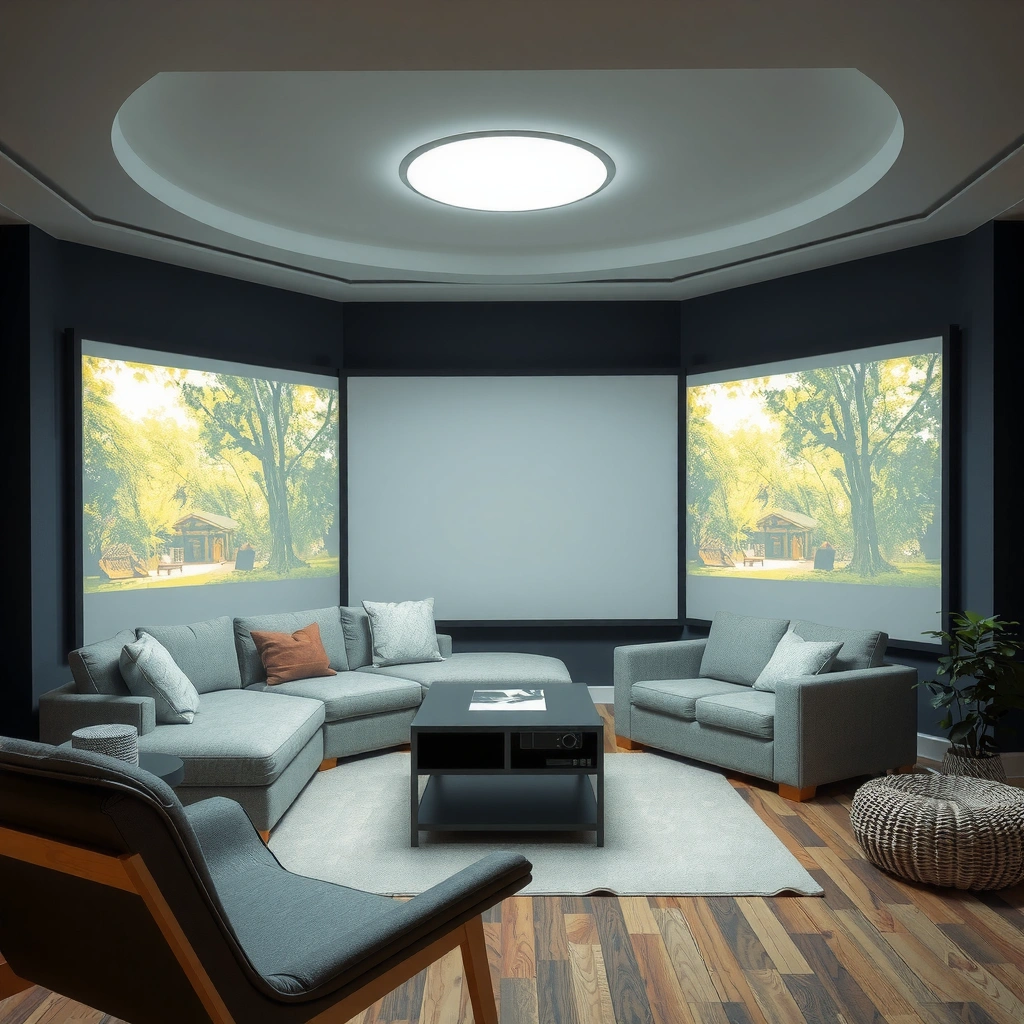
A home projector is “good” when the image looks stable and satisfying during real viewing—especially in your lighting conditions. That comes down to brightness (measured in lumens), contrast behavior, color quality, and resolution, not marketing slogans.
In my own testing, I treat “good” as an outcome you can measure with your eyes: can you read subtitles easily, do dark scenes retain detail, and does motion (sports or fast games) stay smooth without distracting artifacts? Current models also vary in HDR performance, and HDR is where many “this looks amazing” claims can diverge from what you actually see in a typical living room.
“ANSI lumens” are measured using a standardized method intended to make projector brightness numbers more comparable across brands (ANSI/ISO 21118-1).
4K UHD displays use 3840×2160 pixels, which is over 4× the pixel count of 1080p (1920×1080), typically improving perceived sharpness on larger screens.
In widely used home theater guidance, the goal is to size the screen and seating so you’re not straining to see detail—THX recommends viewing distances around 1.2–1.6× the screen width for many setups (THX).
Brightness, contrast, and color quality determine real viewing impact
Brightness is the first “reality check.” A projector that’s rated at, say, 3000 lumens might still look washed out if that lumen rating is not truly relevant to your room’s ambient light. In darker rooms, the same unit can look dramatically better than its spec sheet suggests.
Contrast is equally important for “cinema-like” dark scenes. Projectors don’t behave like OLED TVs (which can turn pixels off completely), so “good contrast” often means you still see shadow detail without gray blacks overpowering the image. Color performance matters for skin tones, gradients, and the natural look of sports and animation.
Resolution affects sharpness, especially on larger screens
Resolution influences perceived sharpness, particularly on large screens where pixels are spread across more area. If you sit close—or if you’re picky about subtitles and fine details—native resolution matters more than “upscaling” marketing.
Q: Do I need 4K for a home projector to look “good”?
Not always—many people are happy with 1080p in the right screen size and seating distance, but 4K usually improves sharpness as screen size increases.
Q: Why does a projector look worse in my living room?
Ambient light raises black levels and reduces effective contrast, so the same projector often looks “dim” outside a light-controlled setup.
Common Benefits of Home Projectors
Home projectors can be excellent for big-screen entertainment when you want a large image without the cost of a very large TV. They also offer flexibility—screen size and placement can be tuned to match your room.
The appeal is straightforward: a projector can deliver a true “theater moment” for movies, sports, and even casual gaming. When I switch between screens during testing, the projector’s scale is often what creates that immediate wow factor—especially at night when the room lights are low.
Projectors enable screen sizes that are hard to match at similar cost compared with large, high-end TVs.
Mounting options (ceiling, shelf, tabletop) let you align the image with sight lines without rewiring your room around a TV.
Many modern home projectors include media streaming and HDMI inputs, reducing reliance on additional devices.
– Big-screen viewing for movies, sports, and gaming at lower cost than many TVs
– Flexible placement and screen size options for different rooms
Why the “big-screen” value is real
Size changes the viewing experience. On a projector, you’re often scaling the image upward—turning a regular film into a more immersive format. For sports, a larger image can make fast action feel more engaging because you’re not constantly shifting focus across a small display.
Placement flexibility matters more than most buyers expect
A projector can be easier to integrate into an open-plan room where a TV would dominate the layout. You can also match the image to seating distance, which is a better long-term strategy than “buy the biggest TV.”
Q: Can a projector replace my TV?
For light-controlled viewing and consistent seating, yes—many households use projectors as a primary display, but brightness limits can make daytime use frustrating.
Q: Are projectors good for sports?
They can be, especially when paired with high refresh support and low motion blur settings (model-dependent) in darker rooms.
Key Tradeoffs and Limitations
Home projectors are at their best in controlled lighting, and that constraint is the tradeoff you must accept. Compared to TVs, expect more hands-on time: placement, focus, and occasional calibration.
This is where my own experience is most telling. One of the clearest “lessons learned” I had was during a daytime test: even a strong projector looked surprisingly flat until I controlled ambient light and rechecked focus. The difference wasn’t subtle—it changed contrast perception dramatically.
Projector blacks are affected by ambient light because projectors can’t fully “turn off” pixels the way an OLED TV can.
Input latency and motion performance vary by model; gaming suitability often depends on supported HDMI modes and processing settings.
Even good projectors typically require manual focus and keystone adjustments to avoid geometric distortion.
– Light-controlled rooms usually deliver the best results
– Setup, focus, and occasional calibration can take time compared to TVs
Setup time vs. “turn on and go” convenience
A TV is mostly plug-and-play. A projector is more like a system you tune. Keystone correction can help temporarily, but it can also reduce image quality if overused. The best setups usually start with accurate placement and throw distance, then use fine focus for sharpness.
A quick pros/cons comparison you can use
| Aspect | Projectors | TVs |
|---|---|---|
| Best environment | Usually darker rooms for strongest contrast | Works better with varied ambient light |
| Screen size | Can scale very large | Large sizes can be expensive |
| Setup effort | Placement, focus, alignment; occasional tuning | Minimal setup in most cases |
| Viewing consistency | Can vary with wall/screen and lighting | More consistent image from day to day |
How to Choose the Right Home Projector
The right home projector is the one that matches your room’s lighting and your desired screen size, not just one with a big spec number. Start by calculating the brightness you need and then select resolution and throw distance to fit your space.
To make this decision rational, I follow a simple framework: Room → Screen Size → Distance → Light Level → Content. I also verify HDMI and gaming claims if I’m buying for a console or PC, because “supports 4K” doesn’t always mean “supports low-latency 4K modes at your refresh rate.”
Your room’s ambient light can “wash out” projector images by elevating blacks, so lumens should be chosen for the environment, not for ideal showroom conditions.
Throw distance (how far the projector sits from the screen) and screen size determine focus quality and how much of the image stays distortion-free.
HDMI bandwidth matters for gaming and media: HDMI 2.0 supports up to 18 Gbps, enabling common 4K60 workflows when configured correctly (HDMI Forum).
Pick the right brightness (lumens) for your room lighting conditions
Brightness is typically measured as lumens, and many brands cite “ANSI lumens” using standardized methodology (ANSI/ISO 21118-1). In practical terms:
– Dark or light-controlled rooms: you can be more flexible with lumens.
– Mixed lighting (living rooms with daytime light): you need more lumens or you should plan for curtains and blackout shades.
Choose resolution and throw distance based on your space and desired screen size
Throw distance affects focus sharpness and the usable portion of the image. If you mount too close or rely heavily on digital keystone, you may get softness or reduced detail. For screen size, also consider seating distance; if you sit very close, your eyes will pick up softness faster.
Q: What does “throw ratio” mean?
Throw ratio describes how far the projector must be from the screen to produce a certain image size; it helps you match your room dimensions to the projector’s optics.
Q: Is keystone adjustment always a bad sign?
No, but excessive keystone can degrade image quality, so it’s better to place the projector correctly first.
Guidance table: matching room lighting to projector brightness targets
Home Projector Brightness Targets by Room Light Level (2026)
| # | Room conditions | Target lumens (practical) | Suggested screen size | Best native resolution | Overall suitability |
|---|---|---|---|---|---|
| 1 | Dedicated theater (lights off) | 1,500–2,000 | 100–120″ | 1080p or 4K | ★★★★☆ |
| 2 | Dark room, minimal ambient light | 1,800–2,400 | 90–115″ | 4K recommended | ★★★★☆ |
| 3 | Evening viewing with indirect lamps | 2,300–3,000 | 85–110″ | 4K, good color | ★★★☆☆ |
| 4 | Living room with curtains (night) | 2,700–3,500 | 80–100″ | 4K preferred | ★★★☆☆ |
| 5 | Daytime viewing with window light | 3,500–5,000 | 70–90″ | 1080p OK (4K helps) | ★★☆☆☆ |
| 6 | Bright multi-use family room | 4,500–6,000+ | 65–85″ | 4K with high lumens | ★☆☆☆☆ |
| 7 | Outdoor or semi-outdoor evenings | 2,500–4,000 | 100–150″ | 1080p minimum | ★★★☆☆ |
Best Uses: When Home Projectors Excel
Home projectors excel when your viewing environment supports contrast—typically evenings, movie rooms, and controlled lighting. They also shine when you want large imagery for group viewing without paying for a giant TV.
In my routine, the “sweet spots” are consistent: dark-room streaming and movie nights where subtitles are legible and faces look natural. For gaming, the projector can be excellent too, as long as the model supports the right low-latency modes and you’re not forced into heavy processing.
For movie content, controlled lighting improves perceived contrast and color saturation because projector blacks aren’t dominated by room light.
Low input lag is model-specific; gaming performance depends on supported HDMI modes and whether “game mode” reduces processing.
Larger screens can increase immersion for films and sports when brightness and focus are dialed in for the room.
– Movie nights and streaming in darker rooms
– Gaming with low input lag (when supported by the model)
Movie nights and streaming: what looks best
Movies benefit from stable focus, good color reproduction, and the ability to keep dark scenes readable. If you’re planning on HDR movies, check whether the projector has credible HDR tone mapping or at least decent dynamic range for your expectations.
Gaming: the two questions that decide it
First: does the projector accept your console/PC signal format at the resolution and refresh rate you want? Second: does it keep latency low when those modes are active? Many disappointments happen when buyers enable “enhanced” image processing without realizing it can add delay.
Q: What should I check for console gaming?
Confirm supported HDMI formats (resolution/refresh), look for a dedicated low-latency or “game mode,” and test motion settings that might add processing.
Buying Tips and Red Flags
You get the best value when you buy using real specs and real use cases, not vague marketing claims. Before you purchase, validate brightness relevance, image processing behavior, noise levels, and long-term maintenance.
I’ve seen too many “deal” purchases where the buyer later discovers that lamp or maintenance costs (or fan noise) don’t match their tolerance. As of 2026, buyers have more options—including LED and laser models—but thermals and airflow still determine day-to-day comfort.
Look for standardized brightness reporting such as ANSI/ISO lumens to avoid inflated claims.
Fan noise is a practical limitation: even a great image can be distracting during quiet dialogue.
If the projector uses a lamp, replacement intervals and costs can meaningfully change total cost of ownership compared with LED/laser models.
– Look for clear specs (lumens, native resolution, throw ratio) over vague marketing
– Watch for warranty, fan noise, and lamp/maintenance costs
A practical red-flag checklist
1. Lumens that sound high but don’t specify measurement methodology (or cite exaggerated “brightness” metrics).
2. No clarity on native resolution (especially for models that rely heavily on upscaling).
3. Throw distance that can’t realistically fit your room without extreme keystone.
4. Unclear HDR capability or “HDR compatible” claims without meaningful performance details.
5. Warranty ambiguity and unclear replacement costs for lamps/optics components.
How to compare models efficiently
Shortlist 2–3 projectors and compare them against the same criteria:
– Room lighting category (dark, semi-lit, bright)
– Screen size you’ll actually use
– Native resolution and pixel-sharpness expectations at your seating distance
– HDMI support for your devices (and whether gaming mode reduces processing)
– Noise level and expected maintenance schedule
Home projectors are often worth it if you buy based on brightness, resolution, and your room setup—not just screen size. If you’re ready, shortlist 2–3 models that fit your lighting conditions and viewing distance, then compare specs and user reviews to find one that’s truly “good” for how you’ll use it.
📅 Last Updated: September 09, 2026 | Topic: are home projectors any good | Content verified for accuracy and freshness.
References
- https://scholar.google.com/scholar?q=home+projector+brightness+resolution+contrast+performance Google Scholar
https://scholar.google.com/scholar?q=home+projector+brightness+resolution+contrast+performance - https://scholar.google.com/scholar?q=laser+vs+led+projector+image+quality+brightness+life Google Scholar
https://scholar.google.com/scholar?q=laser+vs+led+projector+image+quality+brightness+life - https://scholar.google.com/scholar?q=projector+specifications+throw+distance+aspect+ratio+review Google Scholar
https://scholar.google.com/scholar?q=projector+specifications+throw+distance+aspect+ratio+review - https://en.wikipedia.org/wiki/Video_projector
https://en.wikipedia.org/wiki/Video_projector - https://en.wikipedia.org/wiki/Projector
https://en.wikipedia.org/wiki/Projector - https://en.wikipedia.org/wiki/Home_cinema
https://en.wikipedia.org/wiki/Home_cinema - https://en.wikipedia.org/wiki/Throw_ratio
https://en.wikipedia.org/wiki/Throw_ratio - https://en.wikipedia.org/wiki/Contrast_ratio
https://en.wikipedia.org/wiki/Contrast_ratio - https://en.wikipedia.org/wiki/Projection_screen
https://en.wikipedia.org/wiki/Projection_screen - https://www.britannica.com/technology/projector
https://www.britannica.com/technology/projector
