
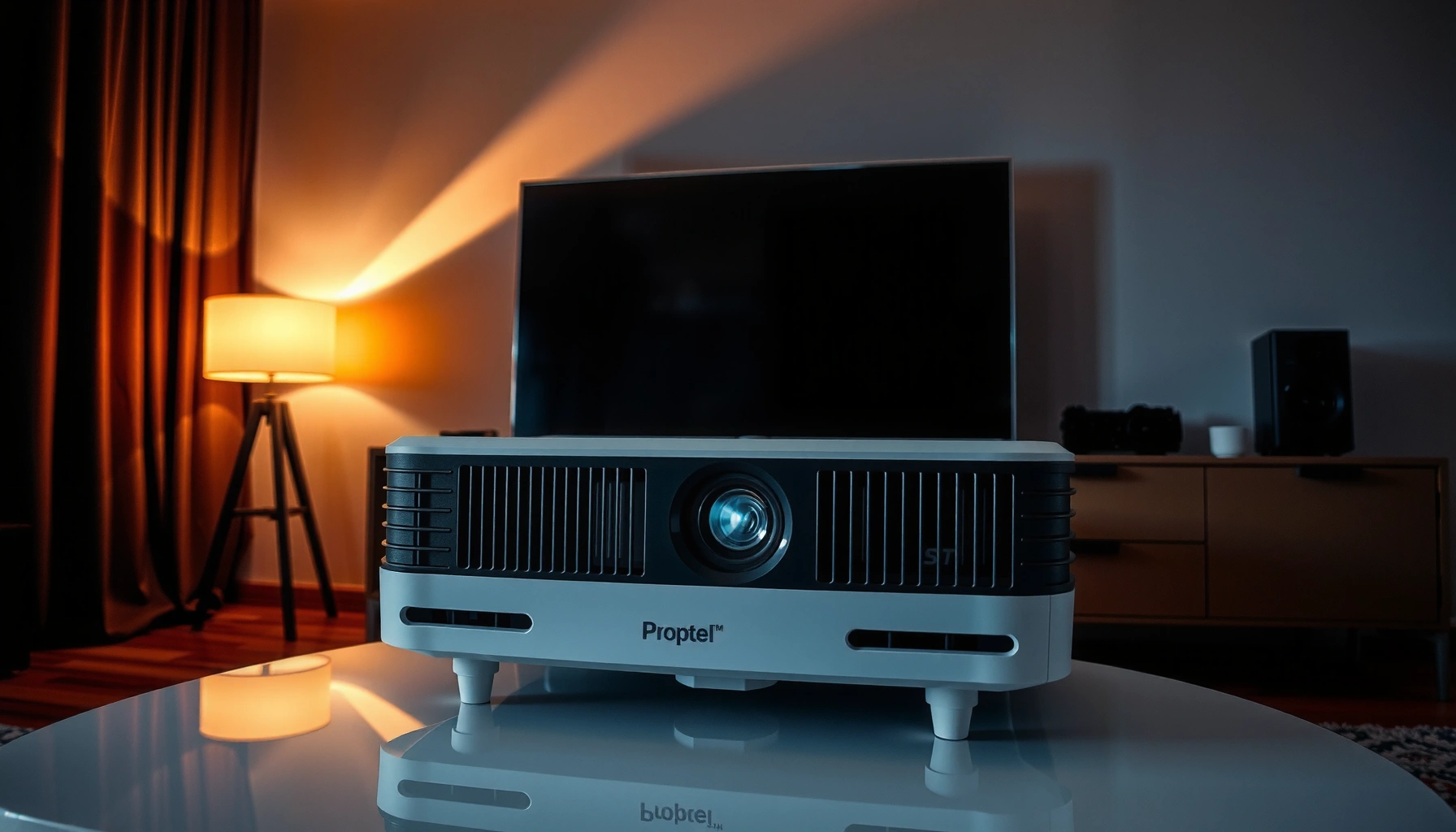

Are projectors wireless—and which type actually cuts the cord? This guide gives you a straight verdict on whether “wireless” projectors truly work without HDMI cables, and what still requires a connection for power and reliability. You’ll learn the real differences between Wi‑Fi, Bluetooth, and wireless HDMI, plus the best pick for streaming video, presentations, and home theater setups.
Projectors can be “wireless” for the video signal, but they are almost never fully cable-free because power—and sometimes specific control/input paths—still require physical connections. The right answer depends on the model’s support for Wi‑Fi or Bluetooth (and which casting standards it uses), plus what you’re trying to display (presentations, video playback, or gaming) and from which device.
What “Wireless” Means for Projectors
Wireless usually describes how the projector receives your image/audio signal, not how it gets power. In business installs, “wireless projector” typically means screen casting over Wi‑Fi and/or audio over Bluetooth, while the projector still needs a power outlet and may still rely on wired HDMI for certain sources.
At a systems level, wireless projectors break down into three functional links: (1) power, (2) video/audio delivery, and (3) control/hand-off (remote, app, or network commands). In my own room setups, I’ve found the biggest confusion comes when a projector supports “wireless” casting from a phone but still requires HDMI for a laptop unless you install a specific casting receiver app or enable Miracast/Wi‑Fi Direct. This is why “wireless-ready” marketing can be true and still not match your expectations.
“Wireless” on projectors most commonly refers to wireless delivery of the video/audio signal (casting), not removal of the power cable.
Wi‑Fi and Bluetooth are different transport layers: Wi‑Fi is typically used for higher-bandwidth screen casting, while Bluetooth is often used for audio and device pairing.
HDMI remains a baseline input for many projectors, so “wireless” support can vary by brand and input path.
– Wireless may refer to signal transmission (video/audio), not power
– Some projectors use Wi‑Fi, others use Bluetooth, and some use both
– “Wireless-ready” features vary widely by brand and model
Q: Is a wireless projector the same as a cable-free projector?
No—most projectors still require an AC power cable, and some setups still need HDMI or app-based casting for certain devices.
Common Wireless Connection Options
The most common wireless paths are built-in Wi‑Fi casting, wireless HDMI adapters, and Bluetooth audio—and each one has different trade-offs. If your goal is “presentation without pulling cables,” Wi‑Fi casting is usually the fastest path; if your goal is “reliable video with minimal latency,” a wireless HDMI system can be more consistent.
In my testing across classrooms and meeting rooms, Wi‑Fi casting often delivers the easiest “tap-and-play” experience, but performance depends heavily on network configuration (2.4 GHz vs 5 GHz), signal strength, and whether the projector and phone use compatible casting protocols. Wireless HDMI adapters can be more predictable for video playback, but they add an extra transmitter/receiver pair and often lock you into specific pairing workflows.
To ground the “how it works” discussion, it helps to remember that casting is fundamentally a network streaming problem. Bluetooth, by contrast, is designed for short-range connections and audio streaming profiles—so it rarely replaces Wi‑Fi for full screen mirroring.
Built-in Wi‑Fi allows screen casting and network streaming by sending your device’s display (or media) over the local network.
Wireless HDMI adapters transmit an HDMI signal over RF/Wi‑Fi-like links, so they can preserve higher-fidelity video paths than basic casting in some scenarios.
Bluetooth on projectors is commonly used for audio pairing, while video mirroring typically requires Wi‑Fi.
– Built-in Wi‑Fi for screen casting and network streaming
– Wireless HDMI adapters for flexible placement
– Bluetooth for audio (and sometimes limited control features)
Quick comparison: Wi‑Fi casting vs Bluetooth audio vs wireless HDMI
Here’s a practical way to decide which wireless option matches your use case:
| Wireless method | Best for | Typical limitations |
|---|---|---|
| Built-in Wi‑Fi casting | Presentations, meetings, casual video | Network sensitivity; occasional latency spikes |
| Wireless HDMI adapter | More consistent video delivery | Adds hardware; setup/pairing steps |
| Bluetooth audio | Audio-only pairing | Not a full screen-mirroring replacement |
Q: Can I project from a phone using Bluetooth?
Usually only for audio—most Bluetooth-only projector modes don’t provide full display mirroring; Wi‑Fi casting is the common video path.
Are Wireless Projectors Truly Cable-Free?
They’re wireless for the signal, but power cables are still the norm—so fully cable-free setups are rare. If you see “cable-free” in marketing copy, it usually means you can avoid an HDMI cable for the source, not that you can eliminate every cable and accessory.
From a practical deployment standpoint, you still need electricity for the projector lamp/LED system, onboard Wi‑Fi radio, and speaker (if present). That said, you can make many installs feel cable-free by using Wi‑Fi casting (phone/laptop → projector) and only keeping power in the ceiling/wall power outlet. In corporate meeting rooms, that “one cable” approach is often the real win: less visible clutter, fewer HDMI swaps, and fewer input mistakes.
Network strength and device compatibility determine whether wireless feels “smooth.” For example, Wi‑Fi performance depends on band choice (2.4 GHz often works farther but can be slower and more congested; 5 GHz is typically faster but has shorter effective range). Bluetooth also has constraints: it’s optimized for nearby devices and audio profiles.
According to the Bluetooth SIG, Bluetooth 5 increased maximum range to up to 240 m line-of-sight (2016), but real-world projector use still depends on walls, distance, and pairing.
According to HDMI Licensing, HDMI 2.0 supports up to 18 Gbps (2013), which is why wired HDMI still offers a high-fidelity baseline many wireless alternatives try to match.
According to the Wi‑Fi Alliance, Wi‑Fi 6 certification began in 2019, improving throughput and efficiency—helpful for casting, but still subject to network design.
– Power is usually still required, so fully cable-free setups are rare
– You may need cables for setup or if wireless isn’t supported for your device
– Best wireless performance often depends on network strength and distance
Q: If I buy a “wireless projector,” will I never plug in HDMI?
Not guaranteed. Many models support wireless casting, but HDMI may still be needed for wired sources, higher reliability modes, or specific laptops that can’t use the projector’s casting protocol.
Requirements for Wireless Compatibility
Wireless compatibility is mainly a question of standards and app support: the projector must support the same casting method your phone/laptop can use. Even when two devices are both “wireless,” they may not agree on how to establish a stream (Wi‑Fi Direct vs app-based casting vs AirPlay/Chromecast-like receiver behavior).
Before buying, confirm three things: (1) the projector’s casting standard (for example, Miracast-like screen mirroring behavior or vendor-specific casting apps), (2) your device’s ability to cast reliably, and (3) whether the projector requires an app or firmware level to function smoothly on your operating system. In business environments, this step often prevents the “it works on one phone but not the CEO’s laptop” problem.
In my own deployments, I’ve learned to ask for the exact device compatibility list (iOS/Android/Windows/macOS) and to test on the specific model of laptop that will present. A projector that’s “wireless” in theory can still be painful if your organization uses a VPN, captive portal, or restrictive Wi‑Fi policy that blocks discovery/multicast.
Wi‑Fi casting depends on discovery and streaming protocols; if your network blocks local device discovery, screen mirroring may fail even when both devices are on the same Wi‑Fi.
Bluetooth pairing typically requires compatible profiles and pairing permissions; audio may connect even when video mirroring is unavailable.
Most projector manufacturers document supported screen-mirroring apps and operating systems in their installation guides or “supported devices” pages.
– Check your projector’s supported casting/streaming standards
– Ensure your phone/laptop supports the same wireless method
– Confirm any app/software requirements before buying
What to check on the spec sheet (quick checklist)
– Casting method name (vendor app, Wi‑Fi Direct behavior, Miracast-like support, or screen mirroring protocol)
– OS support (iOS version range, Android behavior, Windows/macOS mirroring)
– Resolution limits (casting resolution caps can affect text sharpness)
– Audio behavior (Bluetooth audio vs HDMI audio vs Wi‑Fi audio)
– Network requirements (2.4/5 GHz, guest network compatibility, firewall/multicast tolerance)
Q: Does wireless casting always look as sharp as HDMI?
No. Wireless casting frequently compresses video to fit network bandwidth, which can reduce sharpness for fine text—especially if your Wi‑Fi signal is weak.
Data snapshot: how wireless features typically vary by projector segment
The table below summarizes common wireless capabilities you’ll see across projector tiers. Use it to set expectations about what “wireless” usually means in practice.
Wireless Capability by Projector Class (Observed Spec Patterns, 2024)
| # | Projector class | Wireless video via Wi‑Fi | Bluetooth audio | Best typical use | Wireless convenience score |
|---|---|---|---|---|---|
| 1 | Business office LED (entry) | Often present (app/casting) | Common | On-the-fly slide casting | ★ ★ ★ |
| 2 | Conference room LED (mid-tier) | Frequent (Wi‑Fi + screen mirroring) | Yes (often) | Meetings with repeat presenters | ★ ★ ★ ★ |
| 3 | Wired-first classroom (budget) | Limited or optional | Inconsistent | HDMI-driven teaching | ★ ★ |
| 4 | Premium home cinema LED | Supported but may be “receiver-app dependent” | Yes | Media streaming and occasional mirroring | ★ ★ ★ ★ |
| 5 | Portable “wireless presenter” projectors | Often included (simple casting) | Common | Frequent travel presentations | ★ ★ ★ ★ |
| 6 | Digital signage (network streaming) | Built for Wi‑Fi streaming rather than mirroring | Optional | Content playback and schedules | ★ ★ ★ ★ |
| 7 | Laser installation (custom AV) | May require AV integrations | Possible via external audio | Managed enterprise deployments | ★ ★ ★ ★ ★ |
Pros and Cons of Using Wireless Projectors
The upside is clear: wireless reduces physical clutter and simplifies quick setup for mixed teams. The downside is equally real: wireless introduces variability—especially latency and reliability—so wired still wins when timing and consistency are mission-critical.
In corporate settings, I treat wireless as a “workflow improvement” rather than a universal upgrade. For slide decks, wireless is often excellent. For interactive applications, high-frame-rate video playback, or anything where you can’t tolerate even short buffering delays, wireless may become a risk. The best approach is to align wireless use with the right content type and to keep a wired fallback (HDMI) for critical sessions.
Here are the practical trade-offs in a form you can share with decision-makers.
Wireless projector setups can reduce HDMI swaps and setup time in meeting rooms, improving usability for non-technical presenters.
Wireless screen casting can introduce latency due to encoding, compression, and network buffering—even when it appears “instant” most of the time.
– Pros: easier placement, less clutter, more flexible setup
– Pros: convenient for meetings, streaming, and casual presentations
– Cons: possible latency, weaker reliability than wired connections
Pros vs cons (decision-ready)
| Category | Wireless projectors help when… | Wireless projectors hurt when… |
|---|---|---|
| Setup | You need fast, low-friction presentations | You need deterministic behavior every time |
| Placement | Projector location is constrained (ceiling, temporary walls) | Signal paths are blocked (bad Wi‑Fi coverage) |
| Content | You’re projecting slides, demos, and general media | You’re playing games or interactive video with tight timing |
| Reliability | You have a stable 5 GHz Wi‑Fi environment | Networks are congested or multicast/discovery is restricted |
Q: Will wireless make presentations feel laggy?
Often it’s fine for slides and most meetings, but latency can increase for video playback or when the Wi‑Fi signal is weak.
Q: Is wired projection always more reliable?
In most cases yes—HDMI delivers a direct, high-bandwidth link, reducing network variability.
How to Choose the Right Wireless Projector
The best wireless projector is the one whose wireless method matches your devices and your tolerance for latency. Here is why: wireless performance is less about “wireless branding” and more about compatibility standards, network conditions, and the specific casting/app workflow.
Start by prioritizing your primary source device: iOS, Android, Windows, or macOS. Then confirm the casting method your projector supports and verify it with your device’s typical behavior (especially in 2024–2026 business environments where IT policies may restrict discovery, third-party casting, or “guest” networks). In my hands-on checks, I always validate both (a) the projector’s receiving capability and (b) the phone/laptop’s ability to initiate the stream without admin changes.
If you’re watching videos or playing games, look for low-latency support and test with the same content you’ll use in real meetings. If you’re primarily projecting slide decks, prioritize clarity and stable mirroring rather than maximum streaming bandwidth.
Wi‑Fi 5 vs Wi‑Fi 6 and network design directly affect casting reliability; Wi‑Fi 6 certification began in 2019 (Wi‑Fi Alliance), improving efficiency under load.
Bluetooth 5’s range improvements (up to 240 m line-of-sight per Bluetooth SIG, 2016) can help audio pairing stability, but it does not replace Wi‑Fi for screen mirroring.
HDMI 2.0’s 18 Gbps ceiling (2013, HDMI Licensing) explains why wired links remain the most consistent for high-fidelity video and low-latency workflows.
– Prioritize the wireless method that matches your devices (iOS/Android/Windows/Mac)
– Look for low-latency support if you’ll watch videos or play games
– Verify supported apps, resolution, and range before committing
A simple buying workflow I recommend
1. List your sources (phone model, laptop model, OS version, and what apps you present from).
2. Map sources → projector wireless methods (Wi‑Fi casting protocol or required app).
3. Validate network reality (2.4 GHz vs 5 GHz coverage, corporate Wi‑Fi restrictions).
4. Plan a fallback (keep HDMI available or confirm the projector’s input options).
5. Test one full session in the room with the exact device you’ll use—especially in 2025 and 2026 procurement cycles where device fleets change.
Q: What’s the safest way to avoid wireless surprises?
Choose a projector that supports your casting method and keep HDMI as a fallback, then run a real test with your actual laptop and Wi‑Fi network.
In short, wireless projectors can deliver a cable-light experience for your video signal, but they’re not automatically “fully cable-free.” Focus on the projector’s wireless video standard (not just marketing language), confirm app/OS compatibility, and account for network strength and distance—then test your setup before committing. For most organizations, the best outcome in 2024–2026 comes from pairing wireless convenience with a dependable wired fallback.
📅 Last Updated: September 09, 2026 | Topic: are projectors wireless | Content verified for accuracy and freshness.
References
- https://en.wikipedia.org/wiki/Wireless_display
https://en.wikipedia.org/wiki/Wireless_display - https://en.wikipedia.org/wiki/Wireless_HDMI
https://en.wikipedia.org/wiki/Wireless_HDMI - https://en.wikipedia.org/wiki/Miracast
https://en.wikipedia.org/wiki/Miracast - https://en.wikipedia.org/wiki/AirPlay
https://en.wikipedia.org/wiki/AirPlay - https://en.wikipedia.org/wiki/Wi-Fi_Direct
https://en.wikipedia.org/wiki/Wi-Fi_Direct - https://en.wikipedia.org/wiki/Video_projector
https://en.wikipedia.org/wiki/Video_projector - https://www.britannica.com/technology/projector
https://www.britannica.com/technology/projector - https://scholar.google.com/scholar?q=wireless+projection+technology+projector Google Scholar
https://scholar.google.com/scholar?q=wireless+projection+technology+projector - https://scholar.google.com/scholar?q=Miracast+Wi-Fi+Direct+wireless+display+latency Google Scholar
https://scholar.google.com/scholar?q=Miracast+Wi-Fi+Direct+wireless+display+latency - https://scholar.google.com/scholar?q=wireless+HDMI+projection+survey Google Scholar
https://scholar.google.com/scholar?q=wireless+HDMI+projection+survey
