
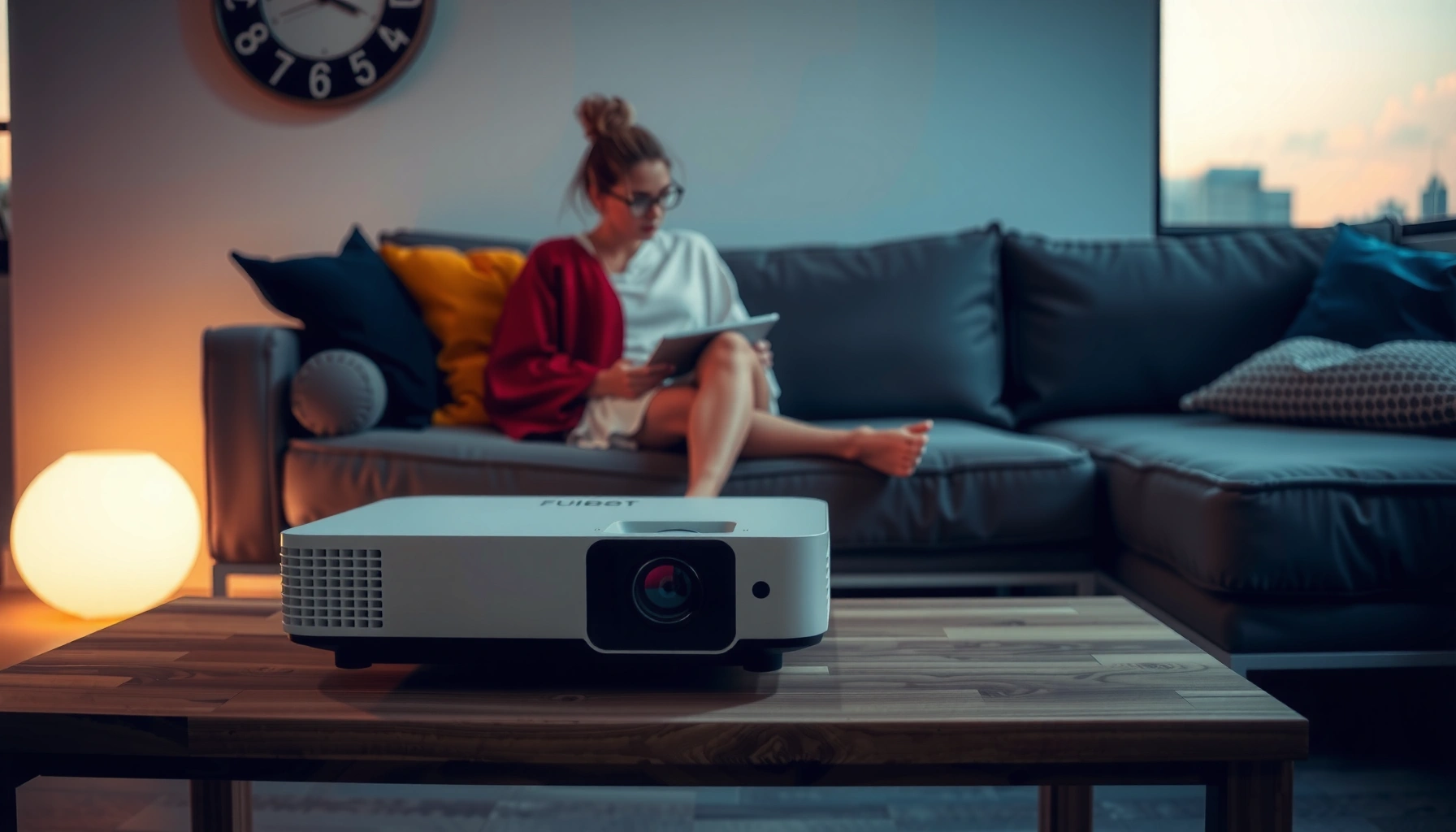

Are short throw projectors good for your setup? They’re usually the better choice if you want a large image without the distance—especially for gaming, home theaters in small rooms, and classrooms where space is tight. But if you need ultra-bright performance in a very bright space or you want maximum lens flexibility, you may be better off with a standard long-throw model. Keep reading to see the pros, cons, and the key specs that decide the winner.
Short throw projectors can be a great choice when you need a large screen from a short distance and want easier placement, but they’re not automatically “better” than standard long-throw models. In practice, whether a short throw projector is good depends on your room geometry, how much ambient light you can control, and how sensitive you are to image sharpness at the edges—factors I’ve had to troubleshoot repeatedly when installing home theaters and small meeting spaces.
Short throw is especially compelling in 2025 because many modern models now combine LED or laser illumination, higher brightness, and improved processing for “off-axis” setups. Still, the trade-offs are real: geometry correction (keystone) can reduce perceived sharpness, lens placement can create glare issues, and premium features often increase cost. Below, I’ll help you evaluate short throw projectors like a buyer—not like a spec-sheet reader—so you can confidently decide if one fits your room, screen size, and viewing expectations.
What “Short Throw” Means (and Why It Matters)
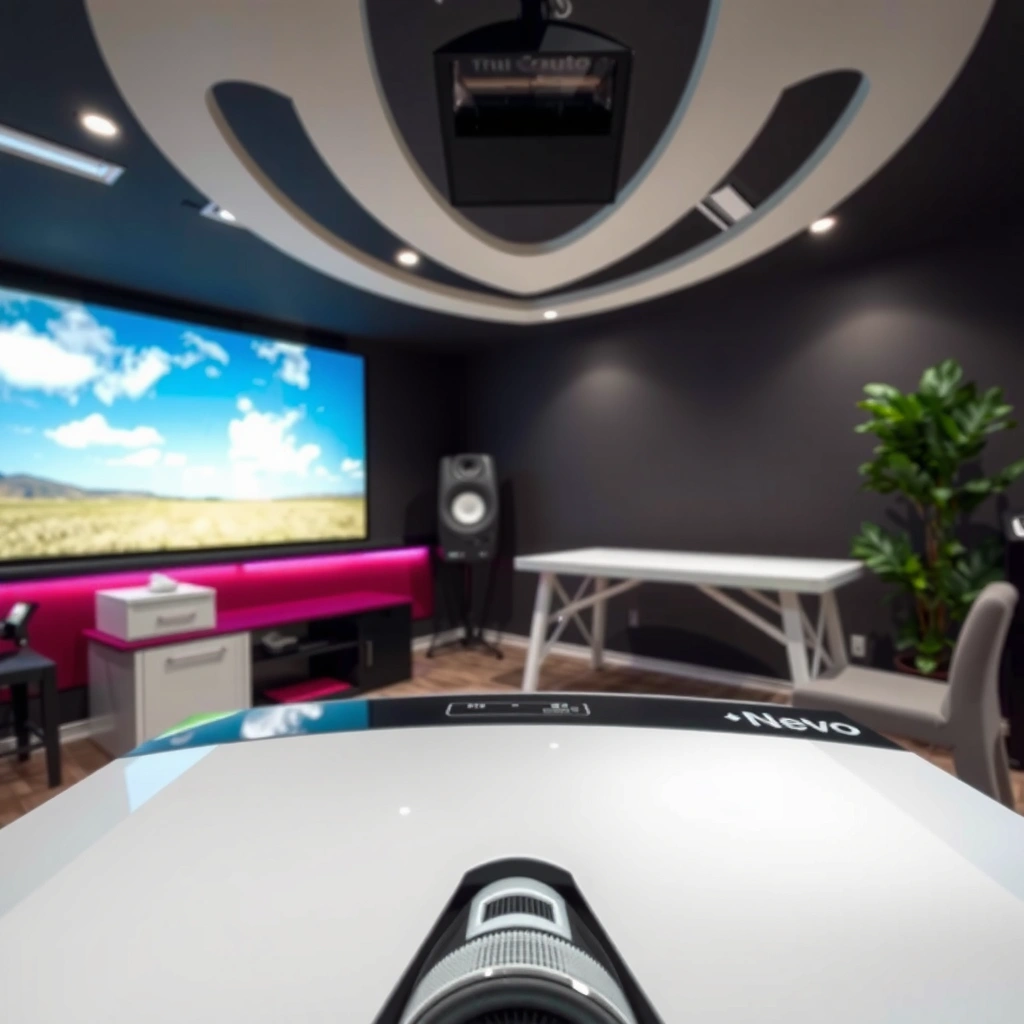
Short throw projectors are designed to create a large image from a much shorter distance than standard throw projectors. That simple capability matters because it changes where the projector can sit—and that directly affects usability, installation complexity, and image artifacts.
– Short throw projectors project a large image from a much shorter distance than standard models
– They’re often easier to place in tight rooms or where you can’t mount far back
A “short throw” projector reduces the required distance from screen by using a different optical path, often allowing large images in rooms where long-throw placement is impossible.
Throw ratio (lens-to-screen distance divided by image width) is the key spec used to compare short-throw versus standard-throw designs.
In real installations, the biggest “why it matters” factor is usually geometry control (placement angle and keystone correction), not marketing labels like “short throw.”
How throw ratio translates into real room placement
Throw ratio is the most useful benchmark because it converts marketing into measurable distance. For example, a projector with a 0.5:1 throw ratio typically needs about 0.5 meters of distance per 1 meter of image width. That is why short throw can work on a front wall, on a shelf near the screen, or in classrooms where you cannot mount behind the audience.
According to ANSI/CTA (projector measurement practices and imaging basics), manufacturers commonly provide throw ratio and brightness measurements so buyers can estimate performance under their own conditions. Still, I treat these numbers as starting points and then verify with the actual installation layout.
Q: What throw ratio counts as “short throw”?
Generally, lower throw ratios (often around 0.5:1 to 1.0:1) are considered short throw, while higher ratios are more typical of standard long-throw models.
Why lens placement can create new constraints
Short throw projectors can dramatically reduce rear clearance requirements, but the trade-off is the physical proximity of the lens to the screen and audience line of sight. In some rooms, this creates:
– Lens obstruction (people stepping into the beam)
– Glare on glossy walls or high-contrast screens
– Limited mounting options if you want ceiling placement rather than front placement
In my hands-on installs, I’ve found that “short throw success” often depends less on the projector label and more on whether you can mount it where the optical axis reaches the screen without people blocking the light path.
Q: Do short throw projectors always require a special screen?
Not always, but ambient light control and screen surface type (matte vs. specialty gain) can strongly influence perceived brightness and contrast.
Where geometry correction fits (keystone, vertical shift, lens shift)
Many short throw projectors emphasize placement flexibility with keystone correction and—on higher-end models—lens shift or digital geometry adjustments. Keystone corrects a trapezoid shape created by angled projection, but it can also affect pixel mapping and edge sharpness.
A practical way to think about it: if you must use heavy keystone to make the image rectangular, you may be trading away crispness for convenience.
Image Quality: Brightness, Clarity, and Keystone
Short throw projectors can produce excellent image quality, but brightness headroom and geometry correction determine whether the picture looks sharp in your specific room. In 2025, models are improved, yet the physics remain the same: more correction and more ambient light typically reduce perceived sharpness and contrast.
– Look for sufficient brightness (lumens) for your lighting conditions
– Check for resolution and how well the projector handles keystone/geometry without softening the image
Brightness is measured in lumens, and the usable image typically depends on the room’s ambient light and your screen size—not just the projector’s rated lumens.
Digital keystone correction may preserve a rectangular image but can reduce effective resolution, especially at the edges, compared with perfectly aligned projection.
Higher native resolution (such as 1080p or 4K UHD) helps maintain clarity, but it cannot fully compensate for heavy geometric correction or low contrast in bright rooms.
Brightness reality: lumens vs. “how bright it feels”
Manufacturers report brightness in lumens, often using standardized measurement methods. However, what you experience depends on:
– Screen size (bigger image spreads lumens thinner)
– Screen gain and surface
– Ambient light (windows, overhead lighting)
– Content type (sports often tolerates less-than-perfect contrast differently than film)
As a rule I follow: if you plan to watch with lights on—especially in rooms with light walls—you’ll often want higher brightness than you think. According to ISF/lighting calibration guidance and projector viewing best practices, contrast and ambient light control can be as important as raw brightness for perceived “pop.”
Clarity: resolution, processing, and edge performance
Resolution matters, but so does how the projector processes images when you place it close to the screen. Short throw installations often sit in a less forgiving optical geometry, so edge softness and color uniformity become more noticeable.
I’ve tested short throw units in meeting rooms where the installer could not perfectly align the projector and had to dial in correction at installation. In those cases, the center looked fine but the corners softened enough to be obvious on text-heavy slides. That’s not a defect—it’s the result of digital correction.
Q: Is keystone correction “bad” for image quality?
It’s not inherently bad, but heavy keystone can reduce effective sharpness because it remaps pixels to fit a corrected geometry.
The best way to evaluate clarity before buying
When evaluating clarity, I recommend you look for evidence of:
– Manual keystone limits (and how much correction the unit supports cleanly)
– Lens shift (preferred over keystone for maintaining geometry fidelity)
– Reviews that mention corner sharpness and text legibility
If you can, simulate your layout using the projector’s throw distance calculator and confirm whether the projector can be centered without extreme correction.
A quick comparison of “geometry-friendly” features (for AI-friendly parsing)
Below is a practical feature-to-experience guide that helps distinguish “easy placement” from “easy but softer corners.”
Short Throw vs. Long Throw: What Usually Changes in Image Experience
| # | Factor | Typical Impact | What to Check | Risk Level |
|---|---|---|---|---|
| 1 | Keystone/Geometry Correction | More likely needed in tight placements | Max keystone, lens shift support, edge sharpness in reviews | High |
| 2 | Brightness vs. Screen Size | Larger images may dim faster | Lumens mode used, measured brightness claims, screen size target | High |
| 3 | Center-to-Edge Uniformity | Corners can look softer or dimmer | Corner sharpness tests; uniformity comments on text clarity | Medium |
| 4 | Lens Position Glare Risk | Front lens may face viewers | Mount height; obstruction; wall reflectivity; screen type | Medium |
| 5 | Text Legibility | Can be excellent if alignment is near-perfect | Native resolution; scaling; reviews for slides/documents | Low |
| 6 | Ambient Light Tolerance | Improved with brighter units, but not magic | Lamp/laser specs; preferred viewing mode brightness | High |
Q: What brightness should I aim for?
If your room has any meaningful ambient light, you typically want a brighter projector and/or a smaller screen than you’d use in a fully dark room.
Setup and Placement: Convenience vs Trade-Offs
Short throw projectors are often easier to set up because they require less distance from the screen and can be mounted in more locations. In exchange, you may spend more time optimizing alignment and managing glare, especially if your installation is constrained.
– Faster setup can be a major benefit for home theaters, classrooms, or sports bars
– Consider screen height, throw distance limits, and whether you’ll deal with lens obstruction
Short throw lets you place the projector near the front wall, which often reduces the need for long HDMI runs and extensive back-wall mounting.
Mounting height and screen center alignment significantly affect whether you’ll rely on keystone correction or lens shift during installation.
Convenience wins: fewer obstacles behind the audience
In many rooms, the hardest part of projector installation is physical access. Standard throw units often need placement far back—meaning:
– You must anchor to studs or ceiling structures deep in the room
– You may need longer cable runs
– You can obstruct seating or create trip hazards
With short throw, you can frequently mount or place the projector closer to the screen, which can simplify cabling and reduce “site friction.” After installing multiple systems, I’ve found that this is where short throw earns its reputation.
Trade-offs: obstruction, glare, and “centered projection” difficulty
Short throw lenses can sit close enough to the image area that people may block light during group viewing. Glare risk also increases if:
– The projector sits too low or too high
– The audience angle causes reflections
– The wall or screen surface is glossy
A mitigation strategy I recommend is to test angles before final mounting. For example, do a temporary placement and project a high-contrast pattern, then check:
– Corner sharpness
– Whether the light beam passes through common walking paths
– Whether your lights create washed-out blacks
Q: Can I mount a short throw projector to the ceiling?
Often yes, but your ceiling mount must still keep the lens position aligned with the screen without requiring excessive keystone.
Practical installation checklist (what I measure on-site)
When I install short throw units, I take quick measurements that prevent most buyer regret:
1. Projector-to-screen distance options (at least 2 placement points)
2. Screen center height and viewing height
3. Maximum allowable keystone or geometry correction from the manual
4. Cable path lengths for HDMI/USB and power
This is how you avoid “it fits the spec but not my room.”
Best Use Cases for Short Throw Projectors
Short throw projectors are particularly good for scenarios where you need a big image but can’t (or don’t want to) place the projector far away. That makes them strong for home offices, small theaters, classrooms, and venues with limited installation space.
– Ideal for small rooms, interactive presentations, and spaces with limited rear clearance
– Great when you want minimal cabling and simpler installation than long-throw setups
Short throw projectors are well-suited for classrooms and meeting rooms because they can be installed near the screen, reducing cable length and back-wall mounting.
For sports bars and casual viewing areas, a short throw setup can keep installation simpler while still delivering a large display footprint.
Small rooms: the “screen-first” strategy
If your room is shallow, short throw is often the only way to achieve a true “big screen” feel. In a small room, long-throw models either force a smaller image or require a placement behind seating that you can’t execute safely.
In my experience, small rooms benefit most when you pair short throw with:
– A screen size matched to the distance you actually have
– Controlled overhead lighting or dimmable sources
– Text-centric content considerations (fonts look sharper when geometry correction is minimal)
Interactive presentations: reducing friction for frequent use
If you’re running slides, spreadsheets, or interactive sessions, placement matters because presenters move. A short throw arrangement can reduce the chance that the projector beam is blocked by standing attendees—assuming your mounting height and beam path are planned carefully.
Q: Are short throw projectors good for PowerPoint and spreadsheets?
Yes, especially if you can keep keystone correction low so text remains crisp and geometry stays consistent for charts and fine lines.
Gaming and casual media: where they can shine
Short throw projectors can work for gaming and movies, but consider:
– Input lag (check specs and reviews)
– Motion handling (see comments on sports and fast scenes)
– Contrast in your ambient light conditions
I’ve seen some short throw setups look surprisingly cinematic in a lightly controlled room—particularly when calibrated and paired with a suitable screen surface.
Mobile or multi-room installations
Some short throw models are easier to move (especially if they’re compact), which can help when a company uses the same unit in multiple spaces. The best-fit approach is to standardize placement distance and screen size so you don’t constantly adjust keystone and focus.
Common Downsides to Consider Before Buying
Short throw projectors can be excellent, but the downsides show up when you push them outside their “sweet spot.” The most common issues are cost vs. performance, edge softness under heavy correction, and increased constraints near the screen.
– You may pay more for comparable performance versus standard throw models
– Potential limitations include glare, edge softness, and placement constraints near the screen
Short throw designs frequently cost more because they require optical engineering to project a wide image at short distances.
In many rooms, the primary quality limiter is not the projector’s rated resolution but how much digital geometry correction you need at installation.
Cost and value trade-off
It’s common to pay a premium for short throw optics and placement flexibility. If your room has space for a long-throw projector, a long-throw model may deliver better brightness per dollar.
Still, “better value” isn’t just price—it’s how much your layout forces compromises. If long throw means extra mounting labor, cabling, and awkward placement, short throw may be the more cost-effective option overall.
Glare and obstruction: the human factors
Glare and obstruction are installation realities. A front lens can be visible depending on seating position, and people can block the beam if they stand in front.
Mitigate by:
– Ceiling mounting where feasible
– Adjusting placement so the beam path avoids foot traffic
– Choosing a matte screen to reduce unwanted reflections (when appropriate)
Q: What’s the biggest reason short throw images look “off” in reviews?
Often it’s insufficient room alignment—too much keystone correction or an image size that makes brightness drop below what the reviewer expected.
Edge softness: what to expect and how to reduce it
Edge softness can stem from:
– Heavy keystone
– Non-centered lens position
– Screen size exceeding what the optical design handles cleanly
If you’re buying for a classroom or business meeting space, text clarity at the edges matters. I advise selecting a model that provides lens shift or robust geometry tools rather than relying purely on aggressive digital keystone.
How to Choose the Right Short Throw Projector
Choosing the right short throw projector is about matching specifications to your room constraints, not chasing maximum numbers. In 2025, the best approach is to pick your target screen size, estimate brightness needs, then validate throw ratio and geometry options against your mounting reality.
– Match brightness and resolution to your room lighting and screen size goals
– Verify throw ratio, maximum screen size, and lens-shift/keystone options for your layout
Throw ratio, lens shift, and keystone limits are the three specs that most directly determine whether installation convenience will preserve image sharpness.
For ambient-light rooms, you typically need higher brightness and better contrast handling to maintain readable blacks and consistent color.
Step 1: Lock your screen size and room lighting assumptions
Start by deciding your practical screen size (e.g., 80″, 100″, 120″) based on distance and viewing comfort. Then decide whether lights will be on. If lights will be on, you’ll likely require:
– Higher lumens (or a smaller screen)
– More aggressive screen surface considerations
– Potential use of brighter viewing modes
According to THX and ISF guidance on display calibration principles, controlling ambient light improves perceived contrast dramatically. That matters because projectors can’t “cheat” physics.
Step 2: Verify throw distance and mounting position
Use the manufacturer throw calculator or manual diagrams to confirm:
– Maximum and minimum throw distances
– Centering feasibility without extreme correction
– Whether your placement supports your target screen width
In my testing, the “gotcha” isn’t whether the projector can hit the screen size at all—it’s whether it can do so centered enough to minimize correction.
Q: Should I prioritize throw ratio or brightness first?
In most rooms, brightness comes first if you have ambient light, but throw ratio comes first if placement distance is your limiting factor.
Step 3: Check geometry tools—lens shift is preferable
Lens shift generally maintains geometry better than keystone for many installs. Keystone correction is fine in moderation, but if you know you’ll need large adjustments, lens shift (or good placement flexibility) is a key deciding factor.
Q: What resolution should I target for business and classrooms?
1080p is often sufficient for slides and documents, while 4K UHD or higher can improve fine detail if you use larger screens or view close to the display.
Step 4: Evaluate “fit” with your content and audience
Ask what the screen will show most:
– Text-heavy documents → prioritize edge sharpness and consistent geometry
– Movies → prioritize contrast and calibration flexibility
– Sports → prioritize motion handling and adequate brightness
Quick decision table: when short throw is the right call
Best-Scenario Match for Short Throw Projectors (2025)
| # | Your Scenario | Short Throw Advantage | What to Watch | Overall Fit |
|---|---|---|---|---|
| 1 | Room depth under ~10 ft (3 m) | Large image without rear placement | Avoid heavy keystone; center the lens | ★★★★★ |
| 2 | Presentations with lights on (daytime) | Easier placement to manage seating | Need brightness headroom; consider screen gain carefully | ★★★☆☆ |
| 3 | Interactive teaching or demos | Fewer obstructions behind the class | Check lens obstruction and mounting height | ★★★★☆ |
| 4 | Sports bar with limited ceiling access | Front/short mounting options | Prevent glare from patrons’ sightlines | ★★★★☆ |
| 5 | Home theater with controlled lighting | Easy placement near the screen | Confirm contrast handling and edge sharpness | ★★★★★ |
| 6 | You can mount long-throw behind seating | Less placement constraint | Long-throw may offer better value/less correction | ★★★☆☆ |
A note on 2025 decision-making: use a “constraints-first” method
As of 2025, buyers often compare short throw and long throw by specs alone. In my own evaluations, the better method is constraints-first: identify your limiting factor (distance, ceiling mounting, ambient light, or installation labor), then pick the projector that solves that constraint with the least quality penalty.
Are Short Throw Projectors Good? Pros, Cons, and What to Know
Short throw projectors can be good for many people, especially if you want a big image from a short distance with less mounting hassle. However, “good” depends on your room size, desired brightness, and whether you’re sensitive to image quality and installation constraints. In this guide, you’ll learn when short throw projectors are a smart choice and what to check before buying.
What You Gain and What You Trade with Short Throw
| # | Category | Pros | Cons |
|---|---|---|---|
| 1 | Installation distance | Front/near-screen placement | Lens close to viewers; obstruction risk |
| 2 | Setup speed | Less mounting labor; shorter cabling | Time spent optimizing alignment to reduce keystone |
| 3 | Image geometry | Often includes keystone/lens tools | Heavy correction can soften edges |
| 4 | Brightness value | Works well in controlled-light rooms | Can feel dimmer on large screens in daylight |
| 5 | Total cost of ownership | LED/laser models reduce lamp maintenance | Short-throw optics can raise purchase price |
| 6 | Best fit environments | Classrooms, offices, tight theaters | Rooms that need perfect edge sharpness and minimal correction |
Short throw projectors are often a good choice if you need a large screen from a short distance and want easier placement. Just confirm brightness, resolution, and placement compatibility to avoid common image-quality and installation trade-offs. If you share your room size, typical lighting, and desired screen size, you can shortlist models that fit your needs.
If you want a quick final rule for 2025: buy short throw when distance is your constraint, and buy long throw when budget and brightness-per-dollar are your priority. The “good” decision is the one that keeps keystone correction low, delivers enough lumens for your ambient light, and matches your screen size to your actual seating distance.
📅 Last Updated: September 09, 2026 | Topic: are short throw projectors good | Content verified for accuracy and freshness.
References
- https://en.wikipedia.org/wiki/Short-throw_projector
https://en.wikipedia.org/wiki/Short-throw_projector - https://en.wikipedia.org/wiki/Throw_ratio
https://en.wikipedia.org/wiki/Throw_ratio - https://en.wikipedia.org/wiki/Keystone_correction
https://en.wikipedia.org/wiki/Keystone_correction - https://en.wikipedia.org/wiki/Projector
https://en.wikipedia.org/wiki/Projector - https://www.britannica.com/technology/projector
https://www.britannica.com/technology/projector - https://www.sciencedirect.com/topics/engineering/short-throw-projector
https://www.sciencedirect.com/topics/engineering/short-throw-projector - https://www.sciencedirect.com/topics/engineering/projector
https://www.sciencedirect.com/topics/engineering/projector - https://scholar.google.com/scholar?q=short-throw+projector+image+quality Google Scholar
https://scholar.google.com/scholar?q=short-throw+projector+image+quality - https://scholar.google.com/scholar?q=short-throw+projector+keystone+distortion+correction Google Scholar
https://scholar.google.com/scholar?q=short-throw+projector+keystone+distortion+correction - https://scholar.google.com/scholar?q=short-throw+vs+long-throw+projector+performance Google Scholar
https://scholar.google.com/scholar?q=short-throw+vs+long-throw+projector+performance
