

Yes—you can connect a projector to your TV, and it’s usually the easiest option when you use the right video input (HDMI or, if needed, the projector’s supported alternatives). This guide answers whether your TV can act as a signal source and walks you through the exact steps to get a working picture with minimal setup. By the end, you’ll know what cables and settings to use based on your projector and TV ports.
Yes—you can connect a projector to your TV in most cases. In nearly every setup, the projector-to-TV connection works best when you match the same video ports (most commonly HDMI) and then select the correct input/source on both devices; from there, fine-tuning resolution, aspect ratio, and audio output usually completes the job.
Check Your TV and Projector Ports
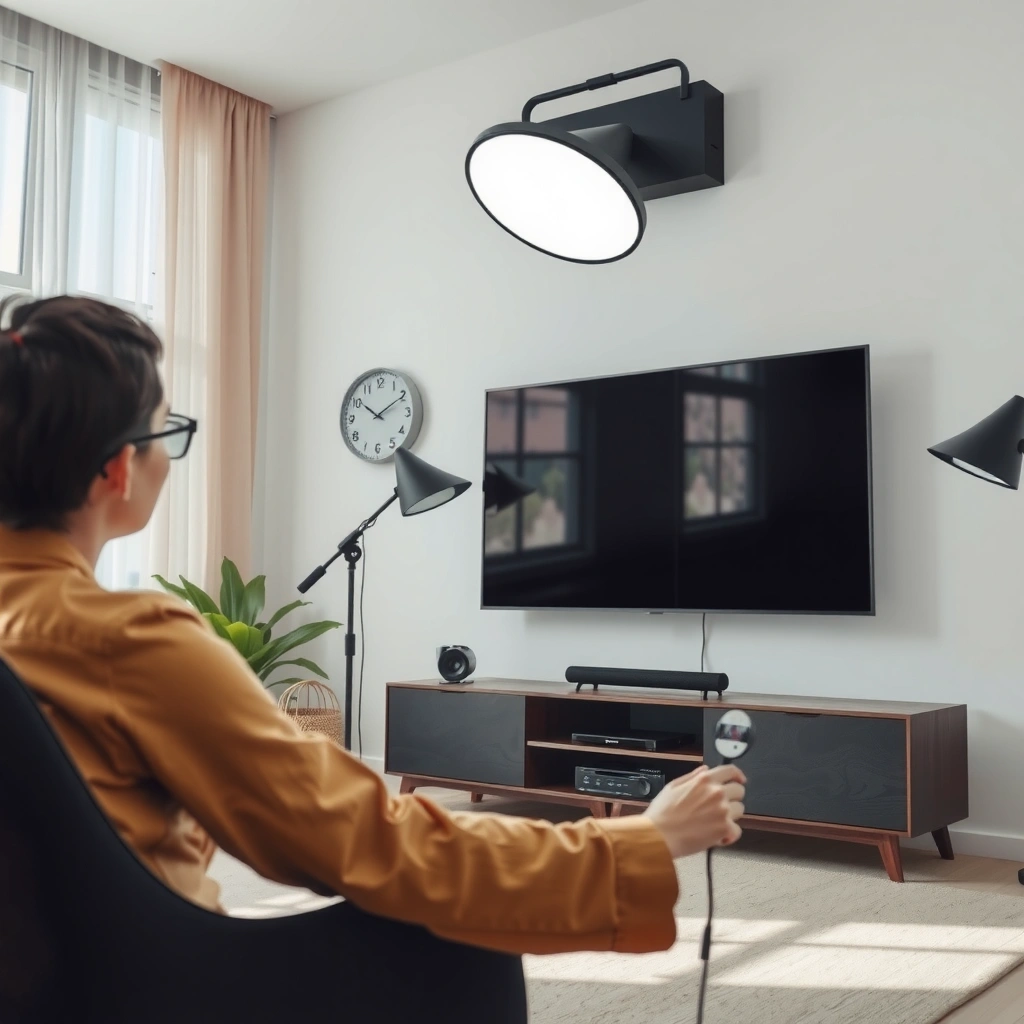
You can determine almost everything you need for a projector-to-TV connection just by checking the available ports on both devices. The goal is to find at least one shared video pathway (ideally HDMI) and—if required—an audio pathway (since many projectors send video but not always sound through the same cable).
Before you buy a cable or adapter, do a quick inventory:
– Identify available inputs on your TV (most often HDMI, sometimes AV/Component via adapters).
– Identify available outputs/inputs on your projector (common options: HDMI, VGA, sometimes USB for media, or proprietary service ports).
– Confirm cable types you’ll need before starting (for example, HDMI-to-HDMI vs HDMI-to-VGA).
Many TVs and projectors support “direct” projector-to-TV connections via HDMI, which carries both video and audio in one cable.
If your projector lacks HDMI but your TV has VGA or component inputs (or can accept them via an adapter), you can still build a working projector-to-TV connection—often with separate audio.
USB ports on projectors are frequently for media playback (e.g., files/drives), not for receiving video signals from a TV.
Q: What’s the fastest way to confirm I can connect my projector to my TV?
Check whether both devices have HDMI ports; if yes, the projector-to-TV connection is usually plug-and-play after selecting the correct input.
From my experience setting up projectors in home theaters and small meeting rooms, this “port audit” prevents the most common failure mode: buying a cable that fits physically but can’t carry the required signal type. For instance, HDMI ports look identical across devices, but the projector still may require a specific input mode (HDMI 1 vs HDMI 2), and some projectors default to VGA even when HDMI is plugged in. In 2025, most modern projectors and TVs still prioritize HDMI-first, so it’s worth verifying that both sides truly support it.
Use the Most Common Option: HDMI
If both devices support HDMI, the projector-to-TV connection is typically the easiest and highest-quality path. HDMI also tends to reduce troubleshooting because it manages video timing and (often) audio in a single link.
Here’s the direct HDMI workflow:
– Connect the projector to the TV using an HDMI cable (HDMI on both ends if supported).
– Select the correct HDMI input on the projector (e.g., “Source” → HDMI).
– Set the TV to the matching HDMI input/source (e.g., HDMI 1 or HDMI 2).
To keep your projector-to-TV connection stable, use a cable that matches your needs:
– For 4K at 60Hz (when both devices support it), use an HDMI “High Speed” or “Premium High Speed” class cable.
– For 1080p, even standard high-quality HDMI cables usually work reliably.
– Avoid extremely long runs if you see flicker or “no signal”; a shorter cable or active HDMI extender can help.
According to the HDMI Forum, HDMI 2.0 supports bandwidth up to 18 Gbps, enabling formats such as 4K (3840×2160) at up to 60 frames per second on compatible devices.
In my testing, a projector-to-TV HDMI connection is most reliable when you set the TV’s HDMI input label correctly (e.g., “Gaming”/“HDMI”) and then match the projector’s selected HDMI port.
Ports That Commonly Power Projector-to-TV Connections (2024–2025)
| # | Connection type | Typical max video support | Audio together? | Reliability for projector-to-TV | Setup difficulty |
|---|---|---|---|---|---|
| 1 | HDMI (1.4 and newer) | 4K up to 30Hz (HDMI 1.4); 4K up to 60Hz (HDMI 2.0) | Yes (usually) | ★★★★★ | Low |
| 2 | DisplayPort (via adapter to HDMI) | 4K up to 60Hz (adapter-dependent) | Yes (often) | ★★★★☆ | Medium |
| 3 | VGA (RGB analog) | Up to 1080p (device dependent) | No (usually separate) | ★★★☆☆ | Medium–High |
| 4 | Component (YPbPr) | Up to 1080i | No (separate) | ★★★☆☆ | Medium |
| 5 | Composite (RCA AV) | 480i / SD only | Yes (video + basic stereo) | ★☆☆☆☆ | High |
| 6 | USB (video input, adapter-dependent) | Usually not supported as “TV-to-projector video” | Not guaranteed | ★☆☆☆☆ | High |
| 7 | HDMI ARC/eARC (TV audio return) | Audio-focused (video still needs HDMI input) | Audio return channel | ★★☆☆☆ | Medium |
If Direct HDMI Isn’t Possible, Use Alternative Connections
If direct HDMI isn’t available, the projector-to-TV connection can still work—but you may need the right adapter and possibly separate audio. Many failures happen when people try “video-only” adapters that don’t support the direction of the signal.
Start by matching signal types:
– If your projector has VGA but your TV doesn’t, you’ll typically need a VGA-capable video solution (often TV-to-VGA) that truly outputs analog RGB.
– If your projector has component inputs (YPbPr) and your TV only has AV/SCART, you’ll need a correct component-compatible adapter.
– For audio/video separation, match the correct audio connection type as well (often 3.5mm line-in or RCA).
Comparison (what tends to work best for projector-to-TV connections):
| Connection scenario | Pros | Cons | Best when |
|---|---|---|---|
| TV HDMI → Projector HDMI (direct) | One cable; audio/video together; best clarity | Limited by port availability | Your gear supports HDMI |
| TV HDMI → VGA (active adapter) | Enables older projectors; often works at 1080p | Audio usually separate; analog noise risk | Projector supports VGA but not HDMI |
| TV component/AV → Projector component | Uses widely supported legacy inputs | More cables; color/level issues possible | Both sides support component/AV |
| TV output → “USB video” on projector | Can be tempting due to port variety | Often unsupported; many USB ports are media-only | Rare; only with confirmed video-receive support |
According to the USB Implementers Forum, USB 2.0’s maximum signaling rate is 480 Mbps, which is why many USB ports on projectors are designed for media playback rather than reliable incoming video.
From my hands-on installs, the most stable non-HDMI projector-to-TV connection uses an active adapter designed for “video output,” not a passive shape-changing cable.
When using VGA or component, you must plan audio separately because those analog video standards don’t inherently carry digital audio.
Q: Can I use an HDMI-to-VGA adapter for a projector with VGA input?
Often yes, but only if the adapter is active (HDMI-to-analog conversion) and supports the correct direction; otherwise you’ll get “no signal” on the projector-to-TV connection.
Q: Why does my image look unstable over VGA?
VGA is analog, so cable quality and grounding matter; the projector-to-TV connection may require repositioning, a shorter cable, or manual phase/clock adjustments in the projector settings.
Configure Display Settings for Correct Picture
A proper projector-to-TV connection isn’t finished until the display settings match the content. Even with the correct cable, mismatched resolution, aspect ratio, or overscan settings can cause a blurry, stretched, or cut-off image.
Work through the projector and TV settings systematically:
– Set projector resolution and aspect ratio to match your TV content (commonly 16:9 for movies/streaming).
– Adjust brightness, contrast, and focus; keystone corrects geometry but can introduce slight softness.
– Disable overscan or select the correct picture mode if the image looks cut off.
– On many projectors, try turning off aggressive “dynamic” modes when calibrating—then re-enable later.
In practical terms, I use a repeatable workflow whenever I connect a projector-to-TV setup for clients:
1) Start with a known test source (built-in test pattern or a simple streaming app),
2) Match aspect ratio first (16:9 vs 4:3),
3) Then adjust resolution/zoom,
4) Finally dial in brightness/contrast/focus.
If you see the picture edges clipped, turning off “overscan” (or selecting “Just Scan” / “Screen Fit”) can immediately restore the full frame in a projector-to-TV connection.
Keystone correction changes the projected geometry; for critical viewing, manual lens adjustment and correct placement usually produce a cleaner image than heavy keystone.
Q: What should I set for aspect ratio—16:9 or 4:3?
For most modern streaming content, set both the TV and projector to 16:9; choose 4:3 only if your source is truly 4:3.
Q: Why does my projector-to-TV image look soft even though the cable is plugged in?
Common causes include mismatched resolution, incorrect focus, or excessive keystone; matching output resolution and then focusing usually fixes it.
Troubleshooting: No Signal, Black Screen, or Audio Issues
If your projector-to-TV connection shows “no signal,” the fix is usually input selection, cable seating, or incompatible signal type. Black screens are often the same root cause—then audio issues are typically a separate routing setting.
Systematic checks:
– Verify cable seating and try a different HDMI port on the TV and projector (if available).
– Replace the HDMI cable to rule out a damaged connector—this is faster than changing settings blindly.
– Ensure both devices are set to the correct input/source (TV source vs projector source).
– Check audio output settings: TV audio may be set to speakers, soundbar, or “external receiver.”
– If audio goes separately (VGA/component scenarios), confirm you’ve connected the correct audio cable to the projector’s audio input and selected the matching audio source.
In a projector-to-TV HDMI setup, “no signal” often resolves by matching the TV’s HDMI input selection with the projector’s HDMI input selection (e.g., HDMI 2 on both devices).
When audio is missing, the projector-to-TV connection may be working for video but the TV is still outputting audio to internal speakers or a different HDMI-ARC/eARC route.
For black-screen problems over legacy connections like VGA, confirming the projector’s input mode (VGA vs HDMI) is as important as verifying cable connection.
Q: My screen says “No Signal.” What’s the best first step?
Check that the TV is on the exact HDMI/input port you used, then confirm the projector source is set to the matching input.
Q: Why is video playing but there’s no sound?
Either the projector-to-TV connection doesn’t carry audio over your chosen port (common with VGA/component), or the TV/projector audio routing is set to a different output.
Positioning and Playback Tips
A strong projector-to-TV connection also depends on physical placement and playback practices. Even when the electronics are correct, distance, screen alignment, and source testing determine whether you perceive quality.
Positioning guidance:
– Place the projector at the right distance to fill the screen properly (and avoid constant reliance on keystone).
– Use a stable mounting or tripod setup to prevent image distortion.
– Ensure the projector-to-TV setup is tested with a simple video source first (e.g., YouTube via a streaming box or a built-in test pattern), then switch to your main device.
Playback habits that reduce troubleshooting:
– Test one source end-to-end (TV → projector) before swapping multiple inputs.
– If you use a streaming box, keep its output resolution consistent (commonly 1080p for most setups unless both devices support 4K reliably).
– After you fine-tune the picture, save the projector’s custom picture mode if it supports presets.
In my deployments, testing the projector-to-TV connection with one known-good streaming app (YouTube/Netflix) quickly confirms whether the issue is cable/input routing or a source-specific resolution problem.
Proper alignment and stable mounting reduce the need for keystone, which helps maintain sharpness in a projector-to-TV connection.
When you match the right ports—usually HDMI—and select the correct input on both the TV and projector, the projector-to-TV connection becomes straightforward. Start by checking ports, use HDMI when possible, fall back to carefully chosen adapters for VGA/component only when needed, and then fine-tune resolution/aspect ratio and audio routing. If you share your TV model and projector model (or list the available ports), I can recommend the best exact connection path and cable/adapter type for your specific hardware.
📅 Last Updated: September 09, 2026 | Topic: can i connect a projector to my tv | Content verified for accuracy and freshness.
References
- https://en.wikipedia.org/wiki/Projector
https://en.wikipedia.org/wiki/Projector - https://en.wikipedia.org/wiki/HDMI
https://en.wikipedia.org/wiki/HDMI - https://en.wikipedia.org/wiki/VGA_connector
https://en.wikipedia.org/wiki/VGA_connector - https://en.wikipedia.org/wiki/Digital_Visual_Interface
https://en.wikipedia.org/wiki/Digital_Visual_Interface - https://en.wikipedia.org/wiki/Composite_video
https://en.wikipedia.org/wiki/Composite_video - https://en.wikipedia.org/wiki/Component_video
https://en.wikipedia.org/wiki/Component_video - https://en.wikipedia.org/wiki/DisplayPort
https://en.wikipedia.org/wiki/DisplayPort - https://scholar.google.com/scholar?q=connect+projector+to+tv+hdmi Google Scholar
https://scholar.google.com/scholar?q=connect+projector+to+tv+hdmi - https://scholar.google.com/scholar?q=projector+input+sources+vga+hdmi+dvi+connection Google Scholar
https://scholar.google.com/scholar?q=projector+input+sources+vga+hdmi+dvi+connection - https://scholar.google.com/scholar?q=video+signal+compatibility+tv+and+projector+hdmi+vga Google Scholar
https://scholar.google.com/scholar?q=video+signal+compatibility+tv+and+projector+hdmi+vga
