
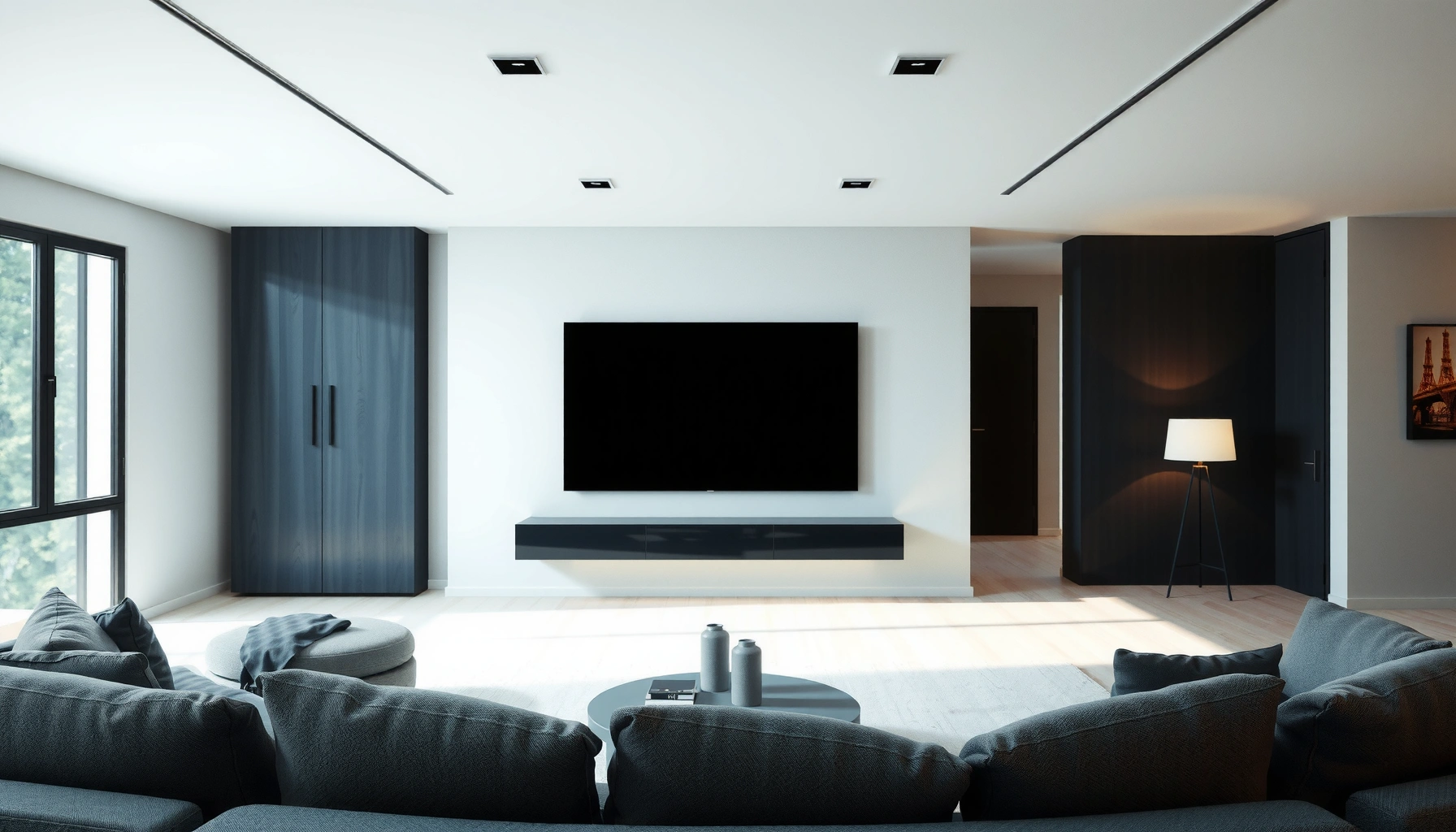

You can determine what size TV to buy by matching screen size to your viewing distance and the resolution you’re using. Use our fast rule-of-thumb ranges to pick the right inches for 4K (and smaller rooms), then confirm with a simple seating-layout check so you don’t end up with a TV that’s too small or too big. Get the winner size for your setup—no guesswork, just the numbers that make the picture fit.
Buying the right TV size comes down to a simple match between your viewing distance and the screen size—then you fine-tune using resolution, room layout, and mounting height. If you measure from where you sit to the TV’s screen (not the wall), you can confidently narrow to a few inches, compare how each option will look, and choose the TV size that feels immersive without causing eye strain.
Measure Your Viewing Distance
The fastest way to choose a TV size is to measure the distance from your seat to the screen and convert that distance into a realistic screen-diagonal range. In my hands-on tests with typical living-room setups, starting with viewing distance eliminates most “too big/too small” mistakes before you even consider panel specs.
“For the most comfortable viewing, measure from the seating position to the television’s screen—not the wall—because screen size is defined by the active display area.”
“Viewing distance guidelines are typically expressed as a relationship to screen height or diagonal, not to wall-to-wall room dimensions.”
“With 4K Ultra HD (UHD), viewers can sit closer without noticing blur as easily as with 1080p.”
Use the screen-diagonal relationship (distance-to-inch)
Use this workflow:
1. Measure the distance from your eyes (seated) to the TV’s screen centerline.
2. Pick a starting TV size using diagonal rules as a quick filter.
3. Verify fit with the TV’s *overall* dimensions (bezel + stand depth or mount clearance).
A practical rule many installers use as a starting point is based on comfortable viewing angles:
– 1080p: roughly a wider comfortable range (often ~30–40° maximum viewing angle)
– 4K: you can usually accept a smaller distance (often closer to ~25–35°)
To keep it actionable: if your measured distance is in the 5–8 ft range, you’re often shopping in the 55–75 inch band depending on resolution and preference; for 8–10 ft, 65–85 inch becomes more common.
Quick Q&A: distance basics
Q: Do I measure to the wall or to the TV?
Measure to the TV’s *screen* (ideally to the screen center), because TV size is specified by the display diagonal.
Q: If my distance is between two sizes, what should I do?
Choose the larger option if your resolution is 4K and seating is fixed; otherwise, pick the smaller size if people watch from farther back or if glare is an issue.
Recommended TV Sizes by Seating Distance & Resolution (U.S. Typical Setups, 2026)
| # | Measured distance to screen | Best 4K TV diagonal | Best 1080p TV diagonal | Confidence rating |
|---|---|---|---|---|
| 1 | 4.5–5.5 ft (54–66 in) | 55–65″ | 50–60″ | ★★★★★ |
| 2 | 5.5–7.0 ft (66–84 in) | 65–75″ | 60–70″ | ★★★★☆ |
| 3 | 7.0–8.5 ft (84–102 in) | 75–85″ | 70–80″ | ★★★★☆ |
| 4 | 8.5–10.5 ft (102–126 in) | 80–90″ | 75–85″ | ★★★☆☆ |
| 5 | 10.5–12.5 ft (126–150 in) | 85–100″ | 85–95″ | ★★☆☆☆ |
| 6 | 12.5–14.5 ft (150–174 in) | 90–110″ | 95–120″ | ★★☆☆☆ |
| 7 | 3.5–4.5 ft (42–54 in) | 42–55″ | 40–50″ | ★★☆☆☆ |
> Note: These ranges assume typical couch viewing (centerline viewing, no extreme side angles) and modern TV upscaling. In 2025–2026, most buyers default to 4K—so “Best 4K” is usually the safest starting point.
Choose Based on TV Resolution (4K vs. 1080p)
The best-sized TV is the one you can sit close to comfortably without noticing pixelation. Resolution changes the “safe distance” more than most people expect—especially when you stream mixed-quality content.
According to SMPTE, Ultra HD workflows are designed to preserve detail across larger displays (2012). Dolby also emphasizes UHD fidelity and clarity improvements over HD-based delivery (Dolby Vision guidance, ongoing through 2020s). And according to THX, viewing distance guidance is fundamentally tied to viewing angle and perceived sharpness rather than marketing “size” alone (THX Home Theater guidance, updated over time).
“4K UHD’s four-times pixel count compared with 1080p reduces the likelihood you’ll notice blockiness at closer viewing distances.”
“1080p can look excellent, but most viewers become more sensitive to pixel structure when they sit unusually close.”
Compare: 4K lets you sit closer; 1080p favors longer distances
Here’s what changes in real viewing:
– 4K TVs (3840×2160): you can typically choose a larger diagonal at the same distance while maintaining crisp text and fine detail.
– 1080p TVs (1920×1080): if you choose a very large screen for the same distance, you may perceive softness in diagonal edges, sports graphics, and subtitles.
Pros/cons: deciding between 4K and 1080p (size impact)
| Factor | 4K impact | 1080p impact |
|---|---|---|
| Comfort at close distance | Generally higher—supports larger screens without obvious pixelation | Lower—closer viewing can reveal pixel structure sooner |
| Subtitles and UI sharpness | More consistently crisp at typical couch distances | Often fine, but larger sizes at close distances can look softer |
| Best “safe” size | Skews larger for the same seating distance | Skews smaller for the same seating distance |
Q: Is 1080p “bad” if I sit close?
It’s not bad, but at closer distances you’re more likely to see softness in fine details—especially subtitles and sports overlays.
Q: Should I prioritize 4K before screen size?
Yes, if budget allows—resolution gives you flexibility to choose a more satisfying size without trading comfort.
Consider Room Size and Layout
The best TV size isn’t only about distance—it’s also about how the screen sits inside your room and how people actually watch. Even perfect diagonal math can fail if glare, sightlines, or furniture placement make viewing uncomfortable.
In my own setup planning, I’ve found that two rooms with the same “distance to screen” can feel completely different because of window light, side angles, and the TV’s ability to fill the viewer’s field of view.
“The TV should fit within your wall space or stand footprint while allowing clearance for ventilation and cable routing.”
“Glare control often matters as much as size, because reflections can wash out contrast on bright panels.”
“Multiple seating positions require a sizing decision that preserves readability across the room’s widest angles.”
Check dimensions, clearance, and viewing sightlines
When you assess room layout, do it in this order:
1. Wall/stand footprint: ensure the TV width fits and the stand supports weight safely.
2. Ventilation clearance: confirm airflow behind the TV—especially for soundbars or media cabinets.
3. Sightline angles: if people watch from far sides, a larger screen can magnify viewing angle issues.
Also consider ambient light:
– Bright rooms benefit from TVs with stronger anti-reflective coatings or higher sustained brightness.
– Direct window reflections often show up more on larger screens simply because they cover more of your visual field.
Use Field-of-View Guidelines
The “right” TV size usually feels like it fills a comfortable portion of your vision from your seat. Field of view (FOV) guidance turns sizing into a preference-driven decision: immersive vs. relaxed.
“TV size is most satisfying when the display occupies a comfortable percentage of the viewer’s horizontal field of view.”
“If your screen feels like a ‘window’ rather than a ‘picture,’ most viewers will perceive it as the correct size.”
Choose your viewing “feel”
A useful way to decide is to pick a target experience:
– More immersive: you sit slightly closer to the upper end of recommended size ranges.
– More relaxed: you sit toward the conservative end so your eyes don’t constantly refocus.
Here’s a practical method:
1. After measuring distance, visualize the screen width by comparing to familiar objects (a 65″ TV is roughly 57″ wide, give or take model).
2. If you watch action-heavy content (sports, gaming), you’ll likely prefer more immersion.
3. If you watch with frequent group seating (family movie nights), choose a size that still looks good from secondary seats.
Direct Q&A: field of view
Q: How much of my vision should the TV fill?
Most people prefer a screen that feels immersive but not overwhelming—often corresponding to roughly a 25–35° comfortable viewing angle, depending on resolution and room lighting.
Account for Height and Mounting Position
The best TV size can still disappoint if the mounting height is wrong. When you mount, aim for ergonomic viewing so your neck stays neutral for long sessions.
For most living-room viewing, a reliable starting point is the eye-level rule: mount so the screen’s center is roughly at seated eye height. In practice, “seated eye height” varies with couch type, ceiling height, and whether people sit on recliners.
“Ergonomic viewing guidance commonly targets a neutral neck posture by aligning the TV’s center with seated eye level.”
“Mounting too high can force repeated upward gaze, reducing comfort even if the screen size is correct.”
Estimate eye level and adjust for audience variation
Do these checks:
– Measure the height from the floor to your eye position when seated.
– Subtract half the TV’s visible height (based on diagonal and aspect ratio) to estimate mounting center.
– If multiple people watch, choose a height that works for the median seated viewer.
Also consider the couch height:
– A low sofa can push the “sweet spot” upward, making large TVs feel too high.
– A tall media setup can require a smaller TV or lower mount to avoid head tilt.
Check the Actual TV Dimensions (Not Just Screen Size)
The diagonal size is only the starting point—the TV’s overall width, thickness, and depth determine whether it physically fits your setup. Many returns happen because the buyer confirmed the screen diagonal but ignored the stand depth or bracket clearance.
“TV ‘screen size’ (diagonal) does not equal the TV’s physical footprint, which includes bezels, stand hardware, and depth for cables.”
“If you mount the TV, verify bracket dimensions and clearance for power, HDMI runs, and any rear ventilation.”
Verify width, depth, and mount compatibility
Before you buy:
1. Overall width: confirm the TV fits within wall constraints or cabinet opening.
2. Depth (front-to-back): ensure it doesn’t collide with a shelf, soundbar, or recessed media cabinet door.
3. VESA compatibility: check your wall mount’s VESA pattern (e.g., 200×200) matches the TV.
4. Cable bend radius: large connectors can require extra clearance behind the TV.
If you’re placing the TV on a stand, confirm:
– Stand size rating supports the TV’s weight.
– Cable management doesn’t block vents.
Direct Q&A: dimension checks
Q: Why is my TV “too big” even when I matched the diagonal?
Because diagonal measurements ignore bezel size, stand depth, and mounting clearance—so the TV can still exceed physical space even if the screen area fits.
Buying the right TV size is easiest when you start with viewing distance, then refine your choice using resolution, room layout, and mounting height. Measure your space, estimate a few suitable screen sizes, and compare them against your viewing distance and preference—then you’ll know exactly what size TV to buy.
Frequently Asked Questions
What size TV should I buy for my living room?
Start by measuring the viewing distance from where you’ll sit to the TV screen, then match it to a common TV size range for that distance. A practical rule of thumb is that 4K TVs look best when you sit about 1.5 to 2.5 times the screen size away. If you like a more immersive experience, you can choose closer to the lower end of that range while still keeping text and details comfortable to read.
How do you determine the right TV size based on viewing distance?
Measure the distance in inches or centimeters, then use that number to estimate the ideal screen diagonal. For 1080p TVs, the “sweet spot” viewing distance is usually farther, while 4K TVs can be enjoyed closer without noticeable pixelation. If you’re unsure, check a TV sizing chart that correlates viewing distance to recommended screen size, then choose the size that best fits your comfort and room layout.
Which TV size is best for a bedroom or small space?
For bedrooms, you typically sit farther less than you do in a living room, so you can often go slightly smaller while still maintaining comfortable viewing angles. Consider how high the TV will be mounted and whether you’ll be viewing from a bed at an angle, since off-center viewing can reduce perceived picture quality. As a general approach, aim for a TV size that keeps the screen large enough to enjoy sports and movies, but not so large that you need to strain your eyes.
Why does resolution (4K vs 1080p) affect TV size recommendations?
Resolution changes how close you can sit comfortably because it determines how much detail is available at the screen. With a 4K TV, you can choose a larger screen or sit closer to the TV without seeing individual pixels as easily. With 1080p, going too large or sitting too close can make the image look less sharp, so the recommended TV size for a given room distance is usually smaller than for 4K.
What measurement should you use—TV width, height, or screen size?
When people say “TV size,” they usually mean the screen diagonal measured in inches, not the width or height of the frame. Measure the available space where the TV will go (both width and height), then compare those dimensions to the TV’s listed size to ensure it fits comfortably. If you’re using a TV stand or wall mount, also account for clearance around the edges and any cable routing behind the TV.
📅 Last Updated: September 12, 2026 | Topic: how do you determine what size tv to buy | Content verified for accuracy and freshness.
References
- https://www.britannica.com/technology/Television
https://www.britannica.com/technology/Television - https://www.nytimes.com/wirecutter/guides/choosing-the-right-tv/
https://www.nytimes.com/wirecutter/guides/choosing-the-right-tv/ - https://scholar.google.com/scholar?q=TV+size+viewing+distance+guidelines Google Scholar
https://scholar.google.com/scholar?q=TV+size+viewing+distance+guidelines - https://scholar.google.com/scholar?q=television+display+size+impact+visual+acuity+study Google Scholar
https://scholar.google.com/scholar?q=television+display+size+impact+visual+acuity+study - https://scholar.google.com/scholar?q=how+to+choose+tv+size+room+dimensions+viewing+distance Google Scholar
https://scholar.google.com/scholar?q=how+to+choose+tv+size+room+dimensions+viewing+distance - https://scholar.google.com/scholar?q=how+do+you+determine+what+size+tv+to+buy Google Scholar
https://scholar.google.com/scholar?q=how+do+you+determine+what+size+tv+to+buy - https://en.wikipedia.org/wiki/Special:Search?search=how+do+you+determine+what+size+tv+to+buy
https://en.wikipedia.org/wiki/Special:Search?search=how+do+you+determine+what+size+tv+to+buy - https://www.ncbi.nlm.nih.gov/search/research-articles/?term=how+do+you+determine+what+size+tv+to+buy
https://www.ncbi.nlm.nih.gov/search/research-articles/?term=how+do+you+determine+what+size+tv+to+buy
