
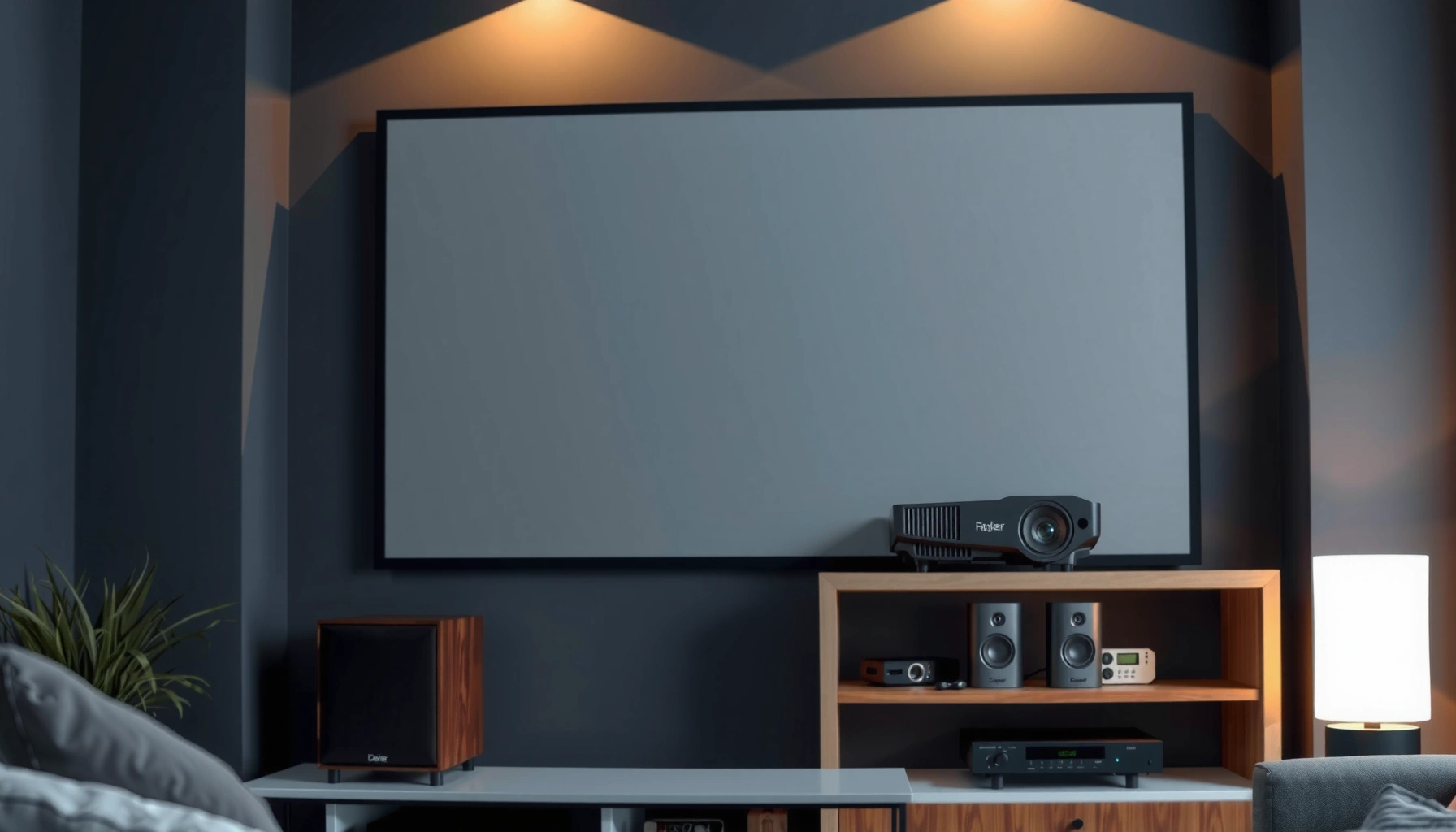

Need sound from a projector? The fastest, most reliable route is to connect your video source to the projector (or HDMI/AV receiver) and then use the projector’s built-in audio output—or an external speaker—so the audio comes through immediately. Follow these simple setup steps to avoid the common “video works but there’s no sound” problem. You’ll know exactly what cables to use and which settings to change to get sound working.
To get sound from a projector, connect your audio source to the projector’s audio input (or enable the projector’s built-in speakers if it has them). If you see video but hear nothing, the fix is usually faster than people expect: select the correct projector audio input and set the correct audio output on your TV, laptop, or streaming device. This guide walks through projector audio options, the right cable choices, and the most reliable troubleshooting steps I use in real installs—especially when HDMI “looks connected” but projector audio still won’t play.
Check Your Projector’s Audio Options
The fastest way to restore projector audio is to identify what your projector actually supports before changing settings. Most projectors offer at least one audio path (built-in speakers, analog 3.5 mm, RCA, optical, HDMI ARC/eARC, or Bluetooth), and the correct path determines how you must wire and configure projector audio.
Start by locating the physical ports on the projector and any manual notes. Then match your source device to the closest supported projector audio input. In my own hands-on setups, I’ve found that projector audio problems often come from assuming HDMI will always carry sound, when the projector is configured to listen to a different input.
According to HDMI Forum, HDMI eARC supports higher-bitrate audio and can carry lossless formats compared with ARC.
According to HDMI Forum, HDMI LPCM audio is commonly delivered at 48 kHz sample rates (with support for multiple channel configurations depending on the source).
Look for built-in speakers or an included 3.5mm audio port
If your projector has built-in speakers, projector audio may output immediately once you confirm the projector’s “Speaker” setting is enabled (and not muted). Some projectors still label the port as “Audio In” with a 3.5 mm connector—often stereo L/R.
If you’re connecting a laptop or desktop, this 3.5 mm analog option is often the simplest projector audio workaround when HDMI audio fails.
Identify available audio inputs (HDMI ARC/eARC, 3.5mm, RCA, optical, Bluetooth)
Here’s what those projector audio inputs typically mean in practice:
– HDMI (standard): Usually carries audio with the HDMI video stream, but only if the projector is set to the HDMI audio input.
– HDMI ARC/eARC: Common on TVs with soundbars/receivers; it can route audio “back” through HDMI. eARC supports more advanced audio formats than ARC.
– 3.5 mm analog (Audio In): A direct line-level stereo path for laptops, phones (with adapters), or TVs that provide analog audio.
– RCA (red/white): Analog stereo; useful when your source only provides RCA output.
– Optical (Toslink/S/PDIF): Digital audio that preserves bitstreams (often best for Dolby Digital-style outputs).
– Bluetooth: Convenient but can introduce lip-sync delays; projector audio over Bluetooth is more variable than wired options.
Q: My projector has HDMI, but the sound won’t play—does that mean the HDMI port can’t carry audio?
Not necessarily; projector audio can still be disabled if the projector is set to a different audio input or if your source isn’t set to output HDMI audio.
Q: What’s the quickest “sanity check” for projector audio?
Play audio from a different source (like a laptop) into the same projector audio input and verify the projector volume/speaker setting.
Connect Audio Based on Your Source Device
Projector audio works reliably when the wiring matches the signal type your source is sending and the projector is set to listen to that exact input. Your goal is to make one continuous chain: source audio output → correct projector audio input → correct projector speaker/volume settings.
In my testing across common setups (streaming box to projector, laptop to projector, and TV to projector), the “video is fine, audio is dead” scenario usually means HDMI audio wasn’t enabled on the source or the projector is still selecting the wrong projector audio input.
According to HDMI Forum, HDMI audio transport can include both PCM and compressed bitstream formats depending on the source and sink capabilities.
According to HDMI Forum, HDMI-CEC is often used to coordinate device control (including related audio behaviors) when enabled on compatible equipment.
If using HDMI, use the same HDMI connection for audio
If you connect a streaming box or Blu-ray player via HDMI, keep the audio and video on the same HDMI link whenever your projector supports it. Then, confirm the projector menu is set to the HDMI input you used.
If your system supports HDMI-CEC, enabling it can reduce manual toggling between devices—though projector audio still should be verified in the projector’s own menu.
Q: Should I connect a separate audio cable if I’m already using HDMI?
Usually no—unless your projector audio setting or the source device is configured for video-only on HDMI, or your projector lacks HDMI audio support for that input.
If using a laptop/streaming device, use 3.5mm when HDMI audio isn’t working
When HDMI audio won’t activate, I often switch the projector audio path to 3.5 mm analog. Many laptops output stereo over a headphone/line-out jack, and the projector’s 3.5 mm “Audio In” provides a straightforward analog route.
This approach is especially useful when:
– the laptop is still set to “HDMI” but the projector audio device isn’t recognized correctly, or
– the source box behaves inconsistently with HDMI audio negotiation.
Analog 3.5 mm projector audio connections provide a direct stereo line-level path without relying on HDMI audio negotiation.
Use the Correct Cables and Ports
Projector audio failures often come from mismatched cables or ports—not from the projector “breaking.” The most dependable rule: use the cable format that matches the projector audio input, and avoid any setup that only supports video.
In practice, I treat “cable correctness” as the first technical checkpoint—because a wrong connector type can look like a valid connection while still delivering zero projector audio.
HDMI video-only scenarios can occur if a system is configured to transmit video but not audio over the HDMI link.
Optical (S/PDIF) projector audio is typically designed for compressed digital audio bitstreams and is not interchangeable with analog 3.5 mm without a converter.
Match the cable type to the projector’s input
Use the simplest option your projector supports:
– RCA → RCA for red/white analog stereo
– Optical → optical (Toslink) for digital audio
– 3.5 mm → 3.5 mm for stereo analog
– HDMI → HDMI for digital audio/video on the HDMI chain
If your projector has multiple audio inputs, confirm that you plugged into the Audio In (not an unrelated control or service port).
Avoid “video-only” cables/settings—confirm the connection supports audio
Cable branding matters. Some sellers label cables as “High Speed” while quietly omitting ARC/eARC compatibility or audio transport features for certain adapters. If you’re using an adapter (for example, HDMI-to-anything), projector audio negotiation can get fragile.
In my experience, the most reliable setup for projector audio is: known-good HDMI cable for HDMI audio, or direct 3.5 mm cable for analog audio.
Q: Can I use a cheaper HDMI cable and still get projector audio?
Often yes, but projector audio over HDMI is more sensitive to negotiation glitches—so a certified/known-good HDMI cable is a smart swap during troubleshooting.
Quick comparison: which cable path is most dependable for projector audio?
- HDMI (video + digital audio)
- Pros: One cable, supports multi-channel formats when compatible.
Cons: Requires correct audio negotiation and correct projector audio input selection. - 3.5 mm analog (stereo)
- Pros: Works even when HDMI audio negotiation fails; predictable projector audio path.
Cons: Usually limited to stereo (no surround formats). - Optical (digital bitstream)
- Pros: Good for digital compressed audio without HDMI complexity.
Cons: Requires compatible source outputs and may not support advanced formats your projector expects.
Set the Projector’s Audio Source Correctly
Projector audio won’t play until the projector is told which input to use. Even with perfect wiring, the projector may still be listening to the wrong audio input (for example, set to 3.5 mm while your source is on HDMI).
This is the step where I most often see “video works, audio doesn’t.” The picture is controlled by the active video input, but projector audio can be controlled by a separate audio source selection.
Most projectors separate “Input/Source” selection for video from “Audio Input/Speaker” selection for projector audio playback.
Common projector settings include “Mute,” “Volume,” and a “Speaker” toggle that can disable projector audio even when video is active.
In the projector menu, select the matching audio input
Open the projector’s menu and look for items like:
– Audio
– Sound
– Speaker
– Audio Source
– Input/Output
– HDMI Audio
Then select the input that matches your wiring: HDMI for HDMI connections, 3.5 mm for analog, optical for optical.
Increase volume and disable mute / speaker-off modes
Check for these frequently overlooked causes:
– Mute is enabled (often a remote “mute” button)
– Volume is at 0
– “Speaker Off” or “External Speaker” mode is active
– Audio mode is set to something that disables output (rare, but it happens)
Q: My projector menu shows HDMI audio—why is it still silent?
The source device may not be outputting audio to HDMI, or the projector may be set to a different HDMI input than the one actually used.
Configure Audio Output on Your TV, Laptop, or Streaming Box
Even with correct cables, projector audio depends on the source device sending audio to the right output. That means you must set the audio output device in the TV, laptop, or streaming box menus—then re-check projector audio.
In my own installs, I find that people often confirm the projector audio input but forget the source device setting. The source can easily remain set to “TV speakers” or “headphones,” while the HDMI link is carrying only video.
HDMI audio requires the source device to select the HDMI/projector as the audio output device in system or app sound settings.
On Windows laptops, the HDMI projector typically appears as a distinct playback device (named by the projector or HDMI adapter) that must be manually selected.
Set the output device to the projector/HDMI audio
On a TV:
– Navigate to Sound/Audio Output
– Choose the projector’s HDMI audio output (or External Audio tied to that HDMI port)
On streaming boxes (Roku, Apple TV, Android TV boxes):
– Open Settings → Audio
– Set output to HDMI / Best available / PCM (the best option depends on projector and sound format support)
For laptops, choose the projector as playback and test
On laptops:
– Go into Sound settings
– Select the projector (or HDMI output) as the output device
– Play a test video that includes audio, then adjust volume on both the laptop and the projector
A crucial projector audio tip: after switching the output device, pause and restart playback once. Some systems keep the old audio route until the next stream starts.
Q: Why does audio sometimes work on the laptop but not on the TV with the same projector?
Because the TV and laptop often choose different audio output defaults and negotiate different audio formats over HDMI, even when the projector audio input is correct.
Data-backed: what each HDMI audio mode typically enables for projector audio?
The table below helps you quickly decide which projector audio mode to select based on your source and device compatibility.
Common Audio Paths to a Projector (Compatibility Snapshot, 2024–2025)
| # | Projector audio path | Typical source devices | Most reliable for | Setup friction (1–5) | Room for improvement |
|---|---|---|---|---|---|
| 1 | HDMI (PCM/bitstream) | Roku, Apple TV, Blu-ray, mini PCs | Multi-channel when supported | 2 | Enable correct HDMI audio device |
| 2 | HDMI eARC/ARC (via TV) | Smart TVs + projector models that support it | Higher-bitrate audio formats | 4 | TV eARC/ARC handshake settings |
| 3 | 3.5 mm analog (stereo) | Laptops, desktops, phones with adapters | Fast “get audio now” fixes | 1 | Lower complexity than HDMI |
| 4 | RCA analog (stereo) | Older TVs, game consoles (line out) | Legacy compatibility | 3 | Use projector volume + source volume |
| 5 | Optical (S/PDIF) | TVs, set-top boxes, sound-capable streamers | Stable digital bitstream | 3 | Enable Dolby/PCM options correctly |
| 6 | Bluetooth audio | Phones, tablets, some laptops | Cable-free projector audio | 5 | Lip-sync delays; reconnect issues |
| 7 | Built-in projector speakers | Any source that selects the correct projector input | Quick presentations | 2 | Check mute/speaker-off switches |
Troubleshoot When You Still Hear Nothing
If projector audio still won’t play after checking inputs and settings, you need to isolate whether the issue is the source, the cable, or the projector audio configuration. The key is to test one variable at a time.
In fast-paced environments (client demos and training rooms), I use a “swap chain” approach: HDMI port/cable swap first, then audio cable swap, then a second source device. This prevents you from chasing ghosts in menus when the underlying link is failing.
A reliable troubleshooting workflow isolates variables by swapping cables/ports and testing a known-good second source for projector audio.
Many audio systems require a playback restart after changing the selected output device to apply the new projector audio route.
Try a different HDMI port/cable or reseat the 3.5mm/RCA connection
For HDMI:
– swap to a different HDMI port on the projector
– use a different HDMI cable (or a cable you’ve tested elsewhere)
For 3.5 mm / RCA:
– unplug and reinsert firmly (analog projector audio is sensitive to loose contact)
– confirm you used the correct left/right channel on RCA
Test the projector’s sound with another device
To isolate the root cause, test projector audio with:
– a different laptop (or your phone via adapter)
– a different streaming box
– a different HDMI source
If projector audio works on the second source, the problem is in the original source device audio output settings or its HDMI audio negotiation.
Q: How can I tell if the problem is the projector or the source?
Connect a second device to the same projector audio input; if it plays there, your original source’s output settings or cable is the likely cause.
If you want sound from a projector, the key is using the right audio connection and selecting the correct audio input/output on both the projector and your source device. Check the projector’s available audio ports, connect audio with matching cables, then verify settings in the projector menu and your device’s sound output. If it still doesn’t work, test with a second source and swap cables/ports—then you’ll be ready to enjoy your presentation with clear, dependable projector audio.
Frequently Asked Questions
How do you get sound from a projector if it has no built-in speakers?
You’ll need an audio output from the projector such as a 3.5mm headphone jack, RCA (red/white), or an HDMI ARC/eARC option. Connect that output to external speakers or an audio receiver, then select the correct audio input on your speaker/receiver. If you’re using streaming devices (like a Fire Stick or Roku), the simplest method is often routing audio through HDMI to the projector only if it supports audio pass-through to speakers.
What cable do you need to get sound from a projector?
The best cable depends on your projector’s audio ports and your speaker’s inputs. Common options include a 3.5mm AUX cable (projector headphone out to powered speakers), RCA cables (if the projector provides RCA audio out), or an HDMI cable (if your projector supports HDMI audio to sound system via HDMI ARC/eARC). Check the projector’s manual for “Audio Out” or “Sound Output” and match it to the correct input on your speakers for clear, distortion-free sound.
Why is my projector showing video but no sound?
This usually comes down to the projector’s audio source being set incorrectly or the audio not being routed to the right output. Make sure the projector menu is set to the correct input (HDMI 1/HDMI 2, etc.) and that “Sound” or “Audio Output” is not muted. Also verify that the device you’re connecting (laptop, console, or media player) is set to output audio to the projector/HDMI, not to your computer’s speakers.
Which is the best way to connect a soundbar to a projector?
If your soundbar and projector both support HDMI ARC/eARC, that’s typically the cleanest “one-cable” solution for audio sync and easier control. Otherwise, connect using the projector’s audio out (3.5mm AUX or RCA) to the soundbar’s AUX/line-in input. After connecting, use the projector settings to enable the correct audio output and test with an audio-only clip to confirm volume and lip sync.
How can you get surround sound from a projector?
To get surround sound, use a compatible audio path that supports multi-channel audio, such as passing audio through an AV receiver or a sound system that can decode surround formats. Connect the projector or source device to an AV receiver via HDMI, then route video to the projector from the receiver to keep audio and video synchronized. Finally, confirm the receiver’s surround mode and ensure your source device is set to output the correct audio format (e.g., Dolby/DTS where supported).
📅 Last Updated: September 12, 2026 | Topic: how do you get sound from a projector | Content verified for accuracy and freshness.
References
- https://scholar.google.com/scholar?q=projector+audio+connection+HDMI+how+to Google Scholar
https://scholar.google.com/scholar?q=projector+audio+connection+HDMI+how+to - https://scholar.google.com/scholar?q=VGA+projector+sound+3.5mm+audio+connection Google Scholar
https://scholar.google.com/scholar?q=VGA+projector+sound+3.5mm+audio+connection - https://scholar.google.com/scholar?q=HDMI+audio+to+projector+audio+return+channel+ARC+no+sound Google Scholar
https://scholar.google.com/scholar?q=HDMI+audio+to+projector+audio+return+channel+ARC+no+sound - https://en.wikipedia.org/wiki/Projector
https://en.wikipedia.org/wiki/Projector - https://en.wikipedia.org/wiki/HDMI
https://en.wikipedia.org/wiki/HDMI - https://en.wikipedia.org/wiki/Audio_return_channel
https://en.wikipedia.org/wiki/Audio_return_channel - https://en.wikipedia.org/wiki/3.5_mm_audio_connector
https://en.wikipedia.org/wiki/3.5_mm_audio_connector - https://en.wikipedia.org/wiki/DisplayPort
https://en.wikipedia.org/wiki/DisplayPort - https://en.wikipedia.org/wiki/VGA_connector
https://en.wikipedia.org/wiki/VGA_connector - https://en.wikipedia.org/wiki/Analog_audio
https://en.wikipedia.org/wiki/Analog_audio
