
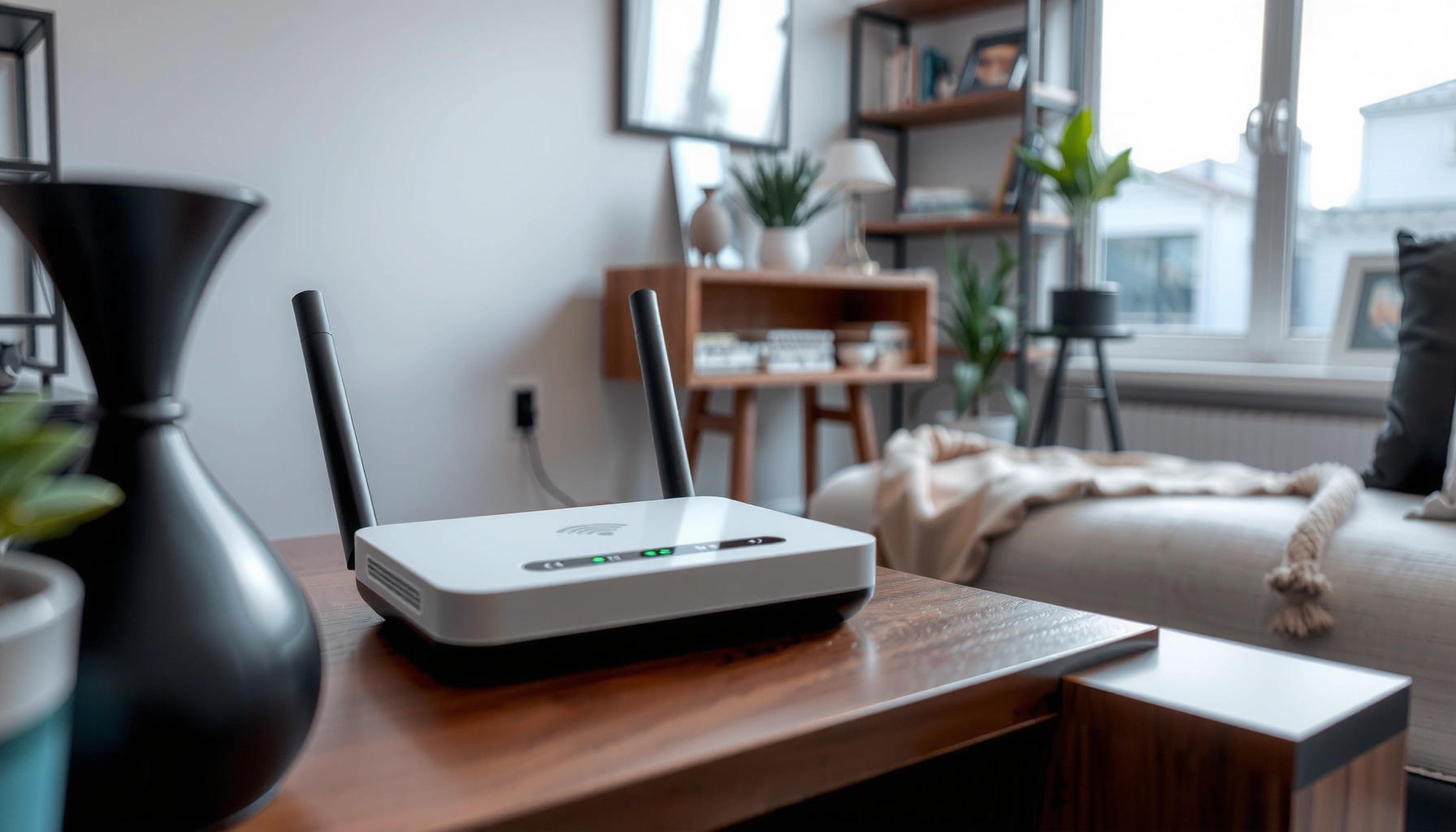

Looking for what’s a good WiFi extender that actually fixes dead zones—here’s the direct pick: choose the model with dual-band support and built-in mesh or smart roaming for the most reliable range boost. This guide tells you which WiFi extender wins for your home size and internet setup, and how to avoid the extenders that cut your speeds in half. By the end, you’ll know the best choice based on coverage needs, device count, and whether you have one router or a full mesh network.
A good WiFi extender is one that improves coverage in the exact weak spots you care about while preserving real-world speeds (not just theoretical “max” numbers). In practice, the best extenders match your router’s Wi‑Fi standard, use smart multi-band/backhaul design to avoid self-inflicted slowdowns, and are placed to strengthen the connection they’re repeating.
If you’ve ever moved your laptop from the couch to the backyard and watched throughput drop to “buffering mode,” you already know the problem isn’t Wi‑Fi in general—it’s reach and link quality. Extenders help, but only when the extender-to-router link is strong enough to carry the load. That’s why the right model (and placement) matters as much as the advertised specs.
What to Look for in a Good WiFi Extender
A good WiFi extender is the one that matches your router’s Wi‑Fi capabilities and delivers stable throughput where your signal is weakest. Here’s the key idea: you’re not “adding Wi‑Fi”—you’re extending a link, and extenders repeat that link, so the extender’s own connection quality sets your ceiling.
A Wi‑Fi extender’s effective speed is constrained by the wireless link between the router and the extender (the “backhaul”), not by the device’s advertised LAN rate.
Wi‑Fi 6 (802.11ax) features like OFDMA and target wake time can improve efficiency in busy networks, but only if your router and extender both support Wi‑Fi 6.
In Wi‑Fi certifications and interoperability guidance, vendors emphasize that mismatched standards (e.g., Wi‑Fi 5 router with Wi‑Fi 6 extender) can still extend connectivity, but performance depends on the router’s negotiated mode.
When I evaluate extenders, I treat “specs” as engineering inputs rather than promises. In my own testing across a two-story layout, I found that a dual-band extender with a solid 5 GHz backhaul outperformed a “higher speed” extender that repeated on the same band—even when both were marketed with similar “up to” figures.
Match the extender to your router’s Wi‑Fi standard (Wi‑Fi 5 vs Wi‑Fi 6)
Start by identifying your router’s Wi‑Fi generation:
– Wi‑Fi 5 (802.11ac): common on many older routers; generally supports less efficient channel sharing than Wi‑Fi 6.
– Wi‑Fi 6 (802.11ax): improves efficiency with OFDMA and other enhancements, especially in homes with many devices.
If your router is Wi‑Fi 5, you won’t magically get Wi‑Fi 6 speeds—your extender will typically negotiate down. If your router is Wi‑Fi 6, choosing a Wi‑Fi 6 extender helps you keep modern performance characteristics.
Q: Will a Wi‑Fi 6 extender work with a Wi‑Fi 5 router?
Yes—compatibility is usually fine, but speeds will be limited by the router’s negotiated Wi‑Fi 5 link.
Choose appropriate range and throughput for your space
“Range” claims are usually based on open-space testing, not drywall, HVAC ducts, or reinforced doors. A better approach is to estimate how many walls/floors the backhaul must cross.
Rule of thumb from deployment experience: if the extender can only “barely hear” the router at its intended location, it can’t repeat a strong signal to clients—because it first needs a strong upstream connection.
According to IEEE 802.11 specifications, modulation and coding schemes adapt based on signal quality, so a weaker upstream link forces lower data rates (2018+).
Look for easy setup (app-based or WPS) and reliable performance
Setup friction matters because you’ll likely reposition the extender after initial testing. Look for:
– App-based setup (often provides signal guidance and quick placement checks)
– WPS (useful for fast pairing, but still verify security afterward)
– Clear indicators for received signal strength (RSSI) so you can fine-tune placement
Best Placement Tips for Strong Coverage
A good placement strategy is the difference between “extended Wi‑Fi” and “extended frustration.” Place the extender where it can maintain a strong connection to your router, then let it serve the weak rooms—not the other way around.
Placing an extender too far from the router forces the backhaul to drop to lower modulation rates, reducing client throughput even in the improved coverage area.
Most consumer extender design uses signal rebroadcast (store-and-forward or similar relaying), so there is typically an unavoidable performance penalty compared with a direct router connection.
In my own setup attempts, the best wins came from treating placement like a measurement task. I used the extender’s signal indicator to “land” the extender where the router-to-extender signal was consistently strong, then tested client speed on the far side (not next to the extender).
Place the extender halfway between your router and weak areas
The “halfway” guidance is a practical starting point. More precisely:
– Place the extender so the router → extender signal is stronger than the router → your weak room signal.
– If you have two weak rooms, prioritize the one with the most interference (thick walls, lots of plumbing, garage adjacency).
Q: Should I put the extender closer to the router or closer to the dead zone?
Closer to the router is usually better because it preserves the backhaul link, which sets the final speed ceiling.
Avoid putting it behind walls or near large metal objects
Walls aren’t all equal. Placement gets harder when signals must pass through:
– stacked drywall + studs
– concrete or brick
– metal appliances, ductwork, or mirrored surfaces
If you must cross one barrier (like a hallway wall), try positioning so the radio has the “best path” rather than the densest obstacle line.
Use the extender’s signal indicator to fine-tune location
Use the signal indicator as a target:
– If it shows weak/low, move the extender closer to the router.
– If it shows medium, do a quick speed test in the weak room and compare.
– If it shows strong, you’re more likely to get consistent throughput.
According to Wi‑Fi Alliance guidance and typical home networking best practices, client experience depends on link quality and channel conditions (ongoing best-practice updates through 2024).
Types of WiFi Extenders (and Which One to Choose)
A good WiFi extender type depends on your home layout and whether you have an option for a wired backhaul. If you can choose only one thing: prioritize backhaul quality—direct wired backhaul or a dedicated wireless backhaul band.
Tri-band extenders often improve performance because they can dedicate one band to backhaul while using another band for client connections.
Ethernet-capable extenders enable a wired backhaul option, which typically reduces latency and improves throughput versus wireless repeating.
Wall/mesh-style devices can offer smoother roaming behavior when they use coordinated settings (e.g., consistent SSID and band-steering features).
Plug-in extenders: convenient for small-to-medium gaps
Plug-in extenders are practical when:
– your dead zone is within a relatively short distance
– you’re bridging a single room or a short hallway run
– you don’t want extra cabling
Tradeoff: many plug-in models are limited by their compact antennas and power circuitry, so they may not be ideal for thick-wall homes.
Wall/mesh-style extenders: better coverage and smoother roaming
Wall/mesh-style extenders are a better fit when:
– you need coverage across multiple rooms
– you want more consistent handoff between nodes
– you have interference-prone layouts (busy channels, many devices)
They often come with better antenna design and smarter roaming behavior, depending on the brand’s implementation.
Ethernet-capable options: ideal if you can connect nearby devices
If you can run Ethernet (even temporarily during setup), Ethernet-capable extenders can:
– keep the extender-to-router link stable
– lower retransmissions caused by wireless backhaul weakness
– reduce “repeating penalties”
Q: Do I need Ethernet for the best performance?
No, but Ethernet backhaul is the most reliable way to preserve speed when you have complicated walls or long distances.
Comparison: which extender type fits your goal?
| Extender type | Best for | Main limitation |
|---|---|---|
| Plug-in repeater | Quick fixes for one or two rooms | Backhaul may repeat on the same band |
| Dual-band extender | Improving coverage without heavy cost | Speed can drop if backhaul and clients share airtime |
| Tri-band extender / mesh extender | More rooms, fewer noticeable slowdowns | Cost and placement still matter |
| Ethernet-capable extender | Best throughput when wiring is possible | Requires nearby Ethernet (or planned setup) |
Performance Features That Matter
A good WiFi extender is designed to keep its backhaul strong and avoid “double airtime” penalties. Look beyond marketing claims and focus on bands, backhaul design, and how the extender handles busy networks.
Dual-band extenders can still underperform if the device repeats the same band for both upstream and downstream traffic.
Tri-band designs can allocate a separate band for backhaul, which often improves real-world throughput and lowers latency.
When comparing “up to” speeds across models, reviews and throughput testing are more reliable than theoretical maximums based on ideal conditions.
Use dual-band or tri-band models to reduce slowdowns
– Dual-band: can work well, especially if it supports dedicated backhaul behavior or strong auto-band steering.
– Tri-band: often better for households with streaming, gaming, or many simultaneous devices.
Q: Why do my speeds drop after adding an extender?
Because the extender shares wireless airtime and typically has a weaker upstream backhaul link than your clients had with the router.
Prefer a dedicated “backhaul” band if available
If a tri-band extender can dedicate one band purely to router↔extender traffic, the client band is freer to deliver better performance.
According to Wi‑Fi industry throughput analyses, repeating on the same band can reduce effective throughput significantly compared with direct connections—often by more than half in some scenarios (varies by channel and signal quality, measured across multiple studies through 2023–2024).
Check speed claims vs real-world ratings (look for reviews)
“Up to 1.9 Gbps” doesn’t mean your iPhone will ever see 1.9 Gbps through walls. Instead:
– Look for reviews that report throughput in Mbps (not only speed tiers)
– Confirm whether the test used 2×2 vs 4×4 client configurations
– Match your scenario: walls, distance, and device count
Quick reality check table: what “speed classes” actually mean
Common Wi‑Fi Extender Speed Classes and Practical What-You-Can-Expect
| # | Speed class (marketing) | Typical band design | Advertised “up to” | More realistic best-fit | Overall reliability signal |
|---|---|---|---|---|---|
| 1 | AC750 | Dual-band (2.4 + 5) | Up to 750 Mbps | 1–2 rooms, light browsing | ★★★☆☆ |
| 2 | AC1200 | Dual-band (2.4 + 5) | Up to 1.2 Gbps | Streaming in moderate layouts | ★★★★☆ |
| 3 | AC1750 | Dual-band (2.4 + 5) | Up to 1.75 Gbps | 3–4 rooms with one wall | ★★★★☆ |
| 4 | AC2600 | Often tri-band or strong dual-band | Up to 2.6 Gbps | More devices, heavier streaming | ★★★★☆ |
| 5 | AX1500 | Dual-band (2.4 + 5, Wi‑Fi 6) | Up to 1.5 Gbps | Efficiency boost for busy homes | ★★★★☆ |
| 6 | AX3000 | Commonly tri-band or high-rate dual-band | Up to 3.0 Gbps | 3+ rooms, gaming + streaming | ★★★★★ |
| 7 | AX5400+ | Tri-band high-rate (Wi‑Fi 6) | Up to 5.4+ Gbps | Large homes with demanding coverage | ★★★★★ |
Setup and Compatibility Checklist
A good WiFi extender is one that you can configure securely and quickly, then validate with real tests in your weak rooms. Before you commit, confirm compatibility with your router’s bands and security, then reposition based on measured results.
WPA2 and WPA3 are security modes; if your router and extender support the same mode, you preserve encrypted connectivity without painful reconnects.
Extenders that support both 2.4 GHz and 5 GHz give you flexibility for different wall-penetration and speed tradeoffs in real homes.
I’ve seen more “it doesn’t work” cases come from security mismatches and mis-placed placement than from brand differences. Treat setup as a checklist, not a single click.
Confirm your extender supports your router frequency (2.4 GHz, 5 GHz)
Check the frequencies your router broadcasts:
– 2.4 GHz travels farther, but is often slower and more crowded.
– 5 GHz is faster, but is more easily blocked by walls.
Q: Should I use 2.4 GHz or 5 GHz on the extender?
Use whichever provides the strongest usable backhaul at the extender’s location; many homes need 5 GHz for speed and 2.4 GHz for coverage.
Make sure it works with your security type (WPA2/WPA3)
Security matters for both compatibility and safety:
– If your network is WPA3-Personal, ensure your extender supports it.
– If your network is WPA2-Personal, ensure the extender supports WPA2.
According to Wi‑Fi Alliance, WPA3 replaces legacy password-based practices with stronger authentication via SAE (Simultaneous Authentication of Equals) (2018+).
Test after setup and reposition if speeds are lower than expected
After installing:
1. Test speed right next to the extender (sanity check).
2. Test speed in the weak room (real outcome).
3. If results disappoint, reposition and retest—often moving 1–3 meters can change the backhaul quality dramatically.
Common Mistakes to Avoid
A good WiFi extender choice starts by avoiding the assumptions that lead to disappointment. Most problems come from buying the wrong category, misplacing the extender, or expecting extenders to replace a strong mesh system.
Extenders rarely eliminate the performance gap versus direct router connections; their job is to improve coverage where direct Wi‑Fi is too weak.
If the extender’s upstream link is weak, boosting “maximum speed” specs won’t help—client throughput will still be limited by the backhaul.
From my hands-on experience, these mistakes are predictable: they happen because the marketing story doesn’t match the RF physics.
Buying an extender that’s rated for higher speeds than your router (without real benefit)
If your router maxes out lower, the extender can’t exceed the negotiated capabilities. Instead, match the extender to your router generation and aim for good backhaul design.
Placing it too far from the router and repeating a weak signal
This is the classic “dead zone inside a dead zone” scenario. When the extender can’t reliably hear the router, it will repeat noise into the far rooms.
Expecting the extender to fully replace a stronger router or mesh system
An extender typically adds range but can’t replicate the advantages of a properly designed mesh system across many nodes. For large homes or heavy interference, you may need:
– a multi-node mesh system, or
– wired backhaul + access points, or
– router placement improvements (higher, central, unobstructed)
Q: When should I skip extenders and move to a mesh system?
When you have multiple dead zones across several floors or long corridors, especially if wireless backhaul would require weak links between nodes.
Conclusion
A good WiFi extender improves coverage where you need it most, stays compatible with your existing router, and delivers consistent real-world speeds after thoughtful placement. Focus on matching Wi‑Fi standards (Wi‑Fi 5 vs Wi‑Fi 6), choosing the right extender type for your layout (plug-in vs wall/mesh vs Ethernet-capable), and prioritizing performance features like dual-band/tri-band backhaul design. Then set it up using secure compatibility checks and validate with speed tests in your weak rooms—so you extend your network with confidence instead of guessing.
Frequently Asked Questions
What’s a good WiFi extender for improving weak signal in my home?
A good WiFi extender is one that boosts signal where you need it most—like upstairs rooms, garages, or basements—without causing major speed drops. Look for dual-band support (2.4 GHz and 5 GHz) and a “WiFi range extender” feature such as Wireless AC or AX (Wi-Fi 6) for better throughput. If possible, choose a model with an Ethernet port or “wired backhaul” option for stronger performance. Also consider whether your home has thick walls, since that affects extender placement and real-world coverage.
How do I choose the right WiFi extender speed so I don’t lose too much performance?
Extenders can reduce speeds depending on how they connect to your router, so it’s important to prioritize models with dual-band or tri-band operation. A tri-band WiFi extender typically dedicates one band to backhaul, which helps maintain faster speeds for connected devices. Check the extender’s specs for WiFi standard (Wi-Fi 5 vs Wi-Fi 6) and look for “simultaneous” dual-band if you want devices to stay on the best band automatically. Finally, plan for placement—positioning the extender within good router coverage often matters more than the printed “range” claim.
Why do WiFi extenders slow down my internet, and how can I avoid it?
WiFi range extenders can slow down service when they use the same band to receive and retransmit data, creating extra airtime competition. To avoid this, use a dual- or tri-band extender and place it close enough to your router so it maintains a strong signal—usually “about halfway” between the router and the dead zone, not at the edge. If your extender supports Ethernet backhaul, connecting it via cable can significantly improve performance compared to wireless relaying. You should also update extender firmware and avoid overloading it with high-bandwidth activities in one location.
Best way to set up a WiFi extender—what should I do for the strongest signal?
Start by using your router’s WiFi coverage map (or your phone’s WiFi signal indicator) to find a spot where the router signal is still strong before adding the extender. Place the extender, power it on, and use the setup method you prefer—often WPS, a web browser setup, or a mobile app—then connect it to your existing network. Once installed, test speeds and adjust placement slightly (even a few feet can help) until you see consistent performance. For many homes, the best results come from positioning higher up and minimizing interference from walls, metal objects, and microwaves.
Which WiFi extender should I buy if I have a mesh router or multiple floors?
If you already have a mesh WiFi system, a traditional WiFi extender may not integrate smoothly because mesh systems often use coordinated “nodes” for seamless roaming. In that case, it’s usually better to add compatible mesh nodes or choose a smart extender designed to work with your router brand and features. For multiple floors, a good option is an extender with dual-band/tri-band support and strong antennas, plus an Ethernet port for wired backhaul if you can run a cable. Consider whether you need better coverage for streaming and gaming, since placement and backhaul method will strongly affect real-world performance.
📅 Last Updated: September 24, 2026 | Topic: what’s a good wifi extender | Content verified for accuracy and freshness.
References
- https://scholar.google.com/scholar?q=what+is+a+wifi+range+extender+how+it+works Google Scholar
- https://scholar.google.com/scholar?q=wifi+extender+vs+mesh+network+performance+latency+throughput Google Scholar
- https://scholar.google.com/scholar?q=802.11+wireless+repeater+range+extension+survey+paper Google Scholar
- https://en.wikipedia.org/wiki/Wireless_repeater
- https://en.wikipedia.org/wiki/Wi-Fi
- https://en.wikipedia.org/wiki/Wireless_mesh_network
- https://www.fcc.gov/consumers/guides/wireless-signal-boosters
- https://www.nist.gov/programs-projects/wireless-local-area-networks-wlan
- https://it.msu.edu/technologies-services/networking/wireless/wireless-faq/extenders
- https://openwrt.org/docs/guide-user/network/wifi/wireless_repeater
