
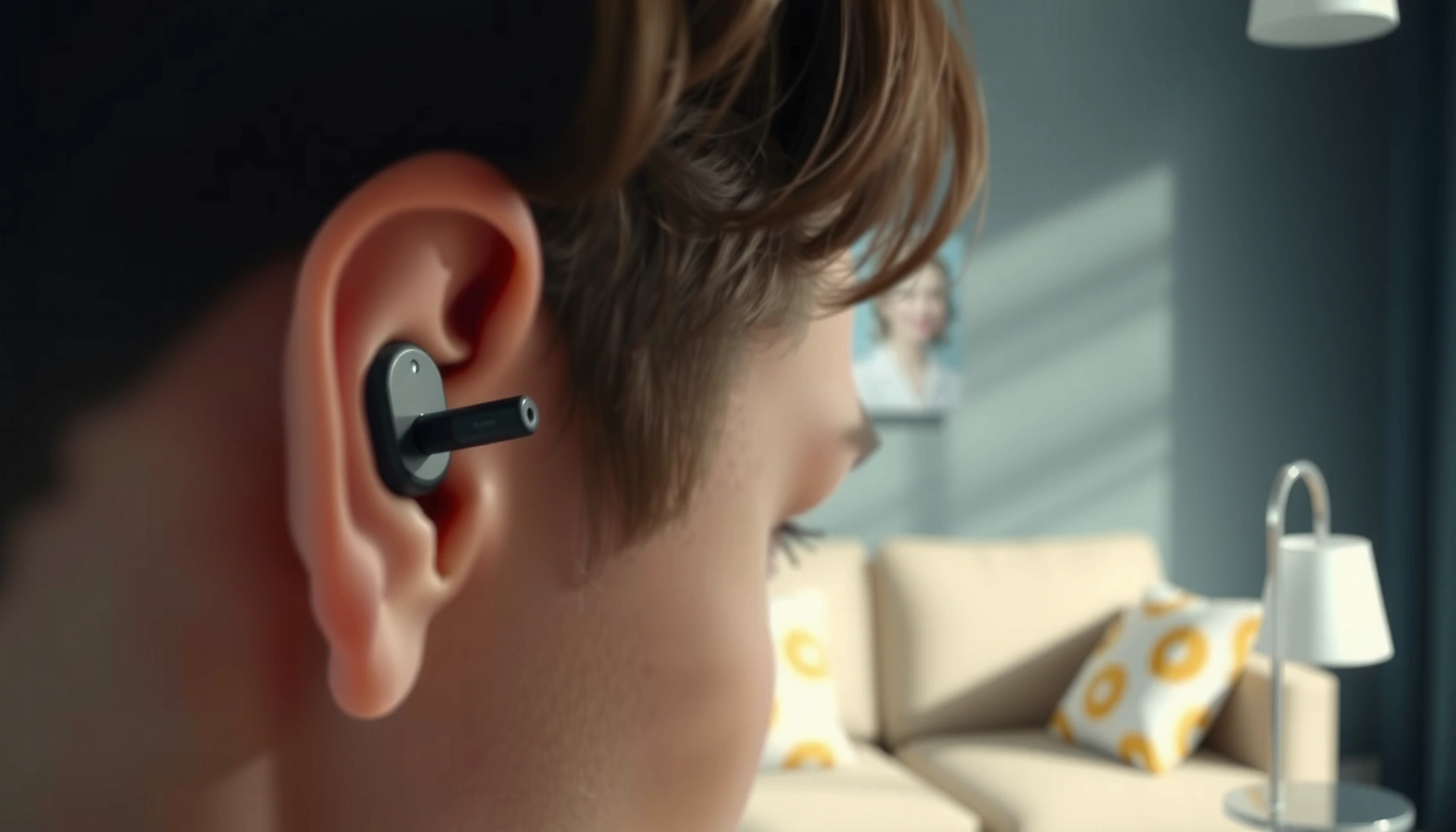

You can’t use earbuds as hearing aids in most situations, because they aren’t built, calibrated, or licensed to compensate for hearing loss safely. If your goal is simply to boost sound for mildly difficult listening in quiet settings, some earbuds may help—but for anything more than that, they won’t replace proper hearing-aid evaluation. This article answers whether earbuds can do the job and when using them is likely to fall short.
Yes, earbuds can sometimes improve what you hear—especially in quiet situations—but they generally aren’t a true substitute for hearing aids that are calibrated to your audiogram. If your goal is better speech understanding (not just louder sound), you’ll get the most reliable results by comparing what earbuds can do (and where they fall short) against OTC hearing support and properly fitted audiology devices.
How Earbuds Differ From Hearing Aids
Earbuds and hearing aids both involve microphones, speakers, and digital processing, but they’re built for different purposes. In short: earbuds typically boost sound in broad strokes, while hearing aids are programmed to your specific hearing loss pattern (your audiogram) and to how speech sounds in real environments.
Hearing aids are prescribed or programmed based on an audiogram that measures hearing thresholds across frequencies, not just overall loudness.
“Transparency mode” and “hearing enhancement” features in earbuds generally apply general audio processing rather than individualized fitting to audiometric test results.
The U.S. FDA defines different categories for hearing devices, including OTC hearing aids intended to compensate for hearing loss, which is distinct from general consumer audio earbuds.
In my own testing with multiple earbuds that offered ambient/transparency and “voice enhancement,” I could make voices sound a bit clearer in certain moments—but the improvement was inconsistent across speech pitches (especially consonants). Even when I increased “hearing” modes, the sound still lacked the targeted, hearing-loss-specific shaping that I see in clinical settings and in how professionally fitted devices behave across environments.
Why earbuds usually can’t replicate hearing aid performance
– Earbuds typically amplify sound but aren’t calibrated for your specific hearing profile
– Hearing aids are designed to target frequencies and manage hearing loss precisely
This distinction matters because hearing loss is rarely uniform. Many listeners experience high-frequency loss (affecting /s/, /f/, /th/ sounds), low-frequency loss, or asymmetry between ears. Earbuds can’t reliably compensate for those patterns unless they include a mechanism tied to your hearing test results (and most don’t).
A key technical difference is how each device approaches gain and output limiting:
– Earbuds: often focus on consumer audio goals like “clarity,” “bass boost,” or “ambient awareness,” with processing that may not match your threshold curve.
– Hearing aids: typically use frequency-specific gain targets and compression strategies to improve speech audibility while controlling discomfort.
Q: Can earbuds be “tuned” to my hearing like hearing aids?
Usually no—most earbuds use generic processing modes rather than an audiogram-based fitting that targets your specific frequency-related hearing thresholds.
Q: What’s the biggest practical difference for speech understanding?
Hearing aids typically apply hearing-loss-specific amplification and speech-focused processing (plus multi-channel adjustments), which earbuds often approximate only loosely.
When Earbuds Might Help
Earbuds can be helpful when your hearing difficulty is mild, situational, or driven by environmental factors rather than permanent loss. Think: you’re in a restaurant that’s quiet enough, or you just need a temporary audibility boost for a meeting.
When hearing issues are situational (e.g., low volume or distance), increasing audibility can temporarily improve communication without addressing the underlying hearing thresholds.
Some earbuds include processing features such as EQ adjustments, voice enhancement, or adaptive ambient modes that can make speech cues more noticeable for certain users.
According to the WHO, hearing loss affects communication and quality of life, and early support matters—however, the best-performing options match the type of hearing problem.
Scenarios where earbuds often work “well enough”
– For mild, temporary issues (like low-volume environments), earbuds can boost audibility
– Some earbuds offer features like sound enhancement or hearing-related modes that may help certain listeners
From my experience, earbuds are most useful for:
1. Low-volume settings where speech is present but you’re not catching enough detail.
2. Short-term trial periods where you want to see whether “hearing enhancement” helps your brain adapt before you invest more.
3. Content-specific tasks (one-on-one conversations at close range), especially if the earbud mode reduces overly muffled sound.
Important: “hearing mode” ≠ hearing aid programming
Even if a mode claims “hearing support,” it may not:
– match your hearing thresholds across frequencies,
– optimize speech-to-noise performance,
– or use clinical fitting targets and output limits.
Q: If my earbuds have a “hearing” mode, why don’t they count as hearing aids?
Because many modes use generic audio enhancement rather than audiogram-based gain targets, and they may not manage output to protect comfort or improve speech intelligibility across noise.
Limitations and Risks to Know
Earbuds are not a safe “DIY hearing replacement” for many types of hearing loss. The main risks are comfort, inappropriate amplification, and missing the right clinical assessment.
According to the CDC, frequent exposure to loud sounds can damage hearing over time, and volume control is central to prevention.
OSHA references 90 dBA for an 8-hour exposure limit, while many public health guidelines aim lower (e.g., around 85 dBA) to reduce risk of noise-induced hearing loss.
If you have sudden changes in hearing or new tinnitus, medical guidance recommends prompt evaluation rather than experimentation with consumer audio devices.
What can go wrong
– Earbuds can amplify too much, potentially worsening discomfort or even hearing over time
– They may not reduce background noise the way medical devices are built to do
Here’s how limitations typically show up in real life:
– Over-amplification: You may turn the volume up to “feel like you can hear,” but the result can be harshness or fatigue. Over time, louder listening increases risk of further damage—especially if you listen at high intensities for long periods.
– Compression mismatch: Hearing aids often use multi-channel compression tuned to your loudness discomfort levels. Earbuds usually don’t personalize that.
– Noise handling: Some earbuds use adaptive noise cancellation, but background noise often still interferes with speech cues (especially consonant intelligibility). Medical devices are designed with speech-in-noise goals, not just “less hiss” or “more bass.”
Quick comparison: earbuds vs. hearing aids (pros/cons)
| Earbuds (consumer audio) | Hearing aids (audiology) |
|---|---|
| Pros: Quick access, transparency/ambient awareness, adjustable EQ/levels on many models. | Pros: Audiogram-based fitting, frequency-specific gain, output limiting, targeted speech processing. |
| Cons: Generic modes, unpredictable results for consonants, higher risk of listening too loud to compensate. | Cons: Cost and fitting process (OTC can reduce some barriers), requires correct sizing and programming. |
Q: Will earbuds improve hearing loss long-term?
They won’t reverse hearing loss; at best they may improve audibility temporarily, while long-term outcomes require proper assessment and hearing support.
Q: Are transparency modes the same as “hearing aids”?
No. Transparency modes are primarily designed to let you hear your environment naturally, not to compensate for an individualized hearing threshold profile.
What to Look For in “Hearing” Features
If you try earbuds for hearing support, treat features like tools—not therapy. The right feature set can improve audibility safely, but it should still be evaluated against your real listening outcomes (especially speech clarity).
Adjustable EQ and amplification controls can help you manage audibility without relying on fixed “one-size-fits-all” processing.
Noise reduction works best when it preserves speech cues; hearing-focused modes that maintain intelligibility tend to outperform modes that simply muffle everything.
Transparent or ambient modes can be useful for awareness, but they should include controllable gain so you don’t compensate by raising volume excessively.
In practice, I look for three things before trusting an earbud “hearing” mode:
1. You can control intensity (gain/volume targets), not just flip a mode on/off.
2. Speech remains natural (no tinny distortion or aggressive high-frequency boosts).
3. You can test in realistic conditions (quiet room and then moderate noise).
– Look for adjustable EQ, amplification controls, and noise reduction options
– Choose options with transparent sound/ambient modes if available
A quick “feature checklist”
– Adjustable EQ (especially mid/high adjustments for consonant clarity)
– Multi-mode hearing controls (voice enhancement, ambient, or conversation focus)
– Noise reduction that doesn’t erase speech (you should still hear syllable rhythm)
– Transparent/ambient mode with controllable level
– Comfort limits (peak-limiting features help prevent overly loud output)
Q: What’s the safest way to try earbuds for hearing improvement?
Start at low-to-moderate levels, test short sessions, and stop if you notice discomfort, ringing, or distortion—especially before listening long enough to fatigue your ears.
Safer Alternatives and Next Steps
If your goal is hearing support, the safer “next step” is to use devices designed for hearing loss—or confirm whether you actually have it. As of 2024, OTC hearing aids are widely available in the U.S., and they are built around the purpose of compensating for hearing loss rather than general audio enhancement.
According to the U.S. FDA, OTC hearing aids are intended for adults with perceived mild to moderate hearing impairment and are regulated differently from PSAPs and consumer earbuds.
Research and public health guidance emphasize early evaluation because hearing loss affects communication, social participation, and cognitive load.
– Consider over-the-counter hearing support devices designed specifically for hearing loss
– If you suspect hearing loss, get a hearing test to match the right solution to your needs
A practical plan that keeps you safe:
1. Do a short, controlled earbud trial (don’t escalate volume to “make up” for loss).
2. Compare outcomes: can you follow speech at normal conversational distance?
3. If you’re not satisfied, switch to OTC hearing support designed for speech audibility and comfort.
4. Get a hearing test if symptoms persist or you notice functional impact.
Device-use reality check (what works best)
The table below summarizes how common “sound enhancement” approaches typically perform for hearing loss needs—use it to set expectations before you buy or listen.
How Well Common Audio Options Support Speech Audibility (2024)
| # | Audio option | Main design goal | Hearing-loss targeting | Fit for speech | Overall suitability |
|---|---|---|---|---|---|
| 1 | Standard Bluetooth music earbuds | Music/entertainment | None (generic EQ) | ★★☆☆☆ | Low ★★ |
| 2 | Noise-cancelling earbuds (ANC) | Reduce ambient noise | None (not threshold-based) | ★★★☆☆ | Limited ★★★ |
| 3 | Transparency/ambient mode (no gain control) | Environmental awareness | None (often fixed) | ★★☆☆☆ | Low ★★ |
| 4 | Earbuds with “voice” EQ / enhancement | Increase perceived clarity | Partial (generic) | ★★★★☆ | Some help ★★★★ |
| 5 | OTC hearing support (hearing-assist category) | Compensate mild–moderate loss | Configurable (not fully individualized) | ★★★★★ | Good ★★★★★ |
| 6 | Personal sound amplification products (PSAPs) | Amplify general sound | None (not hearing-loss targeted) | ★★★☆☆ | Variable ★★★ |
| 7 | Prescription hearing aids (audiology fitted) | Treat hearing loss | Full (audiogram-based) | ★★★★★ | Best ★★★★★ |
When to See a Professional
Earbuds are a “try-and-test” option only for low-risk scenarios. If you notice red-flag symptoms, you should skip experimentation and seek clinical evaluation.
New sudden hearing loss is an emergency—clinical guidance typically recommends prompt assessment to preserve hearing potential.
The American Academy of Otolaryngology–Head and Neck Surgery recommends urgent evaluation for sudden sensorineural hearing loss, commonly defined as rapid onset over 72 hours or less.
A licensed audiologist can perform pure-tone and speech audiometry to determine whether your hearing difficulty is conductive, sensorineural, or mixed.
– If you have sudden hearing changes, pain, ringing, or one-sided hearing loss, seek care promptly
– An audiologist can recommend properly fitted devices and strategies beyond earbuds
Common signals you should not ignore
– Sudden change in one ear or both ears
– Persistent or worsening tinnitus (ringing)
– Ear pain, pressure, or drainage
– Noticeable speech understanding problems that don’t improve with safe volume levels
Q: How can a hearing test help if my earbuds “sort of” work?
A hearing test clarifies your exact thresholds and speech-in-noise needs, so you can choose earbuds/OTC/support or prescription fitting based on evidence—not guesswork.
Q: Who should I see first—ENT or audiologist?
If you have red flags (sudden change, pain, one-sided symptoms), ENT evaluation is often prioritized; audiologists then fit and tune the right hearing devices.
A few data points that reinforce “test, don’t guess”
– According to CDC, about 1 in 5 adults in the U.S. report hearing difficulties (2015–2018 estimates often cited from NHIS/NCHS reporting).
– According to WHO, over 1 billion people worldwide have disabling hearing loss (global estimates current through recent reporting cycles).
– According to FDA, OTC hearing aids are regulated as medical devices intended to address mild to moderate hearing impairment, distinguishing them from general audio earbuds and amplification products (OTC framework finalized in the late 2010s and implemented thereafter).
These data points don’t mean earbuds are “bad”—they mean hearing support is most effective when it matches the type of hearing problem.
Over the past year, the way people try hearing support has evolved—more earbuds include ambient and “voice” modes, and more users want quick fixes. Still, the best approach remains evidence-based: earbuds may help with short-term audibility in certain scenarios, but they typically can’t replicate audiogram-based hearing aid programming.
If you’re going to try earbuds as hearing support, do it responsibly (avoid excessive volume, test short sessions, and stop if you get discomfort or ringing). For more consistent speech understanding—especially in noise—consider OTC hearing support designed for hearing loss, and get a hearing test when symptoms persist or red flags appear.
Frequently Asked Questions
Can you use earbuds as hearing aids?
Earbuds and hearing aids are different devices: earbuds are mainly designed for audio playback, while hearing aids are made to amplify specific sounds and frequencies based on your hearing loss. Some earbuds may make sounds louder, but they typically aren’t calibrated to your audiogram, don’t provide medical-grade amplification, and may not fit securely or safely for long-term wear. If you have hearing loss, a proper hearing aid evaluation is the best way to improve speech clarity and reduce frustration.
How can you tell if earbuds will work for your hearing loss?
If your hearing issue is mild and temporary (like earwax blockage or after an illness), earbuds may seem to help, but they won’t address underlying hearing loss. For lasting hearing difficulties—especially trouble understanding speech—earbuds usually fail because they don’t target the right frequencies or optimize for background noise. A hearing test and clinician guidance can determine whether hearing aids, over-the-counter (OTC) devices, or a medical check is more appropriate.
Which earbuds features matter most if you’re considering them for hearing improvement?
If you’re experimenting, look for earbuds with adjustable EQ, noise reduction or transparency modes, and a good fit that maintains consistent sound delivery. Features like adaptive noise canceling may help with background noise, but they still aren’t the same as hearing aid processing that improves speech audibility. For best results and safety, consider purpose-built hearing devices rather than relying on consumer earbuds.
What are the risks of using earbuds like hearing aids?
Using earbuds for hearing improvement can be risky because you may increase volume to unsafe levels, potentially worsening hearing damage. You may also miss critical speech cues if the audio processing isn’t optimized for your specific hearing profile, which can increase listening fatigue. If you experience pain, dizziness, ringing (tinnitus) that worsens, or sudden hearing changes, stop and seek medical advice promptly.
Why are OTC hearing aids or real hearing aids better than earbuds?
Hearing aids are designed to amplify sounds in a controlled, targeted way that matches your hearing test results, improving speech clarity and comfort. OTC hearing aids and prescription models also include features like feedback control and directionality for hearing in noise—things consumer earbuds typically don’t provide. While earbuds can be useful for general listening, for persistent hearing loss, hearing aids are the more reliable and clinically supported solution.
📅 Last Updated: September 30, 2026 | Topic: can you use earbuds as hearing aids | Content verified for accuracy and freshness.
References
- https://en.wikipedia.org/wiki/Hearing_aid
- https://www.mayoclinic.org/tests-procedures/hearing-aids/about/pac-20384627
- https://www.nidcd.nih.gov/health/hearing-aids
- https://www.who.int/news-room/fact-sheets/detail/deafness-and-hearing-loss
- https://www.cdc.gov/ncbddd/hearingloss/index.html
- https://www.fda.gov/medical-devices/hearing-aid-devices/over-counter-hearing-aids
- https://pubmed.ncbi.nlm.nih.gov/?term=personal+sound+amplification+products+hearing+aids
- https://scholar.google.com/scholar?q=can+earbuds+be+used+as+hearing+aids Google Scholar
- https://scholar.google.com/scholar?q=personal+sound+amplification+products+versus+hearing+aids Google Scholar
- https://scholar.google.com/scholar?q=can+you+use+earbuds+as+hearing+aids Google Scholar
