
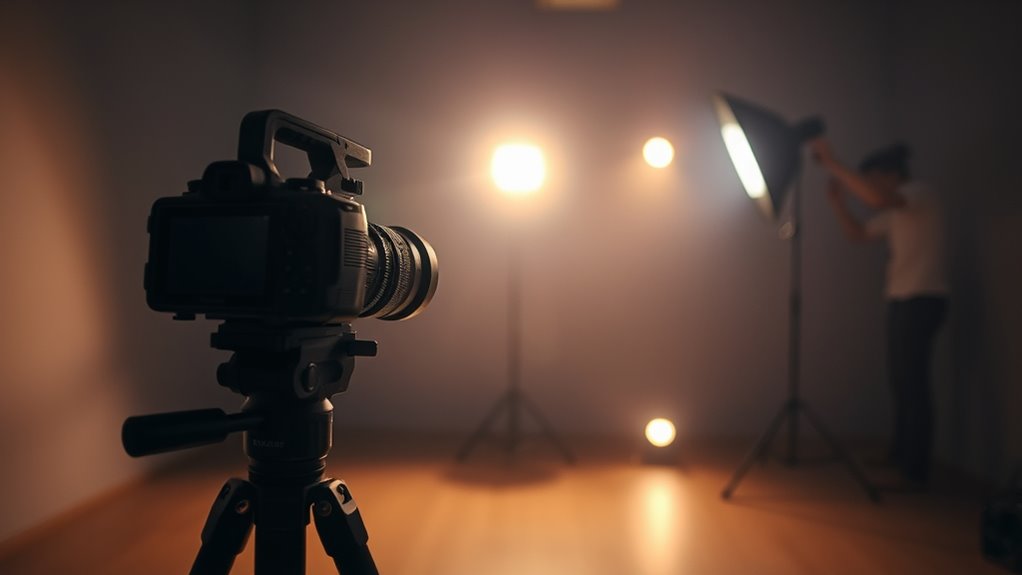

To achieve stunning video recordings, harness natural light during golden hours, and use reflectors to illuminate shadows creatively. Master key, fill, and backlighting techniques to sculpt your subject and add depth. Choose the right artificial light sources like LED panels or softboxes for flattering illumination. Don’t forget about color temperature, as warm lighting evokes intimacy while cool tones offer clarity. Following these principles will enhance your storytelling and emotional impact, and there’s more to explore.
Understanding Natural Light
Natural light can transform your video recordings in remarkable ways. It brings a vibrant energy, casting soft shadows that enhance depth and texture. The natural light advantages are plentiful: it’s free, widely available, and creates a sense of authenticity that artificial lighting struggles to replicate. Whether you’re capturing the golden hour or the gentle glow of an overcast sky, your footage can achieve a cinematic quality that resonates with viewers. However, you’ll face natural light challenges too. The sun’s position shifts, leading to inconsistent lighting, and harsh midday rays can create unflattering contrasts. To master natural light, you’ll need to be adaptable, learning to embrace its unpredictability while harnessing its beauty to elevate your storytelling.
The Importance of Key, Fill, and Backlighting
Lighting is the backbone of effective video production, and understanding the roles of key, fill, and backlighting is fundamental for achieving professional-quality results. Your key light positioning is vital; it acts as the primary source, sculpting your subject’s features with depth and dimension. Experiment with angles to find that perfect balance, illuminating the essence of your scene. Next, consider fill light intensity. It softens harsh shadows created by the key light, ensuring your subject remains vibrant and engaging. Finally, backlighting creates separation between your subject and the background, adding a sense of depth and intrigue. Mastering these three elements allows you to release your creativity, crafting compelling visuals that captivate your audience and elevate your storytelling.
Choosing the Right Artificial Light Sources
When you’re selecting artificial light sources for your video projects, understanding the various types available is essential. You’ll want to take into account not just the color temperature, which affects the mood and tone, but also how to strategically place your lights for ideal effect. Each choice you make will shape the visual narrative, enhancing the overall quality of your recordings.
Types of Artificial Lights
Choosing the right artificial light sources can greatly enhance your video recordings, and there are several types to think about. LED panels offer versatility and energy efficiency, ideal for smooth, even lighting. Softbox lighting diffuses harsh beams, creating soft shadows that flatter subjects beautifully. Ring lights, popular among vloggers, provide a fascinating catchlight and even illumination. If you need focused light, consider Fresnel lights or spotlights for dramatic effects. Strobe lights can add a burst of creativity, while tungsten bulbs deliver warm tones. Experiment with lighting gels to manipulate colors and moods, tailoring your setup to your artistic vision. Ultimately, the right combination of these sources can elevate your videos to a professional level.
Color Temperature Considerations
Understanding color temperature is essential for achieving the desired mood and look in your videos, as it influences how your subjects appear on camera. You’ll want to choose artificial light sources that allow for color temperature adjustment, giving you the freedom to create various atmospheres. For instance, a warmer light (around 3200K) evokes coziness, while cooler light (5500K) offers a crisp, daylight feel.
To maintain lighting color balance, mix light sources carefully; an imbalance can lead to unnatural skin tones. Using gels or filters can also help fine-tune your lights, ensuring everything harmonizes beautifully. By mastering these aspects, you set the stage for enchanting visuals that resonate with your audience, making your videos come alive.
Light Placement Strategies
Balancing color temperature is just the first step in creating compelling visuals; the placement of your lights can dramatically alter the mood and focus of your scene. Experimenting with light angles is essential—try positioning your key light at 45 degrees to your subject for a natural, flattering look. This creates soft shadows that enhance depth while aiding in shadow management. For a dramatic effect, place a backlight behind your subject to separate them from the background. Don’t forget to contemplate fill lights; they soften harsh shadows without losing the scene’s essence. By strategically placing your lights, you can craft an inviting atmosphere or evoke intense emotions, giving you the creative freedom to shape your narrative visually.
Three-Point Lighting Setup Explained
In mastering the art of video lighting, understanding the three-point lighting setup is essential. You’ll position your key light to create striking highlights, while the fill light softens the shadows, ensuring your subject looks natural and engaging. Finally, the back light adds depth, separating your subject from the background and enhancing the overall visual appeal.
Key Light Placement
Three-point lighting is an essential technique in video production, and mastering key light placement can dramatically enhance your footage. Position your key light at a 45-degree angle to your subject to create depth and dimension. Adjust the key light intensity to guarantee your subject stands out without harsh shadows.
| Aspect | Recommendation |
|---|---|
| Key Light Angle | 45 degrees from subject |
| Key Light Intensity | Soft but prominent |
| Distance from Subject | 3-6 feet |
Experimenting with these parameters allows your creativity to flourish, leading to engaging visuals. Remember, the right key light angles and intensity can transform an ordinary scene into something extraordinary, giving you the freedom to express your artistic vision.
Fill Light Purpose
After establishing your key light, the next step in the three-point lighting setup is to understand the purpose of the fill light. This essential component softens shadows created by the key light, creating a balanced, natural look. You’ll find various fill light types, including softboxes, reflectors, or even bounce boards, each offering unique qualities to enhance your scene. When considering fill light positioning, place it at a 45-degree angle opposite the key light, ensuring it subtly illuminates without overpowering. The goal here is to maintain depth while keeping the mood intact. Embracing these techniques allows your video to breathe, inviting your audience into a well-lit world that feels both professional and genuinely engaging.
Back Light Importance
While you’ve established your key and fill lights to create a well-rounded scene, don’t overlook the importance of the back light in your three-point lighting setup. This light, positioned behind your subject, adds depth and separation from the background, enhancing visual interest. Back light techniques can dramatically transform a flat image into a dynamic composition, creating a halo effect that draws viewers in. Experiment with back light positioning to find the perfect angle—too high or low can create unwanted shadows. Aim for a soft, diffused light to avoid harsh edges, ensuring your subject stands out beautifully. Ultimately, mastering back light will elevate your video content, giving it that professional polish you’re aiming for.
Using Reflectors and Diffusers Effectively
How can you transform harsh shadows into soft, flattering light? By using reflectors and diffusers effectively, you can elevate your video quality. Reflector materials like white foam core, silver, or gold can bounce light, filling in shadows and adding dimension. Experiment with angles to see how they can create a more inviting atmosphere. On the other hand, diffuser types such as softboxes or sheer fabrics soften direct light, reducing glare and creating a gentle glow. Position them strategically between your light source and subject for ideal effects. Embrace these tools to gain creative freedom in your lighting setup, allowing your visuals to resonate with warmth and clarity, leaving a lasting impression on your audience.
Color Temperature and Its Impact on Video
In video production, understanding color temperature can make a significant difference in how your final product is perceived. It influences not just the look but also the emotional resonance of your footage. Here’s how it can impact your projects:
- Warm vs. Cool Tones: Warm light (around 3200K) adds intimacy, while cool light (around 5600K) evokes clarity and professionalism.
- Color Grading Compatibility: Different temperatures can affect how your footage responds to color grading, impacting the final visual narrative.
- Mood Setting: The right color temperature sets the mood; think cozy sunsets versus stark daylight.
Mastering color temperature allows you to craft visuals that resonate deeply with your audience, giving your videos the emotional depth they deserve.
Tips for Lighting in Different Environments
Effective lighting can transform any environment into a mesmerizing backdrop for your video, enhancing both the visuals and the overall storytelling. For indoor lighting, consider using soft, diffused sources to create a warm, inviting atmosphere. Position your lights at 45-degree angles to avoid harsh shadows and maintain a natural look. When shooting outdoors, embrace the golden hour—early morning or late afternoon—when the sunlight is softest. If you’re filming in direct sunlight, use reflectors to bounce light and fill in shadows on your subject. Don’t forget to adjust your camera settings to match the lighting conditions, ensuring your footage captures the vibrancy of each environment. With thoughtful lighting choices, your videos will shine, regardless of where you shoot.
Frequently Asked Questions
How Can I Avoid Shadows on My Subject’s Face?
To avoid shadows on your subject’s face, use soft light sources positioned at different angles. Experiment with diffusers and reflectors, creating an even, flattering illumination that enhances features without harsh contrasts. Embrace your creative freedom!
What Is the Best Time for Natural Light Filming?
For natural light filming, you’ll want to aim for golden hour—just after sunrise or before sunset—when the light’s soft and warm. Overcast days can also provide even, diffused light, giving you beautiful results without harsh shadows.
How Do I Balance Multiple Light Sources?
To balance multiple light sources, adjust their color temperature and light intensity. Mix warm and cool lights for harmony, ensuring they complement each other. This’ll create a natural, inviting atmosphere that enhances your visuals beautifully.
Can I Use Household Lamps for Video Lighting?
Sure, you can use household lamps for video lighting. Just consider lamp types and their color temperature; warm tones create cozy vibes, while cooler light adds clarity. Experiment to find your unique visual style and expression.
How Do I Determine the Right Exposure for My Lighting Setup?
To determine the right exposure for your lighting setup, use a lighting meter to assess your scene. Adjust your exposure settings until the meter indicates a balanced exposure, allowing you to capture vibrant, dynamic visuals.
