
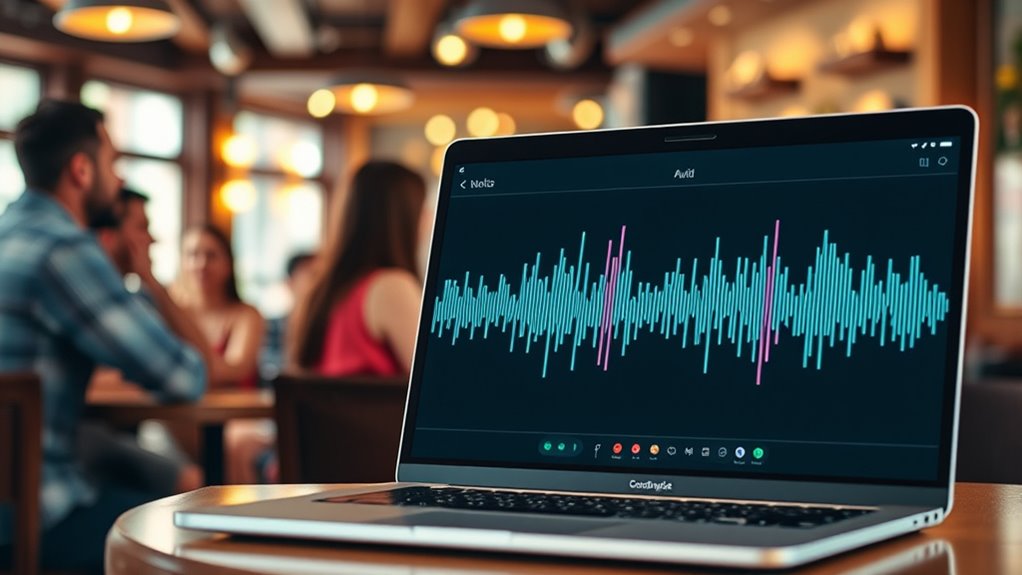

AI-powered noise removal enhances audio in your videos by employing advanced algorithms that effectively distinguish between desired sounds and unwanted noise. This technology improves sound clarity, ensuring crisp, clear audio that keeps viewers engaged. Real-time processing capabilities allow for immediate adjustments, elevating the overall production value. As the algorithms continuously adapt, you’ll find the audio quality dramatically improves. Keep exploring to discover more about the transformative impact of AI on your video production experience.
Understanding AI-Powered Noise Removal Technology
As you explore AI-powered noise removal technology, you’ll find it fundamentally relies on sophisticated algorithms and machine learning models to enhance video quality. These AI algorithms analyze audio signals, identifying and differentiating between desired sounds and unwanted noise. By employing techniques such as spectral analysis and deep learning, the system can effectively filter out disturbances, preserving audio fidelity. The process involves training the algorithms on extensive datasets, allowing them to recognize patterns and adapt to various noise types, thereby improving their accuracy. This technological advancement not only elevates the listening experience but also provides creators with the freedom to produce high-quality content without the constraints posed by ambient interference. Embracing this technology can greatly transform your video projects.
Benefits of Using AI for Audio Enhancement
Using AI for audio enhancement brings significant advantages, particularly in sound clarity. You’ll notice that AI algorithms process audio data rapidly, saving you valuable time in post-production. Additionally, clearer sound can lead to enhanced viewer engagement, making your content more impactful.
Improved Sound Clarity
While traditional audio enhancement methods often struggle to isolate and amplify desired sounds without introducing artifacts, AI-powered noise removal greatly improves sound clarity in videos. By utilizing advanced algorithms, AI can analyze audio signals in real-time, distinguishing between background noise and essential audio elements. This precision enhances audio quality, ensuring that voices and important sounds are crisp and clear. In sound design, this capability allows creators to focus on their intended message without the distraction of unwanted noise. As a result, your audience experiences a more immersive and engaging audio environment. Embracing AI technology for noise removal not only elevates your production value but also empowers you to achieve a level of sound clarity that traditional methods simply can’t match.
Time-Efficient Processing
The advancement of AI in audio enhancement not only elevates sound clarity but also greatly accelerates processing times. By implementing time-saving techniques, you can streamline audio tasks that once took hours. Automated workflows allow you to focus on creative aspects rather than tedious noise removal processes.
| Traditional Method | AI-Powered Method | Time Saved |
|---|---|---|
| Manual editing | Real-time processing | Up to 80% faster |
| Multiple software | Integrated solutions | Simplified workflow |
| Extensive training | AI-driven learning | Reduced learning curve |
With AI, you’re not just optimizing your audio; you’re reclaiming valuable time. This efficiency lets you maximize productivity, ensuring that your projects progress swiftly without sacrificing quality.
Enhanced Viewer Engagement
How can AI-enhanced audio elevate viewer engagement? By eliminating background noise, AI technology guarantees that your content remains the focal point, thereby improving audience retention. When viewers can clearly hear dialogue and essential sounds, their ability to process and connect with the material increases. This clarity often leads to positive viewer feedback, as audiences are more likely to share their experiences and recommend your videos.
Additionally, a seamless audio experience reduces distractions, allowing viewers to immerse themselves fully in the content. As a result, you can expect longer viewing times and enhanced engagement metrics. Ultimately, incorporating AI-powered noise removal not only refines the audio quality but also fosters a deeper connection with your audience, driving both engagement and loyalty.
How AI Noise Removal Works
Although achieving pristine video quality can be challenging, AI noise removal technologies have made significant strides in recent years. These systems utilize advanced signal processing techniques to analyze and filter out unwanted audio artifacts. Here’s how it works:
- Analysis: The AI examines the audio signal to identify noise characteristics.
- Separation: It separates the desired audio from background noise, distinguishing between voice and unwanted sounds.
- Synthesis: The system reconstructs the audio signal, enhancing clarity while minimizing artifacts.
- Feedback Loop: Continuous learning from various audio inputs improves the AI’s effectiveness over time.
Key Features to Look for in Noise Removal Tools
When selecting noise removal tools, it’s vital to take into account several key features that can greatly enhance audio quality. First, look for advanced algorithms that can intelligently differentiate between noise and desired sounds, guaranteeing clarity. A user-friendly interface is also essential; it should allow you to easily adjust parameters without a steep learning curve. Additionally, consider tools that incorporate user feedback, as this can indicate effectiveness and reliability. Real-time processing capability is another feature worth noting, as it allows for immediate results. Finally, verify the tool supports various audio formats, giving you flexibility in your projects. By prioritizing these features, you’ll empower yourself to achieve superior audio enhancement in your videos.
Case Studies of Successful Audio Enhancement
With the right noise removal tools, many creators have successfully transformed their audio quality, showcasing the tangible benefits of advanced technologies. Here are four compelling case studies of audio enhancement:
- Independent Filmmaker: A filmmaker used AI noise removal to eliminate background chatter, resulting in clearer dialogue that captivated audiences.
- Podcaster: A podcaster improved sound fidelity by removing ambient noise, leading to increased listener engagement and subscription rates.
- YouTube Creator: A creator enhanced their video audio by eliminating distracting sounds, which boosted viewer retention considerably.
- Corporate Videographer: A corporate videographer used AI tools to guarantee professional-quality audio, enhancing brand perception in client presentations.
These case studies illustrate how effective noise removal can dramatically elevate audio quality in diverse contexts.
Future Trends in AI Noise Removal for Video Production
As you look ahead, the development of advanced algorithms will markedly enhance AI noise removal capabilities in video production. These innovations will enable real-time processing, allowing for immediate feedback and adjustments during filming. You’re likely to see a shift towards more adaptive systems that tailor noise reduction to specific environments and conditions.
Advanced Algorithms Development
While the demand for high-quality video content continues to rise, advanced algorithms for AI noise removal are becoming increasingly critical in the production process. Algorithmic advancements are enhancing noise filtering techniques, leading to more effective solutions for audio clarity. Here are four key trends shaping the future:
- Deep Learning Models: Utilizing neural networks to intelligently differentiate between noise and desired audio.
- Adaptive Filtering: Creating algorithms that adjust in real-time based on input variations.
- Spatial Audio Processing: Implementing 3D sound models to enhance immersive experiences.
- User-Centric Customization: Allowing creators to personalize noise removal settings based on specific project needs.
These innovations promise to revolutionize how you approach audio quality in video production, providing you with greater creative freedom.
Real-Time Processing Capabilities
The evolution of AI-driven noise removal techniques is increasingly focusing on real-time processing capabilities, enabling immediate enhancements during video production. By leveraging advanced real-time algorithms, you can experience significant latency reduction, allowing seamless integration of noise removal while capturing video. This means you won’t have to wait for post-production to achieve high-quality audio; instead, you can fine-tune sound live, enhancing the overall production value. As these technologies progress, you’ll likely find yourself empowered to make on-the-fly adjustments, adapting to dynamic environments without compromising audio clarity. Real-time processing not only streamlines workflows but also liberates your creative potential, ensuring that the final product aligns with your vision without unnecessary delay. Embracing these innovations will redefine your production landscape.
Frequently Asked Questions
Can AI Noise Removal Work on Live Audio Feeds?
Yes, AI noise removal can work on live audio feeds with real-time processing. It effectively reduces background noise, enhancing clarity and enabling you to maintain focus on the primary audio source during important live events.
What Types of Background Noise Can AI Remove?
AI can effectively remove various background noises, including music interference and wind sounds. By analyzing audio patterns, it distinguishes unwanted sounds, allowing you to focus on essential audio elements, enhancing clarity and overall listening experience.
Is AI Noise Removal Suitable for All Video Genres?
You might wonder if AI noise removal’s truly suitable for every video genre. While its effectiveness shines, some genre-specific challenges, like live performance acoustics, can complicate results. Assess your project’s needs before diving in.
How Much Does AI Noise Removal Software Typically Cost?
AI noise removal software typically ranges from $20 to $300 monthly, depending on cost comparison and software features. Evaluating your specific needs will help you choose the most suitable option for your audio enhancement projects.
Can AI Noise Removal Improve Audio Quality in Older Recordings?
Did you know that 70% of audio restoration techniques effectively enhance older recordings? By using AI noise removal, you can greatly improve audio quality, transforming poor sound into clear, professional-grade audio enhancement for your projects.
