
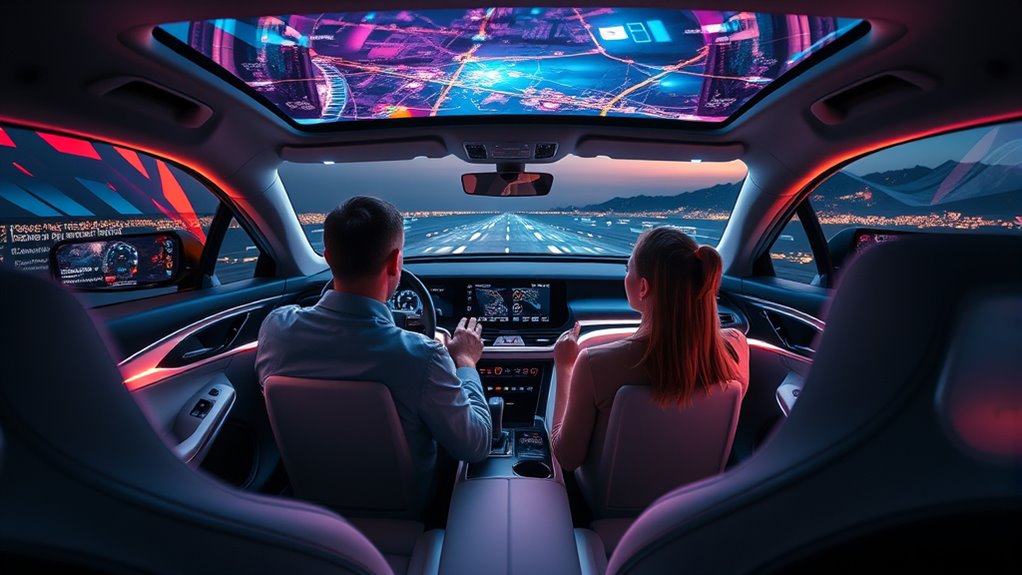

The future of interactive passenger displays in cars is all about enhancing your driving experience. You’ll see seamless connectivity, personalized content, and safe interaction methods like voice recognition and gesture controls. Innovations like augmented reality and multi-screen setups will make navigation and entertainment more engaging. While challenges like safety concerns and regulatory hurdles exist, advancements promise to transform how you interact with your vehicle. Discover how these technologies will shape modern driving further.
The Evolution of Passenger Displays in Automotive Technology
As technology has rapidly advanced, passenger displays in cars have evolved from simple analog instruments to sophisticated digital interfaces that enhance the driving experience. You’ll notice that display technology now integrates seamlessly with various automotive trends, creating an environment where information and entertainment coexist effortlessly. These displays offer real-time navigation, vehicle diagnostics, and even personalized media options, empowering you to tailor your journey. The shift from basic gauges to interactive screens reflects a broader trend towards connectivity and user-centric design. This evolution not only enriches your driving experience but also aligns with a desire for freedom, allowing you to access essential data without distraction. Embracing these advancements means you can enjoy the road ahead while staying informed and engaged.
Key Features of Interactive Displays
While interactive displays in cars have transformed the way passengers engage with their surroundings, several key features stand out as essential to enhancing this experience. These features not only enrich your journey but also provide a sense of freedom and control:
- Touch sensitivity: Allows for intuitive navigation and interaction.
- Gesture control: Enables you to make commands without physical contact, enhancing convenience.
- Voice recognition: Lets you interact seamlessly with the display, making hands-free communication a reality.
- Real-time updates: Keeps you informed about traffic, weather, and entertainment options as they occur.
- Customizable interfaces: Tailors the display to suit your preferences, ensuring a personalized experience.
Together, these elements create a dynamic environment that adapts to your needs, making every trip enjoyable and efficient.
Enhancing User Experience Through Connectivity
In today’s connected world, seamless device integration can transform your driving experience, making it more intuitive and enjoyable. You’ll find that personalized content delivery not only caters to your preferences but also keeps passengers engaged throughout the journey. By leveraging connectivity, interactive displays in cars can greatly enhance how you interact with your vehicle and each other.
Seamless Device Integration
Seamless device integration transforms the driving experience by allowing you to effortlessly connect your smartphone, tablet, or other devices to your car’s interactive passenger display. This level of connectivity enhances your freedom on the road, ensuring device compatibility across various platforms. You’ll enjoy:
- Instant access to your favorite apps
- Hands-free calling and messaging
- Seamless navigation integration
- Music streaming without interruption
- Real-time updates and notifications
With seamless connectivity, you can manage your digital life while focusing on the road ahead. This integration not only boosts convenience but also enriches your overall driving experience, making every journey more enjoyable. So, embrace this technology, and turn your car into an extension of your digital world.
Personalized Content Delivery
As you engage with your car’s interactive passenger display, personalized content delivery enhances your experience by tailoring information and entertainment to your preferences. This system utilizes data analytics to understand user preferences, ensuring that content resonates with you. Imagine receiving contextual advertising that aligns with your interests, suggesting nearby attractions or restaurants based on your travel route. This level of customization not only makes your journeys more enjoyable but also empowers you to explore options that fit your lifestyle. By integrating real-time data and user feedback, these displays create a dynamic interface that evolves with you. Ultimately, personalized content delivery transforms your driving experience into a seamless blend of freedom, convenience, and individualized engagement.
Safety Considerations for Interactive Systems
When integrating interactive displays in cars, you’ll need to take into account how they might distract the driver. User interface design plays an essential role in minimizing these risks, ensuring that important information remains accessible without overwhelming the driver. Balancing functionality with safety is key to creating a seamless and secure driving experience.
Driver Distraction Risks
Although interactive passenger displays can enhance the driving experience by providing entertainment and information, they also pose significant risks for driver distraction. It’s vital to contemplate distraction management strategies to mitigate potential dangers, as cognitive overload can impair your ability to focus on the road. Here are key risks to keep in mind:
- Visual Distractions: Glancing at screens can divert attention.
- Auditory Distractions: Sounds from displays can compete with environmental cues.
- Cognitive Load: Processing too much information can overwhelm you.
- Interaction Demands: Frequent touch or voice commands can disrupt focus.
- Passenger Influence: Passengers may engage in distracting conversations about the display.
Balancing these risks with the benefits of technology is essential for safer driving.
User Interface Design
Effective user interface design is vital for interactive systems in cars, particularly when considering safety. You want an engaging user experience that complies with design principles while guaranteeing intuitive interaction. By incorporating user feedback, designers can refine interface trends to meet real-world needs. Establishing a clear visual hierarchy helps prioritize critical information, allowing you to focus on the road. Adhering to accessibility guidelines guarantees that all passengers can interact comfortably, regardless of ability. Utilizing diverse interaction models can enhance usability, making systems adaptable to your preferences. Finally, paying attention to aesthetic considerations creates a visually appealing interface that enhances your driving experience without compromising safety. Balancing these elements is vital for fostering freedom in your journey while maintaining a secure environment.
Challenges in Implementation and Adoption
As the automotive industry embraces interactive passenger displays, several challenges in implementation and adoption emerge that stakeholders must navigate. You’ll find that addressing these obstacles is vital for success:
- Regulatory hurdles: Compliance with safety and technology regulations can slow progress.
- Technological limitations: Current hardware may not support advanced features.
- Consumer acceptance: Gaining user familiarity is essential for widespread adoption.
- Cost implications: Development and integration can strain budgets.
- Privacy concerns: Safeguarding user data is paramount amidst increasing scrutiny.
Additionally, market competition and integration challenges with legacy systems can complicate the landscape. Maintenance issues may also arise, affecting longevity and performance. By tackling these challenges, stakeholders can pave the way for a more interactive and engaging driving experience.
The Future Landscape of Automotive Displays
While the current landscape of automotive displays is evolving rapidly, the future promises to be even more transformative as technology advances and consumer expectations shift. You’ll likely see augmented reality interfaces, enhancing navigation and entertainment experiences without distraction. Touchless controls will redefine user interaction, letting you engage with displays effortlessly.
| Feature | Benefits | Future Potential |
|---|---|---|
| Augmented Reality | Enhanced navigation | Real-time information overlay |
| Touchless Controls | Safer interaction while driving | Gesture-based commands |
| Customization | Personalized experiences | Adaptive interfaces |
| Multi-screen Setup | Improved multitasking | Seamless integration |
| AI Integration | Predictive responses | Anticipating user needs |
As these innovations unfold, your driving experience will become increasingly intuitive and enjoyable.
Frequently Asked Questions
Will Interactive Displays Increase the Cost of Vehicles?
You’ll find that incorporating advanced display technology often leads to increased costs. A thorough cost analysis reveals that while expenses rise, the benefits in user experience and functionality might justify the investment for many buyers.
How Do Interactive Displays Impact Vehicle Resale Value?
Imagine a vehicle’s charm fading, yet interactive displays can breathe life into its appeal. As future trends evolve, they could enhance the resale market, making your car more attractive to potential buyers, boosting its value considerably.
What Are the Environmental Impacts of These Displays?
You should consider that interactive displays’ environmental impact hinges on sustainable materials and energy consumption. If manufacturers prioritize eco-friendly components and efficient energy use, you might enjoy both functionality and a reduced carbon footprint in your vehicle.
Can Interactive Displays Be Customized for Individual Passengers?
Did you know that over 70% of users prefer personalized interfaces? You can customize interactive displays based on user preferences, ensuring each passenger enjoys a tailored experience that enhances comfort and engagement during your journeys.
How Do Different Age Groups Respond to Interactive Displays?
Different age groups have unique generational preferences that influence their user engagement with interactive displays. Younger users often crave dynamic content, while older ones may prefer straightforward interfaces, reflecting diverse needs and enhancing overall interaction experiences.
