
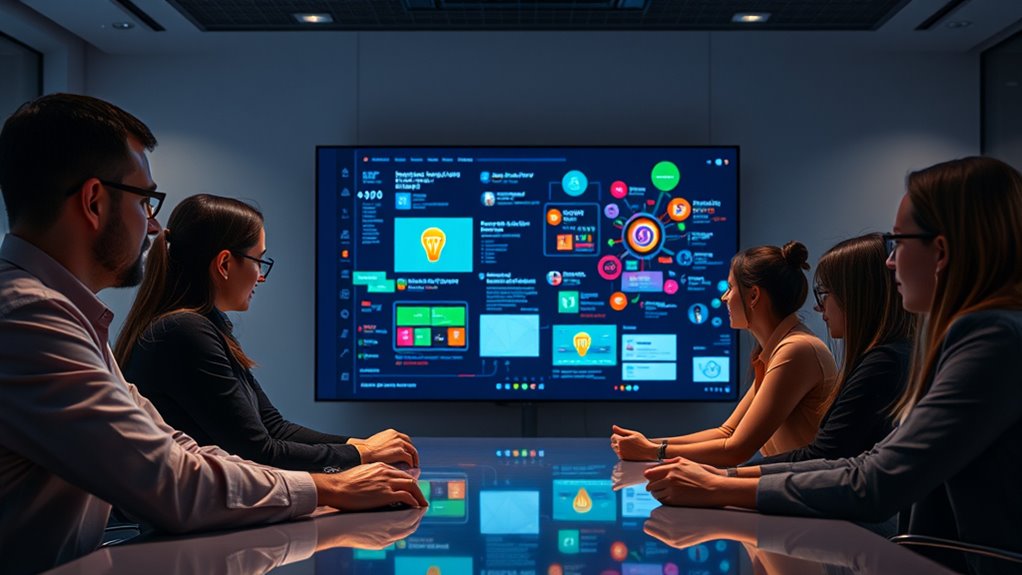

AI improves multi-user display adaptation by analyzing user behavior and preferences in real-time, enabling tailored content delivery for diverse participants. It optimizes interfaces based on individual profiles, enhancing engagement and satisfaction. Predictive analytics guarantees that content remains relevant and adjusts dynamically to user interactions. By addressing the challenges of identity recognition and privacy, AI fine-tunes the collaborative experience, paving the way for seamless shared environments. Discover how these advancements redefine interaction in innovative ways.
Understanding Multi-User Display Systems
Multi-user display systems, often seen in collaborative environments like conference rooms or classrooms, are designed to facilitate interaction among multiple users simultaneously. These systems enable seamless user interaction by employing various display configurations that adapt to the needs of the group. You'll find that effective visual layouts enhance engagement, whether through split screens, interactive touch surfaces, or synchronized displays. By allowing multiple inputs, users can share ideas and content in real-time, fostering creativity and collaboration. The flexibility of these configurations empowers you to tailor the experience based on participant dynamics, ensuring everyone's voice is heard. Ultimately, the design of multi-user display systems is essential for maximizing collaborative potential and driving innovation in shared spaces.
The Role of AI in Display Adaptation
As collaborative environments evolve, the integration of AI in display adaptation is becoming increasingly vital for enhancing user experience. AI-powered context aware systems analyze user behavior and preferences, enabling dynamic content adjustments that promote higher user engagement. This intelligent adaptation guarantees that displays cater to multiple users, providing personalized interactions without compromising the collective experience.
| Feature | Description | Impact on User Engagement |
|---|---|---|
| Real-Time Adaptation | Adjusts content based on user interactions | Increases relevance |
| Predictive Analytics | Anticipates user needs through data analysis | Enhances satisfaction |
| Multi-User Support | Tailors displays for various users simultaneously | Boosts collaboration |
| Feedback Integration | Learns from user feedback to improve experience | Fosters community input |
Personalized User Interfaces
The shift toward personalized user interfaces is a natural progression from AI-driven display adaptation. You can leverage user preferences to create tailored interface customization that enhances usability and engagement. By analyzing user profiles and interaction patterns, AI can optimize display layouts for every individual, ensuring content relevance and a clear visual hierarchy. This not only improves accessibility options but also increases overall satisfaction. Engagement metrics derived from usability testing can further refine these interfaces, making them more intuitive and responsive. With personalized user interfaces, you're not just adapting; you're fostering an environment where users can interact freely and efficiently, ultimately leading to a more enjoyable and productive experience.
Real-Time Data Analysis for Enhanced Interaction
While leveraging real-time data analysis can greatly enhance user interaction, it becomes essential to understand how immediate insights transform engagement dynamics. By utilizing real-time feedback, you can capture interaction metrics that reveal user behavior patterns as they unfold. This instantaneous data allows for adaptive interfaces that respond to user needs promptly, fostering a more engaging environment. You'll find that analyzing metrics like click rates and session durations provides actionable insights that can refine your display strategies. The ability to pivot based on live data not only enhances user satisfaction but also encourages a more dynamic and personalized experience. Embracing this innovative approach can empower you to create interactions that truly resonate with users, driving deeper connections and engagement.
Machine Learning Algorithms in Action
When implementing machine learning algorithms in multi-user display systems, you'll discover that their ability to analyze vast datasets in real-time greatly enhances user interaction. Utilizing deep learning techniques and algorithm optimization, these systems can adaptively cater to diverse user preferences. Here are four key benefits:
- Personalized Content: Algorithms learn user behavior and preferences, delivering tailored experiences.
- Dynamic Adaptation: Real-time adjustments based on user interactions guarantee seamless shifts.
- Scalability: Machine learning allows systems to efficiently handle multiple users without performance degradation.
- Predictive Insights: Advanced analytics provide foresight into user needs, enhancing engagement.
Adaptive Content Delivery
In multi-user display systems, adaptive content delivery plays a pivotal role in enhancing user engagement and satisfaction. By leveraging adaptive algorithms, content can be tailored to align with user preferences and contextual awareness. This guarantees content relevance, optimizing interaction dynamics and display customization.
| Feature | Benefits | Technologies Used |
|---|---|---|
| Adaptive Algorithms | Tailors content dynamically | Machine Learning |
| Contextual Awareness | Adjusts based on environment | Sensor Integration |
| User Engagement | Boosts interaction rates | Real-Time Analytics |
| Interface Fluidity | Seamless shifts | UI/UX Design Innovation |
The integration of these elements improves response time and fosters a fluid interface, allowing users to experience personalized interactions that enhance their freedom and satisfaction.
Enhancing Collaboration in Shared Spaces
To foster effective collaboration in shared spaces, it's essential to leverage technology that adapts to the diverse needs of users. By enhancing group dynamics and spatial awareness, you can create environments that promote teamwork synergy and user engagement. Here are four key aspects to reflect on:
Leveraging adaptable technology enhances collaboration, fostering teamwork and user engagement in shared spaces.
- Collaborative Tools: Utilize digital platforms that facilitate real-time interaction and visual communication.
- Interaction Design: Focus on intuitive interfaces that enhance user experience and minimize friction.
- Customization: Adapt displays to individual preferences, ensuring everyone feels included in shared experiences.
- Feedback Mechanisms: Implement systems that allow for immediate input, fostering a culture of continuous improvement.
Overcoming Challenges in Multi-User Environments
In multi-user environments, accurately recognizing user identity is essential for delivering personalized content effectively. Without robust identification mechanisms, you risk content overlap and confusion among users. Addressing these challenges requires innovative approaches that leverage AI to guarantee each individual's experience is tailored and seamless.
User Identity Recognition
While traversing multi-user environments, accurately recognizing user identities poses significant challenges that can hinder the effectiveness of AI-driven systems. To address these complexities, it is crucial to focus on the following aspects:
- User Profiling: Create detailed profiles to enhance identity verification.
- Behavior Analysis: Utilize behavioral patterns for context awareness and more accurate segmentation.
- Demographic Insights: Gather demographic information to improve user segmentation and enhance personalization.
- Privacy Concerns: Balance identity recognition with stringent privacy measures to maintain user trust.
Personalized Content Delivery
Recognizing user identities lays the groundwork for effective personalized content delivery in multi-user environments. By understanding individual user preferences, AI can generate personalized recommendations that enhance engagement and satisfaction. This innovation addresses the challenge of balancing diverse interests within a shared space.
| User Preference | Personalized Recommendation |
|---|---|
| Sports | Live game updates |
| Cooking | Recipe suggestions |
| Travel | Destination highlights |
| Music | Playlist curated |
In this dynamic landscape, you're empowered to enjoy content tailored to your desires. AI's ability to adapt in real time guarantees that everyone finds value, fostering a sense of freedom and individuality even in communal settings. Embrace this evolution for an enriched user experience.
The Future of AI in Display Technology
As advancements in artificial intelligence continue to reshape various industries, the domain of display technology stands on the brink of a significant transformation. You'll witness the emergence of innovative solutions that harness AI's power, revolutionizing how we interact with screens.
Consider these potential advancements:
- Quantum Displays: AI can optimize color accuracy and brightness, enhancing user experience.
- Holographic Interfaces: Personalized interactions will become seamless, providing immersive experiences.
- Adaptive Algorithms: These will tailor content in real-time, catering to user preferences.
- Multi-User Environments: AI will enable dynamic adjustments for various viewers, ensuring everyone's needs are met.
With these developments, the future of display technology promises to deliver unprecedented freedom and adaptability, allowing you to engage more deeply with digital content.
Frequently Asked Questions
How Does AI Ensure User Privacy in Multi-User Displays?
AI guarantees your privacy in multi-user displays through robust user authentication and data encryption methods. These technologies protect sensitive information, allowing you to interact freely while maintaining control over your personal data in shared environments.
Can AI Adapt Displays for Different Age Groups?
Yes, AI can adapt displays for different age groups by creating age-specific interfaces. It personalizes content based on users' preferences, ensuring an engaging experience that fosters freedom and enhances interaction, regardless of the audience's age.
What Hardware Is Needed for Ai-Driven Multi-User Displays?
Did you know that 75% of users prefer personalized displays? For AI-driven multi-user setups, you'll need display sensors for real-time data and powerful processing units to analyze and adapt content seamlessly, enhancing user experience.
How Does AI Handle Conflicting User Preferences?
AI handles conflicting user preferences through user profiling and preference balancing. It analyzes individual behaviors, dynamically adjusts content, and guarantees each user's needs are met, fostering a harmonious environment that respects everyone's unique choices and freedoms.
Are There Industries That Benefit the Most From This Technology?
Sectors like healthcare applications and entertainment experiences greatly benefit from this technology. They enhance user engagement, streamline interactions, and personalize displays, granting you the freedom to enjoy tailored content without conflicts or compromises.
