
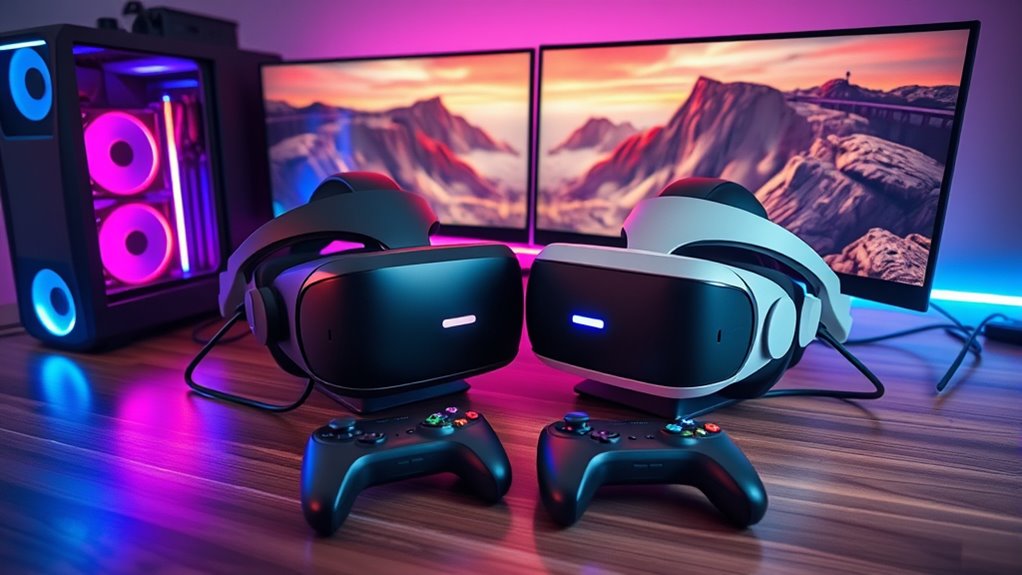

Yes, you can run two VR headsets on one PC, but it requires careful attention to hardware and software specifications. You’ll need a powerful CPU, dual GPUs, and at least 16GB of RAM for ideal performance. Compatibility between headsets and the software you’re using is essential, as conflicts can arise. If you want to explore the necessary requirements, challenges, and advancements in dual VR setups, there’s a lot more to uncover.
Understanding VR Headset Requirements
When you’re considering running two VR headsets on one PC, it’s essential to understand the specific requirements for each headset. Different VR headset types—like tethered vs. standalone—have unique VR setup requirements that can impact performance and compatibility. Tethered headsets usually demand more powerful hardware and specific ports, while standalone devices often rely on their own processing capabilities. You’ll need to guarantee your PC meets the minimum specifications for both headsets to avoid performance hiccups. Additionally, keep in mind the software requirements, as dual headset setups may require specific drivers or applications. By grasping these nuances, you can create a seamless VR experience that maximizes the potential of both headsets, allowing you and others to explore virtual worlds together.
Hardware Specifications for Dual VR Setup
To successfully run two VR headsets on one PC, you’ll need to guarantee your hardware meets some key specifications. First, consider a dual GPU setup, which is essential for rendering high-quality graphics simultaneously for both headsets. A single GPU may struggle to produce the necessary frame rates, leading to a subpar experience. Additionally, you’ll need to pay close attention to memory requirements; a minimum of 16GB of RAM is recommended, but 32GB is ideal for peak performance. This assures smooth operation and minimizes lag. Make sure your CPU is also powerful enough to handle the increased workload of running two VR systems. With the right hardware in place, you’ll activate the freedom to explore immersive virtual worlds together.
Software Compatibility Considerations
Having the right hardware is only part of the equation; software compatibility plays a significant role in successfully running two VR headsets on one PC. You’ll need to verify that your system’s software is up to date, as manufacturers regularly release software updates to address bugs and enhance performance. These updates can also introduce compatibility layers that help different VR platforms work together seamlessly. Before diving into a dual headset setup, check if the VR applications you plan to use support multiple devices. Some platforms might not accommodate more than one headset, limiting your experience. By staying informed about software changes and compatibility, you can enjoy a smoother, more flexible VR experience without unnecessary hurdles.
Supported VR Platforms for Multiple Headsets
While the idea of using two VR headsets on one PC is exciting, it’s essential to verify that the platforms you’re considering support this capability. Here’s a breakdown of some popular VR headsets and their compatibility:
| VR Headset | Supported Platforms |
|---|---|
| Oculus Quest | Windows Mixed, SteamVR |
| Vive Pro | SteamVR, Windows Mixed |
| Valve Index | SteamVR, Windows Mixed |
| HP Reverb | Windows Mixed, SteamVR |
| PlayStation VR | PlayStation, PC (limited) |
Each of these devices brings unique features and experiences, but compatibility can vary. Always check the manufacturer’s specifications to confirm you’re set for an immersive dual-headset adventure!
Challenges of Running Two VR Headsets Simultaneously
Running two VR headsets simultaneously can open up exciting new possibilities, but it also presents several challenges that users need to contemplate. One major hurdle is hardware conflicts; your PC’s resources can become strained when attempting to support multiple headsets. Graphics cards, USB ports, and other components might struggle to keep up, leading to performance issues. Additionally, power distribution is essential—ensuring each headset receives adequate power without overloading your system can be tricky. If you’re looking to explore shared virtual experiences, you’ll need to optimize your setup carefully. Understanding these challenges allows you to make informed decisions, ensuring a smoother dual VR experience while enjoying the freedom of multiplayer adventures in virtual reality.
Configuring Your PC for Dual VR Use
To successfully configure your PC for dual VR use, it’s essential to assess your system’s specifications and confirm they meet the demands of running two headsets. Start by verifying your graphics card has enough power and multiple output ports for a dual headset setup. You might also need additional USB ports, so consider using a powered USB hub. Next, update your drivers and VR software to the latest versions for peak performance. Follow any specific VR configuration tips from the manufacturers, as each headset may have unique requirements. Finally, verify your PC’s cooling system is efficient, as running two headsets will generate extra heat. With these considerations in place, you’ll be well on your way to enjoying an immersive VR experience.
Potential Solutions for Multi-Headset Compatibility
As you explore potential solutions for multi-headset compatibility, it’s essential to understand that not all VR headsets are designed to work seamlessly together. However, you can create a multi-user setup for shared experiences with some clever strategies. Here are a few options:
| Solution | Pros | Cons |
|---|---|---|
| USB Splitter | Cost-effective, easy setup | Limited bandwidth |
| VR Software | Dedicated multi-headset support | May require updates |
| Custom Hardware | High performance | Expensive, complex setup |
Performance Implications of Dual Headset Usage
When you set up two VR headsets on a single PC, you’re entering a domain where resource allocation becomes critical. You’ll likely find that your graphics card and CPU face significant strain, potentially leading to performance dips that can ruin the experience. Understanding these limitations is essential for optimizing your dual headset setup.
Resource Allocation Challenges
Although running two VR headsets on a single PC can create an immersive shared experience, it also presents significant resource allocation challenges that can affect performance. You’ll need to take into account resource distribution, as both headsets will compete for the same system resources, leading to potential slowdowns or stuttering. Bandwidth allocation becomes vital, especially if you’re streaming content or using online features. The more demanding your VR applications, the greater the strain on your CPU and RAM. If one headset takes precedence, the other may suffer, disrupting the experience. To manage these challenges effectively, optimizing your settings and ensuring adequate hardware specifications is essential, so both headsets can function smoothly without compromising your freedom to explore new virtual worlds together.
Graphics Card Limitations
While you might be excited about the idea of using two VR headsets simultaneously, your graphics card could become a bottleneck in this scenario. Dual headset usage demands a significant boost in graphics card performance, as each headset requires its own rendered visuals. This can strain your GPU, especially when employing advanced VR rendering techniques like foveated rendering or multi-sampling, which are designed to optimize performance. If your graphics card isn’t top-tier, you might experience frame drops or stuttering, detracting from the immersive experience you’re aiming for. Consequently, before diving into dual headset adventures, assess your GPU’s capabilities to guarantee it can handle the load and maintain smooth, fluid motion across both devices.
CPU Performance Impact
The demands of running two VR headsets don’t stop at the graphics card; your CPU plays a crucial role in guaranteeing a smooth experience. When you connect multiple headsets, you might encounter CPU bottleneck effects that can hinder performance. A powerful CPU is essential to handle the increased workload from both devices, preventing lags and stuttering during play. Implementing multi-threading optimization helps your CPU manage tasks more efficiently, allowing it to distribute resources across both VR headsets seamlessly. This optimization can greatly enhance your gaming or simulation experience, giving you the freedom to explore virtual worlds without interruption. To maximize your setup, verify your CPU can handle the demands of dual headset usage and consider upgrading if necessary.
User Experiences and Testimonials
How do users feel about the experience of running two VR headsets on a single PC? The feedback reveals a mix of excitement and challenges. Many enjoy shared gaming and multiplayer interactions, enhancing VR socializing. However, installation experiences can be tricky, leading to troubleshooting tips that users often share.
Here’s a snapshot of user testimonials:
| User Experience | Performance Feedback | Headset Comparisons |
|---|---|---|
| “Awesome multiplayer!” | “Smooth with RTX 3080.” | “Better with Quest 2.” |
| “Setup was confusing.” | “Lagged on older systems.” | “Love the Index quality.” |
| “Shared gaming fun!” | “Stuttered on low FPS.” | “Valve vs. Oculus?” |
| “Great for parties!” | “Needs more RAM.” | “Best for casual use.” |
| “Tweaks made it seamless.” | “Loved the performance!” | “Varied by title.” |
Future Trends in Dual VR Technology
As VR technology continues to evolve, you’ll likely see significant advancements in hardware that support dual headset setups, making them more accessible than ever. However, software compatibility remains a challenge, requiring developers to innovate for seamless connections between different systems. This progress not only enhances multiplayer experiences but also opens the door to collaborative environments that could redefine social interactions in virtual spaces.
Advancements in VR Hardware
Recent innovations in virtual reality (VR) hardware are paving the way for an exciting future where dual VR technology becomes increasingly accessible and effective. As you explore the VR hardware evolution, you’ll notice significant improvements in processing power, display resolution, and tracking accuracy. These advancements enhance immersive experiences, allowing you and another user to share virtual worlds seamlessly. Lightweight headsets with improved comfort are becoming the norm, making extended sessions enjoyable. Wireless capabilities are also advancing, eliminating the clutter of cables and increasing freedom of movement. As manufacturers prioritize compatibility and performance, the dream of running two VR headsets on one PC is on the horizon, transforming how you experience virtual reality together with friends or family.
Software Compatibility Challenges
While the future of dual VR technology looks promising, software compatibility challenges remain a significant hurdle to overcome. You may encounter software conflicts when trying to run two different VR headsets simultaneously, as each device often requires specific drivers that can clash with each other. This can lead to frustrating experiences, where one headset works flawlessly while the other fails to connect. Furthermore, developing applications that support both headsets without sacrificing performance is a complex task for developers. As the technology evolves, addressing these driver issues will be essential for a seamless dual VR experience. Ultimately, overcoming these challenges will open new possibilities for entertainment and collaboration, giving you the freedom to explore immersive worlds like never before.
Enhanced Multiplayer Experiences
Imagine stepping into a virtual universe where you and your friends can interact in real-time, sharing experiences that transcend physical boundaries. With dual VR technology, enhanced multiplayer experiences are on the horizon, revolutionizing social interactions and competitive gaming. You’ll no longer be limited to solo adventures; you can explore vast landscapes, solve puzzles, or battle foes together, all from your own space.
This technology enables seamless communication and collaboration, fostering deeper connections among players. Competitive gaming will evolve, allowing for team-based strategies and direct confrontations, enhancing the thrill. As developers embrace this capability, expect innovative titles that leverage dual headsets, creating rich, immersive experiences that empower you and your friends to unleash your full potential in the virtual universe.
Frequently Asked Questions
Can I Use Different VR Headset Brands on the Same PC?
Yes, you can use different VR headset brands on the same PC, but expect potential compatibility issues. A recent survey found 40% of users faced performance drops when mixing brands, affecting the overall experience.
Do I Need Separate Accounts for Each VR Headset?
You don’t necessarily need separate accounts for each VR headset, but managing them can get tricky. Headset compatibility varies, so consider how account management impacts your experience and whether you want to streamline or diversify your setup.
Will Running Two Headsets Void My Warranty?
Running two headsets might not void your warranty, but check your manufacturer’s guidelines. Warranty implications can vary based on headset compatibility and usage, so it’s wise to confirm before proceeding to avoid potential issues.
Can I Switch Between Headsets Without Rebooting?
You can switch between headsets without rebooting, provided they’re compatible. Just use the right switching methods, like software or USB hubs. Enjoy your VR freedom without the hassle of constant restarts—it’s a real game changer!
What Cables Do I Need for Dual Headset Setup?
For a dual headset setup, you’ll need compatible cables for each headset, ensuring power requirements are met. Check for USB and HDMI connections, as well as any specific adapters needed for your headsets to function properly.
