
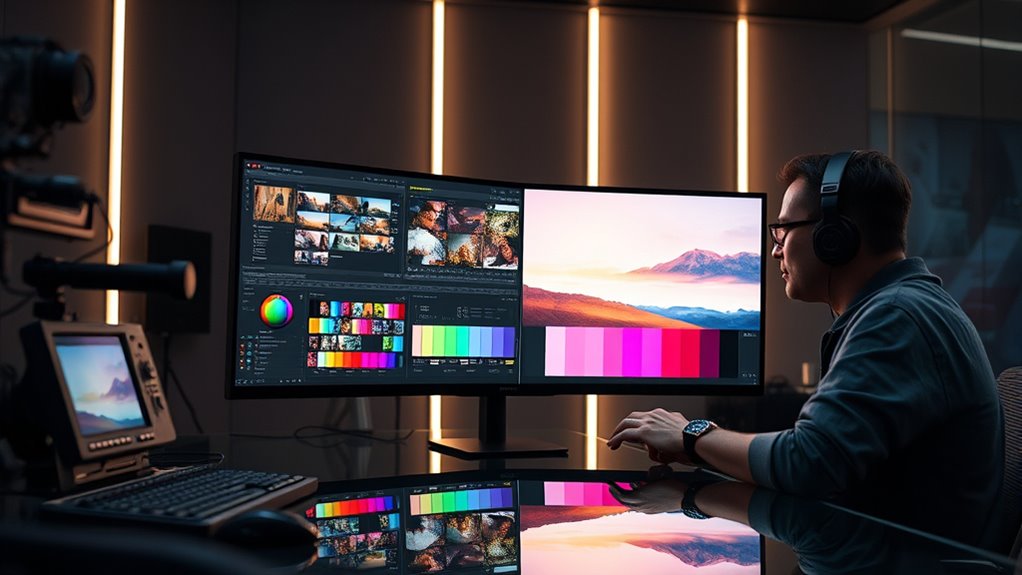

AI color grading works by automating color adjustments in video production, leveraging machine learning to analyze scenes and enhance emotional storytelling. It identifies key elements through object detection and contextual understanding, ensuring a harmonious color palette across footage. While it boosts efficiency and creative exploration, it’s limited by a lack of artistic intuition and cultural sensitivity. Understanding these nuances can elevate your projects, leading to more engaging visual narratives in your work.
Understanding Color Grading in Video Production
Color grading in video production is more than just adjusting hues; it’s about crafting a visual narrative that enhances storytelling. You’ll need to grasp color theory, which underpins how colors influence emotions and perceptions. Consider how a warm palette can evoke comfort or nostalgia, while cooler tones might inspire tension or melancholy. Each choice you make in color grading contributes to visual storytelling, guiding your audience’s emotional journey. You can manipulate shadows, highlights, and saturation to create a cohesive look that aligns with your narrative’s tone. By understanding the interplay of colors, you empower your creative vision, giving your audience the freedom to feel and connect deeply with the story you’re telling. Embrace this art, and watch your projects come alive.
The Role of AI in Color Grading
As the landscape of video production evolves, the integration of AI into color grading processes is reshaping how creators approach visual storytelling. By leveraging advanced AI colorization techniques, you can achieve stunning results with greater efficiency. Here are four key roles AI plays in color grading:
- Automated Color Adjustments: AI algorithms can make precise adjustments based on your footage, saving time and enhancing consistency.
- Machine Learning Frameworks: These frameworks learn from previous projects, improving the quality of color grading over time.
- Visual Coherence Analysis: AI analyzes scenes for visual harmony, ensuring that color palettes align seamlessly.
- Creative Freedom: With AI handling technical tasks, you’re free to focus on artistic expression and storytelling, pushing your creative boundaries.
How AI Algorithms Analyze Footage
When you work with AI algorithms in video production, they’re capable of scene recognition techniques that identify key elements within your footage. By analyzing these elements, they can extract a cohesive color palette that enhances your visual storytelling. This process not only streamlines your workflow but also elevates the overall aesthetic of your project.
Scene Recognition Techniques
Though many may not realize it, scene recognition techniques are at the heart of how AI algorithms analyze footage. By employing sophisticated scene classification methods, AI can identify various elements within a scene, enhancing your color grading process. Here’s how it works:
- Object Detection: AI identifies key objects, influencing color choices based on their characteristics.
- Contextual Understanding: Through visual context analysis, the algorithm assesses relationships between elements, determining their emotional tone.
- Scene Segmentation: The footage is divided into segments, allowing for targeted adjustments in specific areas.
- Temporal Analysis: AI evaluates changes over time, ensuring consistency in color grading throughout the video.
Understanding these techniques empowers you to harness AI’s potential, granting you the freedom to create visually engaging narratives.
Color Palette Extraction
To enhance your color grading process, AI algorithms employ advanced color palette extraction techniques that analyze the visual elements within your footage. By leveraging intricate models rooted in color theory, these algorithms dissect the hues, saturation, and luminance of each frame. They identify dominant colors and create a cohesive palette that aligns with your desired visual aesthetics. This means you can effortlessly achieve a mood that resonates—whether it’s a vibrant summer scene or a moody, atmospheric shot. AI’s ability to analyze vast amounts of data allows for an intuitive understanding of color relationships, helping you refine your artistic vision while saving time. Embracing this technology empowers you to elevate your storytelling through color.
Benefits of AI Color Grading
While traditional color grading can be a time-consuming process requiring extensive skill and experience, AI color grading revolutionizes this aspect of video production by streamlining workflows and enhancing creative possibilities. By utilizing automated adjustments, you can achieve remarkable results with minimal manual intervention, allowing for greater workflow efficiency. Here are some key benefits of AI color grading:
AI color grading transforms video production by enhancing efficiency and creativity, allowing for stunning results with minimal effort.
- Speed: Quickly process large volumes of footage without sacrificing quality.
- Consistency: Maintain a uniform look across all scenes and clips effortlessly.
- Accessibility: Enable less experienced editors to achieve professional results.
- Creative Freedom: Spend more time exploring innovative ideas rather than getting bogged down in technical details.
With AI, you can truly release your creative potential.
Challenges and Limitations of AI in Color Grading
While AI can streamline the color grading process, it often falls short in areas that require a human touch. Its lack of artistic intuition and limited context understanding can lead to inconsistent color application that doesn’t truly enhance your vision. As you explore these challenges, you’ll see how they can impact the overall quality of your video production.
Lack of Artistic Intuition
Although AI has made significant advancements in color grading, it often struggles to replicate the nuanced artistic intuition that experienced colorists bring to the table. This lack of intuition can hinder the emotional impact of your projects. Here are some key challenges:
- Subtlety in Color Choices: AI may overlook the delicate balance of hues that evoke specific feelings.
- Contextual Sensitivity: It can’t fully grasp the story’s emotional depth, which influences color choices.
- Cultural Relevance: Artistic nuances vary by culture; AI often misses these crucial cues.
- Creative Experimentation: Human artists intuitively explore unconventional color combinations, something AI lacks.
In the end, while AI can assist, it can’t replace the heart and soul of a human colorist’s artistry.
Limited Context Understanding
When you’re working on a project, the ability to understand the context behind each scene is essential for effective color grading. AI often struggles with these contextual nuances, limiting its capacity to capture the emotional depth and narrative significance of your footage. While it can analyze color palettes and apply adjustments, it lacks the artistic expression that human colorists bring to the table. For instance, a scene’s mood may depend on subtle cues—lighting, character emotions, or even cultural references—that AI might overlook. This disconnect can lead to color choices that don’t resonate with the intended story, diminishing the viewer’s experience. Ultimately, without a firm grasp of context, AI’s color grading can feel mechanical rather than the artistic touch you aim for.
Inconsistent Color Application
The challenge of context understanding naturally leads to another significant hurdle in AI color grading: inconsistent color application. While AI can automate aspects of color correction, it often struggles to maintain color consistency throughout a project. This inconsistency can undermine the visual narrative and affect audience engagement. Here are some common pitfalls to take into account:
- Scene Variation: Different lighting conditions can confuse AI algorithms, leading to mismatched colors.
- Emotional Tone: AI may misinterpret the desired mood, applying colors that don’t fit the scene.
- Subject Focus: Prioritizing the wrong elements can result in distracting color shifts.
- Post-Processing Adjustments: AI might not adapt well to manual tweaks, causing further inconsistencies.
Awareness of these limitations can help you enhance your color grading process.
Case Studies: Successful AI Color Grading Implementations
As filmmakers increasingly embrace AI color grading, numerous case studies illustrate its transformative impact on video production. One notable implementation example is a feature film that utilized AI to analyze hundreds of reference images, achieving a consistent and vibrant color palette across diverse scenes. Another case study showcases a commercial project where AI algorithms accelerated the color grading process, drastically reducing post-production time while maintaining creative intent. These implementations not only enhanced visual storytelling but also empowered creators with more freedom to experiment. By leveraging AI, filmmakers can focus on artistic vision rather than technical limitations, resulting in compelling narratives that resonate with audiences. Such case studies highlight the potential of AI to revolutionize color grading in the film industry.
The Future of AI in Video Production and Color Grading
While many filmmakers are already experiencing the benefits of AI in color grading, the future promises even more innovative advancements that can redefine video production. Here’s how you can expect AI to shape the industry:
- Enhanced AI Creativity: Expect algorithms that not only analyze but also suggest creative choices, elevating your artistic vision.
- Future Innovations: Look out for real-time adjustments that adapt to your unique style and preferences.
- Automation Impact: Automation will streamline processes, allowing you to focus more on storytelling rather than technicalities.
- Collaboration Tools: Advanced tools will improve team collaboration, integrating workflows while addressing ethical considerations in AI usage.
Frequently Asked Questions
Can AI Color Grading Replace Human Colorists Completely?
While AI color grading can enhance efficiency, it can’t fully replace human colorists. AI has limitations in capturing creative nuances, which are essential for expressing unique artistic visions. Your freedom lies in blending technology with human artistry.
What Software Tools Utilize AI for Color Grading?
You’ll find several software tools utilizing AI algorithms for color grading, enhancing workflow efficiency. Popular options include Adobe Premiere Pro, DaVinci Resolve, and Final Cut Pro, each offering unique features for streamlined software comparison and creative flexibility.
How Does AI Color Grading Affect File Sizes?
AI color grading can profoundly impact file sizes. By employing file compression and data optimization techniques, you’ll find that your final outputs maintain quality while reducing storage needs, giving you more freedom to manage your projects effectively.
Is AI Color Grading Suitable for Live Video Production?
AI color grading can be suitable for live video production, especially with real-time adjustments and live streaming integration. It enhances visual aesthetics while allowing you creative freedom, ensuring your content shines effortlessly during broadcasts.
Can AI Color Grading Work With Different Video Formats?
AI color grading can adapt to various video formats. It intelligently analyzes color profiles, ensuring format compatibility. You’ll find it enhances visuals, giving your projects that vibrant, cinematic flair you’ve always wanted.
