
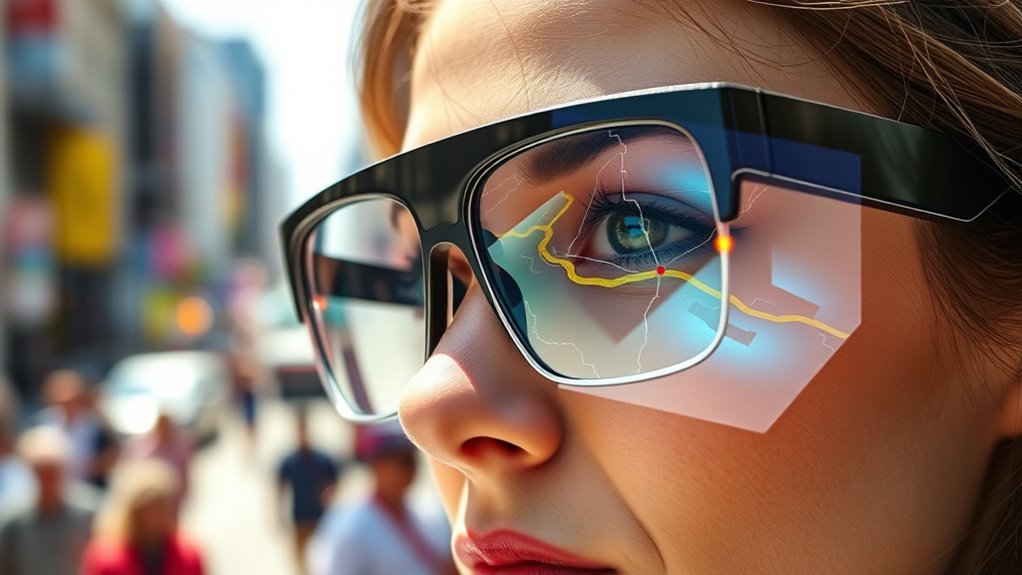

AR displays in smart glasses enhance guidance by projecting real-time, hands-free information directly into your field of vision. This technology improves spatial awareness, making it easier for you to explore unfamiliar environments without getting lost. With contextual details about landmarks and surroundings, you gain confidence while guiding. Additionally, seamless integration with GPS and other sensors allows for precise directions. There’s a lot more to discover about the potential of AR guidance, so keep exploring this topic!
The Evolution of Navigation Technology
The evolution of navigation technology has transformed the way we explore our surroundings, making it easier than ever to find our way. From ancient celestial navigation to today’s GPS systems, the navigation history showcases a remarkable journey fueled by technological advancements. You’ve likely relied on maps, compasses, and later, smartphones to guide you. Each step forward has not only enhanced accuracy but also provided the freedom to roam without fear of getting lost. Innovations like satellite technology and real-time data have redefined your travel experiences, offering personalized routes and instant updates. As you embrace these tools, consider how they empower your exploration, allowing for spontaneity and adventure in your daily life. The future of navigation promises even more exciting possibilities.
How AR Displays Work in Smart Glasses
To understand how AR displays work in smart glasses, you need to take into account a few key components. First, the display technology itself is essential, as it determines how digital content overlays your real-world view. Additionally, sensor integration techniques and user interface design play significant roles in creating an immersive experience that feels natural and intuitive.
Display Technology Overview
While many people may think of augmented reality (AR) as merely a futuristic concept, understanding how AR displays work in smart glasses reveals a fascinating blend of technology and design. AR displays rely on high display resolution to project clear, detailed images directly onto your field of vision. This clarity is essential for overlaying digital information seamlessly onto the real world. Additionally, color accuracy plays a significant role in ensuring that the AR elements appear lifelike and blend harmoniously with your surroundings. Enhanced display technologies such as microLED and OLED contribute to vivid colors and sharp contrasts, making the experience more immersive. By mastering these technologies, smart glasses can revolutionize navigation, providing you with intuitive, on-the-go information right before your eyes.
Sensor Integration Techniques
As you explore the world of AR displays in smart glasses, understanding sensor integration techniques becomes vital for appreciating how these devices function seamlessly. At the heart of this technology is sensor fusion, which combines data from multiple sensors—like GPS, accelerometers, and cameras—to create a cohesive understanding of your environment. This data processing is essential for delivering accurate navigation information in real-time.
| Sensor Type | Purpose | Data Source |
|---|---|---|
| GPS | Location tracking | Satellite signals |
| Accelerometer | Motion detection | Device movement |
| Camera | Environmental awareness | Visual input |
With effective sensor integration, smart glasses can enhance your navigation experience, empowering you to explore freely and confidently.
User Interface Design
With a solid foundation in sensor integration, the next step is understanding how user interface design shapes the experience of AR displays in smart glasses. A well-crafted user interface enhances your overall user experience, ensuring that information appears intuitively and seamlessly within your field of vision. Designers focus on interface aesthetics, balancing functionality with visual appeal, so you can easily navigate through various features without distraction. Clear icons, straightforward gestures, and responsive controls are essential, allowing you to interact with the AR world fluidly. As you move through your environment, the interface should feel like a natural extension of your senses, empowering you to explore and discover without overwhelming complexity. Ultimately, great design offers both freedom and clarity in augmented reality.
Benefits of Using AR for Navigation
Using AR for guidance can greatly boost your spatial awareness, allowing you to easily orient yourself in unfamiliar environments. With real-time directions displayed right before your eyes, staying on track becomes intuitive and stress-free. This technology not only enhances your overall travel experience but also makes maneuvering through busy streets or complex buildings much more manageable.
Enhanced Spatial Awareness
When traversing unfamiliar environments, augmented reality (AR) can significantly enhance your spatial awareness, making it easier to find your way. By overlaying digital information onto your surroundings, AR improves your spatial perception, helping you visualize distances and navigate obstacles effortlessly. This technology empowers you to engage with the world around you, creating a seamless blend of reality and digital guidance.
| Benefits of AR for Navigation | Description |
|---|---|
| Improved Orientation | Helps you know your location |
| Contextual Information | Provides details about landmarks |
| Enhanced Depth Perception | Aids in judging distances |
| Real-World Integration | Merges navigation with environment |
| Increased Confidence | Reduces anxiety in exploration |
With AR, your journey becomes more intuitive, allowing you to roam freely and confidently.
Real-Time Directions Display
Steering in real-time becomes a breeze with AR technology, as it can provide dynamic directions that adjust to your surroundings. With smart glasses, you’re not just following a static map; you’re engaging with the world around you. Here are three key benefits of real-time updates for navigation:
- Enhanced Accuracy: AR delivers precise, visual cues that guide you seamlessly, reducing the chances of getting lost.
- Context Awareness: Directions adapt based on live traffic, weather, and road conditions, ensuring you’re always on the best path.
- Hands-Free Navigation: You can stay focused on the road while receiving guidance, promoting safety and freedom during your travels.
This innovative technology transforms your navigation experience, allowing you to explore with confidence and ease.
Real-World Applications of AR Navigation
As you navigate bustling city streets or unfamiliar trails, augmented reality (AR) navigation can transform your experience, seamlessly blending digital information with the physical world. Imagine exploring vibrant urban landscapes, where AR overlays guide you to hidden gems and historical landmarks in real-time. For tourists, AR navigation offers invaluable assistance, providing context and insights about local attractions. You can easily discover restaurants, shops, and cultural sites tailored to your preferences. With AR displays in smart glasses, you’re empowered to wander freely, enhancing your journey without the constant need to consult your phone. This technology not only enriches urban exploration but also fosters a deeper connection to your surroundings, making each adventure more engaging and memorable.
Challenges and Limitations of AR Displays
While AR displays in smart glasses hold great promise, several challenges and limitations must be addressed for widespread adoption. These display limitations can greatly impact user experience, making it vital to tackle them head-on:
- Field of View: Current AR displays often have a limited field of view, restricting the immersive experience you crave.
- Brightness and Clarity: In bright environments, visibility can diminish, making navigation difficult and frustrating.
- Battery Life: High-performance AR displays consume considerable power, leading to shorter usage times and requiring frequent recharges.
Overcoming these challenges is essential for enhancing user experience and revealing the full potential of AR navigation in smart glasses. Until then, you may find yourself yearning for a smoother, more engaging interaction with your digital surroundings.
The Future of AR Navigation in Smart Glasses
Although many challenges still exist, the future of AR navigation in smart glasses looks promising as technology continues to evolve. You’ll likely see enhancements in user experience, making navigation more intuitive and seamless. Future trends suggest that AR glasses will integrate AI to provide real-time updates and personalized routes, adapting to your preferences and surroundings. Imagine receiving contextual information about landmarks or points of interest as you walk. Additionally, advancements in battery life and display clarity will empower you to use these devices longer without interruptions. As AR technology matures, the potential for enhanced safety and convenience in navigation will revolutionize how you explore the world, granting you the freedom to navigate your environment with confidence and ease.
Frequently Asked Questions
How Do AR Smart Glasses Compare to Traditional GPS Devices?
When you compare AR smart glasses to traditional GPS devices, AR advantages include real-time navigation integration and hands-free operation. In contrast, GPS limitations often involve static displays and less immersive experiences, which can hinder your navigation freedom.
What Brands Currently Offer AR Navigation Smart Glasses?
If you’re exploring AR navigation smart glasses, check out Google Glass, Microsoft HoloLens, Vuzix Blade, Epson Moverio, and North Focals. Each brand offers unique features that could enhance your navigation experience in exciting ways.
ARe AR Displays Safe to Use While Driving?
Imagine trying to juggle while driving. AR displays can enhance navigation, but they pose driver distraction risks. Safety regulations are essential; guarantee you’re aware of laws before using them to maintain your freedom on the road.
Can AR Navigation Work Offline or Without Internet?
AR navigation can work offline, but its navigation accuracy may be limited without real-time data. You’ll find that pre-downloaded maps can enhance your experience, giving you some freedom to explore without constant internet access.
How Do AR Smart Glasses Handle Real-Time Traffic Updates?
Imagine a river flowing with live data; AR smart glasses tap into real-time integration, enhancing your user experience. They seamlessly update traffic conditions, ensuring you’re always steering smoothly, like a boat gliding through the currents.
