
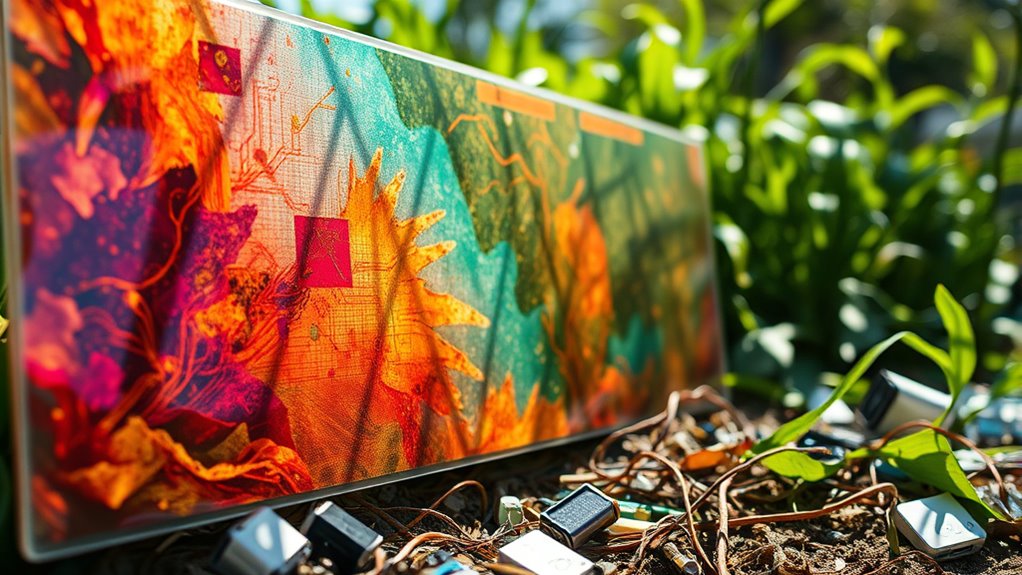

Biodegradable displays can greatly reduce e-waste by using eco-friendly materials that break down naturally, minimizing landfill overflow and harmful environmental impacts. Unlike traditional electronic devices, these displays incorporate sustainable components, promoting recycling and resource conservation. They contribute to a circular economy by reducing toxic waste, lowering carbon footprints, and aligning with sustainable practices. As innovations in this field progress, you’ll find that their potential to reshape consumer electronics is not just promising; it’s essential for a greener future.
Understanding E-Waste and Its Impact on the Environment
As technology continues to evolve rapidly, the issue of electronic waste, or e-waste, has become increasingly pressing. You might not realize that improper electronic disposal can lead to toxic substances leaching into the environment. E-waste recycling is crucial for mitigating these impacts, as it allows valuable materials to be reclaimed while reducing landfill overflow. By participating in responsible e-waste recycling programs, you’re not just protecting the planet; you’re also promoting a sustainable future. It’s important to understand that each discarded device contributes to a growing environmental crisis. By making informed choices about electronic disposal, you can help combat the negative effects of e-waste, ensuring that the freedom to innovate in technology doesn’t come at the cost of our planet’s health.
What Are Biodegradable Displays?
While traditional displays often contribute to the growing e-waste problem, biodegradable displays represent a promising innovation aimed at reducing environmental impact. These displays utilize biodegradable materials that break down naturally over time, minimizing the harmful effects associated with electronic waste. Integrating advanced display technology with eco-friendly components, they offer a sustainable alternative to conventional screens. By shifting to biodegradable displays, you’re not just adopting a new technology; you’re supporting a movement towards greener electronics. This change can greatly decrease landfill contributions and reduce pollution. It’s a proactive step for those who value environmental freedom and sustainability. Embracing biodegradable displays can lead to a future where technology meets ecological responsibility, encouraging a cleaner planet for generations to come.
How Biodegradable Displays Work
Understanding how biodegradable displays work involves examining the innovative materials and technologies that replace conventional components. These displays utilize biodegradable materials such as cellulose, starch, and other natural polymers to create screens that can decompose in a non-toxic manner. Advanced display technology integrates organic light-emitting diodes (OLEDs) and flexible substrates, enabling vibrant visuals without the environmental burden of traditional plastics. The organic compounds used not only guarantee functionality but also facilitate a faster breakdown process when disposed of properly. By harnessing these sustainable materials, manufacturers can develop displays that maintain performance while minimizing e-waste. This approach represents a significant step towards a more eco-friendly future in consumer electronics, aligning with the growing demand for responsible technological solutions.
Advantages of Using Biodegradable Displays
Using biodegradable displays offers significant advantages, particularly in reducing environmental impact. By utilizing compostable materials, you not only contribute to less e-waste but also promote resource efficiency in manufacturing processes. These innovations can transform how we approach technology and its sustainability.
Environmental Impact Reduction
As consumers become increasingly aware of environmental issues, the shift toward biodegradable displays offers a compelling solution for reducing e-waste. By utilizing eco-friendly materials, these displays align with sustainable design principles, promoting a healthier planet.
| Advantage | Description | Impact |
|---|---|---|
| Reduced Pollution | Less toxic waste in landfills | Cleaner ecosystems |
| Renewable Resources | Biodegradable components sourced sustainably | Lower carbon footprint |
| Consumer Awareness | Promotes environmentally conscious choices | Increased demand for green products |
| Innovation in Tech | Encourages development of new materials | Drives industry change |
Transitioning to biodegradable displays not only minimizes waste but also empowers you to make a positive impact by choosing products that prioritize the environment. Embrace this change for a sustainable future.
Resource Efficiency Benefits
The shift toward biodegradable displays not only addresses environmental concerns but also enhances resource efficiency in the production and disposal processes. By utilizing renewable materials, manufacturers can considerably improve resource conservation, reducing dependency on finite resources. This change encourages a circular economy, where materials are reused rather than discarded. Moreover, the manufacturing efficiency of biodegradable displays often leads to lower energy consumption during production, which ultimately decreases overall carbon emissions. You’ll find that these displays can be produced using streamlined processes that minimize waste and maximize output. As a result, embracing biodegradable technology not only supports sustainable practices but also aligns with a growing demand for products that respect both personal freedom and environmental integrity.
Compostable Material Innovations
How can compostable material innovations revolutionize the display industry? By utilizing biodegradable polymers, manufacturers can create displays that break down naturally, reducing e-waste considerably. These materials, derived from sustainable sourcing, not only lessen the environmental impact but also appeal to eco-conscious consumers who prioritize sustainability in their purchasing decisions. Imagine a world where your devices contribute to soil health rather than landfill overflow. Compostable displays could enhance brand loyalty, as companies aligning with these innovations demonstrate their commitment to environmental responsibility. As you consider your next tech purchase, remember that biodegradable displays represent an essential step towards a cleaner planet, allowing you to enjoy cutting-edge technology without compromising your values. Embrace the shift towards a sustainable future.
Current Innovations and Research in Biodegradable Technology
While many industries grapple with the escalating issue of electronic waste, recent innovations in biodegradable technology offer promising solutions. Researchers are developing biodegradable polymers that can replace traditional plastic components in displays, markedly reducing environmental impact. These sustainable materials are designed to break down naturally, unlike their conventional counterparts, which contribute to long-lasting waste. By focusing on integrating renewable resources and innovative manufacturing processes, scientists are paving the way for more eco-friendly electronics. This shift not only addresses e-waste concerns but also aligns with the growing consumer demand for sustainable products. As these technologies advance, you’ll find that the landscape of consumer electronics is changing, allowing for both functionality and environmental responsibility in your everyday devices.
The Future of Biodegradable Displays in Consumer Electronics
As you consider the future of biodegradable displays in consumer electronics, you’ll find that their potential for reducing environmental impact is significant. Innovations in materials are on the horizon, promising to enhance performance while minimizing waste. However, market adoption challenges remain, which could hinder widespread implementation despite these advancements.
Environmental Impact Reduction
Given the increasing urgency to address electronic waste, the development of biodegradable displays in consumer electronics represents a significant step toward reducing environmental impact. By integrating these displays, you’re not just opting for a product that meets your tech needs; you’re also supporting sustainable packaging initiatives and contributing to a circular economy. These displays can decompose naturally, minimizing landfill contributions and fostering a more responsible disposal cycle. Imagine a world where your gadgets not only perform well but also align with your values of sustainability. By choosing biodegradable displays, you empower innovation that prioritizes environmental health, ensuring that future generations inherit a cleaner planet. This shift isn’t just beneficial—it’s essential for a more sustainable future in consumer electronics.
Material Innovations Ahead
The future of biodegradable displays in consumer electronics is shaping up to be an exciting frontier for innovation. As manufacturers increasingly prioritize sustainable materials, you can expect to see displays made from plant-based polymers and other biodegradable substances. These advancements not only promise to reduce e-waste but also align with eco-friendly design principles that resonate with environmentally conscious consumers like you. Innovations in nanotechnology and organic electronics are paving the way for high-performance displays that maintain durability while being completely compostable. By embracing these developments, the industry is not just meeting regulatory demands but also appealing to a growing market that values sustainability. This shift represents a significant step toward a more responsible consumer electronics landscape.
Market Adoption Challenges
While the promise of biodegradable displays offers a sustainable future for consumer electronics, several market adoption challenges remain. First, market readiness is essential; manufacturers must guarantee that production processes can scale effectively without compromising quality. Additionally, the cost of these innovative materials needs to be competitive with traditional displays to gain traction. Consumer awareness also plays a significant role; educating the public on the benefits of biodegradable options can drive demand. If consumers understand how these displays can markedly reduce e-waste, they’re more likely to embrace them. Overcoming these challenges requires collaboration between manufacturers, environmental organizations, and consumers to foster a market environment conducive to sustainable choices in electronics. Your support can make all the difference in this change.
Frequently Asked Questions
What Materials Are Used in Biodegradable Displays?
When you explore biodegradable displays, you’ll find they’re made from natural polymers and eco-friendly components. These materials not only minimize environmental impact but also offer a sustainable alternative to conventional display technologies, fostering a greener future.
How Do Biodegradable Displays Affect Device Performance?
You might find it surprising that biodegradable displays can reduce e-waste by up to 30%. However, their performance implications include durability concerns, which could impact longevity and user experience compared to traditional materials.
Are Biodegradable Displays More Expensive Than Traditional Ones?
When considering cost comparison, biodegradable displays often have higher initial costs due to material innovation. However, as market trends shift towards sustainability, these prices may decrease, making them more accessible and appealing in the long run.
Can Biodegradable Displays Be Recycled After Use?
While you might hope for a simple solution, biodegradable displays aren’t typically designed for recycling. Instead, their biodegradable disposal offers a more environmentally friendly alternative, greatly reducing the adverse environmental impact associated with traditional electronic waste.
What Regulations Exist for Biodegradable Electronics?
You’ll find regulations for biodegradable electronics vary by region, often focusing on biodegradable standards and the management of electronic waste. These rules aim to guarantee safe disposal and minimal environmental impact from technology’s lifecycle.
