
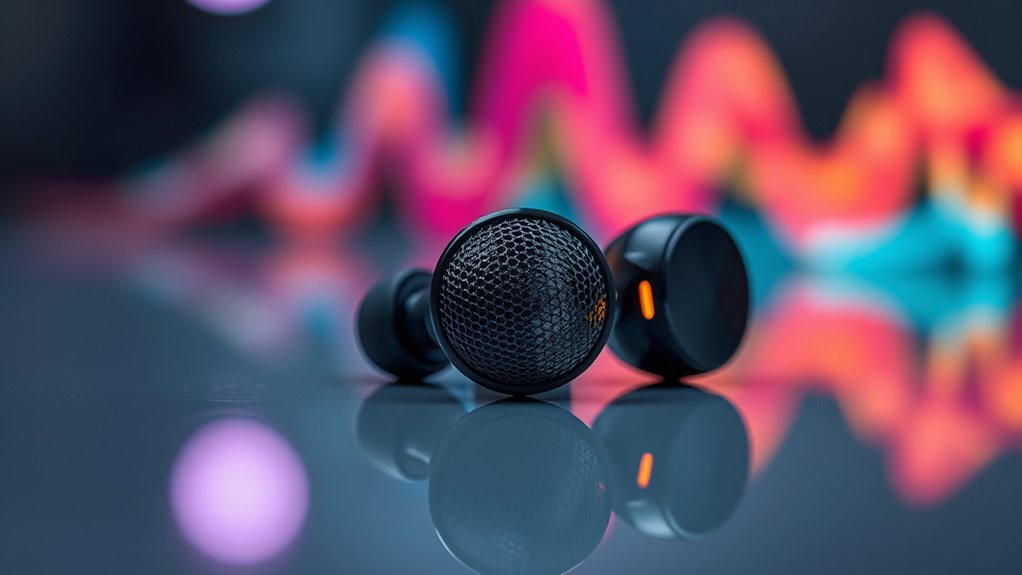

Noise-canceling earbuds use microphones to detect external sounds and sound waves to neutralize them. They employ active noise cancellation (ANC), which generates opposing sound waves to cancel out low-frequency noise, while passive noise isolation blocks noise through the earbud design. This technology enhances your listening experience by creating quieter environments for better focus and enjoyment. The interaction of sound waves is essential for effective noise cancellation. There’s much more to explore about their benefits and limitations.
The Basics of Sound and Noise
When you think about sound, it’s essential to understand that it consists of vibrations traveling through a medium, typically air. These vibrations create sound waves characterized by sound frequency, measured in Hertz (Hz). Higher frequencies correspond to higher pitches, while lower frequencies yield deeper tones. Your auditory perception is the brain’s interpretation of these frequencies, allowing you to distinguish between various sounds in your environment. This perception is vital for identifying sounds, recognizing music, or even engaging in conversations. Understanding these fundamentals of sound can empower you to appreciate the complexities of your auditory landscape. By grasping how sound works, you can better comprehend the technology that enhances or modifies these auditory experiences, such as noise-canceling earbuds.
What Is Noise Cancellation?
Noise cancellation involves two primary techniques: active noise cancellation (ANC) and passive noise isolation. ANC uses microphones and speakers to detect and counteract external sounds with opposing sound waves, while passive noise isolation relies on physical barriers to block noise. Understanding these methods will help you appreciate how noise-canceling earbuds create a more immersive listening experience.
Active Noise Cancellation
Active noise cancellation (ANC) technology employs sophisticated algorithms to detect and counteract unwanted ambient sounds. By analyzing incoming sound frequencies, these algorithms generate an “anti-noise” signal, effectively creating sound waves that are the exact opposite of the detected noise. This active noise manipulation allows you to experience a quieter environment, enhancing your auditory freedom. The earbuds use built-in microphones to continuously monitor sound, adapting in real-time to fluctuations in noise levels. The result is a seamless auditory experience, isolating you from disruptive elements in your surroundings. With ANC, you’re not just blocking sound; you’re actively redefining your listening environment, allowing you to focus more intently on what truly matters, whether that’s music, podcasts, or simply enjoying silence.
Passive Noise Isolation
Passive noise isolation refers to the physical design of earbuds that blocks external sounds without the use of electronic processes. This technique relies on a passive design that utilizes specific earbud materials to create a seal in your ear canal, effectively reducing ambient noise. Common materials include foam and silicone, which mold to your ear’s shape, enhancing comfort while increasing sound isolation. The effectiveness of passive noise isolation depends on the earbud fit and material density; the better the seal, the less intrusive background noise you’ll experience. By choosing earbuds that prioritize passive noise isolation, you gain a more immersive listening experience, allowing you the freedom to focus on your audio without interruption from the outside world.
Active vs. Passive Noise Cancellation
While you may be familiar with the general concept of noise cancellation, understanding the differences between active and passive noise cancellation can enhance your choice of earbuds. Active cancellation uses microphones and sound waves to counteract external noise, effectively neutralizing unwanted sounds. In contrast, passive isolation relies on physical barriers, such as earbud design, to block noise.
| Feature | Active Noise Cancellation | Passive Noise Isolation |
|---|---|---|
| Mechanism | Uses sound wave technology | Relies on physical barriers |
| Noise Reduction Level | High, especially for low frequencies | Moderate, varies by design |
| Battery Requirement | Requires power source | No power needed |
| Comfort | Can be less comfortable over time | Generally comfortable |
| Cost | Typically more expensive | Usually more affordable |
The Role of Microphones in Noise Canceling Earbuds
Microphones play a pivotal role in the functionality of noise canceling earbuds, particularly in active noise cancellation systems. Their primary task involves sound detection, capturing both external noise and the audio signals from within the earbuds. Effective microphone placement is essential; it must be strategically positioned to maximize the capture of ambient sounds while minimizing interference from the audio being played. Once the microphones detect unwanted sounds, the system generates an opposing sound wave, effectively canceling out the noise. This real-time analysis allows for a seamless listening experience, enabling you to enjoy your music or calls without distractions. Understanding this technology gives you greater appreciation for the intricate engineering behind noise-canceling earbuds, enhancing your auditory freedom.
How Sound Waves Interact
To understand how noise-canceling earbuds function, you need to grasp the basics of sound waves. These waves can interact through interference patterns, which play an essential role in canceling unwanted noise. By analyzing these interactions, you can see how earbuds effectively create a quieter listening environment.
Sound Wave Basics
Sound waves are fundamentally vibrations that travel through air (or other mediums) and interact with the environment. These waves possess distinct properties, including frequency, amplitude, and wavelength, which determine their behavior. For instance, higher frequency sound waves result in higher pitches, while greater amplitude equates to louder sounds. When sound waves encounter obstacles or different media, they can refract, reflect, or diffract, altering their paths and intensities. This behavior is essential in understanding how noise-canceling technology operates, as it relies on manipulating these properties to create a quieter auditory experience. By analyzing how sound waves interact with materials, you can appreciate the intricate dynamics at play in your earbuds, ultimately providing you with the freedom to enjoy your audio without distractions.
Interference Patterns Explained
Interference patterns play an essential role in understanding how sound waves interact with each other. When two or more sound waveforms meet, they can combine in ways that amplify or cancel out sounds. Here’s what you need to know:
- Constructive Interference: This occurs when waveforms align, enhancing the sound amplitude.
- Destructive Interference: Here, opposing waveforms cancel each other, reducing sound intensity.
- Complex Interactions: Real-world scenarios often involve multiple waves, creating intricate interference patterns.
The Technology Behind Active Noise Cancellation
While many people enjoy the benefits of active noise cancellation (ANC) in earbuds, understanding the underlying technology can enhance your appreciation of its effectiveness. ANC uses a feedback loop to continuously monitor ambient sound frequencies. By employing built-in microphones, these earbuds capture external noise, analyzing its sound frequency in real time. The system then generates sound waves that are phase-inverted, effectively creating a counteracting wave. This destructive interference cancels out unwanted noise, allowing you to enjoy your audio experience without distractions. The precision of the feedback loop guarantees that ANC adapts to varying sound frequencies, maintaining noise reduction even in dynamic environments. This technology empowers you to reclaim your auditory freedom, immersing you in your chosen soundscape.
Benefits of Using Noise Canceling Earbuds
The advantages of using noise canceling earbuds extend beyond mere sound isolation. These devices enhance your listening experience while fostering a more productive environment. Here are three key benefits:
- Improved Focus: By reducing background noise, you can concentrate better on tasks, whether you’re working, studying, or simply enjoying music.
- Enhanced Listening: Noise canceling technology allows you to hear subtleties in audio that you might miss otherwise, enriching your overall experience.
- Stress Reduction: By blocking out distractions, you create a personal oasis, which can lead to lower stress levels and a more enjoyable day.
Incorporating noise canceling earbuds into your routine can elevate your auditory experience and empower you to reclaim your focus amidst the chaos of everyday life.
Limitations of Noise Canceling Technology
Though noise canceling technology offers significant advantages, it isn’t without its limitations. One major issue is the limitations in effectiveness, as these earbuds perform best against low-frequency sounds while struggling with higher frequencies. Environmental interference, such as wind or sudden loud noises, can also disrupt their performance, reducing their efficacy. Additionally, you’ll find that many models rely heavily on battery power, leading to battery dependency that can limit usage time. Finally, to achieve noise cancellation, manufacturers often make sound quality trade-offs, resulting in less clarity or bass response compared to traditional earbuds. Understanding these constraints is essential for making informed choices about whether noise canceling technology meets your specific needs for auditory freedom.
Tips for Choosing the Right Noise Canceling Earbuds
How can you guarantee that you’re selecting the right noise canceling earbuds for your needs? It’s essential to take into account a few key factors that align with your lifestyle and preferences.
- Earbud Features: Look for models with adjustable noise cancellation levels to suit different environments.
- Sound Quality: Make sure they deliver clear audio, as this is critical for an immersive listening experience.
- Comfort and Fit: Choose earbuds that come with various tips to guarantee comfort during extended use.
Additionally, budget considerations are significant. While premium models often provide superior features, there are many affordable options that still deliver effective noise cancellation. Prioritize your needs and make an informed decision to enhance your audio freedom.
Frequently Asked Questions
Can Noise Canceling Earbuds Cause Hearing Damage?
Yes, noise canceling earbuds can pose a risk to hearing safety if used at high volumes for extended periods. Always prioritize sound quality and keep the volume at a safe level to protect your hearing.
How Long Do the Batteries Last in Noise Canceling Earbuds?
The battery life in noise-canceling earbuds typically ranges from 4 to 30 hours, depending on usage. You’ve got various charging options, ensuring your musical freedom persists without interruption during long journeys or daily commutes.
Are Noise Canceling Earbuds Suitable for All Environments?
Noise canceling earbuds aren’t always suitable for all environments. In urban environments, they excel at blocking distractions, while in office settings, they may hinder awareness of important sounds, limiting your freedom to engage with colleagues.
How Do I Maintain My Noise Canceling Earbuds?
To maintain your noise canceling earbuds, regularly clean them with a soft, dry cloth and avoid moisture. For battery care, charge them properly and avoid extreme temperatures to prolong their lifespan and performance.
Can I Use Noise Canceling Earbuds While Exercising?
You can use noise canceling earbuds while exercising, but be cautious. Sound isolation can enhance focus, yet it may compromise exercise safety. Balance your rhythm with awareness, ensuring freedom alongside vigilance in your environment.
