
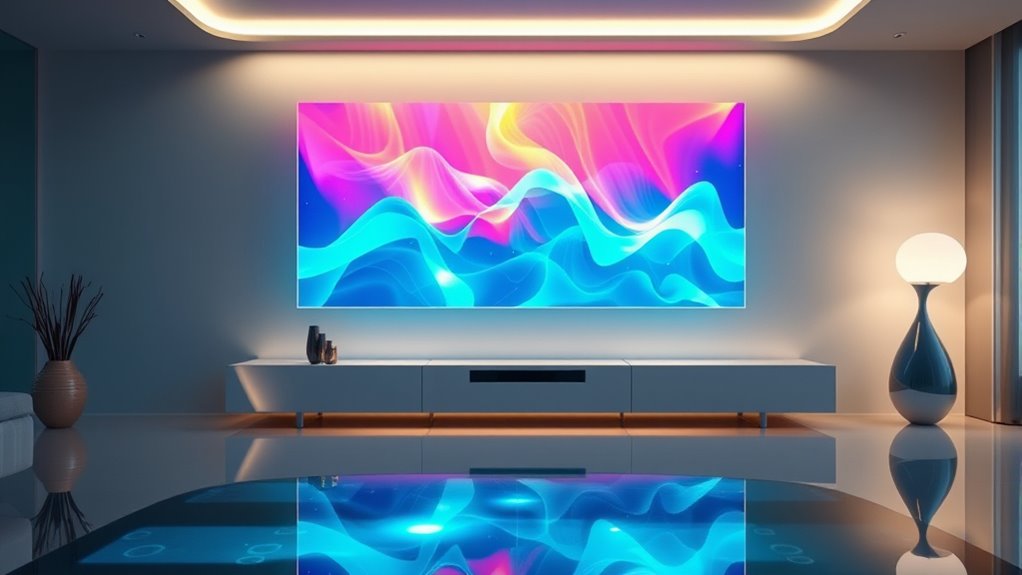

In the next decade, you’ll see liquid crystal displays (LCDs) evolve through enhanced color accuracy and deeper contrast ratios, enriching your visual experiences. Energy efficiency will improve, with innovations promoting sustainability and recyclability. Expect flexible and foldable technologies that adapt to your lifestyle, combined with interactive features for seamless, multi-user experiences. Wearable and augmented reality displays will become lighter and more integrated into daily life. Discover how these advancements will transform your interactions with technology.
Enhanced Color Accuracy and Contrast Ratios
As technology advances, you’ll find that enhanced color accuracy and contrast ratios have become critical factors in the evolution of liquid crystal displays (LCDs). Today’s displays aim to achieve wider color gamuts, allowing for a more extensive range of colors to be represented. This not only enriches visual experiences but also empowers users seeking true-to-life imagery. Contrast enhancement techniques further deepen blacks and brighten whites, creating a dynamic interplay that captivates viewers. By optimizing these parameters, manufacturers can fulfill the demand for high-fidelity visuals in various applications, from gaming to graphic design. Ultimately, the drive for improved color accuracy and contrast ratios reflects a broader pursuit of freedom in digital expression, enabling users to see and create without compromise.
Energy Efficiency and Sustainability Improvements
While consumers increasingly prioritize high-quality visuals, the demand for energy efficiency and sustainability in liquid crystal displays (LCDs) has also gained momentum. Innovations are emerging that integrate solar power technologies into LCDs, allowing screens to harness energy from the sun. Additionally, manufacturers are focusing on utilizing recycling materials, reducing waste and lowering the environmental impact of production.
| Feature | Current Technology | Future Innovations |
|---|---|---|
| Energy Source | Standard Power | Solar Power |
| Material Usage | New Materials | Recycling Materials |
| Environmental Impact | Moderate | Low |
As you seek out displays, consider how these advancements not only enhance performance but also align with a sustainable future.
Flexible and Foldable LCD Technologies
With the rapid advancements in display technology, flexible and foldable LCDs are emerging as a game-changer in the electronics landscape. These innovations allow for bendable screens that adapt seamlessly to your lifestyle, enabling new forms and functionalities. Imagine devices that can roll up for easy transport, transforming your experience with rollable displays that fit into your pocket. The potential applications are vast, from smartphones that expand to tablets, to wearable tech that can conform to various shapes. As manufacturers refine materials and enhance durability, you’ll likely see these technologies becoming mainstream, providing you with unparalleled freedom in device design. The future of displays promises not only versatility but also a more personalized interaction with technology.
Integration of Touch and Interactive Features
The evolution of flexible and foldable LCDs paves the way for integrating touch and interactive features that redefine user engagement. As you interact with these displays, you’ll notice enhanced gesture recognition and multi-touch capabilities, allowing for a more intuitive experience. This integration empowers you to manipulate content seamlessly, whether you’re pinching to zoom or swiping through images. The potential for multi-user interactions also emerges, transforming personal devices into collaborative tools. Additionally, the combination of flexible technology with advanced touch sensitivity means you can enjoy a smooth and responsive interface, regardless of the display’s orientation. In this decade, expect these developments to not only enhance functionality but also foster deeper connections between users and their devices.
Advances in Wearable and Augmented Reality Displays
As advances in display technology continue to surge, wearable and augmented reality (AR) displays are becoming increasingly sophisticated, offering immersive experiences that blend the digital and physical worlds. Display miniaturization plays an essential role in this evolution, allowing for lighter, more compact devices that you can wear comfortably throughout your day. Coupled with sensor integration, these displays can adapt to your environment and respond to your gestures, enhancing interactivity and personalization. Imagine AR glasses that not only overlay digital information but also track your eye movement and adjust the display accordingly. This seamless fusion of technology and daily life offers unprecedented freedom, enabling you to interact with your surroundings in innovative ways. The future of AR is not just about seeing; it’s about experiencing.
Frequently Asked Questions
How Do LCDS Compare to OLEDS in Terms of Lifespan?
When considering lifespan comparison, LCDs typically outlast OLEDs, as they’re less prone to burn-in issues. However, OLEDs offer superior display durability regarding color vibrancy and contrast, making your choice depend on intended use and preferences.
What Are the Costs Associated With New LCD Technologies?
When you consider costs associated with new LCD technologies, you’ll find manufacturing expenses and technology investments can be significant. However, advancements could lead to improved efficiency and potential long-term savings, enhancing value over time.
Will LCDS Still Be Relevant in the Future?
You’ll find that LCDs will likely remain relevant due to their adaptability for future applications. Technological advancements are enhancing their capabilities, allowing them to compete with emerging display technologies while still offering reliability and cost-effectiveness.
How Do LCDS Impact Eye Health and Comfort?
LCDs can impact your eye health by causing eye strain, especially with prolonged exposure. The blue light emitted may disrupt sleep patterns and contribute to discomfort. It’s crucial to take regular breaks and use filters for relief.
What Materials Are Used in the Production of LCDS?
In producing LCDs, manufacturers use liquid crystals, polarizers, glass substrates, and color filters, creating advanced display technology. Understanding these materials helps you appreciate their role in delivering vibrant images and enhancing viewing experiences.
