
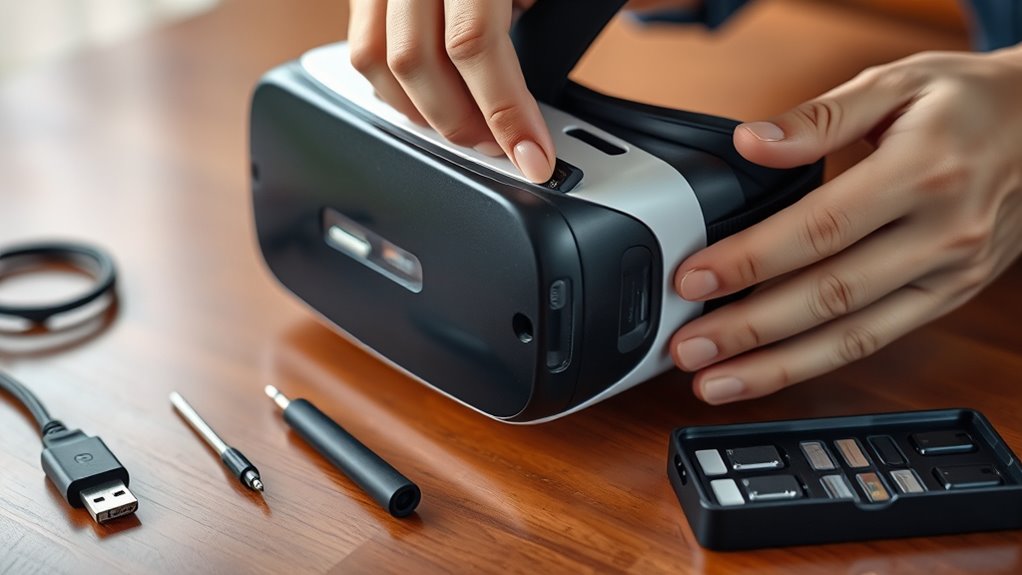

To add storage to your VR headset, consider using external hard drives, USB flash drives, or cloud storage solutions. Some headsets support SD cards, so check compatibility before buying one. You can also upgrade your headset’s internal storage if possible. Regularly manage and delete unnecessary files to free up space, and transfer files to your computer for backup. There’s more to discover about optimizing your VR storage for an enhanced gaming experience.
Understanding Your VR Headset’s Storage Limits
When you’re diving into the world of virtual reality, it’s vital to understand your headset’s storage limits, especially since running out of space can hinder your gaming experience. Each VR headset comes with a specific storage capacity, which determines how many games, apps, or experiences you can install. It’s important to check your headset compatibility with the games you want to play, as some titles may require more space than others. If you’re a frequent user, keeping an eye on your available storage helps you manage your library effectively. Regularly deleting unused apps or content can free up space, ensuring you enjoy uninterrupted gameplay. Knowing your headset’s limits empowers you to maximize your virtual adventures without frustration.
Utilizing External Storage Options
Managing your VR headset’s storage doesn’t always mean you’re limited to its built-in capacity. You can easily expand your storage with external options like external hard drives and USB flash drives. These devices offer flexibility and allow you to store more games, apps, and media, keeping your VR experience seamless.
| Storage Type | Pros | Cons |
|---|---|---|
| External Hard Drives | Large capacity, portable | Bulkier than flash drives |
| USB Flash Drives | Compact, easy to carry | Limited storage capacity |
Cloud Storage Solutions for VR Content
When it comes to expanding your VR headset’s storage, cloud solutions offer a flexible option you might want to contemplate. You’ll find various types of cloud storage, each with unique benefits that can enhance your VR experience. Plus, many popular VR cloud services are designed specifically to accommodate large content files, making it easier than ever to access your favorite VR experiences.
Types of Cloud Storage
As you explore ways to enhance your VR experience, understanding the types of cloud storage solutions available for VR content becomes essential. There are several cloud storage types to take into account. Public cloud solutions offer vast storage and accessibility but may pose some concerns regarding storage security. Private clouds provide dedicated resources, ensuring better security and privacy, though they might come at a higher cost. Hybrid clouds combine both public and private elements, giving you flexibility and control over your VR content. Always evaluate the storage security features of each option, like encryption and access controls, to keep your data safe. By choosing the right cloud storage type, you’ll enjoy a seamless and secure VR experience.
Benefits of Cloud Solutions
While exploring VR content, you’ll find that cloud storage solutions offer numerous benefits that can greatly enhance your experience. One of the key cloud advantages is the storage flexibility they provide. You won’t have to worry about running out of space on your headset, as you can easily expand your storage capacity by uploading your content to the cloud. This means you can access your favorite VR experiences anytime, anywhere, without the hassle of managing physical storage. Plus, cloud solutions often come with automatic backups, ensuring your valuable content is safe and secure. With the freedom to store and access your VR content effortlessly, you’ll focus more on enjoying immersive experiences and less on storage limitations.
Popular VR Cloud Services
With the advantages of cloud storage in mind, several popular VR cloud services can help you manage your content effectively. Services like Google Drive, Dropbox, and OneDrive offer user-friendly interfaces and seamless integration with VR platforms. When you explore cloud service comparisons, you’ll find that each has unique features catering to different needs. Google Drive provides generous storage options, while Dropbox excels in file-sharing capabilities. It’s crucial to evaluate subscription pricing, as it can vary considerably between services. Many platforms offer free tiers, but for extensive VR content storage, premium subscriptions may be necessary. Ultimately, choosing the right service will empower you to access and enjoy your VR experiences anywhere, anytime, without worrying about storage limitations.
Managing and Deleting Unnecessary Files
Managing the files on your VR headset is essential for optimizing performance and freeing up storage space. By keeping your file organization in check, you can guarantee a smoother experience. Here are some tips for managing and deleting unnecessary files:
- Regularly review your downloaded games and apps.
- Delete any outdated or unused content.
- Clear cache files to reclaim space.
- Organize your files into folders for easy access.
- Use cloud storage solutions for backup, if available.
Transferring Files to Your Computer
Transferring files from your VR headset to your computer can be a straightforward process, especially when you want to back up games or save space. Start by connecting your headset to your computer using a USB cable. Once connected, your headset should appear as an external drive. You can then browse through the file organization to find the content you want to transfer. Keep in mind that different formats may require conversion, so check if specific files need to be adjusted before moving. After selecting the desired files, simply drag and drop them onto your computer. This way, you free up space on your headset while ensuring your favorite games and experiences are safely backed up. Enjoy your newfound flexibility!
Using SD Cards With Compatible Headsets
If your VR headset supports SD cards, you can greatly expand your storage options. You’ll need to check which headset models are compatible and choose the right card that meets the specifications. Once you’ve got everything, the installation process is straightforward and can enhance your VR experience.
Compatible Headset Models
When it comes to expanding your VR headset’s storage, not all models are created equal. To guarantee you’re picking the right headset, you’ll want to perform a compatibility check. Here are some popular headset models that support SD cards:
- Oculus Quest 2
- HTC Vive Pro
- Valve Index
- Samsung Odyssey+
- PlayStation VR (with modifications)
Before you plunge in, make sure to verify that your chosen headset supports external storage options. This way, you won’t face any surprises down the road. Knowing which headset models work with SD cards gives you the freedom to enjoy a wider array of content without worrying about limited space. Happy gaming!
Choosing the Right Card
Choosing the right SD card for your VR headset can greatly enhance your gaming experience. First, consider the speed class of the card. A higher speed class guarantees quicker data transfer, which is vital for smooth gameplay. Look for cards rated UHS-I or UHS-II, as they offer faster speeds that cater to the demands of VR applications.
Next, think about storage capacity. Depending on your usage, you might want a card with at least 64GB, but if you’re a heavy user with numerous games and apps, a 128GB or 256GB card could be ideal. Balancing speed and capacity will not only improve performance but also give you the freedom to store more content for your immersive adventures.
Installation Process Explained
Installing an SD card in your VR headset is a simple process that can greatly boost your storage capacity. Here’s how to do it effectively:
- Check headset compatibility: Verify your headset supports external SD cards.
- Gather installation tools: You may need a small screwdriver or tweezers, depending on your headset.
- Power off your headset: Always turn it off before starting the installation.
- Locate the SD card slot: This is usually found on the side or bottom of the headset.
- Insert the SD card: Gently push it into the slot until it clicks into place.
Upgrading Internal Storage (If Applicable)
Although many VR headsets come with limited internal storage, upgrading it can greatly enhance your experience by allowing for more games and applications. If you’re considering internal upgrades, check your headset’s specifications for compatible storage options. Here’s a quick comparison of common upgrade choices:
| Storage Type | Capacity | Compatibility |
|---|---|---|
| SSD | 1TB | Oculus Quest 2 |
| MicroSD Card | 512GB | HTC Vive Pro |
| NVMe Drive | 2TB | Valve Index |
| USB Flash Drive | 256GB | PlayStation VR |
Before proceeding, make sure you back up your data. This way, you can enjoy a more immersive experience without worrying about storage limits.
Regular Maintenance for Optimal Performance
After upgrading your headset’s storage, keeping it in top shape requires regular maintenance to assure peak performance. Here are some essential tips to make certain your VR experience stays smooth:
- Perform regular updates to the firmware and software.
- Clear out unused apps and files to free up space.
- Monitor performance regularly for any lag or glitches.
- Clean the headset lenses and sensors to enhance clarity.
- Reboot your device occasionally to refresh its system.
Frequently Asked Questions
Can I Use Multiple External Storage Devices Simultaneously?
You can’t use multiple external storage devices simultaneously due to external device limitations. Managing storage needs requires careful planning; you’ll need to switch between devices for best performance and effective simultaneous storage management.
What Types of Files Can I Store in Cloud Storage?
You can store everything from documents to videos in cloud storage! Its benefits include easy access and organization. Use folders and tags for file organization tips, ensuring you’ve got your digital life effortlessly managed!
Will Deleting Files From My Headset Affect Cloud Storage?
Deleting files from your headset won’t affect cloud storage directly. However, effective file management strategies guarantee you maintain clarity and space. Keeping what’s needed in the cloud gives you more freedom with your local storage.
How Do I Check Available Storage on My VR Headset?
About 30% of users struggle with storage management in VR headsets. To check available storage, navigate to your headset settings, find the storage section, and view the current usage and remaining space.
Are There Compatibility Issues With Third-Party Storage Devices?
Yes, there can be compatibility issues with third-party storage devices. Not all third-party formats guarantee ideal storage performance, so it’s crucial to check compatibility before purchasing to guarantee a smooth VR experience.
