
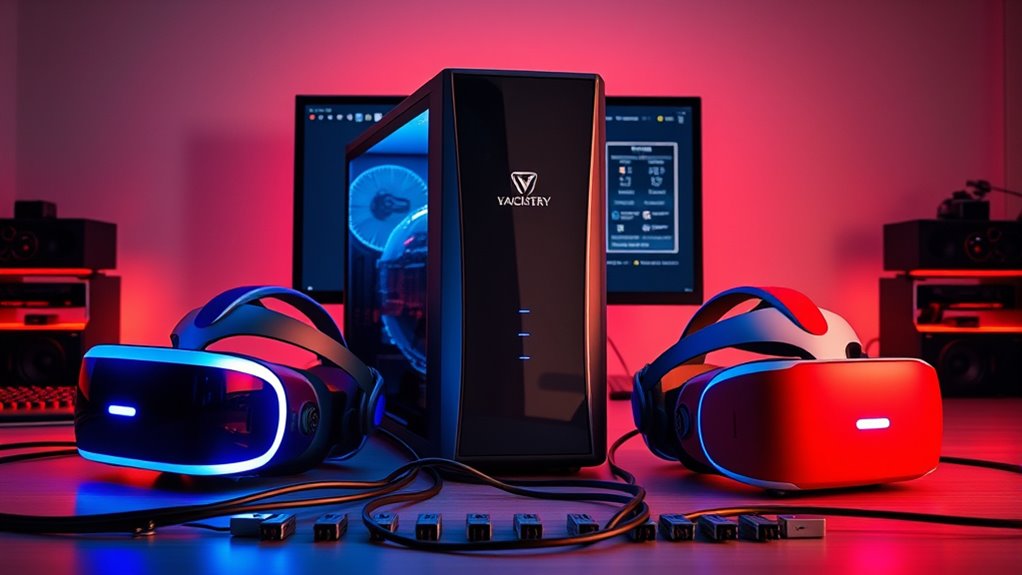

To connect two VR headsets to your PC, first, check your hardware compatibility, ensuring you have enough USB ports and a powerful GPU. Choose headsets with similar specs for less hassle. Prepare your PC by updating drivers and ensuring proper cooling. Power off both headsets, connect them sequentially to their respective ports, and power them back on. Finally, configure graphics settings and user profiles for a smooth experience. Want to know more about optimizing your setup?
Understanding the Requirements for Connecting Multiple VR Headsets
When you’re looking to connect two VR headsets to a single PC, understanding the requirements is crucial for a smooth setup. First, check the hardware compatibility of your PC. Verify it has enough USB ports and the necessary graphics capabilities to support dual headsets. Next, consider performance considerations—running two headsets simultaneously can strain your system. You’ll want a powerful GPU and sufficient RAM to handle the additional load. Make sure your PC’s cooling system is up to par, as increased performance can lead to overheating. Finally, keep your software updated to guarantee compatibility with both headsets. By addressing these factors, you’ll create an ideal environment for an immersive VR experience without sacrificing performance.
Choosing Compatible VR Headsets
With your PC prepared for multiple VR headsets, the next step is selecting compatible devices. Start by considering compatibility factors like the headset’s resolution, refresh rate, and tracking technology. You want to make certain that both headsets can function seamlessly together without compromising performance. Look for headset options that share similar specifications, which can minimize issues. It’s also crucial to check software compatibility; platforms like SteamVR support various headsets, but not all might work together. Research user experiences to find models known for their interoperability. Finally, keep an eye on the latest updates and community forums, as compatibility can evolve over time. Choosing wisely will enhance your VR experience and provide the freedom to explore virtual worlds together.
Preparing Your PC for Dual VR Headsets
Preparing your PC for dual VR headsets involves a few essential steps to guarantee peak performance. First, check the system requirements for both headsets, ensuring your PC meets or exceeds them. This includes having a powerful GPU, sufficient RAM, and a fast processor. Next, assess your hardware compatibility. Make sure your USB ports and HDMI/DisplayPort connections can accommodate both headsets simultaneously. You might need additional adapters or a powered USB hub to support multiple devices. Additionally, keep your graphics drivers updated for maximum performance. Finally, consider your PC’s cooling system, as running dual headsets can increase heat output. By following these steps, you’ll set the stage for an exhilarating VR experience.
Connecting the VR Headsets to Your PC
To successfully connect two VR headsets to your PC, start by ensuring that both devices are powered off. Next, check the VR headset compatibility with your PC, as not all headsets work together seamlessly. Connect the first headset to a USB port that can handle its data requirements. For the second headset, you may need to manage USB bandwidth effectively—consider using a powered USB hub if your PC’s ports are limited. Once both headsets are plugged in, power them on. Verify that your PC recognizes each headset; you might need to update drivers or software. With everything connected, you’re ready for an immersive experience, allowing you to fully explore the potential of dual VR headsets.
Configuring Software Settings for Multi-User Experience
To create a smooth multi-user experience with your VR headsets, you’ll need to adjust your VR software settings properly. This involves fine-tuning options to accommodate both users and synchronizing their profiles for seamless interaction. Let’s explore how to set everything up for maximum enjoyment.
Adjusting VR Software Settings
Configuring VR software settings for a multi-user experience can enhance your gaming or interactive environment markedly. Start by adjusting graphics settings to balance visual quality and performance. Lowering resolution or disabling certain effects can help maintain smooth gameplay, especially when two headsets are in use. Next, optimize performance by ensuring your PC meets the recommended specifications for both headsets. Close unnecessary background applications to free up resources. You might also want to adjust the refresh rate and latency settings for each headset, ensuring both users have a comfortable experience. Finally, regularly update your VR software and drivers; this can greatly improve compatibility and performance. With these adjustments, you’ll create a more enjoyable and immersive multi-user VR experience.
Synchronizing User Profiles
While each user’s experience in VR can be unique, synchronizing user profiles is essential for a seamless multi-user setup. Proper user synchronization guarantees everyone gets the most out of their VR sessions. Here’s how to configure your software settings effectively:
- Create individual user profiles for each player, allowing personalized settings and experiences.
- Adjust graphical settings to match each user’s hardware preferences, ensuring peak performance.
- Set up unique control schemes so everyone feels comfortable steering through the virtual environment.
- Sync progress and achievements, allowing users to share their milestones and enjoy a collective journey.
Troubleshooting Common Issues
When connecting two VR headsets to a PC, you might encounter a few common issues that can disrupt your experience. First, check for common connectivity issues, like loose cables or incorrect USB ports. Confirm both headsets are properly recognized by your system. If you’re troubleshooting audio problems, verify that your audio settings are configured for both headsets.
Here’s a quick reference table to help:
| Issue | Solution |
|---|---|
| Headset not detected | Check connections |
| Audio not working | Adjust sound settings |
| Lag or stuttering | Lower graphics settings |
| Incompatible software | Update drivers/software |
Exploring Multi-User VR Experiences
Multi-user VR experiences can transform how you interact with friends or colleagues in virtual spaces, offering a sense of presence and collaboration. Setting up your system for multiple headsets requires specific configuration steps, but the rewards are well worth the effort. Let’s explore the benefits and the setup process to enhance your shared VR adventures.
Benefits of Multi-User VR
As you immerse yourself in the world of virtual reality, experiencing it with others can greatly enhance the fun and engagement. Multi-user VR offers unique benefits that elevate your adventures. Here are a few ways it enriches your experience:
- Social Interaction: Connect with friends or family in a virtual space, deepening your bonds.
- Shared Experiences: Explore breathtaking environments or tackle challenges together, creating lasting memories.
- Teamwork: Collaborate on tasks or games, improving communication and camaraderie.
- Competitiveness: Engage in friendly competition, pushing each other to achieve new heights.
Setup and Configuration Steps
To plunge into the exciting world of multi-user VR, you’ll need to set up and configure your system properly. Start by ensuring both VR headsets are compatible with your PC and each other. Check for software compatibility; you want to use platforms that support multiple users seamlessly. Next, establish wireless connections for each headset, as this will enhance your experience and reduce clutter. Configure your VR software to recognize both headsets, allowing them to operate simultaneously. Adjust settings for peak performance, ensuring each user has a clear view and comfort. Finally, test your setup with a multiplayer experience to confirm everything’s working smoothly. Enjoy exploring virtual worlds together!
Frequently Asked Questions
Can I Use Different Brands of VR Headsets Together?
You can use different brands of VR headsets together, but cross brand compatibility may be limited. Ensuring proper headset synchronization is essential for a seamless experience, so check compatibility before attempting to connect them.
Will Connecting Two VR Headsets Affect Performance?
“Too many cooks spoil the broth.” Connecting two VR headsets can impact performance, depending on your hardware requirements. Make sure your PC meets the demands; otherwise, you might experience lag or reduced quality during use.
Do I Need Additional USB Ports for Two Headsets?
Yes, you’ll likely need additional USB ports for two headsets. USB hub solutions can help, but make certain they’re compatible with your VR headsets. Check your system’s capabilities to avoid performance issues during use.
How Do I Switch Between Users on the Same PC?
Switching between users? Easy! Just select the user profile from your user accounts list. It’s almost like a game, isn’t it? Yet, you’ll still need to log in each time. Freedom’s so close!
Can I Play the Same Game on Both Headsets Simultaneously?
Yes, you can play the same game on both headsets simultaneously, provided the game supports multi-user functionality. This creates an exciting shared gaming experience, letting you and your friend enjoy virtual adventures together.
