
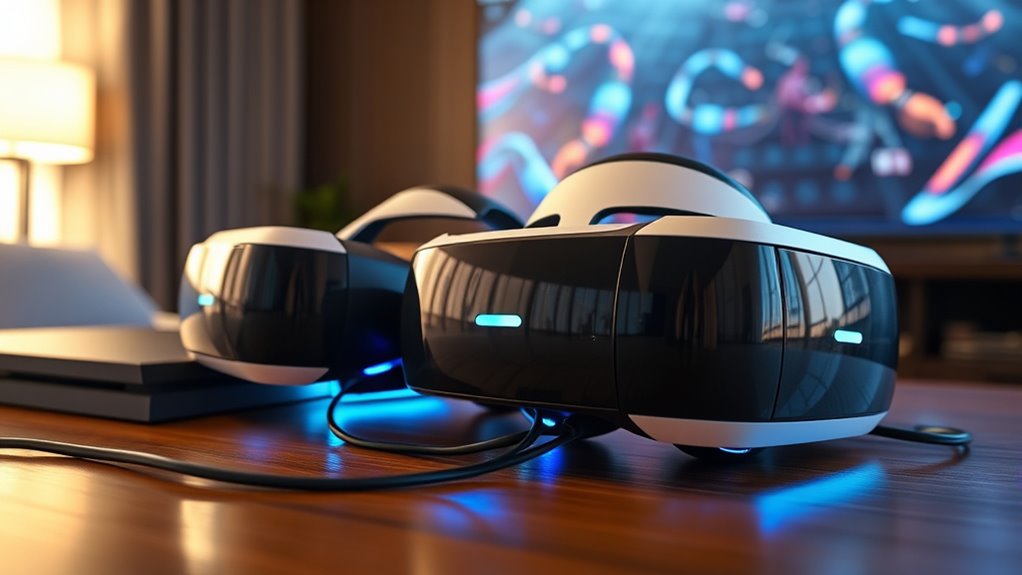

To connect two VR headsets to your PS4 for multiplayer, start by ensuring your PS4 model is compatible and create a clear play area of at least 7 feet by 7 feet for each player. Connect the first headset to the processor unit, then link it to the PS4. Repeat the process for the second headset. Calibrate audio settings for balance and clarity. With the right setup, you can elevate your gaming experience together—discover tips to optimize your sessions further.
Understanding the Requirements for Dual VR Setup
When considering a dual VR setup for your PS4, it’s important to understand the requirements that make this possible. First, you’ll need to guarantee your headsets meet the dual headset specifications, which typically include compatible models and updated firmware. Not all VR headsets can work concurrently, so check their compatibility. Next, consider your gaming environment; sufficient space is essential for smooth multiplayer gaming dynamics. You’ll want to confirm that both players can move freely without interference. Additionally, stable internet connectivity is critical for online multiplayer experiences. By addressing these requirements, you’ll create an immersive environment that allows you and a friend to enjoy thrilling VR adventures together, enhancing your gaming sessions and providing a sense of freedom in your virtual explorations.
Preparing Your PlayStation 4 for Two Headsets
Before you start connecting two VR headsets to your PS4, it’s essential to check your console’s compatibility to guarantee it can handle the setup. Don’t forget to update your system software, as having the latest version can greatly enhance performance and stability. Taking these steps will set a solid foundation for your dual VR experience.
Check PS4 Compatibility
To guarantee a seamless experience with two VR headsets on your PS4, it’s essential to first verify the compatibility of your console with both devices. Start by checking your PS4 model compatibility; the original PS4, PS4 Slim, and PS4 Pro may have different capabilities. Next, explore the VR headset specifications. Not all headsets are designed to work simultaneously, so verify they can operate alongside each other. Look for any specific requirements or limitations from the manufacturers. By confirming both your PS4 model and headset specifications, you’ll pave the way for an immersive multiplayer experience. Being informed about these details will save you time and frustration, allowing you to enjoy virtual adventures without a hitch.
Update System Software
Ensuring your PS4 is up-to-date is a vital step in preparing for a dual VR headset setup. System updates not only enhance performance but also improve software compatibility, which is essential when connecting multiple devices. To check for updates, navigate to your PS4 settings, and select “System Software Update.” If an update is available, download and install it. This process can take a few minutes, but it’s worth the wait. Keeping your system current helps prevent issues like lag or connectivity problems when you and your friend immerse yourselves in virtual worlds together. By prioritizing these updates, you’re setting the stage for a seamless and immersive multiplayer experience. Remember, an updated console means a smoother adventure awaits!
Connecting the First VR Headset
Once you’ve gathered all the necessary equipment, connecting the first VR headset to your PS4 is a straightforward process that can enhance your gaming experience substantially. To guarantee everything runs smoothly, follow these steps:
- Connect the headset: Plug the connecting cables from the headset into the processor unit, ensuring they’re secure.
- Position the headset: Adjust the headset positioning for comfort, making sure it fits snugly on your head and the lenses align with your eyes.
- Link to the PS4: Finally, connect the processor unit to your PS4 using the HDMI and USB cables, and power everything on.
Setting Up the Second VR Headset
Setting up a second VR headset for your PS4 can be an exciting way to share immersive experiences with friends or family. To get started, connect the second headset to the PS4 using the same method as the first. Verify both headsets are powered on and properly linked to the console. Player positioning is essential; arrange the play area so both players can move freely without bumping into each other or the equipment. Make sure there’s enough space between the two headsets to avoid interference. Once positioned, you can plunge into multiplayer games that support dual VR setups. This setup not only enhances your gaming experience but also creates memorable moments with your fellow players. Enjoy the adventure together!
Configuring Audio Settings for Multiplayer
While you immerse yourself in multiplayer VR experiences, configuring the audio settings is essential for clear communication and an enjoyable atmosphere. Here’s how to optimize your audio for a seamless experience:
Configuring audio settings is crucial for clear communication and an immersive experience in multiplayer VR.
- Headset Calibration: Guarantee both headsets are calibrated correctly to provide balanced audio output. Follow the manufacturer’s instructions for precise adjustments.
- Audio Mixing: Adjust the in-game audio settings to prioritize voice chat over background sounds. This helps maintain focus during intense gameplay.
- Volume Levels: Set individual volume levels for each headset. This way, everyone can enjoy the game without straining to hear each other or the environment.
Choosing Compatible Games for Co-Op Play
Finding the right games for co-op play is essential when connecting two VR headsets to your PS4, as not all titles support this feature. Start by researching multiplayer game selection that emphasizes co-op gameplay mechanics, ensuring both players can engage seamlessly. Look for titles that allow shared experiences, like puzzle-solving or competitive challenges, where teamwork enhances enjoyment. Popular choices include “Keep Talking and Nobody Explodes” and “Rec Room,” which excel in creating immersive interactions. Avoid games that limit player participation or require extensive solo play. By choosing compatible games, you’ll maximize your multiplayer experience, fostering collaboration and fun. Remember, the right game can transform your gaming sessions into unforgettable adventures with friends or family.
Optimizing Your Play Area for Two Players
To fully enjoy co-op gaming with two VR headsets, optimizing your play area is key. Effective space management guarantees both players can move freely without bumping into each other or obstacles. Here’s how to set it up:
- Designate a clear play area: Confirm there’s ample room for both players to navigate. Aim for at least 7 feet by 7 feet for each player.
- Consider player positioning: Align players side by side or back to back to minimize interference. This encourages strategic gameplay while maintaining immersion.
- Remove hazards: Clear away furniture or any objects that could pose a risk during gameplay. Safety enhances the experience and lets you focus on the fun.
With these tips, you’re set for an exhilarating multiplayer VR session!
Troubleshooting Common Connectivity Issues
When connecting two VR headsets to a PS4, you might encounter some common connectivity issues that can disrupt your gaming experience. First, check for wireless interference; devices like routers and microwaves can impact your signal. Verify that your headsets are within range of the PS4 and not too close to other electronic devices. Next, confirm headset compatibility. Not all VR headsets work seamlessly with the PS4, so it’s essential to confirm that both headsets are supported. If you’re still facing issues, try restarting your PS4 or resetting the headsets. Keeping your firmware updated can also resolve unexpected connectivity problems, allowing you and your friend to plunge into an uninterrupted multiplayer adventure.
Enhancing Your Multiplayer Experience With Accessories
Enhancing your multiplayer experience with accessories can greatly elevate the fun and immersion of gaming sessions on the PS4. By incorporating the right multiplayer accessories, you can transform your gameplay into something truly spectacular. Here are three must-have items to evaluate:
- High-Quality Headsets: A quality headset not only improves communication but also deepens the immersive experience with superior sound effects.
- Motion Controllers: These enhance interaction within the game, allowing for more natural movements and engagement with your virtual environment.
- VR Camera: A VR camera captures your movements accurately, ensuring a seamless multiplayer experience that feels vibrant and alive.
Investing in these accessories can create a more engaging atmosphere, allowing you and your friends to fully enjoy the freedom of multiplayer gaming.
Frequently Asked Questions
Can I Use Different VR Headset Models Simultaneously on PS4?
You can’t use different VR headset models simultaneously on a PS4; it’s like trying to mix oil and water! Compatibility issues might arise, and headset performance may suffer, limiting your virtual adventures together.
What Happens if One Headset Loses Connection During Gameplay?
If one headset loses connection during gameplay, it disrupts the multiplayer experience, leading to connection issues. You’ll notice lag or disconnection for that player, affecting overall immersion and teamwork, so keeping both headsets synced is essential.
Is There a Limit on the Number of Players per Game?
Most multiplayer games have specific player limits, often affecting the overall experience. Too many players can lead to lag and reduced immersion, so it’s essential to know those limits for an ideal gaming experience.
Do Both Headsets Require Separate User Accounts on PS4?
You’ll need separate user accounts for both headsets, as shared accounts or guest accounts can limit functionality. Having individual accounts lets you fully enjoy multiplayer experiences without restrictions, ensuring everyone’s having a blast!
Can I Use Wireless Headsets With the VR Setup?
Yes, you can use wireless headsets with your VR setup, but make certain they have wireless compatibility. Just keep in mind that audio quality might vary, so test your options for the best immersive experience.
