
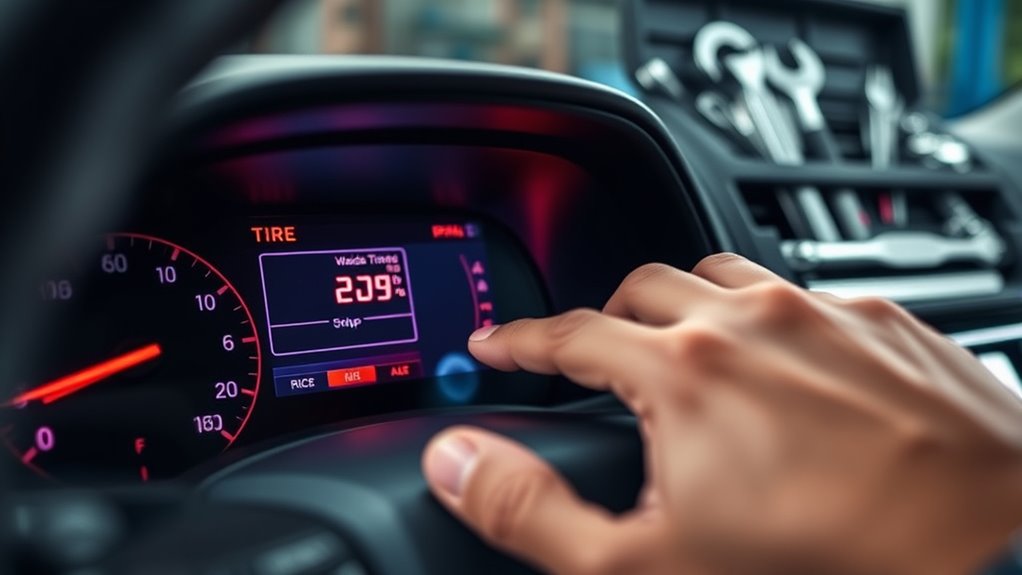

To fix your Tire Pressure Monitoring System (TPMS), start by checking the tire pressure and ensuring all tires are inflated to the recommended levels. Inspect for visible damage or slow leaks that might trigger warnings. If the TPMS light remains on, attempt to reset it by using the reset button usually found under the steering wheel. If issues persist, consider replacing a faulty sensor or seek professional help. There’s more to learn on maintaining ideal tire pressure for your vehicle’s safety.
Understanding Tire Pressure Monitoring Systems (TPMS)
When you drive, understanding how Tire Pressure Monitoring Systems (TPMS) work can help guarantee your safety and vehicle performance. TPMS is designed for tire monitoring, providing real-time data about tire pressure. It uses pressure sensors, typically located within the tire or on the valve stems, to continuously evaluate tire inflation. When pressure drops below a preset threshold, the system activates a warning light on your dashboard, alerting you to potential issues. This system functionality not only enhances safety by preventing blowouts but also improves fuel efficiency and prolongs tire life. By grasping how TPMS operates, you can make informed decisions about maintaining ideal tire conditions, ultimately allowing you to enjoy the freedom of the open road with confidence.
Common Reasons for TPMS Warnings
When you see a TPMS warning, it often indicates low tire pressure, which can compromise safety and performance. Additionally, sensor malfunctions can trigger false alerts, making it essential to verify the system’s functionality. Finally, temperature changes can affect tire pressure, causing fluctuations that might activate the warning light.
Low Tire Pressure
Although maintaining proper tire pressure is crucial for safety and performance, various factors can lead to low tire pressure warnings from your Tire Pressure Monitoring System (TPMS). Understanding these causes can help you address issues promptly:
- Temperature Changes: Fluctuations in temperature can affect tire inflation, causing pressure drops.
- Punctures: Nails or sharp objects can create slow leaks, gradually decreasing tire pressure.
- Worn Valves: Aging valves may fail, allowing air to escape.
- Incorrect Tire Installation: Improper bead seating during installation can result in air loss.
Regular pressure monitoring guarantees your tires remain sufficiently inflated, enhancing performance and safety. If you notice a TPMS warning, check your tire pressure immediately to maintain ideal driving conditions.
Sensor Malfunction Issues
After addressing low tire pressure, it’s important to take into account that TPMS warnings can also arise from sensor malfunctions. One common issue is sensor calibration; if the sensors aren’t calibrated correctly, they’ll misreport tire pressure. This often happens after tire rotation or replacement. Another frequent problem is battery failure. TPMS sensors typically have a lifespan of 5 to 10 years, and when the battery weakens, the sensor can send inaccurate readings or fail entirely. If you suspect a malfunction, check for error codes with a diagnostic tool. If needed, perform a sensor calibration or consider battery replacement to restore proper functionality. Keeping these elements in check guarantees your TPMS operates smoothly, giving you the freedom to drive confidently.
Temperature Changes Impact
As temperatures fluctuate, tire pressure can change considerably, leading to potential TPMS warnings. Understanding how these temperature changes impact your tires is essential, especially during seasonal adjustments. Here are four common reasons for TPMS alerts related to temperature:
- Pressure Drop: A decrease in temperature can lower tire pressure by about 1 PSI for every 10°F drop.
- Pressure Increase: Conversely, warmer temperatures can raise tire pressure, potentially exceeding manufacturer recommendations.
- Seasonal Changes: Switching between winter and summer tires can require different inflation settings.
- Neglected Maintenance: Failing to regularly check tire pressure in response to temperature fluctuations can lead to frequent TPMS warnings.
Keeping an eye on these factors can help maintain ideal tire performance and safety.
Checking Tire Pressure: The First Step
To guarantee ideal tire performance and safety, checking tire pressure is vital. You’ll need a reliable pressure gauge to measure the PSI accurately, and it’s important to refer to your vehicle’s manual for the recommended pressure levels. Maintaining proper tire pressure not only enhances fuel efficiency but also extends tire life.
Importance of Proper Pressure
Tire pressure plays a critical role in vehicle safety and performance. Maintaining proper tire pressure not only guarantees your safety but also enhances tire longevity. When you keep your tires correctly inflated, you can expect the following benefits:
- Improved fuel efficiency: Under-inflated tires increase rolling resistance, leading to higher fuel consumption.
- Enhanced handling: Properly inflated tires provide better traction and stability, improving your vehicle’s handling.
- Reduced risk of blowouts: Correct pressure minimizes the chance of tire damage, keeping you safer on the road.
- Longer tire lifespan: Maintaining ideal pressure prevents uneven wear, prolonging the life of your tires.
Tools for Measurement
When checking your tire pressure, having the right tools is essential for ensuring accuracy and safety. You’ll need a reliable gauge, which can be either digital or manual, to measure tire pressure effectively. Digital gauges often provide precise readings and are easy to read, while manual gauges, like stick types, can be more durable. It’s also beneficial to have a tire inflator on hand, as this allows you to adjust pressure immediately after measurement. Don’t forget a valve stem tool for any necessary adjustments or repairs. Keeping these measurement tools in your vehicle means you can maintain ideal tire pressure whenever needed, enhancing both performance and safety on the road.
Recommended Pressure Levels
Maintaining ideal tire pressure is essential for vehicle performance and safety, and each tire has a recommended pressure level that should be adhered to. To guarantee you’re following tire pressure guidelines, check the following:
- Consult the Vehicle Manual: Your manual provides specific recommended pressure levels for your tires.
- Use a Reliable Gauge: Invest in a quality tire pressure gauge for accurate readings.
- Check When Cold: Measure tire pressure when tires are cold, ideally before driving.
- Adjust Regularly: Check and adjust pressure at least once a month or before long trips.
Keeping your tires at the correct pressure not only enhances safety but also improves fuel efficiency and extends tire lifespan.
Inspecting for Visible Damage or Leaks
Before diving into any repairs, it’s crucial to inspect your tire monitor system for visible damage or leaks. Performing a thorough visual inspection helps you identify potential issues before they escalate. Look for cracks, punctures, or any signs of wear on the tires and valve stems. Additionally, check for air leaks by applying soapy water to suspected areas—bubbles indicate escaping air.
Here’s a quick reference table to assist you:
| Inspection Area | Action Required |
|---|---|
| Tire Sidewalls | Check for cracks |
| Valve Stems | Inspect for leaks |
| Tire Tread | Look for punctures |
| Mounting Beads | Examine for damage |
| Overall Tire Condition | Assess for wear |
This methodical approach guarantees you stay free from unexpected tire troubles.
Resetting the TPMS Light
Although you may have addressed any visible damage or leaks, the Tire Pressure Monitoring System (TPMS) light might still remain illuminated on your dashboard. To effectively reset the TPMS light, you can follow these troubleshooting steps:
- Check Tire Pressures: Verify all tires are inflated to the recommended levels.
- Turn the Ignition On: Without starting the engine, turn the ignition to the “on” position.
- Locate the Reset Button: Often found under the steering wheel; press and hold it until the TPMS light blinks and then turns off.
- Drive the Vehicle: Sometimes, simply driving for about 10 minutes can reset the system.
These resetting methods help restore your freedom on the road by verifying accurate tire pressure readings.
Replacing a Faulty TPMS Sensor
If your TPMS light remains illuminated even after resetting, it may indicate a faulty sensor that needs replacement. There are various sensor types, including direct and indirect systems, so it’s essential to identify which one your vehicle uses. To replace a faulty sensor, start by removing the tire to access the sensor on the valve stem. Carefully detach the old sensor, ensuring not to damage the valve. Next, install the new sensor according to the manufacturer’s instructions, securing it tightly. After installation, reassemble the tire and reset the TPMS light. Finally, verify the system’s functionality by checking if the light turns off, ensuring your tire monitoring system is back in ideal condition.
When to Seek Professional Help
When should you consider seeking professional help for your tire monitor system? If you’re facing persistent issues, it’s wise to consult a professional. Here are four scenarios where professional assistance is essential:
- Warning Light Remains On: If the TPMS light stays illuminated after performing resets, it indicates deeper problems requiring diagnostic services.
- Inconsistent Readings: Erratic tire pressure readings can signal malfunctioning sensors that need expert evaluation.
- Physical Damage: If you notice visible damage to the tire or sensor, immediate professional inspection is necessary to guarantee safety.
- System Malfunctions: Unexplained system failures or errors should prompt you to seek qualified help for troubleshooting.
Don’t hesitate; addressing these issues promptly guarantees your safety and the longevity of your vehicle.
Maintaining Optimal Tire Pressure for Safety
To guarantee your safety and enhance your vehicle’s performance, maintaining ideal tire pressure is crucial. Proper tire pressure guarantees maximum contact with the road, improving handling and braking efficiency. Under-inflated tires can cause excessive wear, increased rolling resistance, and compromised safety features, while over-inflated tires may lead to a harsh ride and reduced traction. To maintain maximum tire pressure, check it at least once a month and before long trips. Use a reliable gauge and adjust according to your manufacturer’s specifications, usually found on a sticker inside the driver’s door. Remember, consistent monitoring not only extends tire life but also contributes to overall vehicle safety, guaranteeing you enjoy the freedom of the road without unnecessary risks.
Frequently Asked Questions
Can I Drive With a Malfunctioning TPMS?
You shouldn’t drive with a malfunctioning TPMS; studies show that 50% of drivers ignore TPMS warnings. Tire safety’s essential for your freedom on the road, so address any issues promptly to guarantee safe travels.
How Often Should I Check My Tire Pressure?
You should check your tire pressure at least once a month. Increased monitoring frequency is essential, especially before long trips or seasonal changes, ensuring ideal performance, safety, and fuel efficiency while enjoying your driving freedom.
Does Weather Affect TPMS Readings?
Oh, the irony! You’d think tire pressure monitors are immune to nature’s whims. However, temperature fluctuations and humidity effects can greatly distort readings, leading you to believe your tires are fine when they’re not.
Are Aftermarket TPMS Sensors Reliable?
Aftermarket TPMS sensors can be reliable, but their accuracy often varies. Some brands offer excellent performance, while others may underperform. Always choose reputable manufacturers to enhance overall aftermarket reliability and guarantee consistent sensor accuracy.
What Tools Do I Need for TPMS Maintenance?
You’ll need TPMS tools like a sensor activation tool, tire changer, and a torque wrench for sensor installation. These guarantee accurate readings and proper installation, giving you peace of mind while driving freely on the road.
