
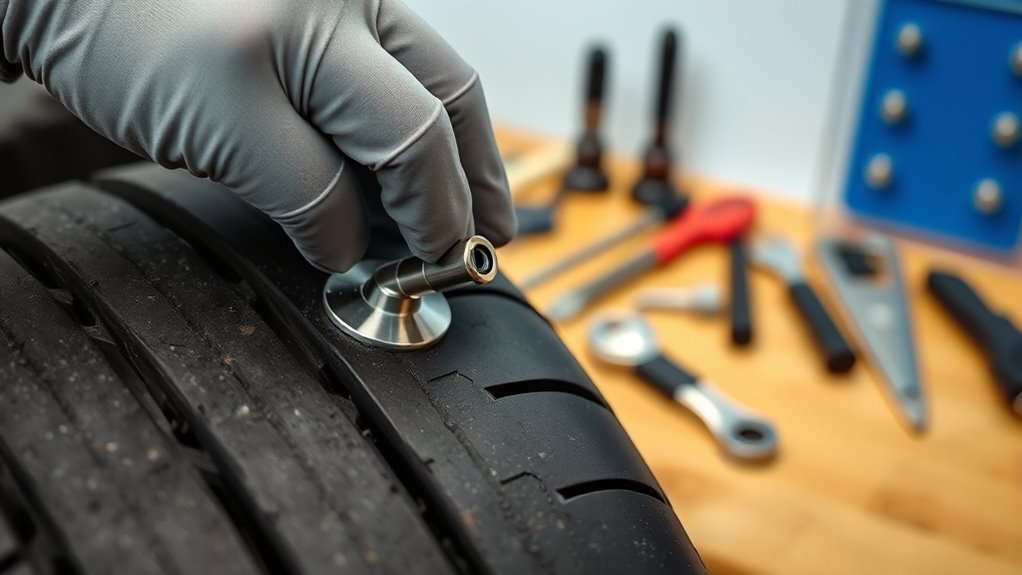

To install a tire pressure monitor sensor (TPMS), start by checking your vehicle’s specifications to choose the right sensor. Gather necessary tools like a tire pressure gauge, valve core removal tool, and a torque wrench. Remove the old sensor and securely attach the new one, ensuring a proper seal when reattaching the tire. Recalibrate the TPMS system according to your vehicle’s manual. Maintaining proper tire pressure will enhance safety and performance, with more details to follow.
Understanding TPMS and Its Importance
When you drive, you might not think about your tire pressure until a warning light appears on your dashboard, but understanding the Tire Pressure Monitoring System (TPMS) is crucial for vehicle safety and performance. TPMS functionality involves monitoring tire pressure in real-time, alerting you to any deviations from the recommended levels. This system relies on sensor accuracy to guarantee that readings reflect your tires’ true conditions. Accurate sensors help prevent under-inflation, which can lead to reduced fuel efficiency and increased tire wear. By maintaining ideal tire pressure, you not only enhance your vehicle’s handling and safety but also enjoy a more liberated driving experience. Prioritizing TPMS knowledge empowers you to take control of your vehicle’s performance and safety.
Choosing the Right TPMS for Your Vehicle
How can you guarantee that the Tire Pressure Monitoring System (TPMS) you choose is compatible with your vehicle’s specifications? Start by reviewing your vehicle model specifications. Different models may require specific sensors. You’ll also want to take into account sensor compatibility considerations, such as frequency and technology type (direct vs. indirect).
Here’s a quick reference table:
| Vehicle Model | TPMS Type | Sensor Frequency |
|---|---|---|
| 2018 Honda Accord | Direct | 433 MHz |
| 2019 Ford F-150 | Indirect | 315 MHz |
| 2020 Toyota Camry | Direct | 433 MHz |
| 2021 Nissan Altima | Direct | 315 MHz |
| 2022 Chevrolet Malibu | Indirect | 433 MHz |
Choose wisely, ensuring you’re equipped with the right sensors for peak performance.
Tools and Materials Needed for Installation
To successfully install a Tire Pressure Monitor Sensor (TPMS), you’ll need several essential tools and materials. First, make sure you have a tire pressure gauge and a valve core removal tool, as these are critical for accessing the sensor. A torque wrench will help you secure the sensor properly, maintaining sensor compatibility with your vehicle. You’ll also need a flathead screwdriver and a pair of pliers for additional assistance during installation. Don’t forget an installation checklist to track your progress and make sure you don’t miss any steps. This checklist will help you verify that all components are present and compatible, streamlining the installation process while enhancing your vehicle’s safety and performance.
Preparing Your Vehicle for Installation
Before diving into the installation of the Tire Pressure Monitor Sensor (TPMS), it’s crucial to prepare your vehicle properly. Start with a thorough vehicle inspection, focusing on the tire condition. Check for any visible damage, such as cuts or bulges, which could affect sensor performance. Confirm your tires are inflated to the recommended pressure, as this not only aids in accurate readings but also promotes overall safety. If you notice uneven wear or other issues, address them before proceeding. Additionally, gather all necessary tools and materials, making sure you have a clean workspace. Taking these steps will help guarantee a smooth installation process, allowing your new TPMS to function effectively and provide you with the freedom of reliable tire pressure monitoring.
Removing the Old Tire Pressure Monitor Sensor
Before you start removing the old tire pressure monitor sensor, gather the necessary tools, like a tire iron and a socket set. It’s essential to follow safety precautions to prevent injuries during this process. Once you’re equipped and prepared, you can proceed with the step-by-step removal.
Tools Needed for Removal
When you’re ready to remove the old Tire Pressure Monitor Sensor (TPMS), having the right tools on hand is vital for a smooth process. First, you’ll need a tire iron or lug wrench to remove the wheel. Depending on the sensor types, a flathead screwdriver or a specialized TPMS removal tool may be necessary to detach the sensor from the valve stem. A torque wrench is also recommended to guarantee proper reinstallation of the new sensor. Additionally, having a pair of gloves can help maintain grip and protect your hands during the removal techniques. With these tools at your disposal, you’ll efficiently tackle the task and prepare for the installation of your new TPMS sensor.
Safety Precautions to Follow
While removing the old Tire Pressure Monitor Sensor (TPMS), it’s important to prioritize safety to prevent injuries or damage. Start by wearing appropriate safety gear, such as gloves and safety goggles, to protect yourself from sharp objects and debris. Confirm your vehicle is securely parked and the tires are deflated before beginning the removal process. Be cautious of any residual tire pressure that may still exist. When disposing of the old tire, follow local regulations for tire disposal to promote environmentally responsible practices. Proper disposal helps avoid potential hazards and keeps your workspace clean. By taking these precautions, you’ll promote a safer and more efficient removal process. Always respect safety guidelines to maintain your freedom during DIY projects.
Step-by-Step Removal Process
To remove the old Tire Pressure Monitor Sensor (TPMS), start by carefully loosening the tire from the wheel rim. Use a tire lever to gently pry the tire away, guaranteeing you don’t damage the rim. Next, identify the sensor type—either banded or Schrader valve—before disconnecting it. If it’s a banded sensor, you’ll need to unclip the band; for a Schrader valve, simply unscrew it. Pay attention to any installation tips you’ve gathered, such as using a torque wrench to avoid over-tightening when replacing. Once the sensor is free, check for any debris or damage in the valve stem area. This guarantees a smooth installation of your new TPMS, maintaining ideal tire performance.
Installing the New Tire Pressure Monitor Sensor
To install the new tire pressure monitor sensor, you’ll need specific tools to guarantee a proper fit. Follow this step-by-step installation guide for a seamless process. Let’s get started by gathering your tools and preparing for installation.
Tools Required for Installation
Installing a Tire Pressure Monitor Sensor (TPMS) requires specific tools to guarantee a successful and efficient process. Knowing the right tools for the job is essential, especially when dealing with various sensor types and ensuring proper pressure calibration. Here’s a handy table to help you prepare:
| Tool | Purpose |
|---|---|
| TPMS Tool | To program and activate sensors |
| Tire Iron | To remove and install tires |
| Torque Wrench | To tighten bolts to specifications |
| Air Pressure Gauge | To check and calibrate tire pressure |
Having these tools on hand will streamline your installation process and help maintain the accuracy of your TPMS, ultimately providing you with the freedom of safe driving.
Step-by-Step Installation Guide
With the right tools gathered, you’re ready to proceed with the installation of your new Tire Pressure Monitor Sensor (TPMS). First, remove the tire from the wheel using a jack and lug wrench. Next, detach the old sensor, ensuring you avoid common installation mistakes like damaging the valve stem. Install the new TPMS, making sure it’s compatible with your vehicle’s system—check for sensor compatibility issues. Secure the sensor properly, then reattach the tire, and lower the vehicle. Finally, reset the TPMS using your vehicle’s onboard system or a TPMS tool. After installation, monitor the tire pressure to confirm the sensor operates correctly. This meticulous approach guarantees accurate readings and enhances your driving experience.
Reattaching the Tire and Ensuring Proper Seal
Reattaching the tire after installing the tire pressure monitor sensor requires careful attention to detail to verify a proper seal. Follow these steps to make sure everything’s correctly positioned:
- Align the tire bead with the rim, ensuring it sits evenly around the entire circumference.
- Carefully insert the valve stem through the hole in the rim, making sure it doesn’t twist or pinch the sensor.
- Inflate the tire slightly to help seat the bead properly, checking for any gaps or irregularities.
- Once you’ve confirmed a snug fit, fully inflate the tire to the recommended pressure, then inspect for leaks.
Recalibrating the TPMS System
After verifying the tire is securely reattached and properly sealed, the next step involves recalibrating the Tire Pressure Monitoring System (TPMS) to confirm accurate readings. Start by following the TPMS reset procedures specific to your vehicle’s make and model, as these can vary. Typically, you’ll need to turn the ignition to the “on” position without starting the engine. Then, locate the reset button, usually found beneath the steering wheel or in the glove compartment, and hold it until the TPMS light blinks three times. This indicates successful calibration. You may also employ various sensor calibration techniques using specialized diagnostic tools. Once completed, drive for a short distance to confirm the system recognizes the new sensor data accurately.
Regular Maintenance and Monitoring Tips
To guarantee your Tire Pressure Monitoring System (TPMS) operates effectively, regular maintenance and monitoring are essential. By keeping an eye on your tire health, you secure peak performance and safety. Here are some key tips for effective tire maintenance and pressure checks:
- Check Tire Pressure Monthly: Regularly inspect your tire pressure to avoid under-inflation or over-inflation.
- Inspect Sensors: Routinely examine TPMS sensors for any signs of damage or corrosion.
- Rotate Tires: Rotate your tires every 5,000 to 7,500 miles to promote even wear.
- Replace Batteries: If your TPMS uses battery-operated sensors, replace them every five years to maintain functionality.
Implementing these practices will help extend the life of your tires and secure your safety on the road.
Frequently Asked Questions
Can I Install a TPMS Sensor Without Professional Help?
Yes, you can install a TPMS sensor without professional help, much like assembling a puzzle. Just verify the sensor’s compatibility with your vehicle, and follow DIY installation guidelines for a successful setup.
What Happens if I Ignore a Faulty TPMS Sensor?
Ignoring TPMS warnings can lead to consequences like under-inflated tires, decreased fuel efficiency, uneven tire wear, and increased risk of blowouts. A faulty sensor compromises your safety and vehicle performance, so don’t overlook it.
How Often Should I Replace My TPMS Sensors?
You should replace your TPMS sensors every five to ten years, depending on factors like usage and wear. Regular checks guarantee peak performance, granting you the freedom to drive safely and confidently without worrying about tire pressure.
Are There Different Types of TPMS Sensors?
Yes, there are different types of TPMS sensors. You’ve got active vs passive sensors and direct vs indirect systems. Active sensors transmit real-time data, while passive ones rely on existing vehicle systems for pressure information.
Will Changing Tires Affect My TPMS Sensors?
Changing tires can affect your TPMS sensors like a storm can disrupt a calm sea. During tire installation, verify sensor compatibility; otherwise, you might face warning lights or inaccurate pressure readings, limiting your driving freedom.
