
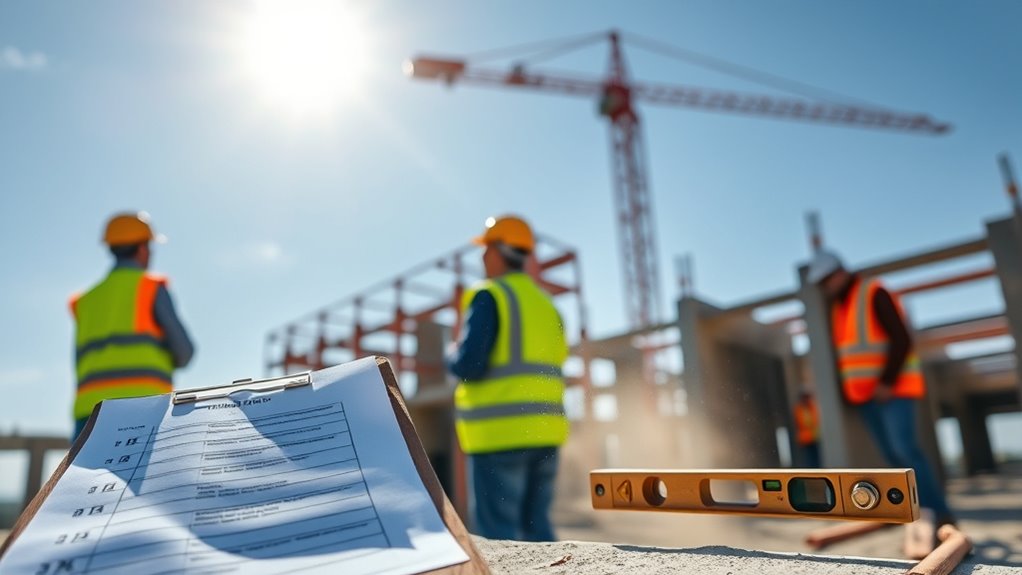

To monitor construction site quality, you should establish a quality control plan that sets clear benchmarks and compliance standards. Conduct regular site inspections and utilize checklists for consistency. Foster open communication within your teams to address issues proactively. Incorporating technology, like drones and IoT sensors, can enhance real-time monitoring. Engage third-party inspectors for unbiased assessments and encourage continuous improvement through data analysis. By adopting these strategies, you can cultivate a culture of quality awareness that drives success.
Establish a Quality Control Plan
When you establish a Quality Control Plan, you’re not just checking boxes; you’re laying the foundation for a successful construction project. This plan should define your quality benchmarks and guarantee that every phase meets compliance standards. Start by identifying specific metrics that reflect the project’s goals, such as material specifications and workmanship criteria. You’ll want to outline procedures for monitoring these quality benchmarks throughout the construction process. Regularly reviewing these standards helps you maintain control and adapt as needed, empowering your team to stay on track. By proactively addressing potential issues before they escalate, you not only uphold quality but also foster a culture of accountability and excellence on-site. This approach ultimately leads to greater freedom in managing your project effectively.
Conduct Regular Site Inspections
Conducting regular site inspections is essential for maintaining quality throughout the construction process. These inspections help you guarantee compliance with safety protocols and enhance site safety, reducing risks for everyone involved. To be effective, focus on key areas during your inspections.
| Inspection Focus | Frequency | Purpose |
|---|---|---|
| Safety Protocols | Daily | Verify adherence to safety measures |
| Quality Checks | Weekly | Assess material and workmanship quality |
| Documentation Review | Bi-weekly | Guarantee accurate records of inspections and incidents |
Implement Checklists for Consistency
To guarantee consistent quality on your construction site, implementing standardized checklists is essential. These checklists should be regularly updated to reflect current best practices and project requirements. Additionally, training site personnel effectively on these procedures will enhance overall compliance and minimize errors.
Standardize Quality Assurance Procedures
Standardizing quality assurance procedures is essential for maintaining high construction standards, as it guarantees that every team member adheres to the same benchmarks. By implementing checklists, you verify that everyone understands the quality benchmarks established for your project. This creates a consistent framework that promotes accountability and encourages process optimization. Each checklist should detail critical tasks, materials, and inspection points, allowing for thorough evaluations at every stage of construction. When everyone follows the same procedures, it minimizes errors and fosters a culture of excellence. Furthermore, standardized procedures empower your team, fostering a sense of ownership and freedom in their roles. Ultimately, this proactive approach not only enhances quality but also boosts overall project efficiency and success.
Regularly Update Checklists
While you may have established initial checklists to guide your construction quality assurance efforts, it is crucial to regularly update them to reflect any changes in project scope, materials, or industry standards. Regular checklist updates guarantee that everyone involved is aligned with the latest construction standards, promoting consistency and quality.
| Checklist Item | Frequency of Review | Responsible Party |
|---|---|---|
| Material Quality | Weekly | Site Manager |
| Safety Protocols | Bi-Weekly | Safety Officer |
| Inspection Procedures | Monthly | Quality Assurance Team |
Train Site Personnel Effectively
Effective training of site personnel is essential for maintaining construction quality, especially when implementing checklists for consistency. To guarantee everyone understands their roles, focus on site safety and effective communication. Start by introducing the checklist system, explaining its purpose and importance. Conduct hands-on sessions where personnel can practice using the checklists in real-time scenarios. Encourage questions and discussions to foster a culture of openness and empowerment.
Regularly assess their understanding and performance, offering constructive feedback. This not only builds confidence but also reinforces the value of their contributions to quality control. By prioritizing training, you create a knowledgeable workforce that’s aligned with your quality standards, ultimately enhancing project outcomes and promoting a safe, efficient work environment.
Foster Open Communication Among Teams
Open communication among teams is essential for maintaining quality on a construction site, as it helps identify potential issues before they escalate. By fostering an environment of transparency, you encourage team collaboration, where everyone feels comfortable sharing insights and concerns. Establishing regular feedback loops can enhance this process; it allows team members to voice their thoughts on ongoing tasks and address any discrepancies early on. When communication flows freely, you’re more likely to spot inconsistencies in quality standards and make timely adjustments. Additionally, it empowers your teams, giving them a sense of ownership over their work. Remember, an open dialogue not only boosts morale but also drives accountability, ultimately leading to a higher standard of quality on-site.
Utilize Technology for Real-Time Monitoring
In today’s construction landscape, leveraging technology like drones and IoT sensors can greatly enhance your site monitoring efforts. Drones provide aerial views for thorough inspections, allowing you to quickly identify potential issues, while IoT sensors continuously track environmental conditions that may affect your project. By integrating these tools, you can guarantee quality control and respond proactively to any emerging challenges.
Drones for Site Inspection
Drones have revolutionized the way construction sites are inspected, offering unprecedented access to real-time data and visuals. With advanced drone technology, you can conduct aerial surveys that provide a thorough overview of your site, identifying potential issues before they escalate. These drones capture high-resolution imagery and video, allowing you to assess progress and quality from angles that ground-based inspections can’t achieve. You’ll save time and resources while enhancing safety, as drones can reach hard-to-access areas without putting anyone at risk. By integrating this technology into your monitoring process, you’re not just keeping up with industry standards; you’re setting them. Embracing drones empowers you to maintain a high level of quality and efficiency in your construction projects.
IoT Sensors Tracking Conditions
While drones provide an aerial perspective, IoT sensors bring a different layer of insight by continuously tracking site conditions in real-time. These smart building technologies enable you to monitor environmental factors like temperature, humidity, and air quality, ensuring compliance with safety standards. By integrating IoT sensors, you gain proactive insights that help identify potential risks before they escalate, allowing for timely interventions. This level of environmental monitoring not only enhances site safety but also improves efficiency, ultimately leading to successful project outcomes. You’re not just collecting data; you’re transforming it into actionable intelligence that empowers your team to make informed decisions. Embrace IoT technology to create a responsive, adaptive construction environment that prioritizes quality and safety.
Document All Quality Control Activities
To guarantee effective quality control on a construction site, you need to meticulously document all quality control activities. This quality documentation guarantees accountability and provides a clear record for future reference. By maintaining thorough inspection logs, you not only track compliance but also identify areas for improvement. Here are key aspects to include:
Effective quality control in construction relies on meticulous documentation to ensure accountability and track compliance for future improvements.
- Daily inspection logs detailing findings and actions taken
- Records of materials received, including certifications and test results
- Documentation of non-conformance reports and corrective actions
- Regular review meetings to discuss quality issues and updates
Train Workers on Quality Standards
Training your workers on quality standards is essential for maintaining high construction site performance. By focusing on ongoing skill development, you guarantee that your team stays updated on best practices and industry standards. This proactive approach not only enhances their capabilities but also directly impacts the quality of the projects you deliver.
Importance of Quality Training
Quality standards in construction aren’t just guidelines; they’re vital benchmarks that directly influence the integrity of a project. To achieve high-quality outcomes, effective training programs are imperative. They empower your workforce, guaranteeing everyone understands the importance of quality certifications and how to meet those standards.
Consider these key aspects of quality training:
- Consistency: Guarantees all workers apply the same standards, minimizing errors.
- Accountability: Trains workers to take ownership of their roles in maintaining quality.
- Skill Enhancement: Elevates the overall skill set, fostering a culture of excellence.
- Compliance: Keeps your team updated on regulations, reducing legal risks.
Incorporating these elements into your training programs not only enhances quality but also promotes a more liberated, confident workforce.
Ongoing Skill Development
While maintaining high-quality standards is essential for any construction project, ongoing skill development guarantees that your team stays equipped to meet those demands. Prioritizing skill enhancement through regular training sessions fosters an environment of continuous improvement. By offering workshops and certifications, you empower your workers to refine their techniques and adapt to evolving quality standards.
Encouraging professional development not only boosts morale but also enhances productivity and reduces costly errors. Track progress and provide feedback, ensuring each worker understands their role in maintaining quality. Remember, investing in your team’s growth isn’t just about compliance; it’s about cultivating a culture of excellence. A skilled workforce will confidently embrace challenges, ultimately leading to superior project outcomes and greater freedom in achieving your construction goals.
Engage Third-Party Inspectors
Engaging third-party inspectors can greatly enhance the reliability of your construction site quality assessments. By employing independent professionals, you guarantee an unbiased evaluation of your project. Here are some key considerations when choosing inspectors:
- Third-party credentials: Verify their certifications and affiliations with recognized organizations.
- Inspector qualifications: Ascertain they have relevant experience in your specific type of construction.
- Transparent processes: Choose inspectors who provide clear methodologies for their assessments.
- Communication skills: Look for professionals who can articulate findings effectively to your team.
Utilizing third-party inspectors not only bolsters your project’s credibility but also instills confidence among stakeholders. Take proactive steps to engage qualified inspectors, and you’ll be well on your way to achieving superior construction quality.
Analyze Data for Continuous Improvement
After securing the insights of third-party inspectors, the next step is to systematically analyze the data gathered throughout the construction process. Use data visualization techniques to transform complex information into easily digestible formats. This allows you to identify trends, pinpoint areas needing improvement, and make informed decisions. Establish feedback loops to guarantee that insights are continuously integrated into your processes. Regularly review this data, not just at project completion but throughout the entire construction timeline. By proactively addressing issues as they arise, you’ll foster a dynamic environment that thrives on continuous improvement. Embrace this analytical approach, and you’ll enhance quality control while empowering your team to innovate and adapt.
Encourage a Culture of Quality Awareness
To foster a culture of quality awareness on your construction site, it’s essential to create an environment where every team member understands their role in upholding standards. Implementing quality awareness initiatives and effective employee engagement programs can greatly enhance this culture. Consider the following strategies:
- Encourage open communication about quality concerns.
- Provide training focused on quality standards and best practices.
- Celebrate achievements related to quality improvements.
- Solicit feedback for continuous enhancement of processes.
Frequently Asked Questions
What Are Common Quality Control Tools Used on Construction Sites?
You’d think quality control’s all about rules, right? But it’s really just smart tools. Quality checklists and inspection tools are essential for ensuring everything’s up to par, keeping your project on track and stress-free.
How Can Subcontractors Be Held Accountable for Quality?
You can hold subcontractors accountable for quality by regularly evaluating subcontractor performance, implementing strict quality assurance protocols, and conducting thorough inspections. Clear communication of expectations and consequences fosters a commitment to maintaining high standards throughout projects.
What Is the Role of Safety in Quality Control?
Did you know that 80% of construction accidents stem from inadequate safety protocols? By prioritizing risk assessment, you guarantee safety and enhance quality control, creating an environment where workers thrive and projects succeed.
How Do Weather Conditions Affect Construction Quality Monitoring?
Weather impacts your construction quality monitoring considerably. Rain or extreme temperatures can cause delays, compromising material integrity and worker safety. You need proactive strategies to mitigate these effects and guarantee consistent quality throughout the project.
What Certifications Should Quality Control Inspectors Possess?
Quality control inspectors should possess relevant certifications, such as Certified Construction Manager (CCM) or Project Management Professional (PMP). These certification requirements guarantee inspectors have the necessary qualifications to effectively monitor and maintain construction site standards.
