
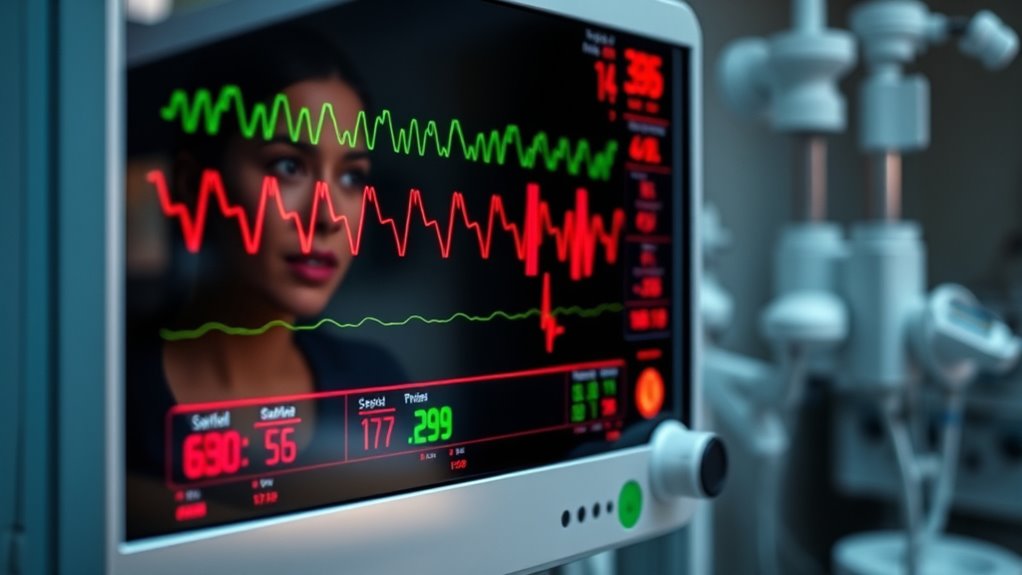

To read a monitor in a hospital, you’ll want to focus on key essential signs. Look for heart rate (60-100 beats per minute is normal), blood pressure (systolic <120 and diastolic <80 is ideal), and oxygen saturation (95%-100% is healthy). Each reading provides important insight into a patient’s health. Understanding these measurements helps you communicate effectively with healthcare professionals. There’s more to learn about interpreting these values, which can enhance your knowledge and involvement in patient care.
Understanding Vital Signs Displayed on Monitors
When you glance at a hospital monitor, you’re likely seeing an important snapshot of a patient’s health. Understanding key sign significance can empower you to grasp what’s happening. Monitors typically display heart rate, blood pressure, respiratory rate, and oxygen saturation. Each key sign reflects essential body functions, indicating how well a patient is coping. Different monitor types, such as bedside monitors or portable devices, may present these signs in varying formats, but they’re all aimed at providing real-time data. By familiarizing yourself with these displays, you can better appreciate the patient’s condition and the immediate actions that may be necessary. This knowledge not only enhances your awareness but also supports informed discussions with healthcare professionals about patient care.
Interpreting Heart Rate and Rhythm
Understanding heart rate and rhythm is essential for evaluating a patient’s cardiac function, as these parameters provide insight into their overall health status. Monitoring these metrics can help you identify potential issues. Here are four key aspects to evaluate:
Evaluating heart rate and rhythm is crucial for assessing cardiac health and identifying potential issues.
- Normal Heart Rate: A typical resting heart rate ranges from 60 to 100 beats per minute.
- Heart Rate Variability (HRV): This measures the variation between heartbeats, indicating autonomic nervous system function.
- Rhythm Abnormalities: Watch for irregularities like arrhythmias, which can signal underlying problems.
- Response to Activity: Heart rate should increase with physical activity; a lack of response may indicate an issue.
Deciphering Blood Pressure Readings
Evaluating heart rate and rhythm provides a foundation for appraising cardiovascular health, but blood pressure readings are equally important in understanding a patient’s condition. Blood pressure is measured in millimeters of mercury (mmHg) and consists of two key components: systolic pressure (the higher number) and diastolic pressure (the lower number).
| Blood Pressure Category | Systolic Pressure (mmHg) | Diastolic Pressure (mmHg) |
|---|---|---|
| Normal | Less than 120 | Less than 80 |
| Elevated | 120-129 | Less than 80 |
| Hypertension Stage 1 | 130-139 | 80-89 |
| Hypertension Stage 2 | 140 or higher | 90 or higher |
Understanding these values helps you gauge the risk of cardiovascular issues and enables timely interventions.
Monitoring Oxygen Saturation Levels
Oxygen saturation levels are important indicators of respiratory function and overall health. Monitoring these levels can provide significant insights into a patient’s condition. Here’s what you need to know about oxygen saturation and pulse oximetry:
- Normal Range: Healthy oxygen saturation typically ranges from 95% to 100%.
- Pulse Oximeter: This non-invasive device clips onto a fingertip or earlobe to measure oxygen levels.
- Symptoms of Low Levels: Watch for signs like shortness of breath, confusion, or a bluish tint to lips and fingertips.
- Intervention: If levels drop below 90%, it’s essential to seek medical attention immediately.
Understanding these aspects helps you guarantee that oxygen saturation remains ideal, promoting better health outcomes.
Communicating Effectively With Healthcare Professionals
How can you guarantee your concerns are heard when speaking with healthcare professionals? Effective patient-provider communication is key. Start by being clear and concise about your symptoms and questions. Don’t hesitate to ask for clarification if something’s unclear; this boosts your health literacy and guarantees you’re fully informed.
Here’s a quick reference table to guide your discussions:
| Tip | Explanation |
|---|---|
| Prepare Your Questions | Write down your concerns before the visit. |
| Use Clear Language | Avoid jargon; be straightforward. |
| Confirm Understanding | Restate what you’ve heard to guarantee clarity. |
Frequently Asked Questions
What Do Different Colors on the Monitor Indicate?
Red alerts usually indicate critical issues requiring immediate attention. Other colors have specific meanings too: yellow often signals caution, while green signifies normal parameters. Understanding these color meanings helps you respond effectively in urgent situations.
How Often Are Vital Signs Updated on the Monitor?
Essential sign frequencies on a monitor typically update every few minutes, though it can vary. Staying aware of these monitor updates helps you grasp your health’s rhythm, much like a heartbeat echoing freedom’s song.
Can Monitors Detect Changes in Patient Conditions?
Yes, monitors can detect changes in patient conditions. Their accuracy is vital; they provide real-time data, allowing healthcare professionals to respond swiftly to any significant alterations in a patient’s status, ensuring timely and effective care.
What Should I Do if a Monitor Alarms?
If a monitor alarms, follow patient safety protocols immediately. Assess the situation, check the patient, and guarantee all equipment’s functioning correctly. Document findings and notify the healthcare team to ensure appropriate care is provided swiftly.
Are All Hospital Monitors the Same Across Departments?
Not all hospital monitors are the same; they vary based on monitor types and department requirements. Each department tailors its monitors to specific needs, ensuring ideal patient care and accurate data monitoring across various medical settings.
