
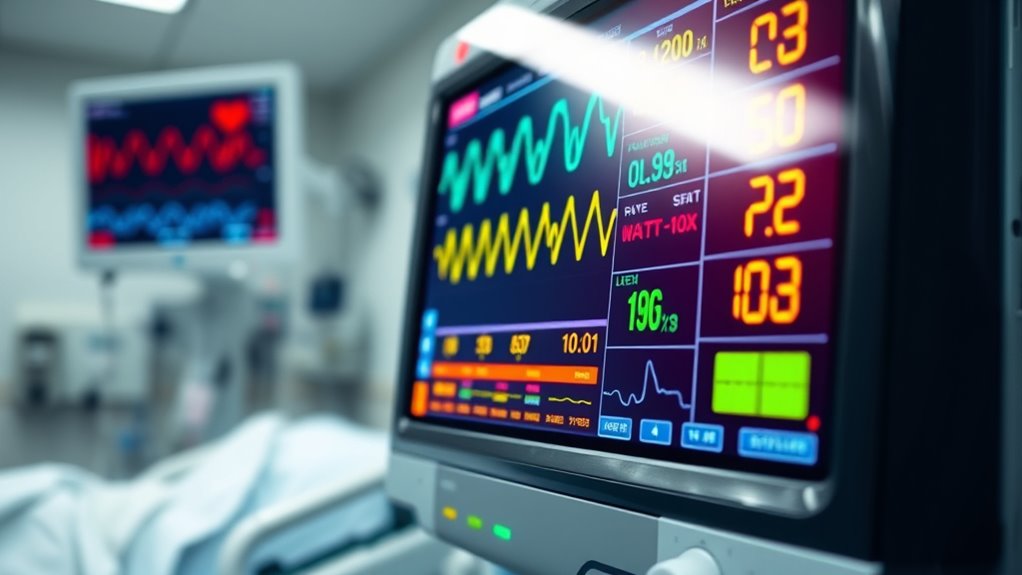

To read a hospital monitor, start by checking essential signs like heart rate, blood pressure, and oxygen saturation. Heart rate should be between 60-100 BPM, with consistent rhythms indicating stability. Blood pressure is shown as systolic/diastolic; normal is around 120/80 mmHg. Look for oxygen saturation levels, ideally between 95%-100%. Pay attention to alarm signals, as they indicate urgent medical situations. Understanding these elements can greatly improve patient care, and there’s more to uncover about each essential sign.
Understanding Vital Signs Monitored
Essential signs are the body’s essential indicators, providing important information about a patient’s health status. Understanding significant sign significance helps you grasp how well the body is functioning. Common significant signs include heart rate, blood pressure, respiratory rate, and temperature. These measurements are critical for identifying potential health issues early on.
Different monitor types, like bedside monitors and handheld devices, display significant signs in real-time. You’ll often see these monitors in hospitals, where they continuously track changes. By keeping an eye on these indicators, you can better understand a patient’s condition and respond if something’s off. This knowledge empowers you to advocate for your health and make informed decisions about treatment options.
Decoding Heart Rate and Rhythm
While monitoring a patient’s heart rate and rhythm, you’ll gain essential insights into their cardiovascular health. The heart rhythm is displayed as a waveform, showing the beats per minute (BPM). A normal rate typically ranges from 60 to 100 BPM. Keep an eye out for any irregularities; these could indicate arrhythmia. Arrhythmia detection is vital, as it can signify underlying conditions that need immediate attention. Look for patterns in the rhythm—consistent spacing often suggests a stable heart, while erratic patterns could point to potential issues. By understanding these elements, you empower yourself to recognize changes that may require medical intervention, ultimately contributing to better patient care and outcomes. Stay observant; your awareness makes a difference.
Interpreting Blood Pressure Readings
Understanding blood pressure readings is crucial in evaluating a patient’s cardiovascular health. Blood pressure is measured with two numbers: systolic (top number) and diastolic (bottom number). A normal reading typically ranges from 90/60 mmHg to 120/80 mmHg. Elevated readings can signify health issues, while low readings may indicate other concerns.
Different cuff types can affect accuracy; verify the appropriate size is used for the patient’s arm. A cuff that’s too small can result in falsely high readings, while one that’s too large may show falsely low numbers. Always monitor trends rather than isolated readings. By understanding these factors, you can better assess a patient’s condition and advocate for their health effectively.
Analyzing Oxygen Saturation Levels
Oxygen saturation levels, often represented as SpO2, are important indicators of a patient’s respiratory function. You can monitor these levels using pulse oximetry, a non-invasive method that measures the percentage of oxygen in the blood. A normal SpO2 reading typically ranges from 95% to 100%. If you see numbers below this range, it may indicate a respiratory issue, such as hypoxemia. Understanding these readings is essential; low oxygen saturation can lead to serious complications if not addressed promptly. Always remember that consistent monitoring is critical in a hospital setting. If you notice a significant drop in SpO2, it’s important to alert the medical staff immediately for further assessment and intervention. Your awareness can make a difference in patient care.
Recognizing Alarm Signals and Their Meanings
In a hospital setting, recognizing alarm signals is essential for ensuring patient safety. Monitors display various alarm types, each indicating specific issues that require your attention. For instance, a continuous beep might signal a low heart rate, while a rapid series of beeps could indicate a high blood pressure. Understanding these signals and their meanings helps you respond effectively and promptly.
When you hear an alarm, assess the situation quickly. Check the monitor for visual cues, like numbers or graphs, to determine the appropriate signal responses. Being familiar with the most common alarms can empower you to act confidently, whether notifying medical staff or assisting with patient care. Remember, timely recognition and response can make all the difference in critical situations.
Frequently Asked Questions
What Types of Monitors Are Commonly Used in Hospitals?
In hospitals, you’ll commonly find cardiac monitors and respiratory monitors. Cardiac monitors track heart activity, while respiratory monitors measure breathing patterns. Both are essential for ensuring patient safety and providing timely medical interventions.
How Often Are Vital Signs Recorded During Monitoring?
Did you know that patients in critical care often have essential signs recorded every 1 to 5 minutes? Monitoring protocols vary, but generally, essential sign frequency helps guarantee timely responses to any changes in condition.
Can Monitors Detect Changes Before Symptoms Appear?
Yes, monitors can facilitate early detection of health changes by tracking essential signs and identifying symptom indicators before you notice any symptoms. This proactive approach helps healthcare providers respond swiftly to potential issues.
What Should I Do if the Monitor Alarms?
If the monitor alarms, stay calm and quickly assess the situation. Check the patient’s condition and notify the healthcare team. Prioritize patient safety by following the established alarm response protocols to guarantee effective care.
How Can Family Members Access Monitor Information?
Family members can access monitor information through hospital staff. Ask about patient updates and monitor access options. Being involved in your loved one’s care fosters understanding and support during challenging times, enhancing everyone’s experience.
