
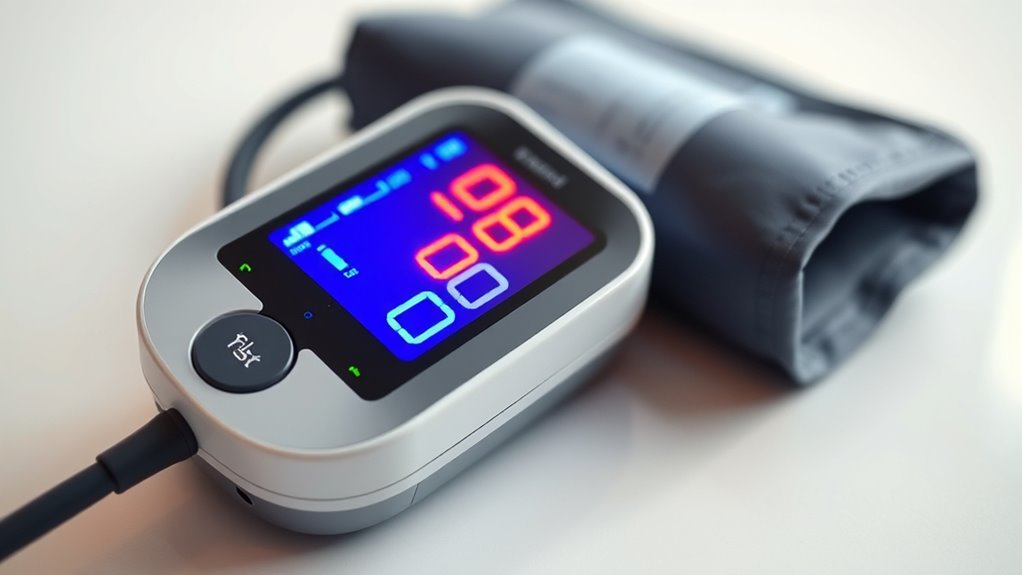

To read blood pressure readings from a monitor, look for two numbers: systolic (the higher number) measures the pressure during heartbeats, while diastolic (the lower number) measures the pressure when the heart is resting. A normal reading is around 120/80 mmHg. Make certain you’re using the correct cuff size and have the cuff positioned on your bare upper arm, relaxed and at heart level. If you’d like to explore tips for accurate measurements and tracking trends, keep going!
Understanding Blood Pressure: Systolic vs. Diastolic
When you check your blood pressure, you’ll notice two numbers: the systolic and diastolic readings. Systolic pressure is the higher number, measuring the force of blood against your arteries when your heart beats. This indicates how hard your heart is working to pump blood. Diastolic pressure, the lower number, measures the pressure in your arteries when your heart rests between beats. Both numbers are vital for understanding your cardiovascular health. A healthy blood pressure reading is typically around 120/80 mmHg, where 120 is the systolic and 80 is the diastolic. Being aware of these readings empowers you to take charge of your health and make informed decisions about your lifestyle and well-being.
How to Use a Blood Pressure Monitor
Using a blood pressure monitor correctly is crucial for accurate readings. You’ll need to choose the right device, guarantee proper cuff placement, and understand what the numbers mean. Let’s go through each of these steps to help you get reliable results.
Choosing the Right Monitor
Choosing the right blood pressure monitor is essential for accurately tracking your health. You’ve got two main types to evaluate: digital monitors and manual monitors. Each has its pros and cons, so it’s important to pick one that fits your lifestyle and preferences.
- Digital monitors: Easy to use and often come with features like memory storage and irregular heartbeat detection.
- Manual monitors: Typically more affordable and don’t rely on batteries, but they require a bit of practice to get accurate readings.
- Comfort: Verify the cuff size is suitable for your arm to get precise readings.
Whichever you choose, make certain it meets your needs and allows you to take control of your health effectively.
Proper Cuff Placement
Proper cuff placement is essential for getting accurate blood pressure readings. To start, make sure you’re using the right cuff size. A cuff that’s too small or too large can lead to incorrect measurements. Place the cuff on your bare upper arm, about an inch above the elbow crease. Your arm should be relaxed and supported at heart level—this means it shouldn’t be hanging or elevated. Keep your palm facing up for the best results. Once the cuff is in position, it should fit snugly but not too tight; you should be able to slide a fingertip underneath. Proper placement sets the stage for accurate readings, giving you the freedom to monitor your health effectively.
Understanding the Readings
Once you’ve positioned the cuff correctly, understanding the blood pressure readings becomes essential for tracking your health. The readings are typically displayed in two numbers: systolic and diastolic pressure, measured in millimeters of mercury (mmHg).
Here’s what you need to know about blood pressure terminology:
- Systolic Pressure: This is the top number, indicating the pressure in your arteries when your heart beats.
- Diastolic Pressure: The bottom number reflects the pressure when your heart rests between beats.
- Normal Range: A typical reading is around 120/80 mmHg; higher or lower values could indicate health issues.
Interpreting Blood Pressure Readings
Understanding how to interpret blood pressure readings is essential for maintaining your health, especially since these numbers can indicate underlying issues. Blood pressure categories help you identify your status, while reading anomalies may signal a need for further evaluation.
Here’s a simple table to clarify blood pressure categories:
| Category | Systolic (mm Hg) | Diastolic (mm Hg) |
|---|---|---|
| Normal | < 120 | < 80 |
| Elevated | 120-129 | < 80 |
| Hypertension Stage 1 | 130-139 | 80-89 |
| Hypertension Stage 2 | ≥ 140 | ≥ 90 |
| Hypertensive Crisis | > 180 | > 120 |
Healthy Blood Pressure Ranges
Maintaining healthy blood pressure ranges is essential for your overall well-being, as it can greatly reduce the risk of heart disease and stroke. Knowing what’s considered normal can empower you to take charge of your health.
Here are some key points to remember:
- Normal ranges usually fall between 90/60 mmHg and 120/80 mmHg.
- Hypertension stages are categorized as elevated (120-129 systolic) and various levels of high blood pressure (130 and above).
- Regular monitoring helps you identify changes early.
Tips for Accurate Blood Pressure Measurement
To guarantee you’re getting an accurate blood pressure reading, it’s crucial to follow a few simple steps before you measure. Start with a calm environment, avoiding caffeine or exercise 30 minutes prior. Sit comfortably with your back supported and feet flat on the floor.
Here’s a quick reference table for better home monitoring:
| Step | Description | Importance |
|---|---|---|
| Rest for 5 minutes | Relax before measuring | Lowers stress impact |
| Use the right cuff | Verify the cuff fits properly | Accurate readings |
| Measure at the same time | Consistency helps track changes | Better lifestyle factor analysis |
| Keep arm at heart level | Proper positioning is key | Prevents inaccuracies |
| Record readings | Note down your results | Vital for tracking |
Tracking Blood Pressure Over Time
Tracking your blood pressure over time is essential for understanding your cardiovascular health. Regular monitoring helps you identify trends and patterns that can indicate changes in your condition. By keeping a consistent record, you can make more informed decisions about your health and discuss any concerns with your healthcare provider.
Importance of Regular Monitoring
While it might seem easy to overlook, regular monitoring of your blood pressure is essential for maintaining your overall health. By keeping track of your readings, you can access several health benefits:
- Early Detection: Catch potential issues before they escalate.
- Personalized Insights: Understand how lifestyle changes impact your blood pressure.
- Empowerment: Take control of your health journey.
Aim for consistent monitoring frequency, whether daily, weekly, or monthly, depending on your needs. This practice not only helps you stay informed but also allows for better communication with your healthcare provider. By paying attention to your blood pressure, you’re investing in your well-being and making informed decisions about your health. Regular monitoring is a simple yet powerful tool for a healthier life.
Understanding Trends and Patterns
Recognizing trends and patterns in your blood pressure readings can provide valuable insights into your health. By consistently tracking your numbers, you can engage in effective trend analysis, helping you see if your blood pressure is stabilizing, rising, or falling over time. Look for patterns that emerge during specific times of day or after certain activities, as this can inform your lifestyle choices. With pattern recognition, you can identify triggers that might cause fluctuations, enabling you to make informed decisions about your diet, exercise, or stress management. Ultimately, understanding these trends empowers you to take control of your health, making adjustments as needed to maintain a balanced blood pressure level. Stay proactive and informed—it’s your health journey!
Frequently Asked Questions
What Causes Fluctuations in Blood Pressure Readings?
Fluctuations in blood pressure can be caused by stress factors like anxiety or excitement, as well as exercise impact, which temporarily raises your heart rate. Staying relaxed and consistent can help stabilize your readings.
Can Medications Affect Blood Pressure Readings?
Certain medications, like beta-blockers or diuretics, can affect your blood pressure readings. Dosage effects vary, so it’s essential to monitor how your prescriptions influence your numbers for ideal health and freedom.
How Often Should I Check My Blood Pressure?
You should check your blood pressure regularly, ideally at least once a week. Following frequency guidelines helps you monitor your health effectively. Stick to best practices for accurate readings and stay informed about your cardiovascular health.
Are There Any Foods That Influence Blood Pressure?
Imagine a tightrope walker balancing carefully. Foods like bananas and spinach, rich in potassium, help maintain your balance, while high salt intake can throw you off. Choose wisely to keep your blood pressure in check.
What Should I Do if My Readings Are Consistently High?
If your readings are consistently high, consider making lifestyle adjustments like a balanced diet and regular exercise. Incorporating stress management techniques, such as mindfulness or yoga, can also help lower your blood pressure effectively.
