
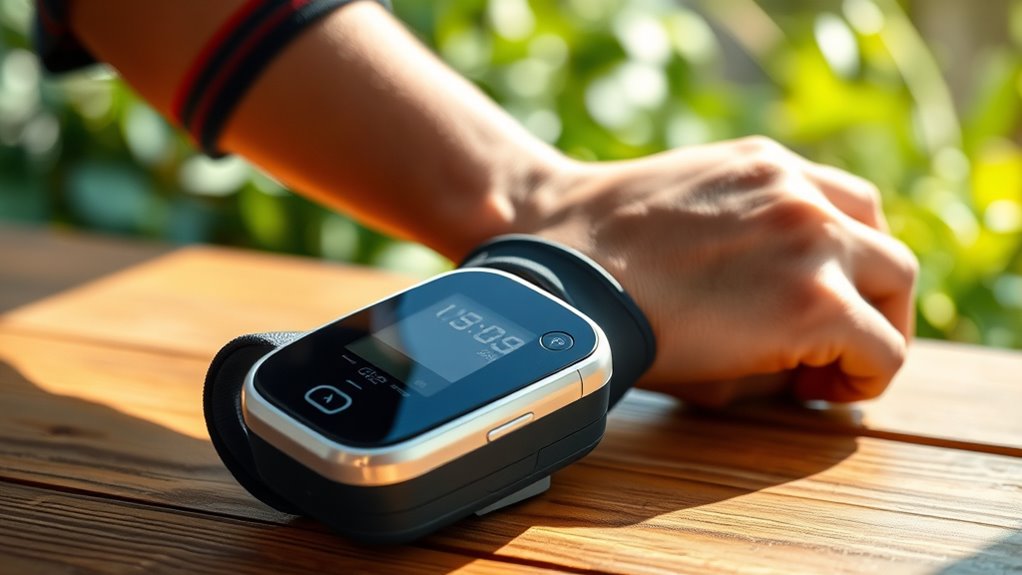

To use a wrist blood pressure monitor, first check the batteries and verify it’s calibrated. Sit quietly for five minutes, avoiding caffeine or heavy meals beforehand. Position the cuff an inch above your wrist bone, keeping your arm relaxed and at heart level. Press start and remain still during the reading. Take two more readings, waiting a minute between each. Understanding how to interpret your results is essential for managing your health effectively, and there’s more to uncover about proper techniques.
Understanding Your Wrist Blood Pressure Monitor
A wrist blood pressure monitor is a compact and convenient tool for tracking your blood pressure at home. Understanding how it works is vital for accurate readings. The device fits snugly around your wrist, where the wrist anatomy plays a key role in measurement. Proper placement guarantees that the sensor aligns with your radial artery, allowing for precise results.
Before using the monitor, it’s essential to check its calibration. An uncalibrated device can lead to misleading readings, which could affect your health decisions. Regularly calibrating your monitor according to the manufacturer’s guidelines guarantees its accuracy and reliability. By familiarizing yourself with these aspects, you empower yourself to take charge of your health and make informed decisions regarding your blood pressure management.
Preparing for Measurement
Before taking a measurement, it’s important to prepare properly to guarantee accuracy. Start with a pre measurement checklist: verify your monitor’s batteries are fresh and the device is calibrated. Sit quietly for at least five minutes in a relaxed position, as stress can skew results. Use relaxation techniques like deep breathing or visualizing a peaceful scene to calm your mind and body. Avoid caffeine, alcohol, and heavy meals for at least 30 minutes prior; these can affect your reading. Wear loose clothing that allows the monitor to fit comfortably around your wrist. By following these steps, you’ll set yourself up for a reliable measurement, empowering you to take charge of your health with confidence.
Proper Placement of the Monitor
To guarantee accurate readings, it’s important to place the blood pressure monitor correctly. Start by making sure the monitor fits snugly around your wrist, as a loose fit can lead to inaccurate results. Pay attention to your wrist alignment; the monitor should be positioned about one inch above your wrist bone.
Here are key points to remember:
- Position the monitor on the inside of your wrist.
- Keep your arm relaxed and supported at heart level.
- Avoid crossing your legs or sitting in an awkward position.
- Make sure the cuff doesn’t obstruct blood flow.
- Stay still and quiet during the reading.
Taking Your Blood Pressure Reading
Once you’ve positioned the monitor correctly, you’re ready to take your blood pressure reading. First, sit comfortably with your back supported and feet flat on the floor. Rest your arm at heart level, and make sure the cuff is snug but not too tight. Press the start button on your monitor, and stay still while it inflates. This is where proper reading techniques come into play; any movement can affect measurement accuracy. Once the reading appears, take a moment to note it down, ensuring you’re in a calm environment to avoid spikes in your results. Repeat the process two more times for consistency, and remember to wait a minute between readings for the most reliable data.
Interpreting Your Results
After you’ve taken your readings, understanding what those numbers mean is essential for managing your health. Your blood pressure results fall into various categories with specific normal ranges that indicate your cardiovascular status. Here’s how to interpret your results:
- 120/80 mmHg: Ideal, promoting excellent health
- 130-139/80-89 mmHg: Elevated, potential risk ahead
- 140-159/90-99 mmHg: Hypertension stage 1, health implications increase
- 160+/100+ mmHg: Hypertension stage 2, serious health risks
- Below 90/60 mmHg: Hypotension, could lead to dizziness
Recognizing these categories helps you take proactive steps toward better health and informs discussions with your healthcare provider about necessary lifestyle changes or treatments. Being aware means taking charge of your well-being.
Tips for Accurate Readings
To get accurate readings from your blood pressure monitor, you’ll need to pay attention to a few key factors. Proper wrist positioning, consistent measurement timing, and avoiding external factors can make a significant difference. By following these tips, you can guarantee that your readings are reliable and reflective of your true blood pressure.
Proper Wrist Positioning
Proper wrist positioning is essential for obtaining accurate blood pressure readings. When you use a wrist monitor, confirm your wrist is properly aligned to promote ideal blood flow. Follow these tips for effective wrist positioning:
- Place the monitor directly on your wrist, snug but not too tight.
- Keep your arm at heart level, resting comfortably.
- Support your elbow on a flat surface for stability.
- Position your palm facing upward to enhance circulation.
- Remain still and relaxed during the measurement.
Consistent Measurement Timing
Regularly measuring your blood pressure at the same time each day can greatly improve the accuracy of your readings. Establishing a consistent measurement frequency helps your body adapt to the routine, leading to more reliable results. By incorporating blood pressure checks into your daily routine, you eliminate variables that might skew your numbers. Choose a time when you’re relaxed, such as in the morning or evening, and stick to it. This consistency allows you to track trends over time, making it easier to spot any significant changes that may require attention. Remember, the key to effective monitoring is discipline; staying committed to your schedule empowers you to take control of your health.
Avoiding External Factors
While you may be keen to get an accurate blood pressure reading, it’s crucial to minimize external factors that could affect your results. Environmental influences and stress factors can skew your readings considerably. Here are some tips to guarantee accuracy:
- Avoid measuring after a heavy meal or caffeine intake.
- Find a quiet, comfortable space free from distractions.
- Sit quietly for a few minutes to reduce stress levels.
- Keep the room at a comfortable temperature.
- Make sure your wrist is at heart level during measurement.
Common Mistakes to Avoid
Although monitoring your blood pressure can be straightforward, there are several common mistakes that can lead to inaccurate readings. One frequent issue is improper placement of the cuff; it should be snug but not too tight. Avoid common wrist mistakes like having your arm at an incorrect angle or not keeping it still during the measurement. Incorrect measurement techniques, such as measuring after physical activity or consuming caffeine, can also skew results. Make sure you’re seated comfortably, with your back supported and feet flat on the floor. Finally, always take multiple readings at different times and average them for the most accurate assessment. By avoiding these pitfalls, you’ll gain more reliable insights into your blood pressure.
When to Consult a Healthcare Professional
When should you consider consulting a healthcare professional about your blood pressure? It’s essential to recognize signs of concern that indicate it’s time to seek help. If you’re experiencing any of the following symptoms, don’t hesitate to reach out:
- Persistent headaches that don’t go away
- Dizziness or lightheadedness, especially when standing
- Shortness of breath or chest pain
- Unexplained fatigue or weakness
- Blurred vision or sudden changes in eyesight
These signs could signal underlying health issues that need attention. Regular monitoring is important, but knowing when to consult a professional can help you maintain your well-being. Your health is your freedom, and getting expert advice is a key step in safeguarding it.
Maintaining Your Blood Pressure Monitor
To guarantee your blood pressure monitor remains accurate and reliable, it’s crucial to establish a regular maintenance routine. Start by checking the device for any physical damage or wear that could affect its performance. Regularly clean the cuff and monitor with a soft, damp cloth to maintain hygiene and longevity. Pay attention to battery care; replace batteries when you notice a drop in performance or if the low-battery indicator lights up. Always use the recommended battery type to avoid any issues. Additionally, store your monitor in a cool, dry place, away from direct sunlight, to prevent any environmental damage. With proper monitor maintenance, you can enjoy peace of mind knowing your readings are trustworthy and consistent.
Tracking Your Readings Over Time
Tracking your blood pressure readings over time is essential for understanding your health and identifying trends. By consistently monitoring your numbers, you can take charge of your well-being, setting goals and tracking progress effectively. Here are some ways to visualize your journey:
Consistent blood pressure monitoring helps you understand your health, set goals, and track your progress effectively.
- Create a dedicated journal for logging readings
- Use an app to store and graph your data
- Note lifestyle changes and their impact
- Share your results with your healthcare provider
- Celebrate milestones as you reach your goals
Frequently Asked Questions
Can Children Use a Wrist Blood Pressure Monitor?
Yes, children can use a wrist blood pressure monitor, but make certain it’s appropriate for their age and size. Monitor safety is vital; consult a pediatrician for guidance on accurate readings and proper usage.
How Often Should I Replace My Wrist Monitor?
Like a ticking clock, your wrist monitor needs timely care. Replace it every three to five years for peak accuracy, as monitor lifespan varies. Regular replacement frequency guarantees you’re always in tune with your health.
Are Wrist Monitors Less Accurate Than Arm Monitors?
Wrist monitors can be less accurate than arm monitors, especially if not used correctly. Follow measurement guidelines closely for better reliability, and consider accuracy comparison studies if you’re concerned about the precision of your readings.
What Should I Do if My Monitor Malfunctions?
If your monitor malfunctions, start troubleshooting by checking for battery replacement—about 20% of issues stem from low power. If problems persist, consult the manual or contact customer support for further assistance and solutions.
Can I Use the Monitor on Either Wrist?
You can use the monitor on either wrist, but guarantee proper wrist positioning for accurate readings. Always check the monitor’s calibration beforehand to maintain consistency and reliability in your blood pressure measurements.
