
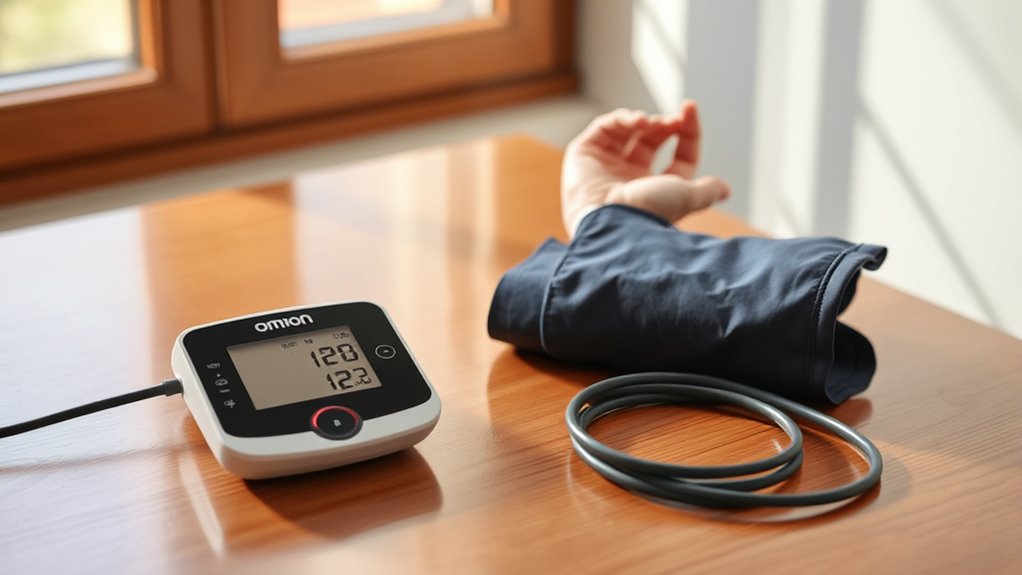

To use your Omron blood pressure monitor, start by familiarizing yourself with the device’s features and read the user manual. Find a calm space and avoid caffeine or exercise for 30 minutes prior. Verify the cuff fits snugly around your upper arm, positioned above the elbow. Keep your arm at heart level while remaining still during the measurement. Record your results consistently to monitor health trends. Want to know more tips for accurate measurements and maintenance?
Understanding Your Omron Blood Pressure Monitor
When you first unbox your Omron blood pressure monitor, it’s essential to familiarize yourself with its features and functions to guarantee accurate readings. Start by reviewing the user manual, which offers vital information on setup and operation. Take note of the monitor features, like memory storage, average reading functions, and irregular heartbeat detection. Understanding these capabilities can enhance your monitoring experience, empowering you to track your health with confidence. Make sure you’re aware of the display options and how to navigate through your results, as this will make your blood pressure management much easier. Remember, knowing your device inside and out gives you the freedom to take control of your health journey effectively. Enjoy the process of monitoring your wellness!
Preparing for Measurement
Before taking a measurement, it’s crucial to prepare properly to guarantee accurate results. Start your pre-measurement routine by finding a quiet space where you can relax. Ideally, choose a time when you’re calm and haven’t consumed caffeine or exercised for at least 30 minutes. This ideal measurement timing helps confirm your readings reflect your true blood pressure. Sit comfortably with your back supported and feet flat on the floor. Avoid talking or moving during the measurement, as this can affect the results. By following these simple steps, you’ll set yourself up for success and obtain reliable data to discuss with your healthcare provider. Remember, preparation is key to accurate blood pressure monitoring!
Proper Cuff Placement
Proper cuff placement is a vital step in ensuring accurate blood pressure readings. First, you need to choose the right cuff sizing. The cuff should fit snugly around your upper arm, typically about an inch above the elbow. If it’s too loose or too tight, your readings may not be reliable.
Next, focus on arm positioning. Sit comfortably with your back supported and feet flat on the floor. Rest your arm on a table at heart level, ensuring it’s relaxed. Avoid crossing your legs or tensing your muscles, as this can affect the results. With the cuff in place and your arm positioned correctly, you’re set for an accurate reading. Remember, proper placement sets the foundation for monitoring your health confidently!
Taking Your Blood Pressure Reading
Taking your blood pressure reading is a straightforward process that can provide essential insights into your cardiovascular health. First, make sure you’re seated comfortably and relaxed—this is key for accurate results. Choose the right measurement timing; it’s best to check your blood pressure at the same time each day, ideally when you’re not stressed. Use effective reading techniques: keep your arm supported at heart level and avoid talking during the measurement. For the Omron monitor, simply press the start button and let the device do its job. Once you’ve got your reading, take a moment to breathe and reflect on the numbers. This simple routine can empower you to take charge of your health and well-being.
Recording Your Results
Recording your blood pressure results accurately is essential for tracking your health over time. It helps you spot trends and make informed decisions with your healthcare provider. To guarantee consistency, follow some simple tips for taking measurements under the same conditions each time.
Importance of Accurate Recording
Accurate recording of your blood pressure readings is essential for effective health management. The importance of accuracy can’t be overstated, as even minor discrepancies can lead to misunderstandings about your health. When you record your results correctly, you empower yourself to monitor changes over time, making it easier to identify trends and discuss them with your healthcare provider. The impact of readings on your overall health is significant; consistent inaccuracies may result in incorrect treatment decisions. By taking the time to log your measurements precisely, you’re not just keeping track—you’re actively participating in your health journey. This commitment enables you to make informed choices, leading to better outcomes and a greater sense of control over your well-being.
Tips for Consistent Measurements
Consistent measurements are key to tracking your blood pressure effectively. To guarantee accuracy, follow these tips:
- Stick to a schedule: Measure your blood pressure at the same time each day. Consistent measurement timing helps you spot trends and changes.
- Practice relaxation techniques: Before taking a reading, spend a few minutes calming your mind. Deep breathing or light stretching can lower stress and yield more reliable results.
- Limit distractions: Choose a quiet place for your readings. Avoid phones or television to focus solely on your measurement.
Understanding Blood Pressure Readings
Blood pressure readings are essential for evaluating your cardiovascular health. Understanding these readings helps you in hypertension management and identifying blood pressure categories. Each reading consists of two numbers: systolic (top) and diastolic (bottom). Here’s a quick reference table to help you interpret your results:
| Category | Systolic (mm Hg) | Diastolic (mm Hg) |
|---|---|---|
| Normal | < 120 | < 80 |
| Elevated | 120-129 | < 80 |
| Hypertension Stage 1 | 130-139 | 80-89 |
| Hypertension Stage 2 | ≥ 140 | ≥ 90 |
| Hypertensive Crisis | > 180 | > 120 |
Tips for Accurate Measurements
To guarantee reliable measurements with your Omron blood pressure monitor, preparation is key. Follow these tips to secure accuracy:
- Stay Still: Sit comfortably with your back supported and feet flat on the floor. Avoid talking during the measurement.
- Position the Cuff Correctly: Place the cuff around your upper arm, making sure it’s at heart level. Refer to the user manuals for specific guidance.
- Use the App: If available, sync your monitor with the app for easy tracking and analysis of your readings. This can help you spot trends over time.
Maintaining Your Omron Blood Pressure Monitor
To keep your Omron blood pressure monitor in top shape, regular maintenance is key. This includes calibration checks, proper storage, and timely battery replacements. By following these simple steps, you can guarantee accurate readings and extend the life of your device.
Regular Calibration Checks
While it’s easy to overlook, regular calibration checks are essential for maintaining the accuracy of your Omron blood pressure monitor. To guarantee your device consistently delivers precise readings, follow these simple steps:
- Check Calibration Frequency: Aim for checks at least once a year or as recommended by your healthcare provider.
- Use a Reliable Reference: Compare your readings with those from a calibrated device at your doctor’s office to confirm monitoring accuracy.
- Document Your Results: Keep a record of your calibration checks, noting any discrepancies to address potential issues.
Proper Storage Practices
Storing your Omron blood pressure monitor properly is essential for ensuring its longevity and accuracy. Keep it in a cool, dry place where the ideal temperature ranges between 50°F and 104°F (10°C to 40°C). Avoid exposing it to extreme heat or cold, as this can affect its performance. Humidity control is also important; aim for a storage environment with low humidity to prevent any moisture damage. When not in use, place the monitor in its original case or a protective pouch to shield it from dust and accidental impacts. By following these simple storage practices, you’ll maintain your monitor’s accuracy and extend its lifespan, ensuring you’re always ready to check your blood pressure whenever you need to.
Battery Replacement Tips
Replacing the batteries in your Omron blood pressure monitor is essential for ensuring accurate readings and peak performance. A fresh battery helps maintain optimal battery life, so you won’t miss a beat when monitoring your health. Here are some quick tips for the replacement process:
- Use the right batteries: Check your monitor’s manual for the specific type needed.
- Power off the device: Always turn off your monitor before changing the batteries to prevent any damage.
- Replace in pairs: For the best results, replace both batteries even if one is still functioning.
Frequently Asked Questions
How Often Should I Measure My Blood Pressure?
You should measure your blood pressure at least once a week for best practices. If you’ve concerns, increasing the measurement frequency to daily can help monitor changes and guarantee your health remains a priority.
Can I Use the Monitor on My Wrist Instead?
You can use a wrist monitor, but keep in mind that wrist accuracy can vary. Compared to upper arm devices, they might not always provide consistent readings, so choose wisely for the best results.
What Should I Do if My Reading Is Unusually High?
If you get high readings, don’t panic. Check your monitor’s accuracy, relax, and retest after a few minutes. If concerns persist or you feel unwell, consult your healthcare provider for personalized advice and guidance.
Is It Safe to Use the Monitor During Pregnancy?
Like a vigilant guardian, your monitor’s safety during pregnancy hinges on following precautions. It’s generally safe, but consult your healthcare provider to guarantee you’re using it properly, safeguarding both you and your baby’s well-being.
How Do I Dispose of an Old Blood Pressure Monitor?
To dispose of an old blood pressure monitor, check local recycling options for electronic waste. Many communities offer special drop-off events or facilities, ensuring you properly recycle and reduce environmental impact. Don’t just throw it away!
