
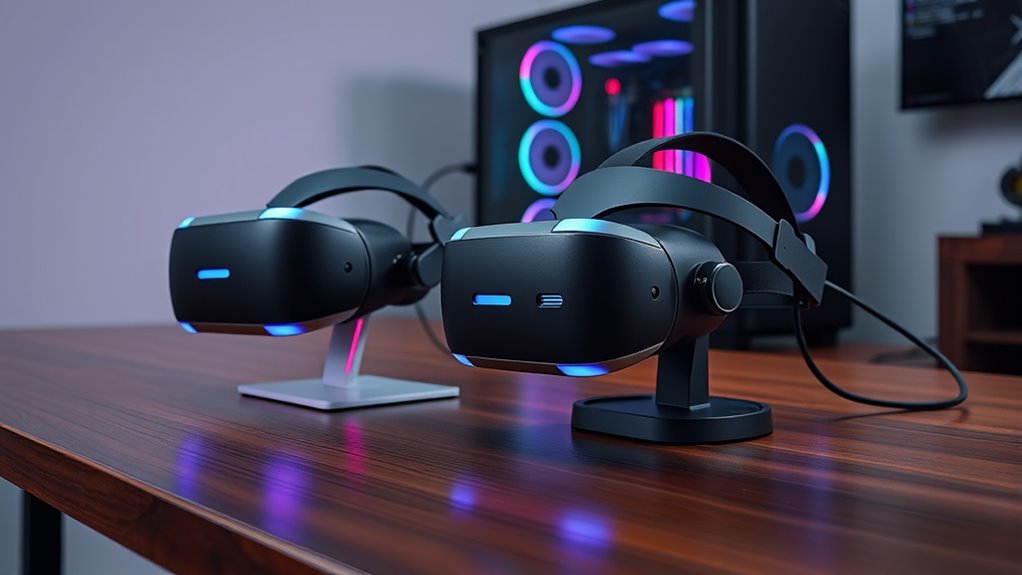

To use two VR headsets on your PC, make sure your system meets the required hardware specifications, including a powerful CPU, GPU, and at least 16GB of RAM. Install the necessary software for each headset and connect them via USB and HDMI, ensuring both devices are recognized. Adjust settings for performance and resolution, and troubleshoot common issues like loose connections. Engage in shared experiences and explore creative projects for a memorable time. There’s more to discover!
Understanding VR Headset Compatibility
When you’re diving into the world of virtual reality, understanding headset compatibility is essential, especially if you plan to use two headsets on your PC. Different VR headset types, like the Oculus Rift and HTC Vive, have unique requirements that can affect how they connect and function together. Compatibility factors include the USB ports, HDMI connections, and the graphics card capabilities of your PC. You’ll need to guarantee your system can handle the demands of both headsets simultaneously. Additionally, check for any software limitations that might restrict using multiple headsets. By grasping these elements, you can make informed choices that enhance your VR experience and allow for seamless shifts between headsets without unnecessary hiccups.
Preparing Your PC for Dual Headset Setup
Before you start connecting two VR headsets, make certain your PC is ready to handle the increased demands of a dual setup. Check your system requirements; a powerful CPU and ample RAM are essential for smooth performance. You’ll also want to verify your graphics card can manage the workloads of two headsets simultaneously.
Next, consider headset positioning—make sure your play area can accommodate both headsets without interference. Clear any obstacles, and confirm your sensors have a clear line of sight to avoid tracking issues. Finally, keep your USB ports in mind; you may need additional connections to support both headsets. With these preparations in place, you’ll be set for an immersive dual VR experience!
Required Hardware and Software
To successfully use two VR headsets on your PC, you need to guarantee your hardware meets specific requirements. You’ll also need to install the right software to manage both headsets effectively. Let’s explore the essential specifications and applications that will set you up for a seamless experience.
Compatible PC Specifications
For a seamless experience using two VR headsets on your PC, you’ll need to guarantee your hardware and software meet specific requirements. First, check the VR headset requirements for each device; they often demand powerful GPUs and CPUs. Ideally, go for at least an NVIDIA GTX 1070 or AMD equivalent, paired with a recent Intel i5 or Ryzen 5 processor. You’ll also want a minimum of 16GB of RAM and ample USB ports for connectivity. Keep in mind your PC hardware limitations; using two headsets can strain your system, so make sure your cooling and power supply are up to par. Finally, consider your operating system; Windows 10 or later is usually the best choice for compatibility with VR applications.
Necessary Software Installations
While setting up two VR headsets on your PC, you’ll need to make sure you have the right software installations in place to avoid compatibility issues. First, confirm you’ve downloaded the latest software updates for both headsets. This not only enhances performance but also resolves bugs. Next, check for driver compatibility with your graphics card and USB ports; outdated drivers can hinder your experience. You may also need to install specific VR platforms like SteamVR or Oculus software, depending on your headsets. Finally, consider using third-party applications that allow for better headset management. By confirming all software is current and compatible, you’ll set yourself up for a seamless virtual journey with both headsets.
Connecting the First VR Headset
To get started with your first VR headset, you’ll need to select a compatible model that suits your PC’s specifications. Once you’ve got your headset, install any necessary software to guarantee smooth functionality. Finally, connect the headset using the appropriate USB and HDMI ports, and you’re ready to immerse yourself in virtual reality.
Selecting Compatible Headset
Choosing a compatible VR headset is crucial for guaranteeing a smooth and enjoyable experience on your PC. Different headset brands offer various features, but it’s important to take into account compatibility factors like hardware requirements and connectivity options. Here’s a quick comparison to help you decide:
| Headset Brand | Compatibility Factors | Recommended Use |
|---|---|---|
| Oculus Rift | USB 3.0, HDMI | Gaming |
| HTC Vive | USB 3.0, DisplayPort | Immersive experiences |
| Valve Index | USB 3.0, DisplayPort | High-fidelity gaming |
| Windows Mixed Reality | USB 3.0, HDMI | Versatile applications |
Make sure to check your PC’s specs against these compatibility factors to verify your chosen headset will work seamlessly with your system. Enjoy the freedom of virtual reality!
Installing Necessary Software
Before diving into the virtual world, you’ll need to install the necessary software to connect your first VR headset. Here are three key steps to follow:
- Download the Software: Visit the manufacturer’s website and download the latest version of the VR software. Confirm you’re getting the right one for your headset model.
- Follow Installation Guides: Use the provided installation guides to guarantee a smooth setup. These guides often include important details about software updates and configurations.
- Check for Updates: Once installed, check for any software updates. Keeping your software current is essential for peak performance and new features.
Connecting via USB/HDMI
After you’ve got the necessary software installed, it’s time to connect your first VR headset to your PC. Start by plugging in the USB cable, ensuring proper USB bandwidth management. This is essential to prevent any lag or disconnection during your VR experience. Next, connect the HDMI cable, focusing on the right HDMI output configurations for your graphics card. Make sure your PC recognizes the headset; you might need to adjust settings in the software. Once everything’s connected, launch your VR platform to test the setup. If you encounter any issues, double-check your connections and settings. Now you’re ready to immerse yourself in immersive worlds with your first VR headset! Enjoy the freedom to explore!
Setting Up the Second VR Headset
Setting up a second VR headset on your PC can enhance your gaming experience and allow for shared adventures. To fully enjoy the dual headset benefits, follow these steps:
- Check Compatibility: Verify your PC meets the specifications for both headsets. This guarantees an ideal user experience.
- Connect the Headset: Use the appropriate USB and HDMI ports to connect your second headset. Make sure it’s recognized by your system.
- Update Drivers: Install the latest drivers for both headsets. This prevents any compatibility issues and guarantees smooth performance.
With everything set, you’re ready to plunge into immersive worlds, sharing the excitement with friends or fellow gamers. Enjoy your newfound freedom in virtual reality!
Configuring VR Software for Dual Use
Once both VR headsets are connected and recognized by your PC, it’s time to configure the VR software for dual use. Start by running software compatibility checks to verify both headsets can operate simultaneously without conflicts. Look for settings that allow for dual VR configuration; this often involves selecting which headset will act as the primary device. Adjust the display settings to confirm each headset has the appropriate resolution and refresh rate. You’ll also want to customize controls for each headset, allowing for a seamless experience. Don’t forget to test your setup with a few compatible apps to make sure everything runs smoothly. With the right configuration, you’re set for an immersive, shared VR adventure!
Troubleshooting Common Issues
While using two VR headsets on your PC can enhance your gaming experience, it’s not without its challenges. You might encounter headset detection issues or performance lags that can disrupt your fun. Here are some troubleshooting tips to assist you out:
- Check Connections: Verify both headsets are securely connected to your PC. Loose cables can cause detection issues.
- Update Drivers: Make sure your graphics and VR software drivers are up to date. Outdated drivers can lead to performance lag.
- Adjust Settings: Experiment with graphics settings in your VR software. Lowering the resolution may help reduce performance lag and improve headset detection.
Optimizing Performance for Multiple Headsets
After addressing common issues, it’s time to focus on optimizing the performance of your dual VR headsets. For a seamless experience, you’ll need to tweak settings and guarantee your system’s up to the task. Here’s a quick reference to enhance your dual headset configuration:
| Action | Purpose |
|---|---|
| Update Drivers | Guarantees compatibility |
| Adjust Graphics | Balances performance |
| Monitor CPU Usage | Prevents bottlenecks |
| Optimize USB Ports | Improves connection stability |
Exploring Shared VR Experiences
As you immerse yourself in the world of dual VR headsets, you’ll discover exciting opportunities for shared experiences that can elevate your gaming or social interactions. With two headsets, you can engage in collaborative experiences that make virtual worlds even more engaging. Here are three ways to enhance your shared gaming:
- Co-op Missions: Team up with friends to tackle challenges together, strategizing in real-time for a more immersive experience.
- Virtual Hangouts: Host gatherings in virtual spaces where you can interact, chat, and explore together, regardless of physical distance.
- Creative Projects: Collaborate on building or designing virtual environments, combining your ideas and creativity for a unique result.
These shared experiences not only strengthen your connections but also make every session memorable.
Future of Dual VR Headset Usage
With the rapid advancement of technology, the future of dual VR headset usage promises to redefine how we interact within virtual environments. As future trends emerge, you’ll likely see enhanced synchronization between headsets, allowing for seamless sharing of experiences with friends or collaborators. Imagine stepping into immersive worlds together, where every movement and gesture is mirrored in real-time. This evolution can greatly elevate user experiences, making virtual hangouts feel more genuine and engaging. Additionally, advancements in compatibility and wireless technology will break down barriers, giving you the freedom to explore endless possibilities. Embrace the shift as dual headset usage transforms gaming, education, and social interactions, paving the way for a more connected and interactive virtual future.
Frequently Asked Questions
Can I Use Different Brands of VR Headsets Simultaneously?
Yes, you can use different brands of VR headsets simultaneously, but brand compatibility and headset synchronization may pose challenges. Verify your PC meets the requirements and software supports both headsets for a superior experience.
Will Using Two Headsets Affect Performance or Graphics Quality?
Using two headsets can strain your PC’s resources, affecting performance and graphics quality. For instance, if you’re running a demanding game, you might notice lower frame rates and graphics optimization issues compared to using one headset.
Are There Any Power Requirements for Running Two VR Headsets?
Yes, running two VR headsets requires a robust power supply to support extra hardware. You’ll also need sufficient USB ports, as each headset typically demands its own connection for ideal performance and functionality.
Is It Possible to Switch Between Headsets Without Restarting the PC?
Yes, you can switch between headsets without restarting your PC. Just verify your VR software supports headset switching, and you’ll enjoy a seamless experience. It’s all about flexibility and optimizing your virtual adventures!
How Does Dual Headset Usage Impact VR Game Compatibility?
Using two VR headsets can limit game compatibility due to different headset specifications. You’ll often find that some titles only support specific devices, so it’s essential to check for headset limitations before diving into gaming.
